- Category
- Herbs and spices
- State
- Fresh
- Usual unit
- tablespoon
What it is
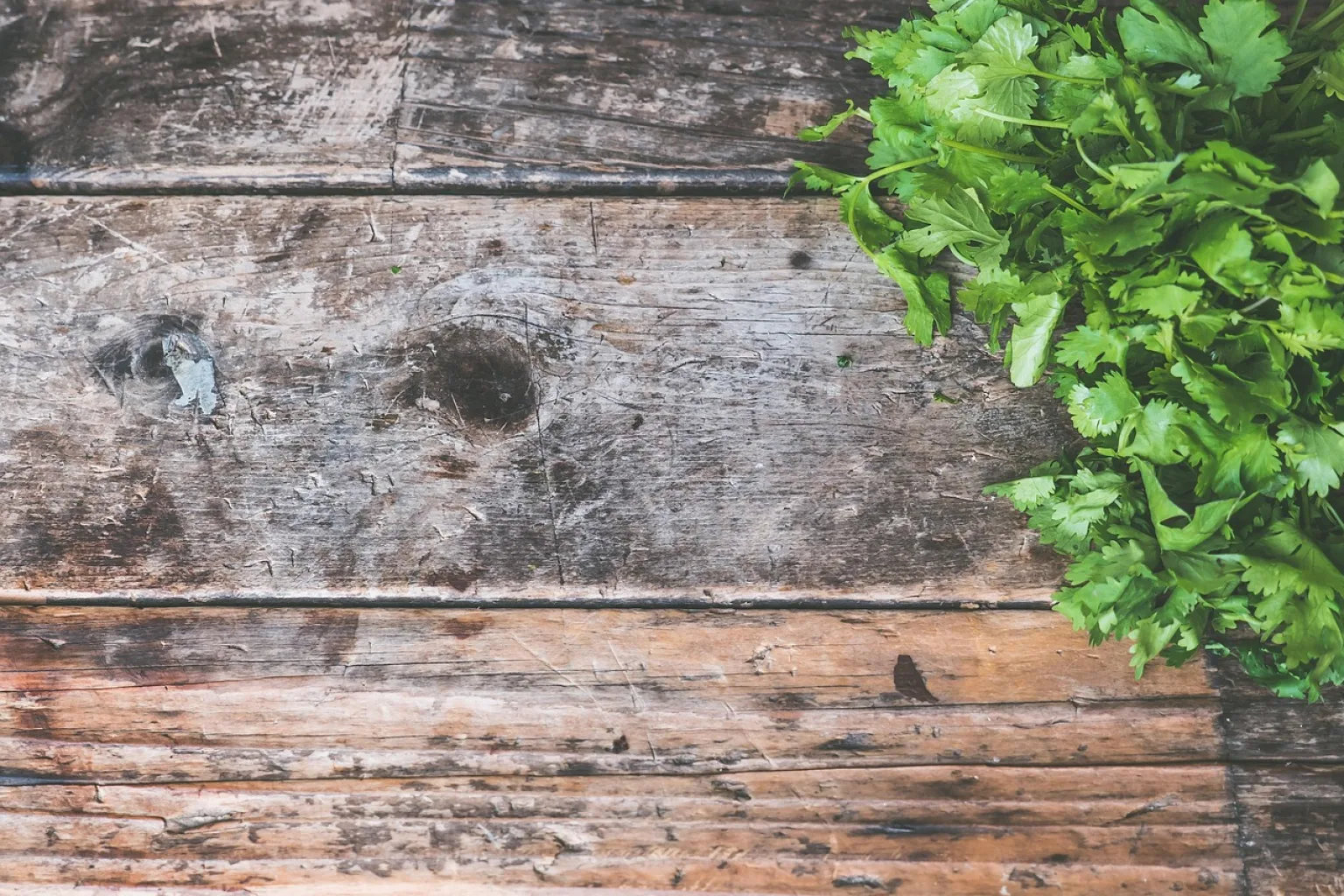
Cilantro leaves are the fresh leafy part of Coriandrum sativum, an annual herb in the Apiaceae family, also known as the carrot or parsley family. The leaves look somewhat like European parsley, but their aroma and flavor are distinct. In culinary usage, “cilantro” commonly means the fresh leaves, while “coriander” may refer to the seeds, whose flavor differs. This profile covers the leaves only, not the seeds or root.
When to use it
Use cilantro when you want a noticeable fresh herbal aroma, especially in salsa, guacamole, salads, sandwiches, soups, stews, stir-fries or egg dishes. Young, tender leaves are often more flavorful. Adding the leaves near the end of cooking or using them as a garnish keeps their fresh character more recognizable; prolonged cooking gives a different result. Taste is personal: some people describe cilantro as citrusy and pungent, while others perceive it as soapy.
How to use it
Pick the leaves from the stems if your recipe calls for it, then chop them finely to spread their aroma through a salsa, salad or finished dish. You can also leave them whole and use them as a garnish. For a simple herb mixture, combine chopped herbs with oil and lemon juice. Add cilantro to soups, stews, sandwiches, egg dishes or stir-fries to suit the dish. Adding it near the end highlights its fresh character. The leaves can be frozen or dried; bear in mind that drying removes much of their flavor, so dried cilantro will not give precisely the same result as fresh leaves.
Flavour and texture
The leaves have a bold, pungent flavor described variously as fresh and citrusy or soapy. Perception differs between people and may have a genetic component. The leaves are green and delicate, resembling European parsley in appearance, though their aroma is clearly distinct. Drying reduces much of their flavor, so dried leaves taste less vivid than fresh ones.
How to choose it
Choose bunches with brightly colored, firm leaves that are not limp. Avoid leaves with brown spots or yellowing, and look for a clear, characteristic aroma. Check that the bunch looks fresh before buying. Because cilantro has a strong flavor and fresh leaves are valued for their aroma, buy an amount you can use while the leaves still look good.
Storage
To store cut leaves, wrap the stems in a damp paper towel and place the bunch in a plastic bag in the refrigerator; an extension guide recommends using it within about a week. Another option described for cut herbs is to keep them as a bouquet in water. Do not wash herbs until you are ready to use them. If drying the leaves, avoid direct sun and store them in an airtight container in a cool, dry, dark place; drying reduces their flavor.
Substitutions
Fresh flat-leaf parsley can stand in when the green leafy appearance matters most, but it does not reproduce cilantro’s distinctive aroma or bold flavor. Dried cilantro is still the same herb, but dried leaves lose much of their fresh flavor. Neither choice fully recreates fresh cilantro, so choose according to whether appearance, aroma or availability matters most.
Common mistakes
A common mistake is treating cilantro as interchangeable with parsley: the leaves look similar, but their aroma and flavor differ. It is also easy to expect dried cilantro to taste as intense as fresh leaves; drying removes much of its flavor. If you do not know diners’ preferences, start with a modest amount, since some people find cilantro soapy while others describe it as citrusy or pungent.
Safety and allergens
Wash your hands before handling the leaves and use clean utensils. Rinse the cilantro shortly before use and do not serve it if it shows clear signs of spoilage. Refrigerate cut leaves and follow safe-handling guidance for fresh produce.
Culinary uses
- Hierba aromática fresca
- Guarnición y acabado
- Aporte de frescor a salsas y platos
Recommended techniques
- Picar finamente y añadir al final
- Mezclar con aceite y zumo de limón
- Usar las hojas enteras como guarnición
- Congelar o secar para conservar, teniendo en cuenta que el secado reduce su sabor
Pairs well with
- Salsas y guacamole
- Ensaladas y bocadillos
- Sopas y guisos
- Salteados y platos de huevo
Frequently asked questions
Are cilantro and coriander the same thing?
They are parts of the same plant, but this profile is about the fresh leaves. The seeds, also called coriander, have a different flavor.
Why does cilantro taste soapy to some people?
People perceive its flavor differently, and that difference may have a genetic component. Others describe the leaves as citrusy, fresh or pungent.
Can I dry or freeze cilantro leaves?
Yes. The leaves can be frozen or dried, but drying removes much of their flavor, so dried leaves will not taste just like fresh ones.
Estimated nutrition
- Fat
- 0 g
- Saturates
- 0 g
- Carbohydrate
- 0 g
- Sugars
- 0 g
- Fibre
- 0 g
- Protein
- 0 g
- Salt
- 0 g
Sources and review
Automatically researched, cross-checked and validated content. Sources consulted:
- ¿Por qué la muerte es origen de miedos y tabúes? doi.org
- The Essential Glossary of Cooking Terms for the Culinary Arts - Escoffier escoffier.edu
- Cilantro / Coriander, Coriandrum sativum – Wisconsin Horticulture hort.extension.wisc.edu
- El cilantro. ¿Qué es? Beneficios, propiedades y usos en la cocina abc.es
- Revista del Comité Científico de la ... aesan.gob.es
- Fresh Herbs | UNL Food | Nebraska food.unl.edu
- Cilantro: qué es, propiedades y usos en la cocina bonviveur.com
- How to grow cilantro for leaves — or coriander seeds | Servicio de Extensión de OSU extension.oregonstate.edu
- Module 19: Food Safety While Harvesting Vegetables and Herbs From the School Gardens - Farm to School farmtoschool.osu.edu
- Herbs - National Center for Home Food Preservation nchfp.uga.edu
- Antimicrobial Activity of the Essential Oil from the Leaves ... mona.uwi.edu
- Schmid College of Science and Technology | Chapman Blogs blogs.chapman.edu
- Cilantro: propiedades, orígen y usos en la cocina - Oriental Market orientalmarket.es
- - YouTube youtube.com
- El cilantro, hojas aromáticas que trasformarán tus platos - Krissia® te cuida krissia.es