- Category
- Oils and fats
- State
- Liquid
- Usual unit
- ml
What it is
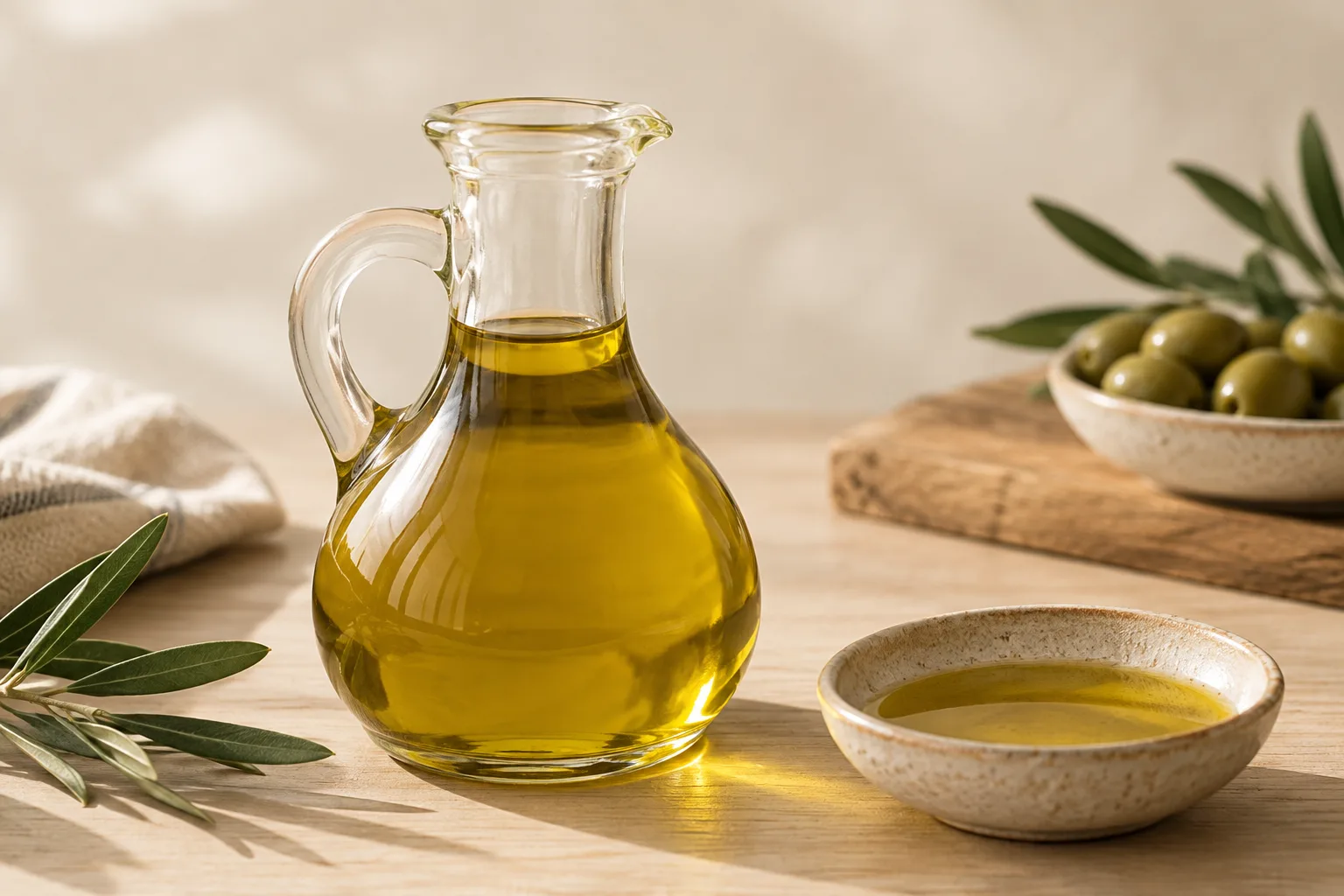
Cooking oil is a fat used in food preparation and is generally liquid at room temperature. The category includes oils from different plant sources and, less commonly, animal sources; a product called vegetable oil may contain one particular oil or a blend. For that reason, the general term does not describe one fixed flavor, composition or cooking behavior. The specific product name and label matter when choosing an oil. Cooking oils can be used to prepare food, dress salads, and make sauces or dressings. This guide describes the broad category rather than any single variety, so it does not assume that every oil tastes or behaves the same way.
When to use it
Use oil when a recipe calls for a liquid fat, when cooking food in a pan, when dressing a salad, or when making a sauce or dressing. Choose a product that suits the intended use and flavor; oils in the same broad category are not necessarily interchangeable in taste. If a recipe specifies a particular oil, check the product label before substituting. When oil will contribute noticeably to a dressing or sauce, select it by its variety and product description rather than assuming that all cooking oils are neutral.
How to use it
Read the product name and description to identify whether the oil is a single type or a blend. Use it to dress a salad, as part of a dressing or sauce, or in a preparation cooked in a pan. For an emulsified sauce, combine it with the other recipe ingredients gradually and mix until the desired texture is reached; proportions depend on the recipe. Oil may also be flavored with ingredients such as garlic, herbs or pepper, but do not assume a homemade infused oil keeps in the same way as a commercial product. Follow reliable recipe and product directions; if safe storage directions are unavailable, prepare it for immediate use. Do not pour used cooking oil down the drain; use an appropriate collection system.
Flavour and texture
Flavor and texture vary with the particular oil and with whether the product is a single oil or a blend. The broad category is generally liquid at room temperature, but that does not mean every oil tastes neutral. Check the variety and product description. Oil can be incorporated into dressings and sauces, where its character may be noticeable in the finished dish.
How to choose it
Read the product name and check which oil it contains: vegetable oil can refer to one particular oil or to a blend. Choose according to the intended recipe and the flavor you want. Check the package for product-specific use and storage directions. If you need to avoid an ingredient because of an allergy or intolerance, consult the label for the specific product, since this broad category includes different products.
Storage
There is no single storage instruction that applies to every cooking oil. Follow the package directions and any product-specific conditions provided by the manufacturer. As a general quality precaution for foods, avoid extreme temperature changes and exposure to light; do not assume a specific storage life if the product does not state one. Keep the oil in its closed container when not in use and check the label for directions after opening.
Substitutions
One cooking oil may be replaced with another if the alternative suits the recipe, but the flavor may change. For dressings and sauces, consider that the chosen variety can contribute a noticeable character. If a recipe calls for a particular type, check that the substitute is suitable and follow the alternative product's directions.
Common mistakes
Do not assume all cooking oils are identical: they can come from different source materials or be blends, and their flavors may vary. Do not ignore the package directions or assume that every product has the same shelf life or storage requirements. Never pour used cooking oil down a sink or toilet; it can cause pipe and wastewater-management problems.
Safety and allergens
Read the product label and follow its use and storage directions. If you have an allergy or intolerance, check the ingredients and allergen information for the specific oil. Do not pour used cooking oil down the drain; keep it in a closed container and take it to an available collection system.
Culinary uses
- Medio para cocinar
- Aliño de ensaladas y componente de salsas
Recommended techniques
- Aliñar
- Cocinar en una sartén
- Emulsionar salsas
Pairs well with
- Ensaladas
- Ajo
- Hierbas aromáticas
- Pimienta
Frequently asked questions
Do all cooking oils taste the same?
No. The category includes different oils and blends, so flavor can vary. Check the variety and product description.
Can I use cooking oil to dress a salad?
Yes. Oil is used for salad dressing and can also be part of sauces and dressings. Choose a type that suits the flavor you want.
How should I store a bottle of cooking oil?
Follow the package directions, since there is no single instruction for every product. As a general quality precaution, avoid extreme temperature changes and exposure to light.
How should I dispose of used cooking oil?
Do not pour it down a sink or toilet. Keep it in a closed container and take it to an appropriate collection system in your area.
Sources and review
Automatically researched, cross-checked and validated content. Sources consulted:
- En el etiquetado alimentario hay algunas menciones que son obligatorias eletiquetadocuentamucho.aesan.gob.es
- Client Challenge doi.org
- The Essential Glossary of Cooking Terms for the Culinary Arts - Escoffier escoffier.edu
- Preparing an Emergency Food Supply, Long Term Food Storage | Food Preservation | Food | Extension | UGA FACS fcs.uga.edu
- Agencia Española de Seguridad Alimentaria y Nutrición aesan.gob.es
- Food Storage in Home | USU extension.usu.edu
- USDA FoodData Central libguides.marist.edu
- Aceite de cocina - Wikipedia, la enciclopedia libre es.wikipedia.org
- Aceites de cocina Usados miteco.gob.es
- Home Food Storage | UNL Food | Nebraska food.unl.edu
- Top 10 Culinary Essential Oils files.achs.edu
- Food Timeline: food history research service libguides.umflint.edu