- Category
- Pulses
- State
- Dry
- Usual unit
- g
What it is
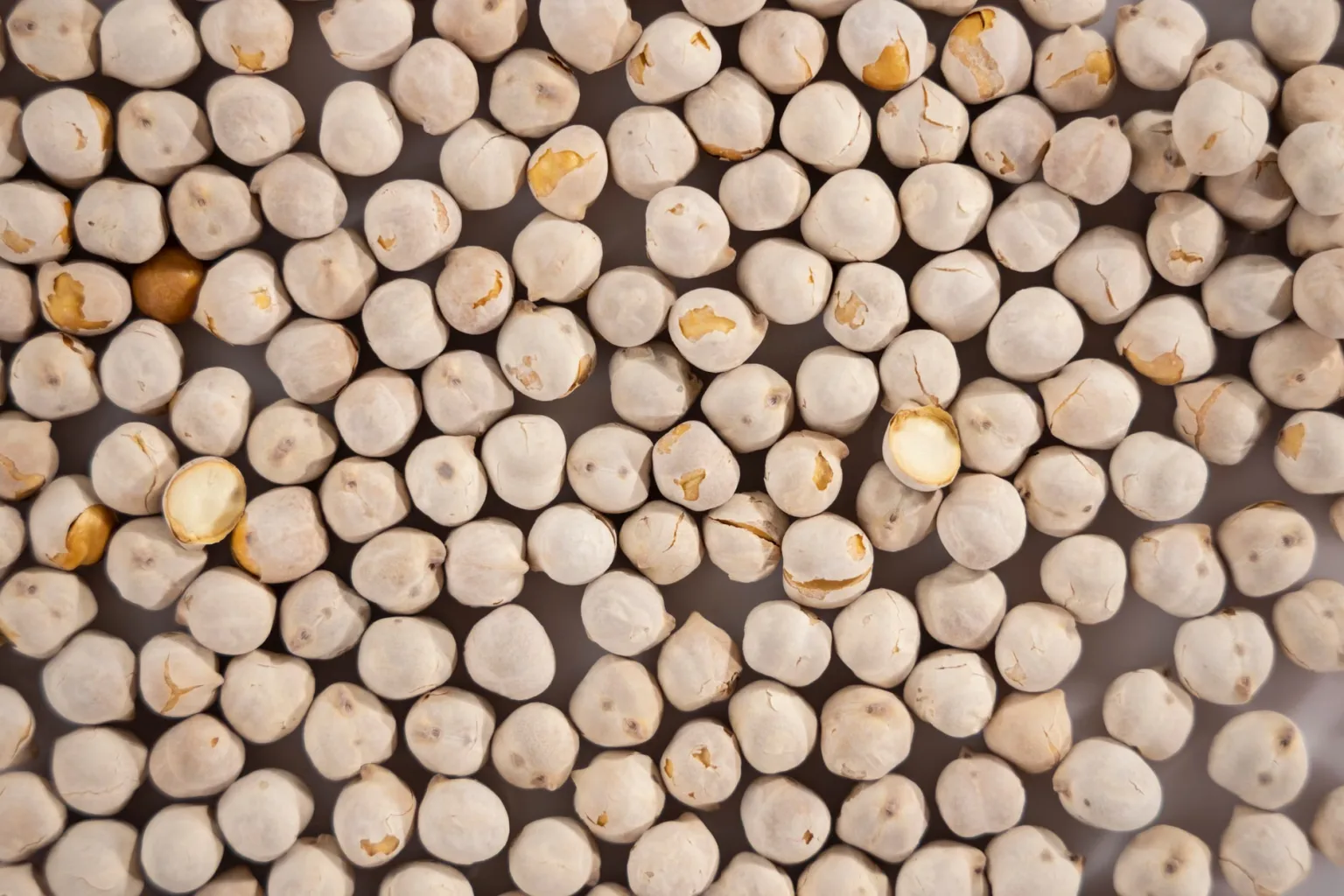
A dried chickpea is the dehydrated seed of a legume plant. It is sold whole and uncooked, so it needs to be hydrated and cooked before it can be used as a tender bean in most recipes. Chickpeas come in different sizes and appearances. The types described include Desi, which is generally smaller and darker, and Kabuli, which is often larger and lighter. Medium-sized, smooth, rounded types are also described. Variety affects appearance and can affect texture, but dried chickpeas remain a versatile legume for many kinds of cooking.
When to use it
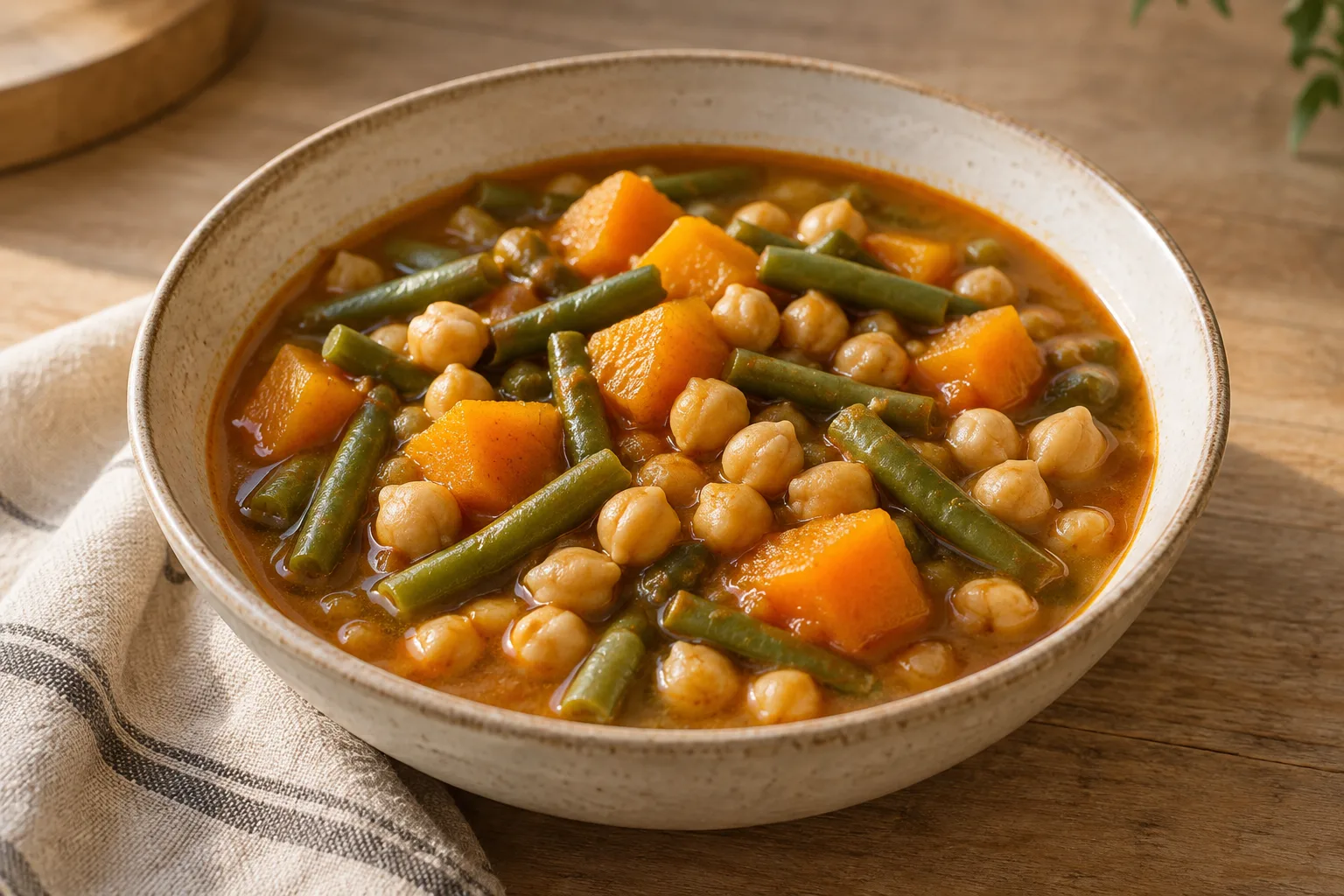
Choose dried chickpeas when you want to control their doneness or cook a quantity to use in several dishes. Once cooked, they can form the base of stews, soups and purées, or be added to salads and grain dishes. They can also be blended into hummus and other spreads. Chickpea flour is useful in recipes designed for that form. If time is limited, cooked or canned chickpeas can be a convenient alternative, although they are not the same product as dried chickpeas and may bring their own cooking liquid.
How to use it
Check the chickpeas and prepare them according to the recipe and package directions. A common cooking approach is to soak dried chickpeas, discard the soaking water, rinse them and cook them in fresh water at a gentle simmer until tender. Cooking time can vary with size, variety and product condition, so check for tenderness rather than relying on a fixed time. Add cooked chickpeas to stews or soups, toss them into salads, or blend them for hummus and purées. Cooked chickpeas can also be roasted for a crisp snack. Chickpea flour belongs in recipes written for flour, such as farinata or panelle; it is not a direct replacement for whole chickpeas.
Flavour and texture
Chickpeas have a mild, earthy flavour that works with herbs, garlic, tomato and spices. Dried chickpeas are hard and need hydration and cooking to become tender. When cooked, they may hold their shape in a salad or soften enough to blend smoothly, depending on cooking and variety. Types can differ in size, colour, shape and skin thickness, so they do not all produce exactly the same texture.
How to choose it
Look for chickpeas clearly identified as dried, and check the package information and date marking. Choose a size or type to suit your preference: some are small and dark, while others are larger and lighter, and local varieties can differ in appearance and texture. For unpackaged chickpeas, check that the product is identified and ask what storage or use information is available. Appearance alone cannot establish a precise cooking time.
Storage
Store the product according to the package or retailer’s directions, especially when it is sold unpackaged and storage guidance is provided separately. Keep the product identification so you can refer to its date marking and applicable instructions. Do not assume one storage period applies to every dried chickpea product: guidance can depend on the product and how it is sold. Once cooked, follow storage directions for the specific preparation.
Substitutions
Cooked or canned chickpeas can stand in for dried chickpeas in recipes that call for cooked legumes; adjust the liquid and final texture as needed. Other cooked legumes may replace chickpeas in some stews or salads, but the flavour and texture will change. Chickpea flour suits recipes designed for flour, such as farinata or panelle, but it cannot directly replace whole chickpeas in a salad or stew.
Common mistakes
Do not treat dried chickpeas as already cooked: they need preparation before they can be added as a ready-to-eat legume. Avoid relying on one universal cooking time, because variety and product condition can affect the result. Check tenderness as they cook, and remember that whole chickpeas and chickpea flour are different forms that are not automatically interchangeable.
Safety and allergens
Legumes, including chickpeas, can cause allergic reactions, and cooking should not be assumed to remove their allergenic proteins. If you have a chickpea allergy or are unsure about an unpackaged or packaged product, check ingredient and allergen information and ask the manufacturer or retailer. Follow the product’s use and storage directions.
Culinary uses
- Base de guisos, potajes y sopas
- Ingrediente para ensaladas, purés y cremas
- Base para hummus, falafel y harina de garbanzo
- Legumbre para aperitivos tostados
Recommended techniques
- Remojar y cocer suavemente hasta que estén tiernos
- Triturar los garbanzos cocidos para hacer purés o hummus
- Añadir garbanzos cocidos a guisos, sopas y ensaladas
- Asar garbanzos cocidos para obtener un aperitivo crujiente
Pairs well with
- Tomate, cebolla, ajo y hierbas en guisos o ensaladas
- Tahini, limón y ajo en hummus
- Especias y tomate en preparaciones tipo curry
- Cereales como arroz o cuscús en platos combinados
Frequently asked questions
Do dried chickpeas always need soaking?
Soaking is a common way to hydrate them before cooking. Follow the recipe or package directions; timing and results can vary with the product.
How are dried chickpeas different from canned chickpeas?
Dried chickpeas are uncooked and need preparation to become tender. Canned chickpeas are already cooked and can save time in recipes that suit that form.
Does cooking remove chickpea allergy risk?
Do not assume that it does. Available evidence indicates that chickpea allergenic proteins may remain even after cooking.
Estimated nutrition
- Fat
- 8.91 g
- Saturates
- 1.12 g
- Carbohydrate
- 25.48 g
- Sugars
- 4.46 g
- Fibre
- 7.1 g
- Protein
- 8.23 g
- Salt
- 0.56 g
Sources and review
Automatically researched, cross-checked and validated content. Sources consulted:
- En el etiquetado alimentario hay algunas menciones que son obligatorias eletiquetadocuentamucho.aesan.gob.es
- Client Challenge doi.org
- Informe del Comité Científico de la Agencia Española de ... aesan.gob.es
- Los garbanzos: variedades, propiedades nutricionales y muchas recetas para disfrutar con la legumbre más consumida en España directoalpaladar.com
- El Garbanzo: Historia, Diseminación Y Usos Culinarios - Restaurante Romero restaurante-romero.es
- Origen y propiedades de los garbanzos ¡6 BENEFICIOS ÚNICOS! lacribadevalseca.com
- Guía completa sobre los tipos de garbanzos más utilizados: variedades, propiedades, usos y recetas jardineriaon.com
- Los garbanzos | Naturarla | Arla naturarla.es
- Los garbanzos | Naturarla | Arla arlafoods.es
- Cicer arietinum - Wikipedia, la enciclopedia libre es.wikipedia.org
- Maridaje Perfecto: Cómo la Cocción de Garbanzos Potencia el Sabor de los Mejores Quesos y Embutidos donquesotori.es
- La técnica para cocinar garbanzos tiernos y con más sabor - Guia de Cocina Facil guiadecocinafacil.com
- Los garbanzos en la cocina: una tendencia creciente - Pizza Stories pizzastories.le5stagioni.com
- Análisis y Comparativa: Planta de Garbanzo Seca, ¡Descubre sus Beneficios Naturales! zarafrica.es
- Los Garbanzos y sus usos | Graneria Moreneta graneriamoreneta.com
- El Gourmet Urbano: #PASTELERIA #REPOSTERIA 🍰 | Cómo sustituir el huevo en recetas de repostería: cinco ingredientes alternativos que se lucen en la pastelería vegana elgourmeturbano.blogspot.com
- Cómo cocinar los garbanzos secos - Recetas deliciosas gzrecipes.com
- MedlinePlus en español: Garbanzos asados en seco medlineplus.gov