- Category
- Vegetables
- State
- Dry
- Usual unit
- g
What it is
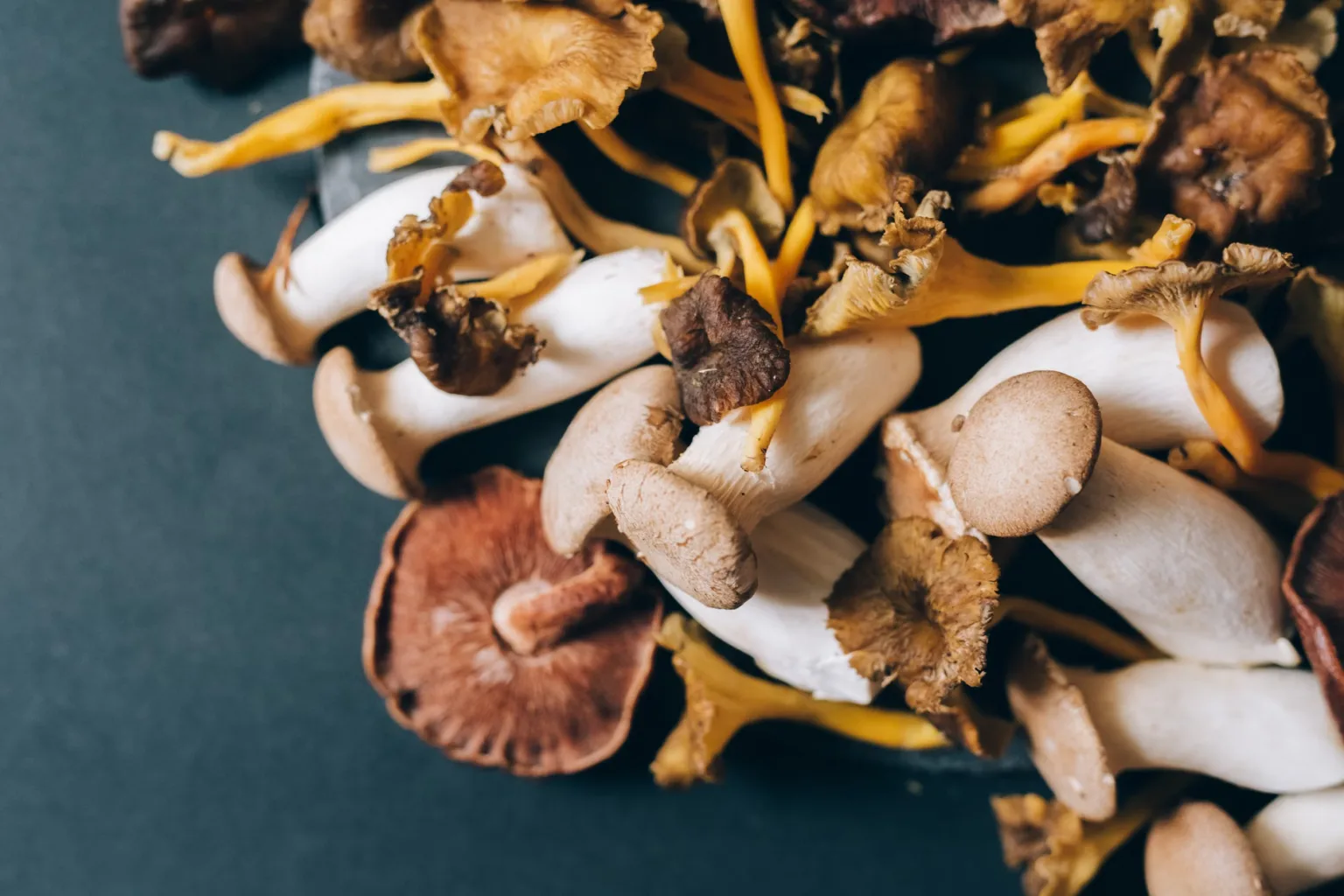
Dried mushrooms are fungi from which moisture has been removed through a drying process. The name covers products made from different varieties; it does not, by itself, identify a particular species or drying method. Compared with fresh mushrooms, the dried form is often used to add flavor to soups, stews, sauces, broths, rice dishes or pasta. For many preparations, rehydrate the mushrooms before cooking. Once rehydrated, they can be added to dishes that also use fresh mushrooms, although their texture is not identical. The soaking liquid can also be used in a recipe if it is strained first. Check the package to identify the variety and follow any product-specific directions.
When to use it
Choose dried mushrooms when you want to add flavor to a preparation with liquid, such as a soup, sauce or stew, or to enrich rice dishes and pasta. They are also useful when you want a dry pantry ingredient and the mushroom does not need to be the main feature for its texture. For dishes where the bite and appearance of the mushroom take center stage, fresh mushrooms may be a better fit. If you use the dried product, allow time for rehydration and consider adding the strained soaking liquid to the dish.
How to use it
Check the package first, since varieties and directions can differ. To rehydrate, cover the mushrooms with warm or cold water and leave them to soak; one culinary source gives 20 to 30 minutes as a guide, not a rule for every product. Do not assume boiling water is required. Drain the mushrooms and, if you plan to use the liquid, strain it before adding it to a soup or sauce. Add the rehydrated mushrooms to stews, rice dishes, pasta, soups or sauces, adjusting their amount to the dish. Rehydrated mushrooms can be used in preparations that also suit fresh mushrooms, though the texture may differ. Always follow the package directions.
Flavour and texture
A culinary source describes dried mushrooms as having a more concentrated flavor with umami character. After soaking, the mushrooms take up moisture, but their texture is not exactly the same as that of fresh mushrooms. If strained first, the soaking liquid can also contribute flavor to soups and sauces.
How to choose it
Check that the package clearly identifies the product and, when stated, the mushroom variety. The term dried mushrooms can cover different products, so do not assume a particular species, identical flavor or universal preparation method. Read the label for ingredients, declared allergens and directions for use, and choose a package whose contents and condition you can assess.
Storage
Follow the storage directions on the package; conditions may depend on the product and its packaging. Keep the label information available and check the stated duration and storage advice before use. The available evidence does not establish a universal shelf life or specific storage conditions for all dried mushrooms.
Substitutions
Fresh mushrooms can be an option when you want a texture closer to that of fresh fungi and their visual presence matters. Conversely, rehydrated dried mushrooms can be used in dishes that suit mushrooms, especially when concentrated flavor is the goal. Do not expect the two forms to have exactly the same texture.
Common mistakes
Do not assume every dried variety needs the same preparation; check the package. Avoid automatically discarding the soaking liquid, since it can be strained and added to soups or sauces. Also, do not expect a rehydrated mushroom to have exactly the same texture as a fresh one.
Safety and allergens
Check the label for the product identity, declared allergens, and storage and use directions. Follow any product-specific instructions; the available evidence does not identify a safety warning that applies to all dried mushrooms.
Culinary uses
- Aportar sabor concentrado a sopas, guisos, salsas, caldos, arroces y pasta.
- Añadir trozos rehidratados cuando se desea una presencia más sustancial del hongo.
Recommended techniques
- Rehidratar en agua templada o fría antes de incorporarlos a una preparación, según las indicaciones disponibles para el producto.
- Colar el líquido de remojo y aprovecharlo en sopas o salsas.
Pairs well with
- Sopas y caldos
- Salsas y guisos
- Arroces y risottos
- Pasta
Frequently asked questions
Do dried mushrooms need to be rehydrated?
They are rehydrated before use in many preparations. Check the package, since directions can vary by product.
Can you use the soaking water?
Yes. Once strained, it can be added to soups or sauces to make use of its flavor.
Do rehydrated mushrooms have the same texture as fresh ones?
Not necessarily. A culinary source notes that rehydrated mushrooms do not exactly reproduce the texture of fresh mushrooms.
Estimated nutrition
- Fat
- 0 g
- Saturates
- 0 g
- Carbohydrate
- 85.7 g
- Sugars
- 0 g
- Fibre
- 57.1 g
- Protein
- 0 g
- Salt
- 0.36 g
Sources and review
Automatically researched, cross-checked and validated content. Sources consulted:
- En el etiquetado alimentario hay algunas menciones que son obligatorias eletiquetadocuentamucho.aesan.gob.es
- Client Challenge doi.org
- Los alimentos como medicina: la dieta antiinflamatoria | Children's Hospital of Philadelphia chop.edu
- Pescado a la Veracruzana 1952 (Veracruz-style Fish) - lacocina.utsa.edu
- Agencia Española de Seguridad Alimentaria y Nutrición aesan.gob.es
- educational content to support healthful lifestyle practices sjsu.edu
- Dictionary of Health Related Terms: English – Spanish hia.berkeley.edu
- Prácticas Básicas de Mip para Fincas de Champiñones/Hongos Orgánicos: Enfermedades Bacterianas y Virales de los Champiñones y Hongos extension.psu.edu
- El Uso de Hongos Entomopatógenos en el Invernadero | Integrated Pest Management | College of Agriculture, Health and Natural Resources | University of Connecticut ipm.cahnr.uconn.edu
- Integrated Pest Management Strategic Plan for Hazelnuts in Oregon and Washington | Servicio de Extensión de OSU extension.oregonstate.edu
- Setas y hongos deshidratados vs frescos: Todo lo que debes saber clubdelicatessen.com
- Descubre todo sobre el champiñón - Florette florette.es
- Champiñones en la cocina friolisa.es