- Category
- Baking
- State
- Dry
- Usual unit
- teaspoon
What it is
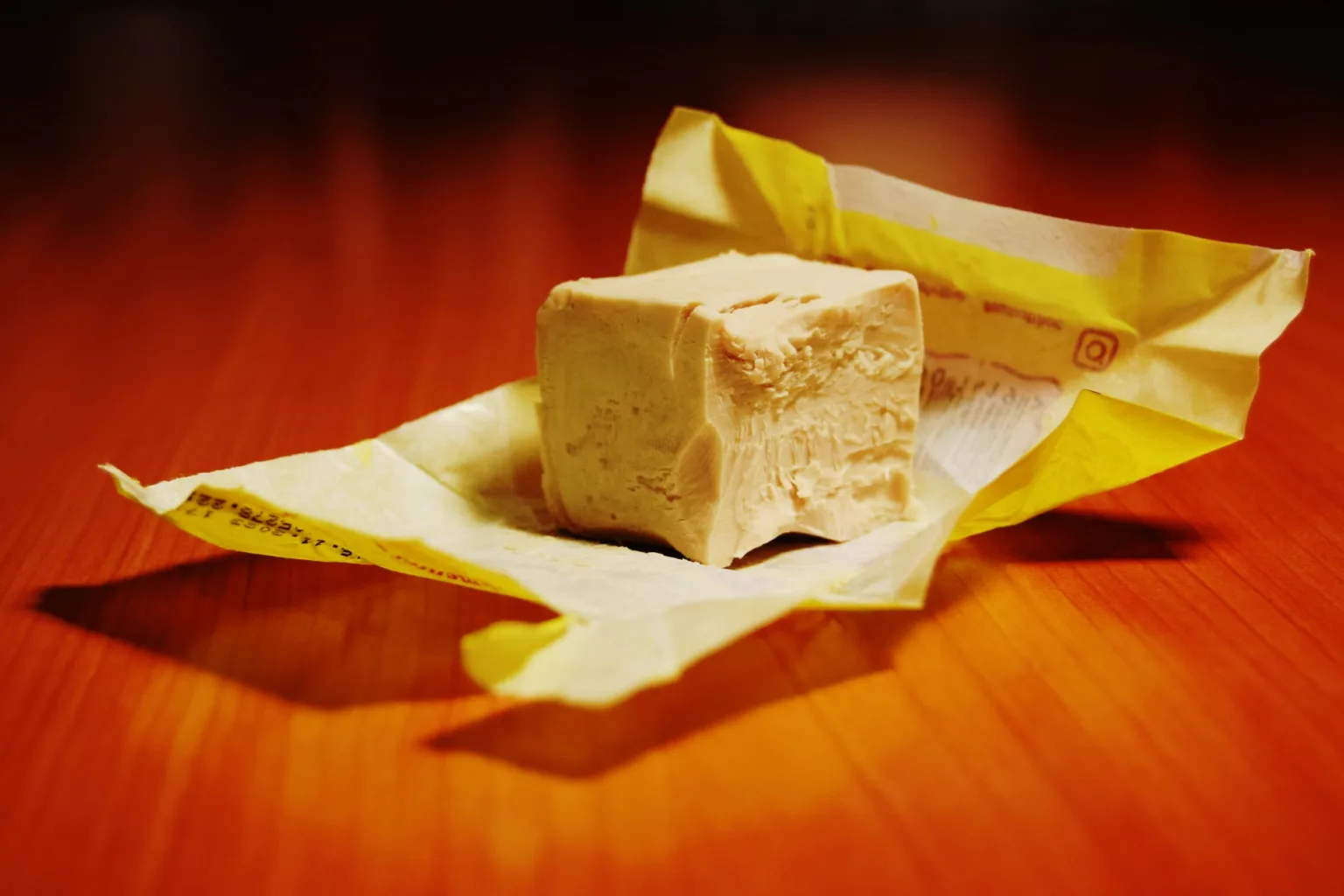
Dry yeast is baker's yeast that has been dehydrated and is commonly sold as granules. It is used to ferment doughs that need to rise, including bread and pizza dough. Dry yeast products do not all have the same handling instructions: active dry yeast is commonly hydrated before use, while instant yeast can be mixed directly into dry ingredients when the recipe and package allow it. Check the product name and directions, since the term “dry yeast” can refer to forms with different use instructions. It is not the same ingredient as baking powder, which serves a different purpose in recipes.
When to use it
Use dry yeast when a baking recipe calls for baker's yeast or dough fermentation, such as for bread or pizza. It is convenient to keep on hand and measure, but the specific type matters: active dry yeast may need to be hydrated first, whereas instant yeast is generally added to dry ingredients according to its label. For sweet doughs or other recipes, follow the particular formula; the available evidence does not establish one universal amount or rising time. If you are unsure which type you have, check the package before you begin.
How to use it
First read the label to identify whether the product is active dry or instant yeast and to determine the amount specified by the recipe. Active dry yeast is commonly hydrated before it is added: combine it with the liquid specified in the recipe and follow the product directions. One culinary guide mentions warm water and sugar for activation, but the evidence here does not support a universal temperature or resting time for every product; follow the package rather than improvising figures. Instant yeast can be mixed directly with flour or other dry ingredients if the manufacturer permits. Then incorporate it into the dough and follow the recipe's fermentation and baking method. Do not treat it as interchangeable with baking powder.
Flavour and texture
Dry yeast contributes a characteristic fermentation aroma to dough, while its main role is to help the dough ferment and rise. The finished crumb and texture also depend on the recipe and process; the available evidence does not support promising a precise result or a consistent flavor difference among all dry yeast types.
How to choose it
Check that the product is labeled as dry baker's yeast and distinguish active dry from instant, since their directions can differ. Inspect the date and package condition, and choose a pack size suited to how often you bake. If the manufacturer gives a conversion or directions for use, follow that information rather than relying on a general rule.
Storage
Keep dry yeast in a cool, dry place and close the package securely, following the manufacturer's instructions. One culinary guide recommends storing it in an airtight container; no universal opened-package shelf life is established by the evidence supplied here. Check the package directions and do not assume every product has the same shelf life or storage requirements.
Substitutions
Active dry and instant yeast can both be used for fermented doughs, but they may be added differently: active dry is commonly hydrated, while instant can be mixed into dry ingredients. Fresh baker's yeast can also replace dry yeast; one culinary guide gives a rough ratio of one part dry to three parts fresh. Check the recipe and package, since the conversion can depend on the product.
Common mistakes
Do not confuse active dry yeast with instant yeast or assume both require the same hydration step. Another common mistake is to use a fixed conversion without checking the recipe or label. Baker's yeast is also not directly interchangeable with baking powder: they are different leavening agents, and the recipe determines which one is needed.
Safety and allergens
No specific official safety warning for this ingredient was supplied. Follow the package and recipe directions, and do not use a product if its packaging is damaged or its identity cannot be confirmed.
Culinary uses
- Leavening doughs by fermentation
- Helping create volume and an airy crumb in yeast-raised bakes
Recommended techniques
- Rehydrate active dry yeast when the recipe or package directs
- Mix instant dry yeast directly with the dry ingredients when its package allows
Pairs well with
- Flour and water in bread doughs
- Sugar and warm water or milk when a recipe calls for hydrating active dry yeast
Frequently asked questions
Do I need to activate all dry yeast?
Not necessarily. Active dry yeast is commonly hydrated first; instant yeast can be mixed directly into dry ingredients when its package says to do so.
Can I substitute fresh yeast for dry yeast?
A substitution is possible, but the amount needs adjusting. One culinary guide gives a rough ratio of one part dry yeast to three parts fresh; check the recipe and product directions.
Is dry yeast the same as baking powder?
No. Dry baker's yeast ferments dough, while baking powder is a different leavening agent and should not be treated as a direct equivalent.
Estimated nutrition
- Fat
- 7.61 g
- Saturates
- 1 g
- Carbohydrate
- 41.2 g
- Sugars
- 0 g
- Fibre
- 26.9 g
- Protein
- 40.4 g
- Salt
- 0.13 g
Sources and review
Automatically researched, cross-checked and validated content. Sources consulted:
- REGLAMENTO (UE) No 1169/2011 DEL PARLAMENTO ... eletiquetadocuentamucho.aesan.gob.es
- The Essential Glossary of Cooking Terms for the Culinary Arts - Escoffier escoffier.edu
- Qué es la punción seca y para qué la usan los fisioterapeutas doi.org
- Vamos a Conservar Alimentos: El secado de las plantas medicinales y aromáticas extension.psu.edu
- revista del - Comité Científico aesan.gob.es
- Dictionary of Health Related Terms: English – Spanish hia.berkeley.edu
- Free Standing, Slide In, and Drop In Electric housing.illinoisstate.edu
- Muffins (1852) - Rubenstein Library Test Kitchen - The Devil's Tale blogs.library.duke.edu
- Su Propio Cultivo | Servicio de Extensión de OSU extension.oregonstate.edu
- PARTE TRES. VIDA TAREA LISTA ssec.si.edu
- Qué es la levadura seca: usos y cómo activarla bien - Guia de Cocina Facil guiadecocinafacil.com
- Levadura fresca o seca - diferencias, equivalencias y usos oliveroburriana.es
- Diferencias entre levadura fresca, seca e instantánea - Repostería y Cocina reposteriacocina.com
- Levadura | Nutrepedia nutrepedia.com