- Category
- Dairy and eggs
- State
- Fresh
- Usual unit
- unit
What it is
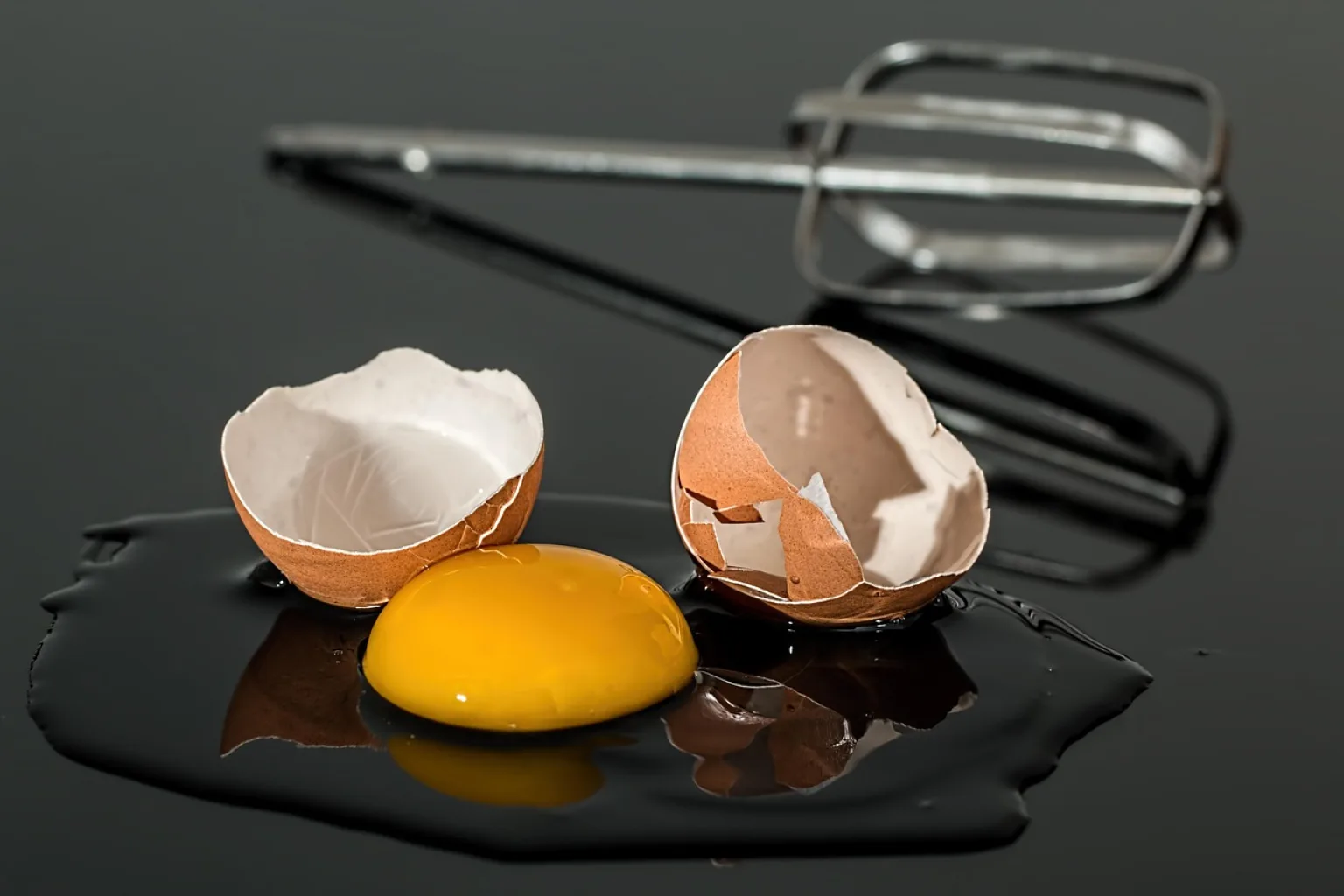
An egg yolk is the yellow portion separated from the white. In cooking, its viscous consistency helps emulsify some mixtures, including certain sauces. It is also added to doughs and sweet preparations to help bind or enrich them, and it can contribute yellow or golden colour. Recipes vary: some call specifically for yolks, while others use whole eggs. Follow the stated recipe rather than automatically exchanging the parts, since each ingredient can play a different role and the result may change. Yolks can be used in both sweet and savoury preparations when the recipe calls for them.
When to use it
Use yolks when a recipe calls for an emulsified sauce, a mixture that needs binding, or the colour and flavour that yolk can contribute. They are useful in baking and some pasta and sauce preparations. They may also be served with pasta, soft rice or mushrooms when a recipe specifies them. If a recipe calls for a whole egg, do not assume that one yolk is an equivalent replacement: the ingredients can perform different functions and change the balance of the preparation. Check which part of the egg is required before you begin.
How to use it
Separate the yolk from the white carefully, especially if it needs to remain intact. You can pass the egg contents between the shell halves or let the white drain over a clean hand; work over a clean bowl and keep shell fragments out of the mixture. For an emulsified sauce, whisk the yolk while adding the other ingredients as directed by the recipe. For doughs and desserts, incorporate it as specified, since it can help bind and enrich the mixture. It can also be served with pasta or rice when the recipe calls for it. Follow the recipe rather than assuming that a whole egg and a yolk behave in the same way.
Flavour and texture
Yolk is more viscous than egg white and can give preparations a rich, smooth quality when incorporated. Its yellow colour may contribute yellow or golden tones. The final flavour and texture depend on the recipe and the other ingredients; yolk is also reported to intensify the flavour of some baked goods. Yolk colour varies and is not, by itself, a measure of quality.
How to choose it
Choose clean, intact eggs and check the package information and seller’s instructions. Yolk colour can vary; a paler shade alone is not a reliable quality test, and the available evidence notes that several factors affect colour. If your recipe needs separated yolks, check the quantity before you begin. You can set the whites aside for another preparation if useful.
Storage
For separated yolks, follow the package or product directions and official food-safety guidance in your area. Do not infer a storage time or temperature from a recipe. If the available instructions do not explain how to keep them for later use, consult an official source before storing them.
Substitutions
There is no universal yolk substitute: some recipes use whole eggs, while others depend specifically on yolk to emulsify, bind or add colour. Use a whole egg only if the recipe explicitly allows it; the result may differ. An egg product may be suitable only when its label and the recipe indicate that it can replace fresh yolk.
Common mistakes
Do not automatically swap a yolk for a whole egg, or expect every yolk to give exactly the same shade of yellow. Separate the yolk carefully if it needs to stay intact. A recipe alone does not establish how long separated yolks can be stored; follow the package directions and applicable official guidance.
Safety and allergens
When handling or storing yolks, follow the package or product directions and official food-safety guidance in your area. If those instructions do not clarify what to do, consult an official source before keeping them for later use.
Culinary uses
- Emulsionante para algunas salsas
- Agente que ayuda a ligar y enriquecer masas y mezclas
- Aporte de color y sabor en preparaciones dulces y saladas
Recommended techniques
- Batir mientras se incorporan los ingredientes de una salsa emulsionada
- Integrar en masas y mezclas según la receta
- Separar cuidadosamente de la clara
Pairs well with
- Aceite, zumo de limón y sal en salsas emulsionadas
- Pasta y setas
- Pan y queso
Frequently asked questions
What are egg yolks used for in cooking?
They can help emulsify sauces, bind or enrich mixtures, and add colour. Their specific role depends on the recipe.
Can I replace a yolk with a whole egg?
Not automatically. Some recipes call for whole eggs, but there is no universal equivalent; follow the recipe or the product directions.
Does yolk colour alone show its quality?
No. Yolk colour varies for several reasons, and a paler shade alone does not determine quality.
How can I separate a yolk from the white?
You can pass the contents between the shell halves or let the white drain over a clean hand, working over a clean bowl.
Estimated nutrition
- Fat
- 26.5 g
- Saturates
- 9.55 g
- Carbohydrate
- 3.59 g
- Sugars
- 0.56 g
- Fibre
- 0 g
- Protein
- 15.9 g
- Salt
- 0.12 g
Sources and review
Automatically researched, cross-checked and validated content. Sources consulted:
- ¿Por qué la muerte es origen de miedos y tabúes? doi.org
- Mayonesa - Wikipedia, la enciclopedia libre es.wikipedia.org
- GUIA OVOPRODUCTOS PDF WEB aesan.gob.es
- Qué es (y qué no es) la estadística, usos y abusos de una disciplina clave en la vida de los países y las personas | Estudios económicos doi.org
- Aula de cocina contalabor.com
- Cómo aprovechar las yemas de huevo | Recetas Nestlé recetasnestle.com.bo
- Día Mundial del Huevo: eleva tus recetas con Nestlé Professional nestleprofessional-latam.com
- Yemas de huevo curadas y tratadas, como trabajarlas, cinco recetas cocinayaficiones.com
- Yemas Untables: 4 Ingredientes clave para una receta con carácter lachinata.es
- **Turrón de Yemas de Huevo: Comparativa y Análisis de los Mejores Quesos y Embutidos con Toques Dulces** laovejaquebala.es
- Yemas de huevo textura crema ⋆ Divina Vinagreta Recetas saludables divinavinagreta.es
- Gastronomía de la provincia de Zaragoza - Wikipedia, la enciclopedia libre es.wikipedia.org