- Category
- Herbs and spices
- State
- Dry
- Usual unit
- teaspoon
What it is
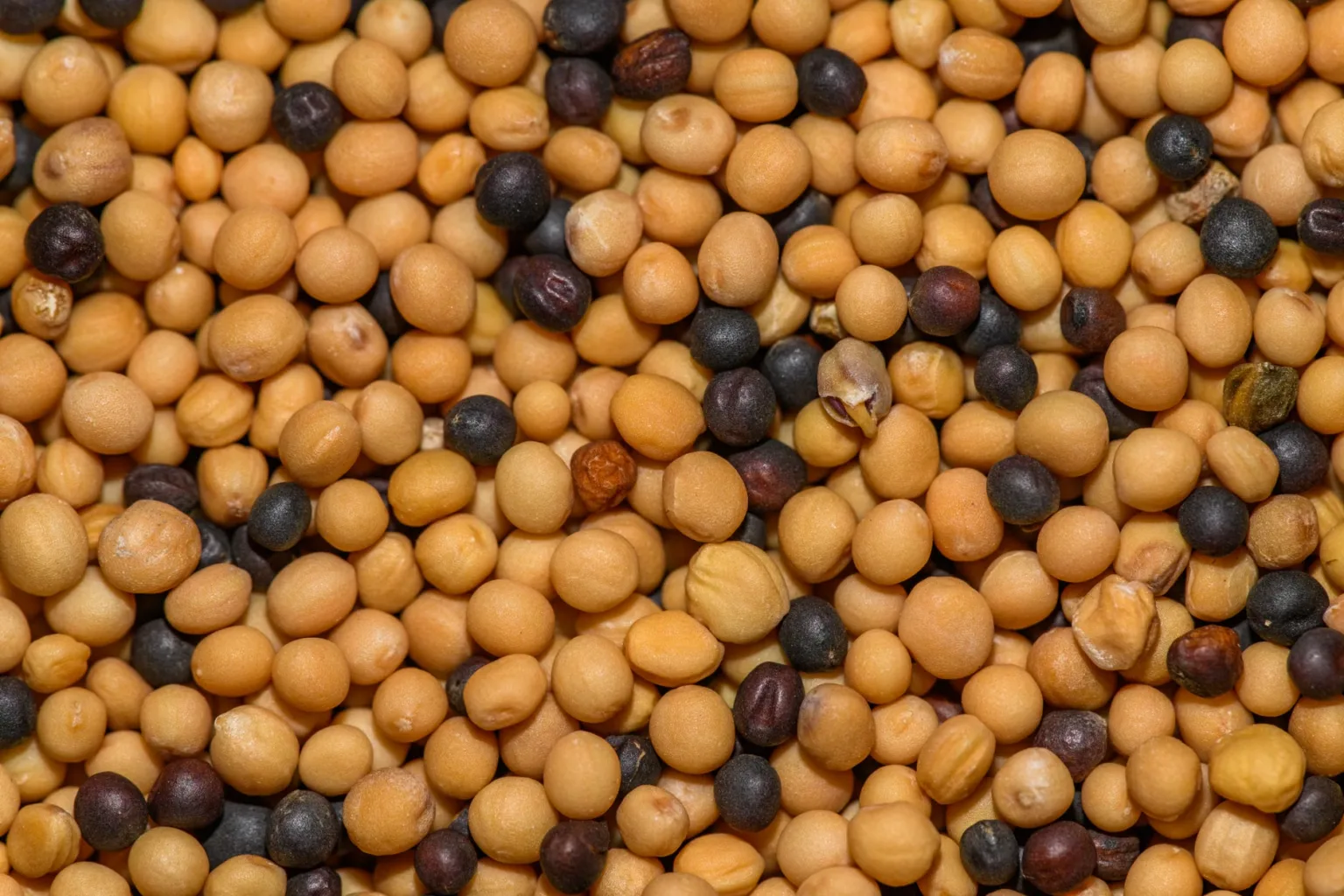
Fenugreek, also called alholva, is an annual plant in the legume family Fabaceae. Its seeds are used as a spice and are commonly sold dried, either whole or ground; the leaves are also used in cooking, but this profile focuses on the seeds. Whole seeds are small and very hard, with colors described from golden yellow to brown. They have a penetrating, spicy aroma and an intense flavor that combines bitterness with a lingering sweet note. Fenugreek seeds are used as a seasoning and appear in some spice blends, including curry, tandoori masala, and panch phoron.
When to use it
Use fenugreek when you want to bring a deep, spicy aroma to a seasoning blend, stew, or broth. It works in preparations where it can mingle with other spices, such as cumin and fennel. Its flavor is intense and can be bitter, so add it sparingly and taste as you cook. Whole seeds remain more noticeable in the finished dish, while ground seeds distribute more evenly.
How to use it
Fenugreek seeds can be added whole, but they are hard and may feel unpleasant when bitten into. For a more even texture, grind or crush them before adding them to the food. Another option is to toast them briefly, either on their own or in oil, before adding the other ingredients. Keep the toasting gentle: excessive heat can burn the seeds and intensify their bitterness. They can also be toasted with cumin and fennel to flavor stews and broths. When whole seeds are added to a long-cooking preparation, they soften and can become part of the sauce.
Flavour and texture
Fenugreek has a strong, penetrating, spicy aroma. Its flavor is intense, initially somewhat bitter, then sweeter and lingering, with notes that some descriptions compare to maple syrup. Whole seeds are very hard and crunchy; ground seeds disperse more readily through food. Gentle toasting can bring out their aroma, while burning them can make the bitterness more pronounced.
How to choose it
Choose whole fenugreek seeds if you want to grind or toast them shortly before cooking, or select ground fenugreek for direct use in blends and dishes. Both forms are sold. Check the package and label to confirm which form you are buying. Whole seeds are hard, so consider whether you want their texture to remain noticeable in the finished dish.
Storage
Whole seeds are described as retaining their aromatic stability longer than the ground form. Ground fenugreek requires careful storage conditions to preserve freshness. Keep the product closed according to its package directions and check the label for specific instructions; the available evidence does not establish a precise shelf life or particular storage conditions.
Substitutions
The closest format swap is to use whole seeds instead of ground fenugreek, or vice versa, depending on the texture you want. Ground fenugreek blends and disperses more easily; whole seeds are more noticeable and can soften during long cooking. The available evidence does not support recommending another spice as an equivalent substitute.
Common mistakes
Avoid adding a large amount before tasting: fenugreek has an intense flavor and can be bitter. Do not toast it excessively, since it can burn and become more bitter. It is also easy to overlook how hard whole seeds are; grind or crush them if you do not want to bite into intact seeds.
Safety and allergens
Use the seeds as a culinary seasoning and follow the package directions. This profile does not establish medicinal uses or guidance for therapeutic consumption.
Culinary uses
- Condimento para mezclas de especias
- Especia para aportar aroma a guisos y caldos
Recommended techniques
- Moler o machacar antes de añadir para evitar encontrar semillas enteras duras
- Tostar brevemente y con moderación; también puede tostarse en aceite
- Añadir entero a preparaciones de cocción prolongada para que se ablande
Pairs well with
- Comino
- Semillas de hinojo
Frequently asked questions
Should fenugreek seeds be used whole or ground?
Either form can be used. Whole seeds are hard and more noticeable; ground or crushed seeds distribute more evenly through a dish.
Should fenugreek be toasted?
You can toast it briefly to bring out its aroma, but do so gently. Burning the seeds can intensify their bitterness.
What spices pair with fenugreek?
It can be toasted with cumin and fennel to flavor stews and broths, and it is used in some spice blends.
Estimated nutrition
- Fat
- 0 g
- Saturates
- 1.46 g
- Carbohydrate
- 54 g
- Sugars
- 0 g
- Fibre
- 27 g
- Protein
- 27 g
- Salt
- 0 g
Sources and review
Automatically researched, cross-checked and validated content. Sources consulted:
- ¿Por qué la muerte es origen de miedos y tabúes? doi.org
- La Sierra Natural Foods - Financial Administration - La Sierra University lasierra.edu
- Herbs to Avoid During Pregnancy utep.edu
- Manual on integrated soil management and conservation ... vtechworks.lib.vt.edu
- Just a Dash of Punctuation learn.k20center.ou.edu
- Fenugreek | UC Master Gardeners of Santa Clara County ucanr.edu
- DIY Guide: How to Make a Herbal Tincture | American College of Healthcare Sciences achs.edu
- Fenogreco: qué es, para qué sirve, propiedades y uso en la cocina bonviveur.com
- Fenogreco | Gastronomía & Cía gastronomiaycia.com
- Descubriendo el Fenogreco: Especia Ancestral para tu Salud y Cocina - Especias RUCA ruca.es
- Fenogreco o alhova, sus beneficios y usos naturitas.es
- Fenogreco o alholva | CreatiVegan.net creativegan.net
- Fenogreco | PAPRIMUR paprimur.es