- Category
- Dairy and eggs
- State
- Fresh
- Usual unit
- g
What it is
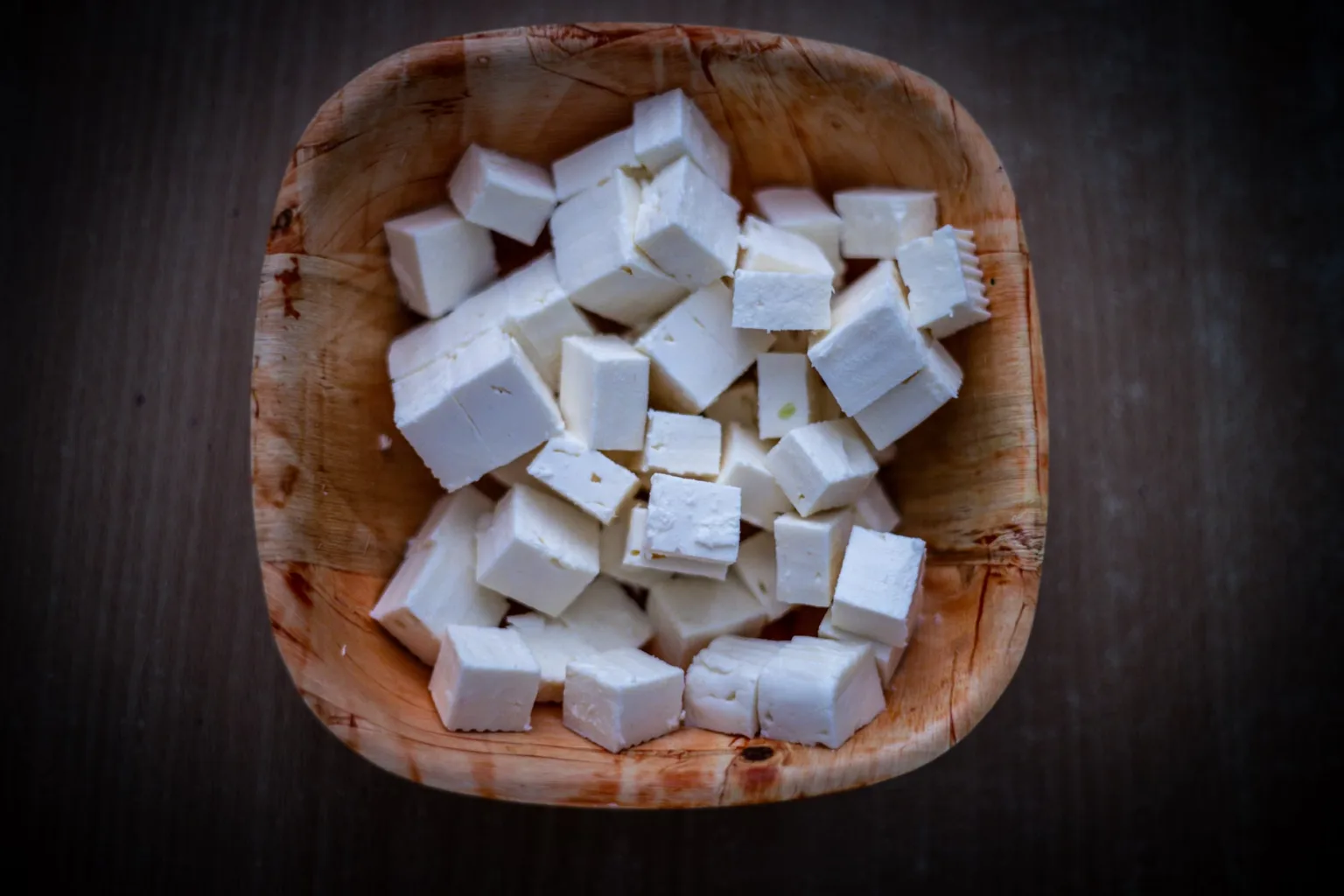
Feta is a white cheese commonly sold in blocks or crumbled. In the traditional preparation described by the sources, it is made with sheep’s milk, either alone or combined with goat’s milk, and kept in brine. This helps explain its salty profile and its texture, which can range from soft to semi-hard and crumbles when pressed. Products sold as feta can differ in milk and production: for example, the Illinois source notes that much of the feta made and sold in the United States is made with cow’s milk and may taste milder. Check the product name and ingredient list rather than assuming every block has the same flavor or composition.
When to use it
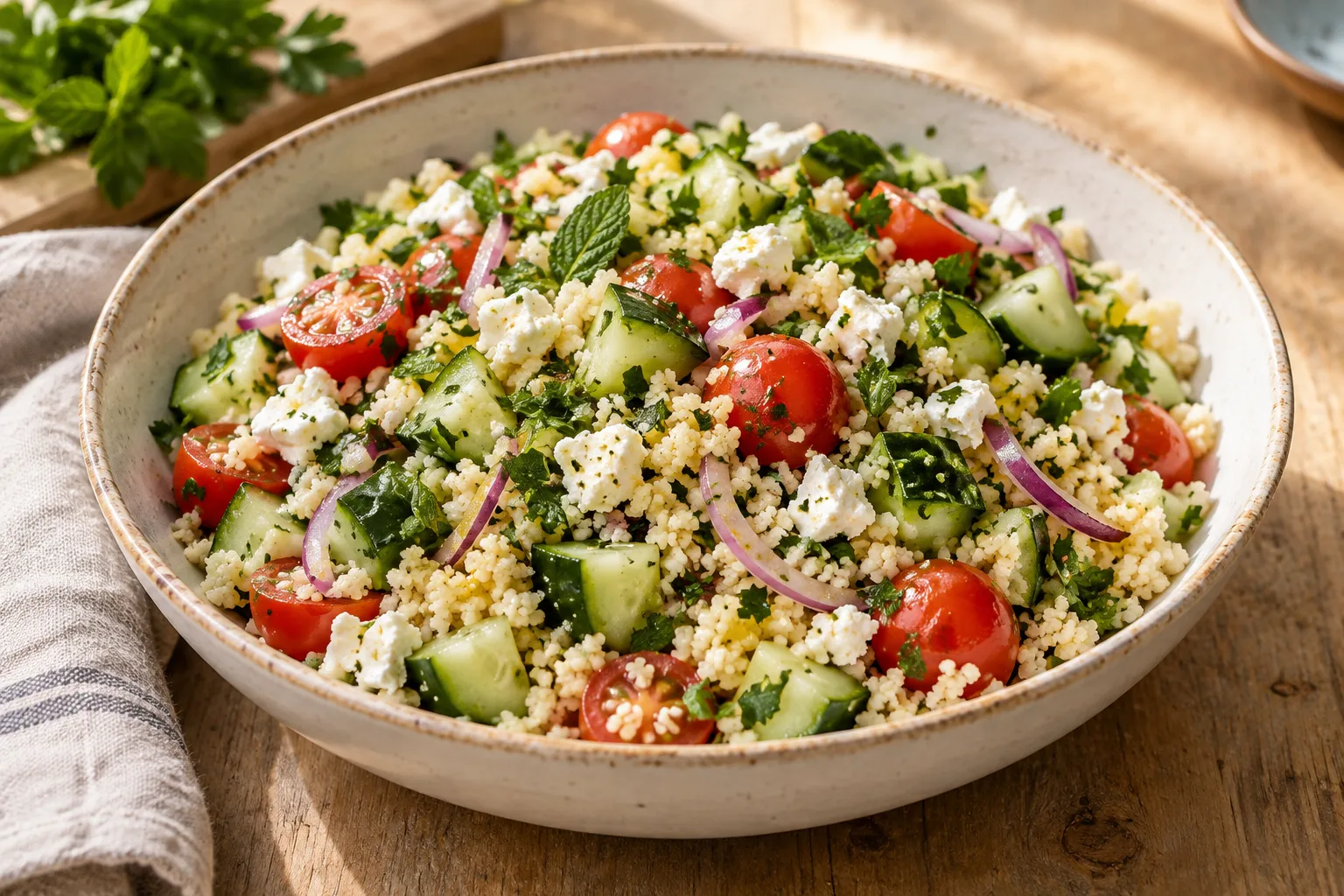
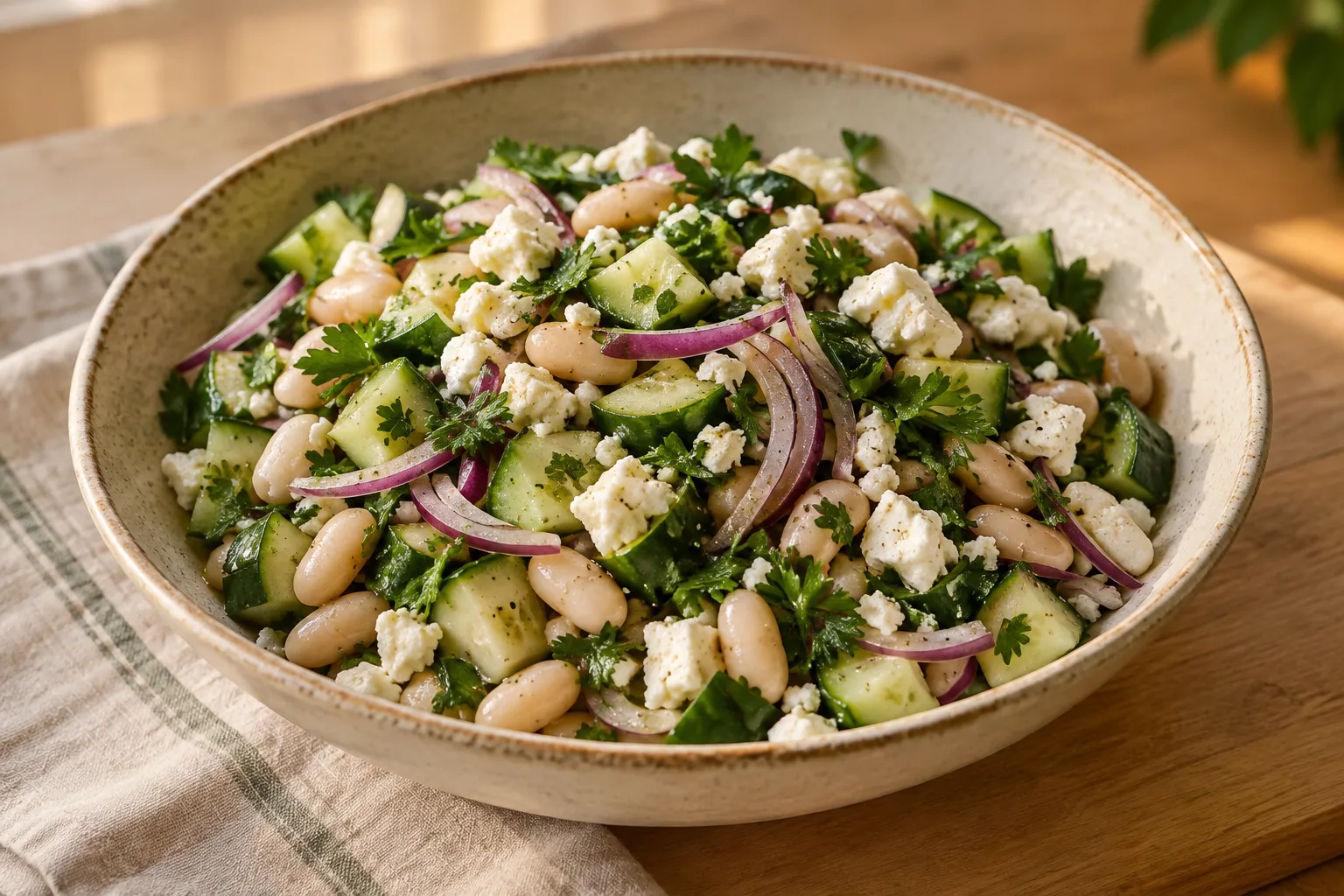
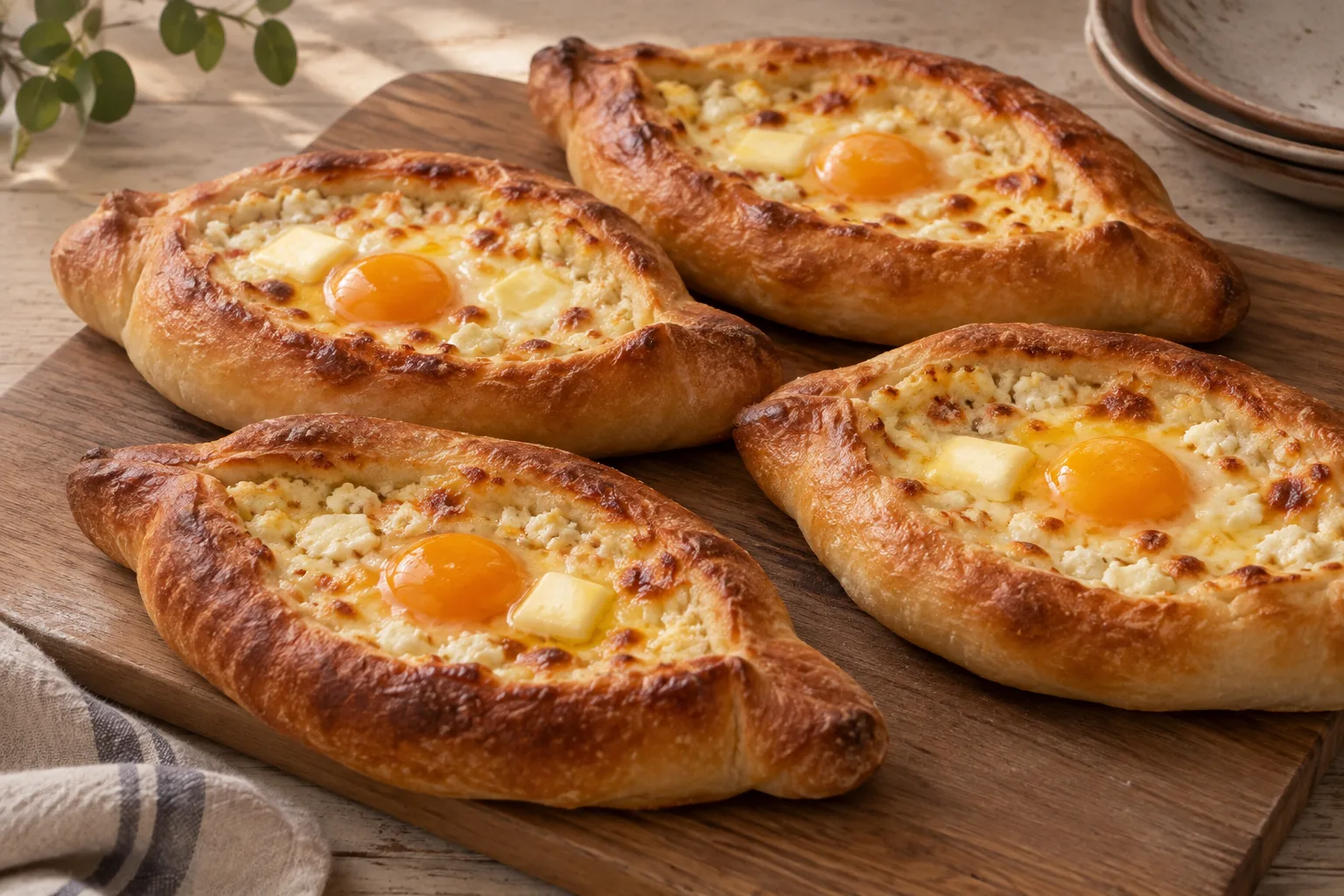
Use feta when you want a salty note and crumbly texture in vegetables, salads, pasta or breads. Cold, it can be scattered over a salad or paired with fruit such as watermelon and mint; hot, it works sprinkled over roasted vegetables or flatbreads. Since heat softens it but does not melt it, feta is useful when you want distinct pieces of cheese rather than a smooth, stretchy topping. Products can vary in intensity, so taste a little before adjusting the dish’s salt.
How to use it
Crumble the cheese with your fingers or cut it into pieces, then add it to a salad, cooked vegetables, pasta or flatbread. To keep distinct pieces, stir it in near the end or serve it on top; it softens when heated but does not melt. Pair it with tomatoes, spinach, zucchini, eggs or hearty breads, or try the watermelon-and-mint combination. If the block is packed in brine, drain it to control how much liquid goes into the dish; this practical suggestion does not replace the package directions. Taste before adding more salt, since feta cured in brine can be salty.
Flavour and texture
Feta is typically white, salty and crumbly, with a texture that can range from soft to semi-hard. Milk and production affect its character: the Illinois source describes cow’s-milk feta commonly sold in the United States as milder. It softens when heated but does not melt completely.
How to choose it
Check the product name and ingredient list to learn what you are buying and which milk it contains; food labels are meant to identify the product and its allergens. When comparing options, remember that flavor can vary with milk and production. Choose a format that suits your cooking, such as a block or crumbled cheese, and check the package’s storage instructions too.
Storage
Follow the package’s storage conditions and date, and keep the product refrigerated when directed. The Illinois culinary source recommends storing brined blocks refrigerated in their brine; for crumbled feta or feta without brine, it recommends a tightly sealed container. Do not use a generic time period in place of the instructions for your specific product.
Substitutions
The evidence documents feta and queso costeño as interchangeable for Colombian buñuelos. This substitution is tied to that preparation and does not establish that the cheeses are interchangeable in every recipe. No general substitute for other uses is supported here; adjust the amount and salt only after tasting the cheese you choose.
Common mistakes
Do not assume every product called feta has the same milk, intensity or texture. Do not expect it to melt like a stretchy cheese: it softens with heat but retains its character. Finally, do not add salt automatically; taste first, especially when the cheese has been cured in brine.
Safety and allergens
Feta is a dairy product and contains milk, an allergen that should be identified in food information. Check the label, follow its storage and use directions, and keep the product refrigerated when appropriate. If you are unsure about a product or its condition, do not eat it.
Culinary uses
- queso desmenuzable para ensaladas y platos de verduras
- ingrediente salado para panes planos, pasta y rellenos
Recommended techniques
- desmenuzar o desmigar con los dedos
- servir en frío o añadir a platos calientes; se ablanda con el calor sin fundirse
Pairs well with
- tomate, espinaca, calabacín y otras verduras
- pasta, huevos, panes contundentes, sandía y menta
Frequently asked questions
Does feta melt when heated?
It softens with heat but does not melt like a stretchy cheese. Use it for soft pieces over vegetables or flatbreads.
Is all feta made with the same milk?
No. Milk and production can vary; the sources describe traditional sheep’s milk or sheep-and-goat’s-milk feta, as well as cow’s-milk products in some markets. Check the label.
What foods pair well with feta?
The cited pairings include tomatoes, spinach, zucchini, eggs, pasta and hearty breads. Watermelon and mint are also mentioned.
How should I store feta?
Follow the label. The culinary source consulted recommends refrigerating feta in its brine and keeping crumbled or brine-free feta in a tightly sealed container.
Estimated nutrition
- Fat
- 21.4 g
- Saturates
- 14.3 g
- Carbohydrate
- 3.57 g
- Sugars
- 0 g
- Fibre
- 0 g
- Protein
- 17.9 g
- Salt
- 2.85 g
Sources and review
Automatically researched, cross-checked and validated content. Sources consulted:
- En el etiquetado alimentario hay algunas menciones que son obligatorias eletiquetadocuentamucho.aesan.gob.es
- Cheese «Burgos» Es un queso blanco, blando y acuoso (debido a que mapa.gob.es
- Client Challenge doi.org
- Cooking Food Storage | USU extension.usu.edu
- Aesan - Agencia Española de Seguridad Alimentaria y Nutrición aesan.gob.es
- Cheese-Storage-Bulletin-4-8-20.pdf cdr.wisc.edu
- Jump into Mediterranean cooking with feta cheese | Simply Nutritious, Quick and Delicious | Illinois Extension | Illinois extension.illinois.edu
- Feta Cheese – Hello Cheese World !!! blogs.baruch.cuny.edu
- Cheese • The Nutrition Source nutritionsource.hsph.harvard.edu
- Understanding Sheep’s Milk Cheese | The Institute of Culinary Education ice.edu
- Queso feta | qué es, origen, tipos y beneficios codinafoods.com
- Queso feta: origen, propiedades y usos en la cocina | El Diario Vasco diariovasco.com
- Feta - Wikipedia, la enciclopedia libre es.wikipedia.org
- Queso Feta: Análisis y Comparativa de su Sabor y Textura en el Mundo de los Mejores Quesos donquesotori.es
- El Queso Feta | La Boulette laboulette.com
- El auténtico origen del queso feta: ¿Qué conservas lo incluyen en su mejor versión? ensaladadepasta.com.es