- Category
- Herbs and spices
- State
- Dry
- Usual unit
- g
What it is
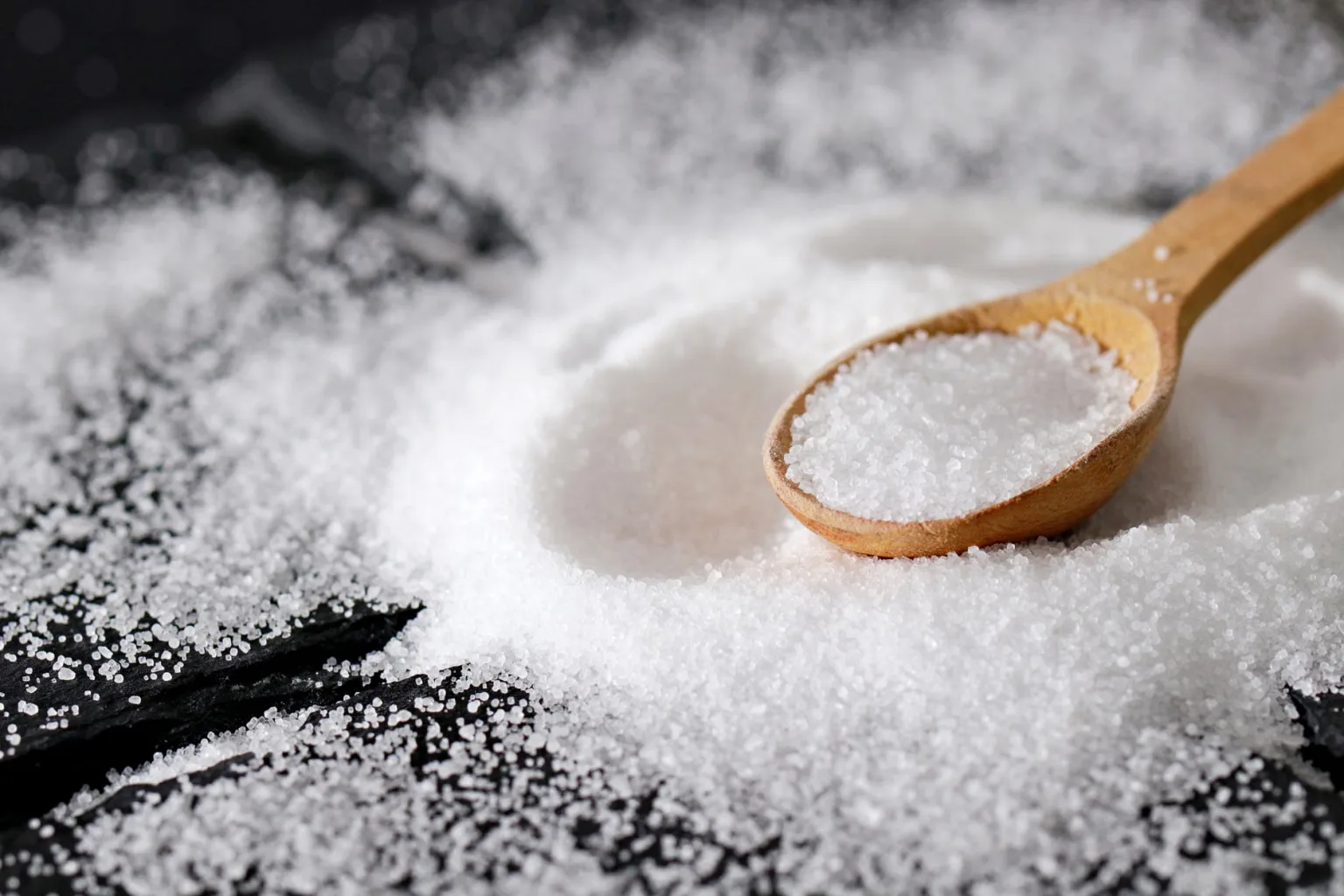
Fine salt is food salt made up of small crystals and is often sold as table salt. Its small grain makes it easier to distribute and generally quicker to dissolve than larger crystals. The name alone does not establish a particular source or mean that the salt is iodized: products can differ in origin, processing and added ingredients, so check the package. In cooking, it is used to add a salty taste and bring other flavors into balance. This profile describes the fine-grained format, not a particular brand or exact composition. If a recipe gives a volume measure and you use a different grain size, the result may change because a spoonful of fine crystals does not necessarily contain the same amount as a spoonful of larger crystals.
When to use it
Choose fine salt when you want seasoning to spread evenly and blend in without leaving noticeable crystals. It is convenient for soups, stews, sauces, dressings and doughs, and for adjusting a dish as it cooks. It can also be used for a final adjustment, but add a little at a time and taste between additions. For an intentionally crunchy finish or visible crystals, a different grain size may be a better fit. When replacing coarse or flaky salt with fine salt, do not automatically use the same spoon measure: crystal size and shape affect how salt is measured and distributed.
How to use it
Add fine salt gradually and mix well so that it is distributed throughout the food. For soups, stews and sauces, add it during cooking, allow it to blend in, and taste before adding more. For dressings, dissolve it in the liquid component first or mix thoroughly to avoid salty patches. In doughs and baking, weigh it if the recipe gives a gram amount and distribute it evenly with the other ingredients, following the recipe's method. To adjust a finished dish, add a small pinch, mix and taste again. If switching from fine salt to coarse or flaky salt, do not automatically exchange spoonfuls: compare by weight where possible, then check the seasoning.
Flavour and texture
Its defining taste is salty; in cooking, salt is also used to bring out or balance the perception of other flavors. The small crystals spread readily and dissolve faster than larger grains, making fine salt handy in liquids, dressings and doughs. That same ease of blending means an unmeasured addition can quickly become difficult to correct. The exact profile and any added ingredients depend on the specific product, so do not assume that all fine salts have the same source or composition.
How to choose it
Check that the package identifies the product as food salt, and read the ingredient list and any information about additions, such as iodine or anti-caking agents, where applicable. Choose a fine grain suited to your intended use and a clearly labelled, intact, well-sealed package. If a recipe depends on precise quantities, use a salt with a consistent grain size and weigh it when practical. The label, rather than the word “fine” alone, is the place to check the product's declared characteristics.
Storage
Keep fine salt in a clean, dry, tightly closed container, and avoid using a damp spoon so it is less likely to clump. Follow any specific storage directions on the package. You can keep it in its original packet, sealed well, or transfer it to a suitable container; retain the label if you may need to check ingredients or product information. Do not assume a specific shelf life: refer to the manufacturer's directions.
Substitutions
Fine sea salt or another food-grade fine salt can be used instead, with the seasoning checked and adjusted to taste. Coarse salt and flaky salt can also work, but spoon-for-spoon measures may not be equivalent and they may dissolve at a different rate. If the quantity matters, compare by weight rather than simply copying the volume, mix thoroughly and taste before adding more. Flakes can intentionally change the texture when used as a finishing salt.
Common mistakes
A common mistake is replacing fine salt with coarse or flaky salt using the same volume without checking the result. Crystal size affects measurement, distribution and dissolving speed. It is also easy to add too much at once: add gradually, mix and taste. Do not assume all fine salts have the same origin, processing or added ingredients; check the package when those details matter.
Safety and allergens
Use salt identified as food and follow the package directions. If you need information about ingredients or allergens, check the label for the specific product, especially for blends or products with additions.
Culinary uses
- Condimento para ajustar el sabor salado
- Ingrediente para sazonar de forma uniforme
Recommended techniques
- Añadir durante la cocción para que se disuelva y reparta
- Incorporar a masas y mezclas secas
- Añadir al final para ajustar el sazón
Pairs well with
- Sopas, guisos y salsas
- Verduras y ensaladas
- Masas y preparaciones de panadería
Frequently asked questions
Does fine salt dissolve faster than coarse salt?
In general, its small crystals distribute and dissolve more readily than larger crystals.
Can I replace it with flaky salt?
Yes, but the texture changes and a spoon measure may not be equivalent. Adjust gradually and weigh the salt if the amount is important.
Is all fine salt iodized?
Do not assume so. Iodine and other additions depend on the product; check its label.
Estimated nutrition
- Fat
- 0 g
- Saturates
- 0 g
- Carbohydrate
- 0 g
- Sugars
- 0 g
- Protein
- 0 g
- Salt
- 100 g
Sources and review
Automatically researched, cross-checked and validated content. Sources consulted:
- En el etiquetado alimentario hay algunas menciones que son obligatorias eletiquetadocuentamucho.aesan.gob.es
- Client Challenge doi.org
- Sal común - Wikipedia, la enciclopedia libre es.wikipedia.org
- 15 tipos de sal para dar variedad a nuestros platos: cómo elegirlas y usarlas en la cocina directoalpaladar.com
- Tipos de sal para cocinar: descubre cómo usarlas en tu cocina laespanolaaceites.com
- Tipos de sal: éstas son las variedades y para esto sirven excelsior.com.mx
- Tipos de sal para transformar tus platos chovi.com
- Tipos de sal y sus usos en la cocina divinacocina.es
- Sabor a sal: 10 variedades que debes conocer y usar cooking.elmundo.es
- Contenido de sal de los alimentos en España. 2012 aesan.gob.es
- Sal: tipos, usos y cómo salar bien - CocinoPedia.com cocinopedia.com
- Tipos de sales, usos en cocina y recetas hola.com
- Descubre los beneficios de la sal fina en la gastronomía internacional: un análisis positivo superlekker.es
- Artes culinarias/Ingredientes/Sal - Wikilibros es.wikibooks.org
- Tipos de sal: cuáles existen, para qué sirve cada una y cuál conviene usar en cocina abc.es
- Diferencias y tipos de sal: marina, del Himalaya y refinada - Club Delicatessen clubdelicatessen.com
- La guía definitiva para saber usar cada tipo de sal lavanguardia.com