- Category
- Grains, flour and pasta
- State
- Dry
- Usual unit
- g
What it is
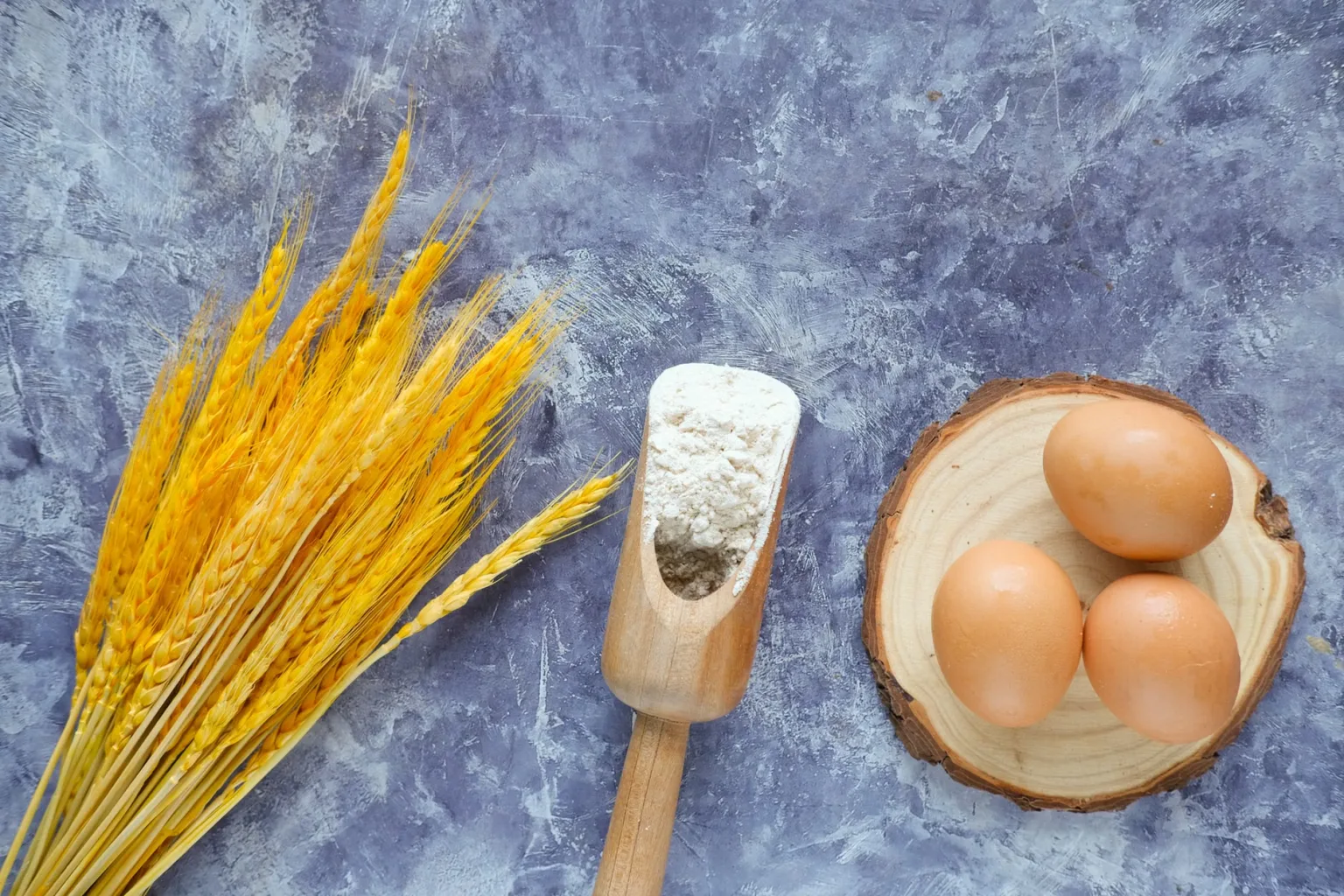
Fine wheat semolina is made by milling wheat to particles coarser than fine flour. “Fine” describes the particle size, not a specific wheat variety: the product may come from durum or soft wheat, so check the package when that distinction matters. Wheat semolina is not the same as corn or rice semolina, which come from different cereals and behave differently in cooking. It is used for porridge and puddings and can also be included in doughs, pasta or baked goods. Particle size affects liquid absorption and the final texture, so semolinas are not automatically interchangeable. Follow the recipe and label to identify the kind and grind required.
When to use it
Choose fine semolina when you want a cereal preparation with more presence than a smooth flour-based result, but do not need the coarser grain of other semolinas. It can suit porridge or pudding, as well as dough and baked recipes that specifically call for fine wheat semolina. It may also be used in some pasta or bread preparations, although the recipe and wheat type affect the result. If a recipe specifies durum wheat, another particle size or a different cereal, check the label before substituting: the change can affect consistency and structure.
How to use it
Start by checking the recipe and package to confirm whether the semolina is made from durum or soft wheat and which grind is intended. For porridge, gradually add it to the liquid while stirring, then cook according to the recipe until the texture is even. In dough, combine it with the wet and dry ingredients in the stated proportions; do not automatically replace all the flour, because particle size changes absorption and structure. It can also be used in puddings and baked preparations when the formula calls for it. If switching to rice semolina, corn semolina or fine flour, expect a different texture and follow a recipe designed for that substitute rather than assuming a universal one-to-one conversion.
Flavour and texture
Wheat semolina has a mild cereal flavour; the exact note can vary with the wheat and degree of milling. Fine semolina feels less grainy than medium or coarse semolina, while generally retaining more body than very fine flour. Cooked in liquid, it can produce a creamy consistency; in doughs and baked goods, it contributes a different structure from smooth flour. “Fine” does not guarantee identical texture across brands: grind and recipe both matter.
How to choose it
Look for a package clearly labelled fine wheat semolina, and check whether it specifies durum or soft wheat, since those products may suit different uses. Read the ingredient list and allergen information: wheat contains gluten. If a recipe depends on a particular grind, take care not to buy medium or coarse semolina by mistake. Colour can vary with the cereal and product, so appearance alone is not a reliable way to identify the type.
Storage
Keep dry semolina in its sealed package or a clean, dry, closed container, following the manufacturer’s directions. Protecting it from moisture helps it remain dry and easy to use. If the label gives specific storage conditions, follow those instructions. No exact storage life should be assumed without package information; check the date and condition of the product before use.
Substitutions
Fine wheat flour may work in some doughs, but it gives a smoother result and is not an identical replacement. Rice or corn semolina changes the cereal, absorption and final texture; use it only when it suits the recipe. Fine wheat semolina is also not an automatic replacement for durum semolina where the recipe depends on durum wheat. There is no universal conversion ratio: use a recipe formulated for the substitute.
Common mistakes
Do not confuse fine semolina with fine flour or with corn or rice semolina: particle size and cereal affect the result. Another common mistake is swapping one for another in equal amounts without considering the recipe, because absorption and texture may change. Do not assume all wheat semolina is made from durum wheat; check the package when that detail matters.
Safety and allergens
This is a wheat product and may contain gluten. Check the package if you need to avoid wheat or gluten, and follow the manufacturer’s and recipe instructions. No specific safety warning for this semolina is available here.
Culinary uses
- Base for porridge and semolina pudding
- Ingredient for pasta, couscous, bread and baked goods
Recommended techniques
- Simmering or cooking in liquid
- Mixing into doughs and batters
- Using as a dry coating or to thicken preparations
Pairs well with
- Milk or water in porridge and pudding
- Vegetables and savoury sauces in couscous or pasta dishes
- Butter and sugar in sweet preparations
Frequently asked questions
Is fine semolina the same as wheat flour?
Not exactly. Semolina has larger particles than fine flour, and that difference can affect absorption and the texture of a dish.
Is fine semolina always made from durum wheat?
Do not assume so. Fine describes the grind, not the wheat variety; check the package to see whether it is durum or soft wheat.
Can I replace it with rice or corn semolina?
Only when the recipe can accommodate a different cereal. Flavour and texture may change, so there is no identical substitute or universal conversion ratio.
Estimated nutrition
- Fat
- 2.68 g
- Saturates
- 0.35 g
- Carbohydrate
- 73.1 g
- Sugars
- 2.6 g
- Fibre
- 10.1 g
- Protein
- 13.5 g
- Salt
- 0.03 g
Sources and review
Automatically researched, cross-checked and validated content. Sources consulted:
- ¿Por qué la muerte es origen de miedos y tabúes? doi.org
- educational content to support healthful lifestyle practices sjsu.edu
- CERVECERO ESPAÑOL aesan.gob.es
- WHEAT STUDIES - AgEcon Search ageconsearch.umn.edu
- From Wheat Fields to Milling Operations - UNL Digital Commons digitalcommons.unl.edu
- Second Edition - cns cns.ucdavis.edu
- Prolamin proteins alteration in durum wheat by species of ... upcommons.upc.edu
- Essays on the world wheat economy (1939-2010) diposit.ub.edu
- An Introduction to the Interrelationships of Plants and People digitalcommons.humboldt.edu
- Qué es la sémola: usos, tipos y diferencias legumbresmiau.es
- ¿Qué es la sémola? Todo lo que necesitas saber | Garofalo pasta-garofalo.com
- Todo lo que necesitas saber sobre la sémola | LÉKUÉ lekue.com
- Conoce qué es la sémola de trigo | Recetas Nestlé recetasnestle.com.co
- Sémola cruda (¿orgánica?) | Fundación G+E diet-health.info