- Category
- Fish and seafood
- State
- Liquid
- Usual unit
- ml
What it is
Fish stock is a liquid cooking base made with fish or fish parts such as bones, heads and trimmings; some versions also include vegetables and herbs. In cooking, the term fumet is often associated with a more pronounced or concentrated fish flavor than a mild stock, although names and intensity are not consistent across every product. It can be used as a cooking liquid or as an ingredient in a sauce. Commercial products also vary in composition, so check the ingredient list and directions rather than assuming that all fish stocks are alike.
When to use it
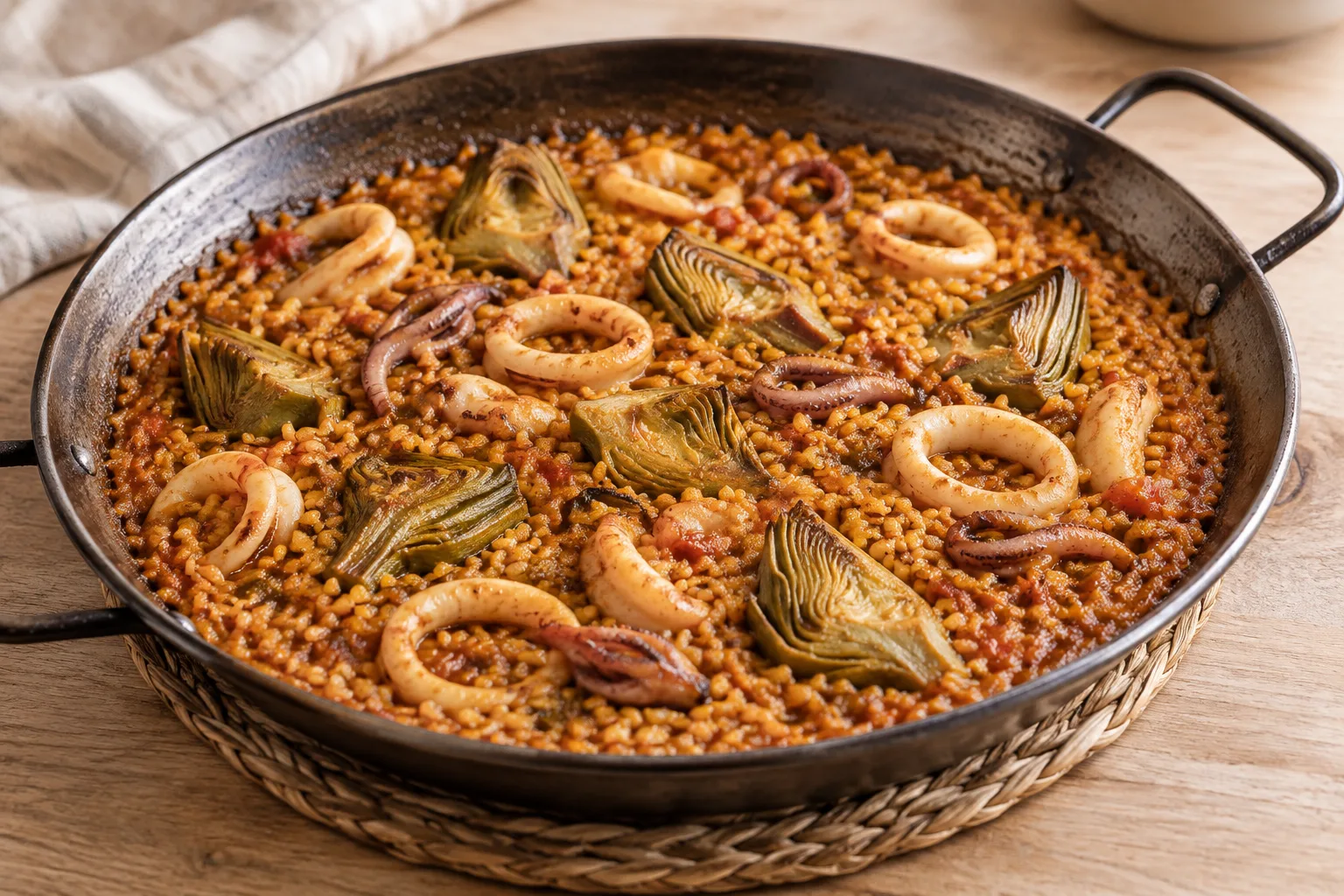
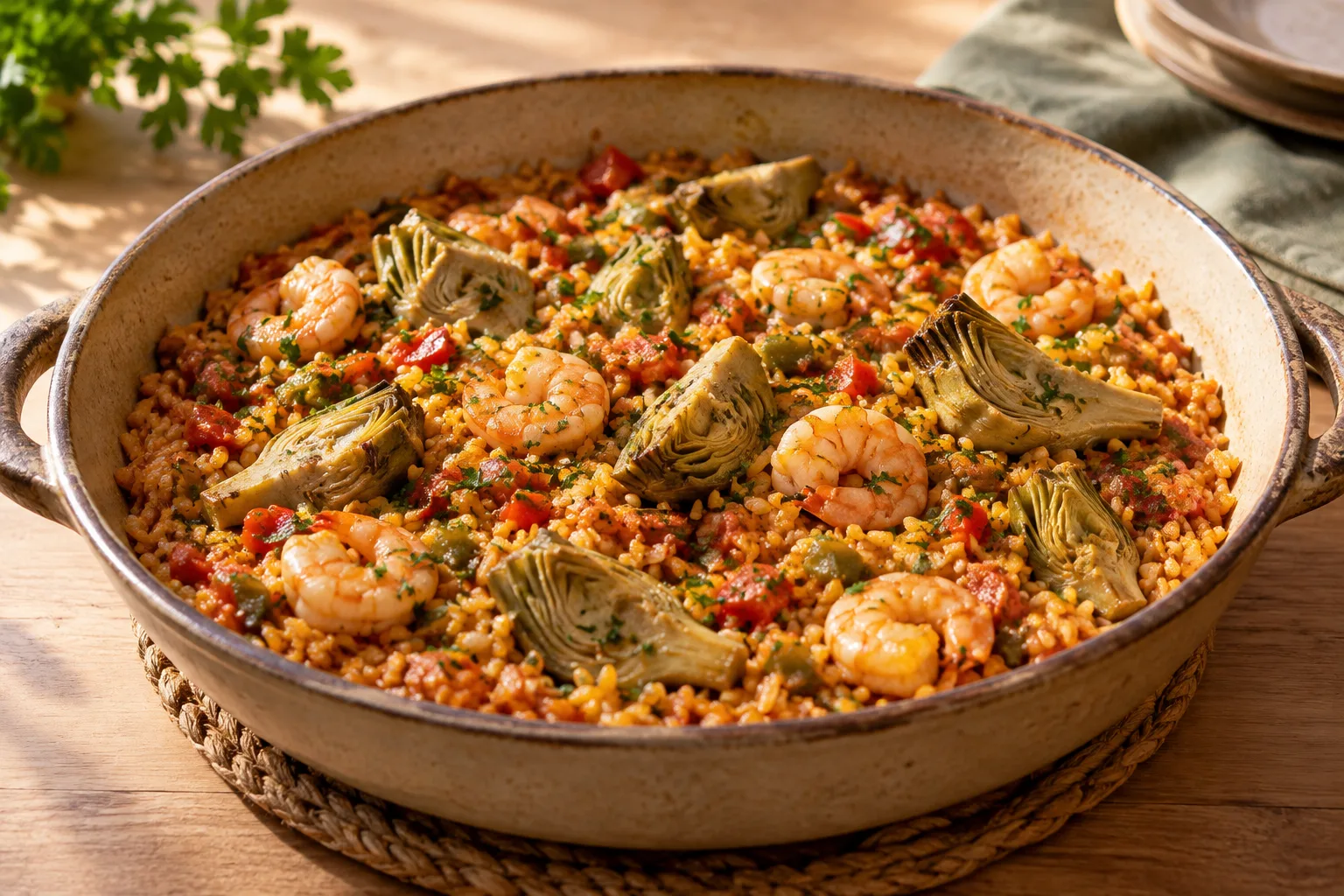
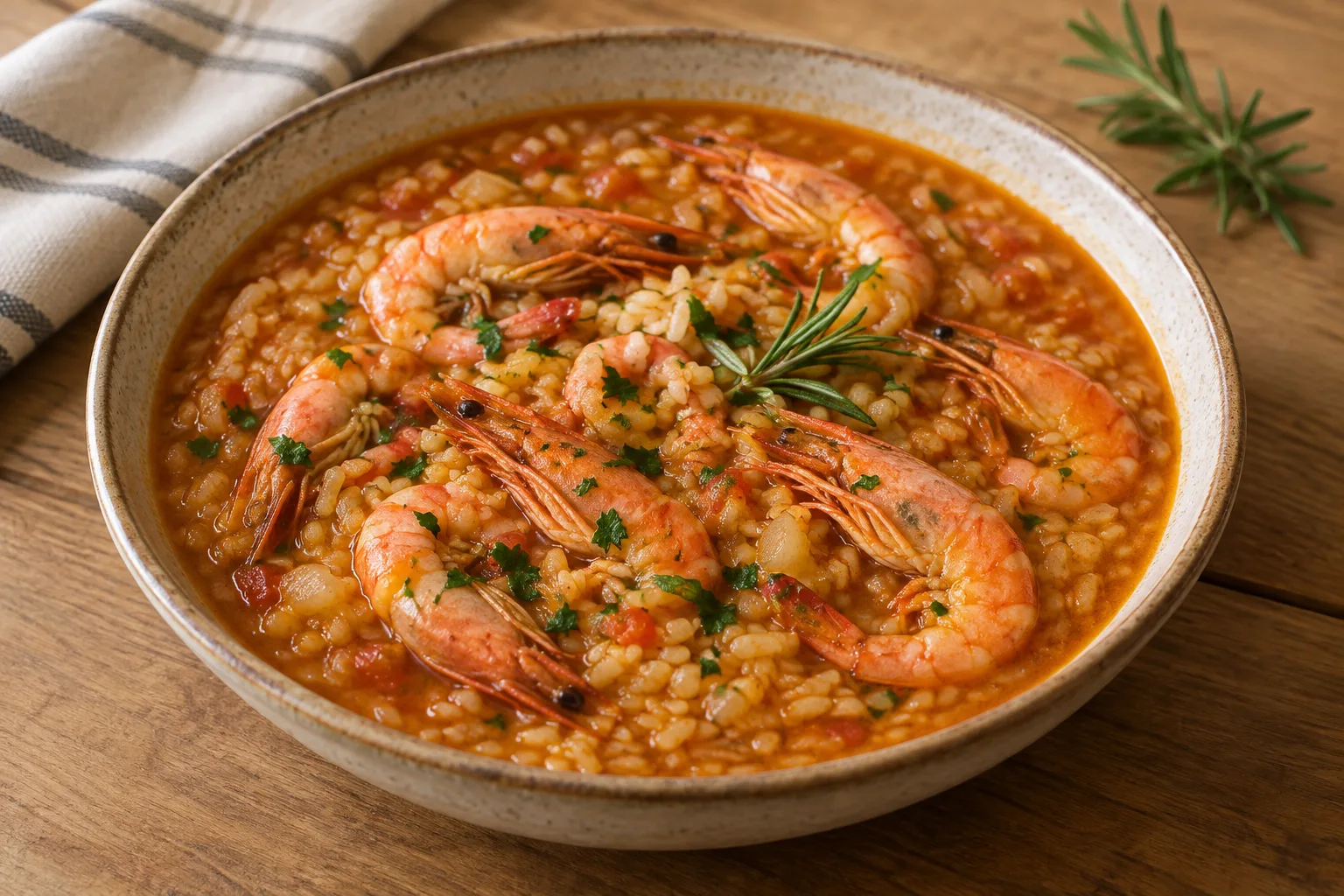
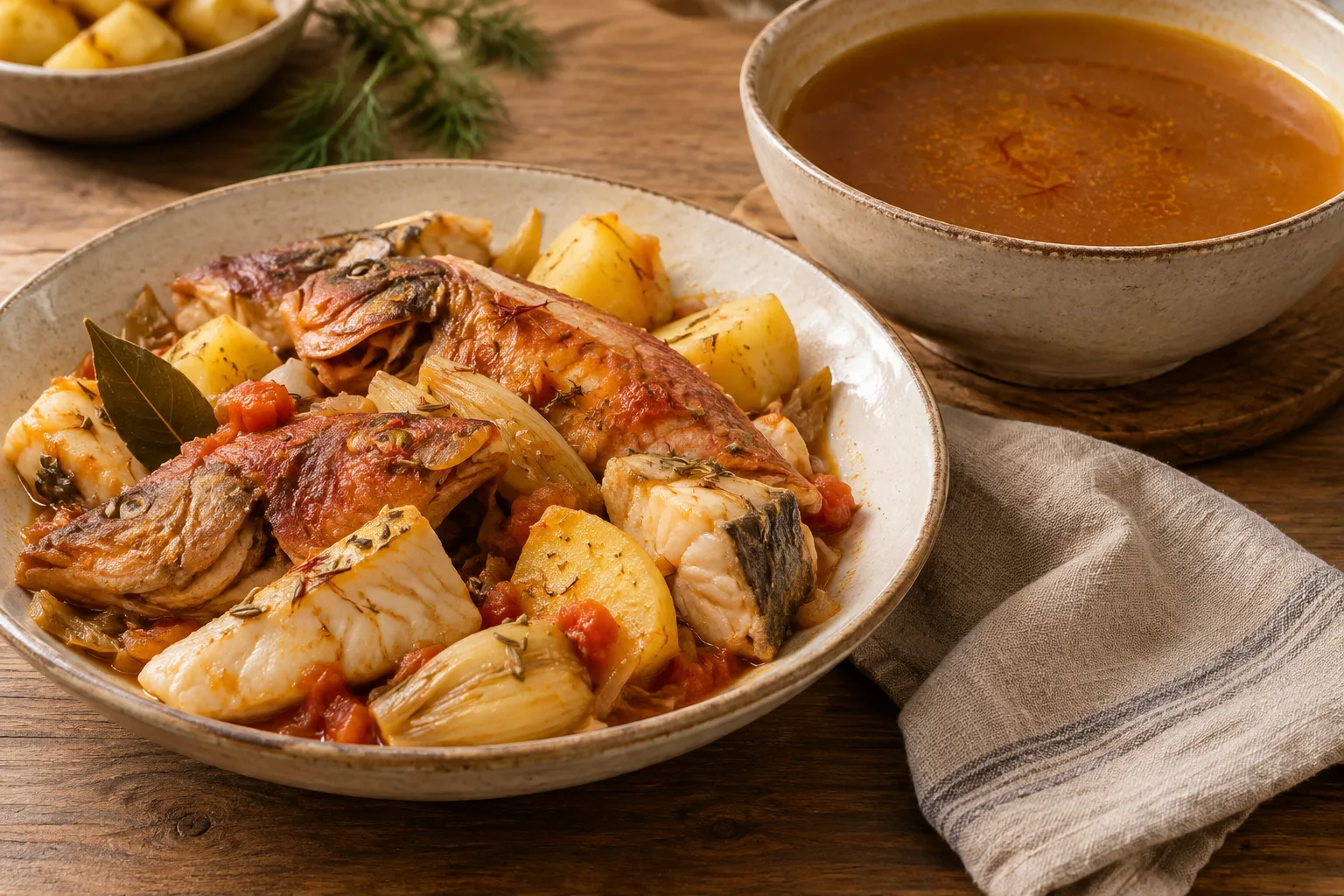
Use it when you want the cooking liquid to contribute a seafood flavor, such as in rice dishes, fideuà, risotto, soups, creamy soups, fish stews or sauces. A more intense stock can suit a dish where a pronounced flavor is wanted; for a delicate recipe, or one that already contains salty ingredients, start with a modest amount and taste as you cook. Fish stock does not provide the same flavor as vegetable stock or water.
How to use it
If you are using a prepared product, follow its directions first because concentration and ingredients vary. In a recipe, use fish stock as the cooking liquid for rice, fideuà pasta or a stew, or add it to soup or sauce. If the recipe already calls for stock, replace only part of it at first and taste before adding more; this lets you control the intensity. You can also reduce it to concentrate its flavor for a sauce. Consider the other ingredients and adjust the finished dish rather than assuming every fish stock has the same strength.
Flavour and texture
It contributes a distinctive seafood flavor, with intensity depending on the ingredients and concentration. It is usually liquid, but do not assume every product is equally clear, concentrated or salty. Check the label and taste it before adjusting your dish.
How to choose it
Read the product name and ingredient list to find out whether the stock is ready to use and what it contains. Check the directions too, including whether it needs dilution: stocks and fumets can differ in concentration and format. If you need to avoid an ingredient, use the product's declared allergen information rather than relying on its name alone.
Storage
Formats and storage conditions can vary between products. Follow the package directions before and after opening, and observe its stated use and durability information. If buying an unpackaged product, ask the seller how it should be stored. Do not assume a stock can be kept at room temperature just because another product carries that instruction.
Substitutions
Vegetable stock can replace fish stock when you do not want to use fish, but the dish will lose its seafood flavor. Water supplies liquid without the same flavor. A milder fish stock may also work; adjust the amount to the intensity you want and to the recipe directions.
Common mistakes
Do not assume that every product called fish stock or fumet has the same concentration, ingredients or directions. Replacing all the liquid in a recipe without considering the change in flavor can throw off the result. Check the label and taste first; it is easier to add more stock than to tone down an overly strong flavor.
Safety and allergens
Fish is an allergen to consider, and some formulas may include crustaceans. Check the ingredient list and allergen information on the product. Follow its storage and safe-use directions.
Culinary uses
- Base líquida para sopas y guisos de pescado o marisco
- Aporta sabor marino a arroces, fideuás, risottos y salsas
Recommended techniques
- Usar como líquido de cocción en lugar de agua o de parte del líquido indicado
- Reducir para concentrar el sabor y emplear en salsas
Pairs well with
- Arroz, fideuá y risotto de pescado o marisco
- Sopas, cremas y guisos marineros
- Salsas para pescado y marisco
Frequently asked questions
Are fish stock and fumet exactly the same?
Usage varies. Fumet is often described as a more concentrated or intense stock, but composition and flavor depend on the product. Check the label and taste it before using.
What can I cook with fish stock?
It can be used as a liquid or base for rice dishes, fideuà, risotto, soups, creamy soups, seafood stews and sauces for fish or seafood.
Can I substitute vegetable stock?
Yes, if a base without the same seafood flavor suits the dish. The result will differ; water supplies liquid but does not replace the flavor of fish stock.
Estimated nutrition
- Fat
- 0.81 g
- Saturates
- 0.2 g
- Carbohydrate
- 0 g
- Sugars
- 0 g
- Fibre
- 0 g
- Protein
- 2.26 g
- Salt
- 0.39 g
Sources and review
Automatically researched, cross-checked and validated content. Sources consulted:
- En el etiquetado alimentario hay algunas menciones que son obligatorias eletiquetadocuentamucho.aesan.gob.es
- ¿Por qué la muerte es origen de miedos y tabúes? doi.org
- Revista del comité científico de la aecosan número 24 aesan.gob.es
- ▷ Qué es el fumet de pescado y sus usos chovi.com
- ¿Qué es el Fumet de Pescado? | Freshcado freshcado.es
- Caldo de pescado (fumet): definición, tipos y usos culinarios es.alegsaonline.com
- Caldo de pescado (fumet) enciclopediadegastronomia.es
- ¿Como Hacer Fumet De Pescado? | Galicia Marisco galiciamarisco.com
- Fumet de pescado: qué es y cómo se hace - Recetas de Miriam García / El invitado de invierno invitadoinvierno.com
- Diferencia entre fumet y caldo de pescado – El Paeller elpaeller.com
- Fumet o caldo de pescado. ¿Son lo mismo? - Pilarica pilarica.es
- Fumet de pescado en conserva: Análisis y comparativa de las mejores opciones del mercado baulgastronomico.es
- Sopa - Wikipedia, la enciclopedia libre es.wikipedia.org
- Fumet de Pescado: Análisis y Comparativa de Ingredientes Esenciales para Realzar Tus Postres de Mar pasteleriamarianohernandez.es
- Cómo preparar un fumet de marisco | Marisquería Chao Pescao chaopescaoseafood.com
- Cómo Hacer Fumet de Pescado y Marisco | Paula's Apron paulasapron.com
- Mejores pescados para fumet originalpaella.es