- Category
- Vegetables
- State
- Fresh
- Usual unit
- unit
What it is
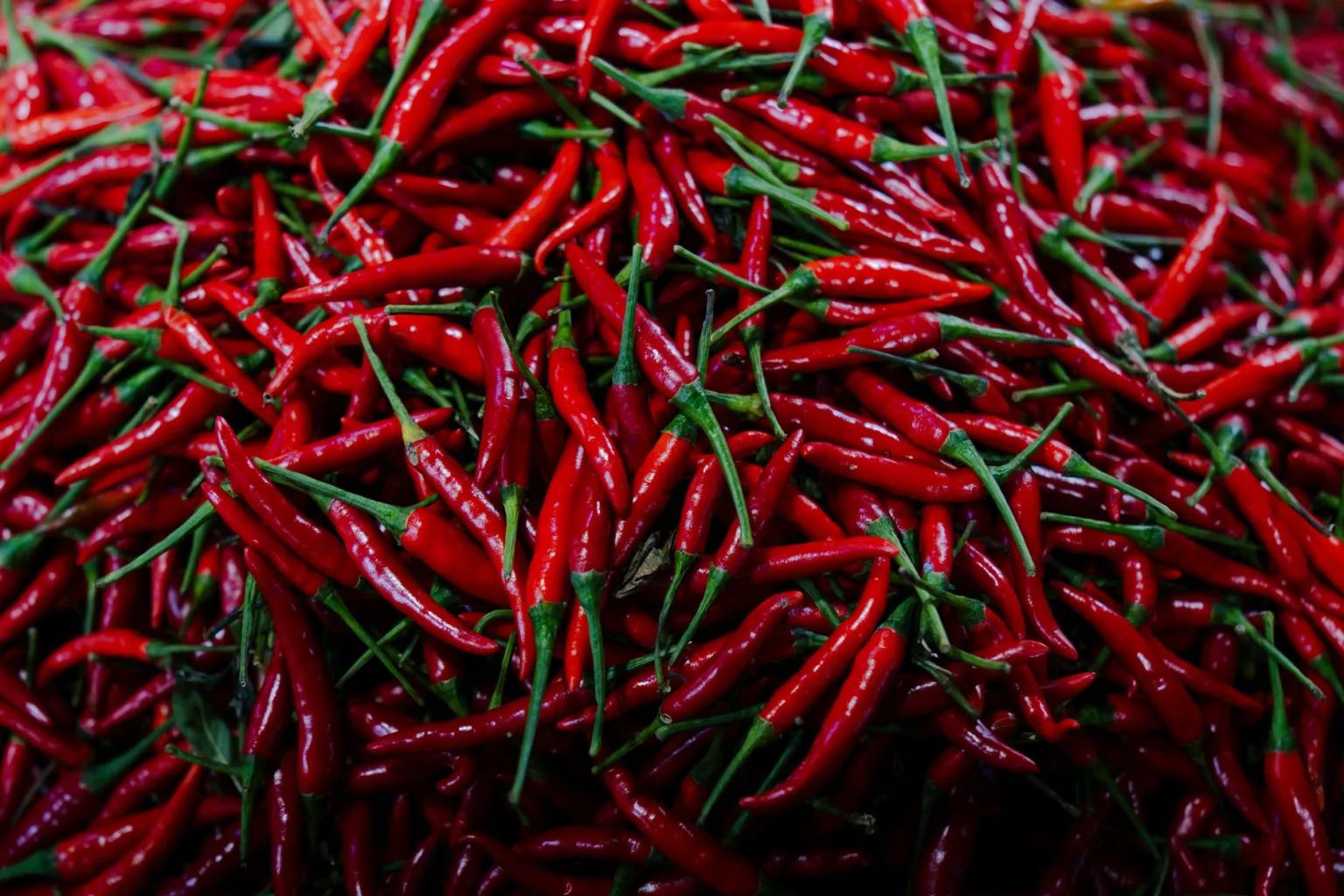
Fresh red chile is a general name for red-colored chiles sold without drying. It does not identify one particular variety: fresh chiles differ in shape, size, flavor and heat, and some varieties change color as they mature. Red color alone therefore cannot predict how hot an individual chile will be. In the kitchen, it can be used whole, chopped or cooked, depending on the recipe and the desired intensity. It should not automatically be treated as the same ingredient as dried chile: drying is a different treatment and may change the flavor profile. If the variety is not identified on the label, taste a small amount before adjusting a dish.
When to use it
Use it when you want to add heat or flavor to a sauce, a fresh preparation or a cooked dish. Chopped raw chile can go into salsa-like mixtures; roasted or blistered chile suits recipes that call for cooked chile. Because the name does not identify a variety or its heat level, start with a small amount and adjust after tasting. If you want a mild result, choose a variety known to be mild or use a sweet alternative. Another fresh chile can also stand in, but the flavor and heat may differ.
How to use it
Rinse the chile under running water and dry it before preparing it. Remove the stem and cut it into rings, dice or pieces as needed; for a sauce or fresh preparation, chop it and add it gradually. You can also roast or blister it, or cook it with the other ingredients. Whether to remove seeds or inner parts depends on the recipe and the result you want: do not assume that removing a particular part guarantees a specific heat level. Avoid touching your face or eyes while handling it; wear gloves when cutting hot chiles and wash your hands and utensils thoroughly afterward. Taste the dish before adding more.
Flavour and texture
Fresh chiles can differ considerably: some are mild while others are very hot, and varieties also differ in shape, size and flavor. Red color alone does not establish the heat level or identify a variety. In raw preparations the chile remains a fresh, distinct ingredient; roasting or cooking changes the preparation and lets it blend with the other ingredients. Add it cautiously, especially when you do not know the variety.
How to choose it
Choose fresh, firm and crisp pods with smooth skin and no soft spots, bruises, shriveling or mold. Shape, size and shade vary between varieties, so do not use red color as the only guide to heat. If the seller or label identifies the variety, use that information to anticipate its intensity more accurately; even so, taste a small amount when a recipe requires precision.
Storage
The available evidence does not establish a specific storage time or temperature for fresh red chile. Follow the package or seller’s instructions, and do not treat it as though it were dried, pickled or canned. Before use, check that the chile is still firm and free of mold or soft spots; discard pieces showing spoilage. To preserve it by freezing, canning or pickling, use a tested recipe for that method rather than improvising a preservation process.
Substitutions
Another fresh chile can replace it, but the chosen variety may change both heat and flavor. A sweet fresh pepper is an option for reducing heat, though the result will differ. Do not assume that green or dried chile is equivalent: color, variety and processing can change the profile. Add the substitute gradually and taste the dish.
Common mistakes
A common mistake is assuming that all fresh red chiles have the same heat or that color identifies the variety. It is also easy to add too much before tasting, touch your eyes while preparing it or confuse fresh chile with dried chile. Start with a small amount, handle it carefully and adjust the dish after tasting.
Safety and allergens
Rinse the chile before preparation and use clean surfaces and utensils. Hot chiles can irritate or burn hands and eyes: wear plastic gloves when handling them and do not touch your face. If you do not wear gloves, wash your hands thoroughly with soap and water before touching your face or eyes.
Culinary uses
- Aporta picor y sabor a salsas y platos cocinados.
- Se utiliza crudo, asado o cocido como condimento o ingrediente.
Recommended techniques
- Picar y añadir crudo a salsas o preparaciones frescas.
- Asar o tatemar; la piel puede retirarse después.
- Cocer o freír como parte de un plato.
Pairs well with
- Tomate, en salsas.
- Aguacate, en preparaciones como el guacamole.
- Queso y crema, en platos con chile.
Frequently asked questions
Are all fresh red chiles equally hot?
No. Fresh chile varieties differ in heat, shape, size and flavor; red color alone cannot predict how hot one will be.
Can I use it raw?
Yes. Rinse it, chop it and add it gradually to sauces or other fresh preparations. Taste the dish before adding more.
How should I handle it safely?
Wear plastic gloves if it is hot and avoid touching your face or eyes. Wash your hands thoroughly with soap and water afterward.
Estimated nutrition
- Fat
- 2 g
- Saturates
- 0 g
- Carbohydrate
- 10 g
- Sugars
- 2 g
- Fibre
- 5 g
- Protein
- 2 g
- Salt
- 1.15 g
Sources and review
Automatically researched, cross-checked and validated content. Sources consulted:
- Ingredientes para Recetas de Salsa (Spanish) - National Center for Home Food Preservation nchfp.uga.edu
- Client Challenge doi.org
- The Essential Glossary of Cooking Terms for the Culinary Arts - Escoffier escoffier.edu
- Agencia Española de Seguridad Alimentaria y Nutrición aesan.gob.es
- El chile, ingrediente esencial en la cocina de México - Formacion en Gastronomia formacionengastronomia.com
- Los chiles mejicanos y sus variedades expogourmetmagazine.com
- - YouTube youtube.com
- Storing Food for Safety and Quality ucanr.edu
- How to Preserve Chiles | USU extension.usu.edu
- Tipos de Chiles Secos Mexicanos: Características y Usos abarrotes.es
- Vamos a Conservar Alimentos: Chiles/Pimientos extension.psu.edu
- Assessing Food Access in Oregon's Willamette Valley pdxscholar.library.pdx.edu
- ALBARICOQUE mapa.gob.es
- cooking – The Western Howl wou.edu
- Chile jalapeño Km 0 de Lleida fresco, picante y cultivado en huerto propio - Km0 km0andanifruits.com