- Category
- Vegetables
- State
- Fresh
- Usual unit
- g
What it is
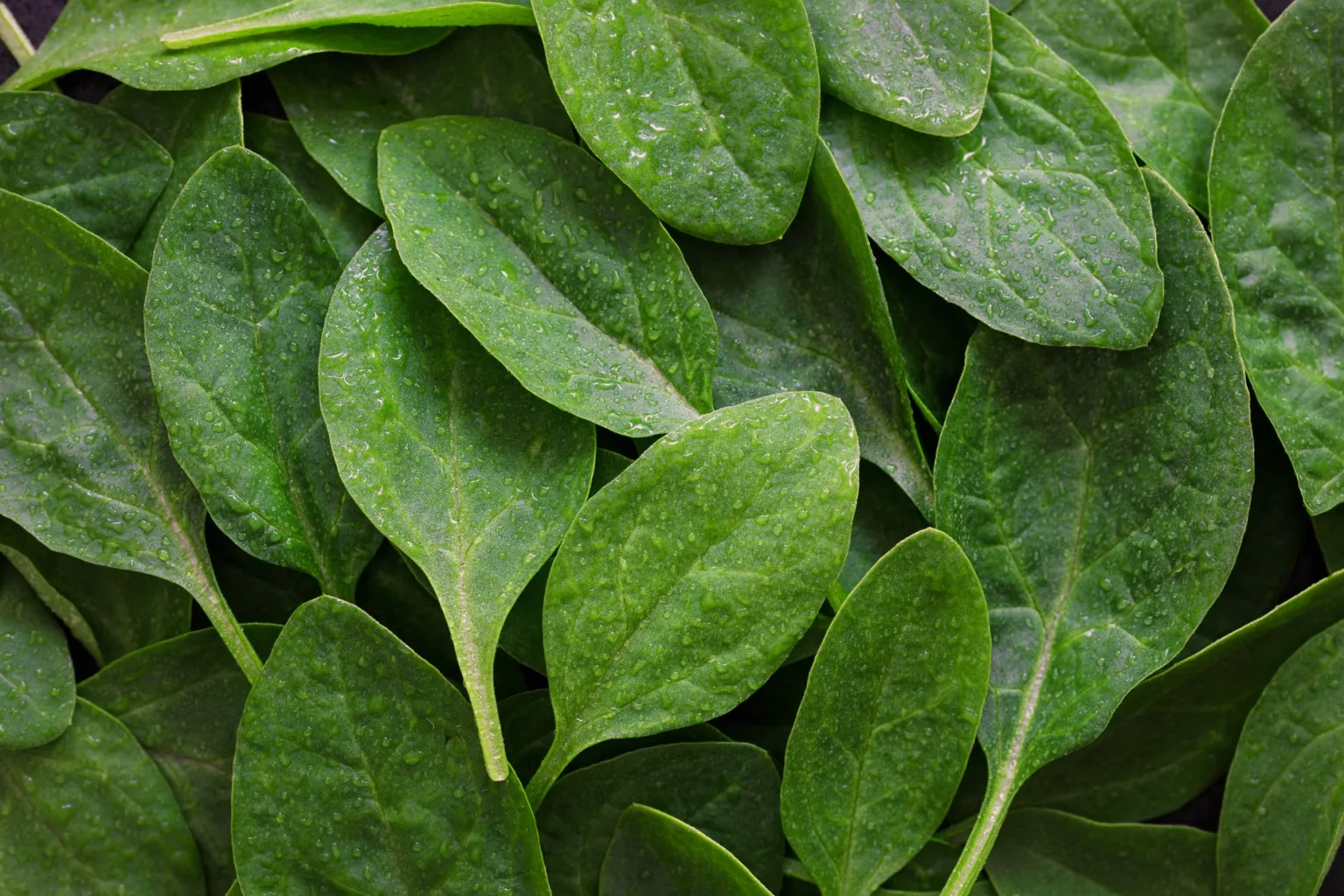
Spinach is a leafy vegetable whose green leaves are eaten raw or cooked. It belongs to the Amaranthaceae family and is sold with smooth or crinkled leaves in a range of sizes and textures. Young leaves, often sold as baby spinach, are generally more tender and less fibrous than mature leaves; they are not a different plant, but leaves harvested earlier. In the kitchen, fresh spinach can add color, leafy flavor, and texture to many kinds of dishes. [4059, 4060, 4070, 4072]
When to use it
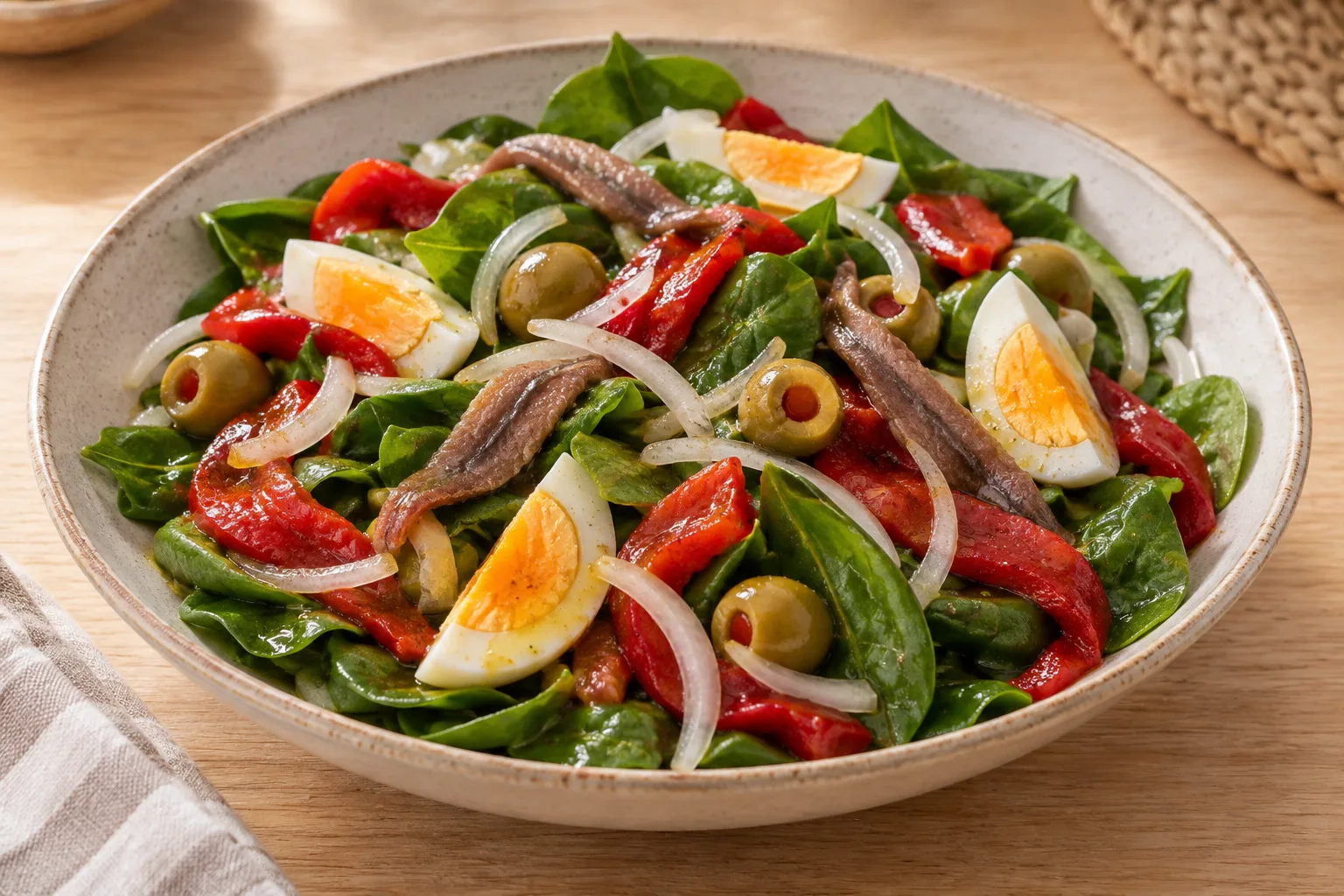
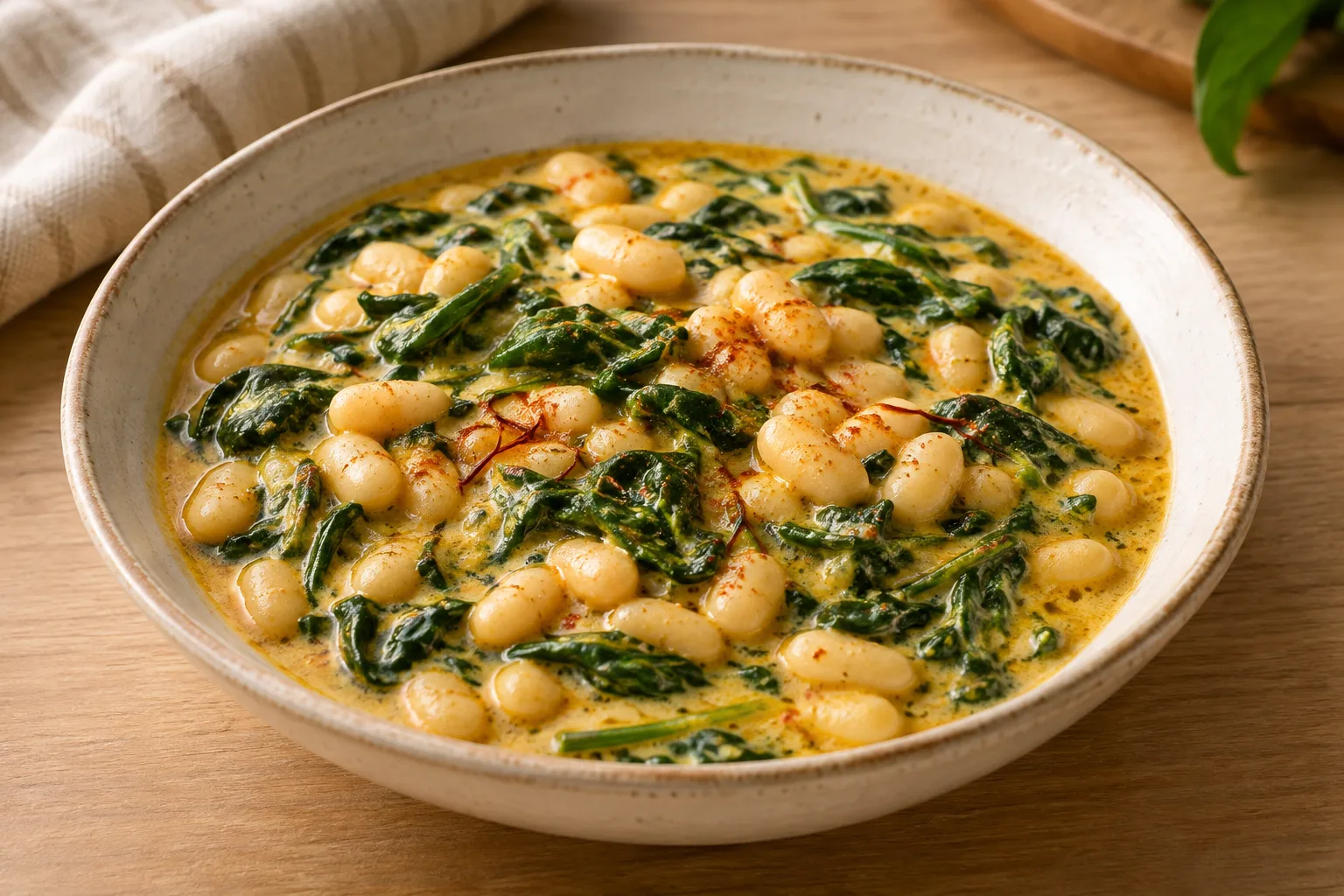
Use fresh spinach raw when you want a tender leaf for salads, or add young leaves to a smoothie. Mature leaves are a practical choice for cooked dishes such as soups, stews, omelets, creamed spinach, and fillings. Choose fresh spinach when you want to retain some texture; its volume shrinks considerably as it cooks, so plan the amount accordingly. Sources describe better availability or quality during the cooler months, although spinach can also be found at other times of year. [4059, 4060, 4063, 4072]
How to use it
Remove damaged leaves and any stems that seem too tough for the dish. Wash the leaves thoroughly to remove soil and drain them; repeat if grit remains. For salads, use young leaves or mix mature leaves with more tender greens. For cooked dishes, try a brief sauté or add spinach to soup, stew, an omelet, a cream soup, or a filling. Steaming is another option. Add it at an appropriate stage so it does not cook longer than needed: short cooking helps preserve texture and flavor. [4061, 4059, 4060, 4072, 4759]
Flavour and texture
Fresh spinach tastes leafy and herbaceous, and can be mild; mature leaves may be more bitter than young shoots. Baby leaves are usually more tender, slightly sweeter, and less fibrous. Mature leaves have more bite and may have firmer stems. Raw spinach has a fresh texture; cooking softens the leaves and reduces their volume considerably. [4059, 4060, 4072]
How to choose it
Choose green leaves with a fairly even color and a fresh, crisp appearance. Avoid leaves that are yellowing, wilted, damaged, or spotted. If you plan to cook the spinach only briefly, choose a bunch without excessively thick stems, which may remain tough; stem texture matters less in soups, fillings, or blended dishes. Pick young leaves for tender salads and mature leaves for cooked dishes. [4060, 4063, 4072]
Storage
Fresh spinach is perishable. Keep it refrigerated and avoid washing it before storage if you will not use it right away, since moisture can hasten deterioration. Protect the leaves in a bag or food wrap and check their condition before use. Sources differ on how long spinach keeps, so it is prudent to use it soon and judge by the leaves themselves. Some sources describe blanching, draining, and freezing as a longer-term option; once frozen, spinach is better suited to cooked dishes than fresh salads. [4059, 4060, 4063, 5719, 5720]
Substitutions
Tender chard leaves can play a similar role in cooked dishes, although their texture and flavor are not identical. Komatsuna is also used in salads and stir-fries and can stand in when a similar leafy vegetable is wanted. Red spinach is described as a substitute for ordinary spinach. Adjust the cut and cooking to suit the replacement leaves’ thickness and firmness. [4060, 5721, 5723]
Common mistakes
Do not cook spinach longer than necessary if you want it to retain some bite: it softens and loses much of its volume. Do not assume that large leaves and baby leaves have the same texture; mature leaves may be more fibrous. Also avoid storing wet leaves longer than necessary or treating wilted, deteriorated leaves as fresh. [4059, 4060, 4072, 5719]
Safety and allergens
Wash the leaves thoroughly before eating to remove soil. AESAN notes potential effects of nitrates in leafy vegetables, including spinach, for infants and young children; follow current official guidance for these age groups. [4061, 4756]
Culinary uses
- hoja para ensaladas y otros platos crudos
- verdura para sopas, guisos, rellenos y tortillas
- guarnición o ingrediente de cremas y platos horneados
Recommended techniques
- consumir cruda
- saltear brevemente
- cocinar al vapor
- escaldar o incorporar a sopas y guisos
Pairs well with
- ajo y cebolla
- pasas y piñones
- setas y jamón
- pescados y mariscos
- coliflor y almendra
Frequently asked questions
Can fresh spinach leaves be eaten raw?
Yes. Spinach is eaten raw in salads and other preparations; wash the leaves well first. Young leaves are usually more tender for this use. [4060, 4061, 4072]
What is the difference between baby and mature spinach?
Baby spinach is harvested earlier, and its leaves are usually more tender, slightly sweeter, and less fibrous. Mature leaves have more bite and often work particularly well in cooked dishes. [4060, 4072]
Why does spinach shrink so much when cooked?
Fresh leaves lose volume as they cook; one source describes a reduction of about three quarters. Keep this in mind when estimating how much to use. [4060]
Can I freeze fresh spinach?
Sources describe freezing as an option, often after blanching and draining the leaves. The resulting texture is better suited to soups, stews, or sauces than to a fresh salad. [4059, 4063, 4072]
Estimated nutrition
- Fat
- 0 g
- Saturates
- 0 g
- Carbohydrate
- 3.53 g
- Sugars
- 0 g
- Fibre
- 2.4 g
- Protein
- 2.35 g
- Salt
- 0.19 g
Sources and review
Automatically researched, cross-checked and validated content. Sources consulted:
- 4 formas de cocinar espinaca fresca - wikiHow es.wikihow.com
- ¿Por qué la muerte es origen de miedos y tabúes? doi.org
- Espinacas: beneficios y cómo usarla en la cocina - Cocina y Come cocinaycome.com
- Espinaca joseanalija.com
- Escuela de Cocina: LAS ESPINACAS tuprofedecocina.blogspot.com
- Espinaca | HerbaZest herbazest.com
- Espinaca | Introducción | Verduras y hortalizas | EROSKI CONSUMER verduras.consumer.es
- Las mejores recetas para cocinar con espinacas: fáciles, caseras y rápidas directoalpaladar.com
- Recetas Cómo cocinar espinacas: seis maneras de disfrutar con una verdura maltratada: Cómo cocinar espinacas: seis maneras de disfrutar con una verdura maltratada | El Comidista | Gastronomía | EL PAÍS elpais.com
- Aesan - Agencia Española de Seguridad Alimentaria y Nutrición aesan.gob.es
- Cómo cocer espinacas frescas o congeladas - PequeRecetas pequerecetas.com
- hojas frescas de espinaca - Ingrediente - Guías de Cocina guiasdecocina.com
- Espinacas (bolsa) - Delahuertacasa delahuertacasa.com
- Espinaca - Información general frutas-hortalizas.com
- Espinaca - EcuRed ecured.cu
- Pesto - Wikipedia, la enciclopedia libre es.wikipedia.org
- Cómo cocinar espinacas y acelgas: trucos y recetas que transformarán tus platos esta temporada huleymantel.com