- Category
- Vegetables
- State
- Frozen
- Usual unit
- g
What it is
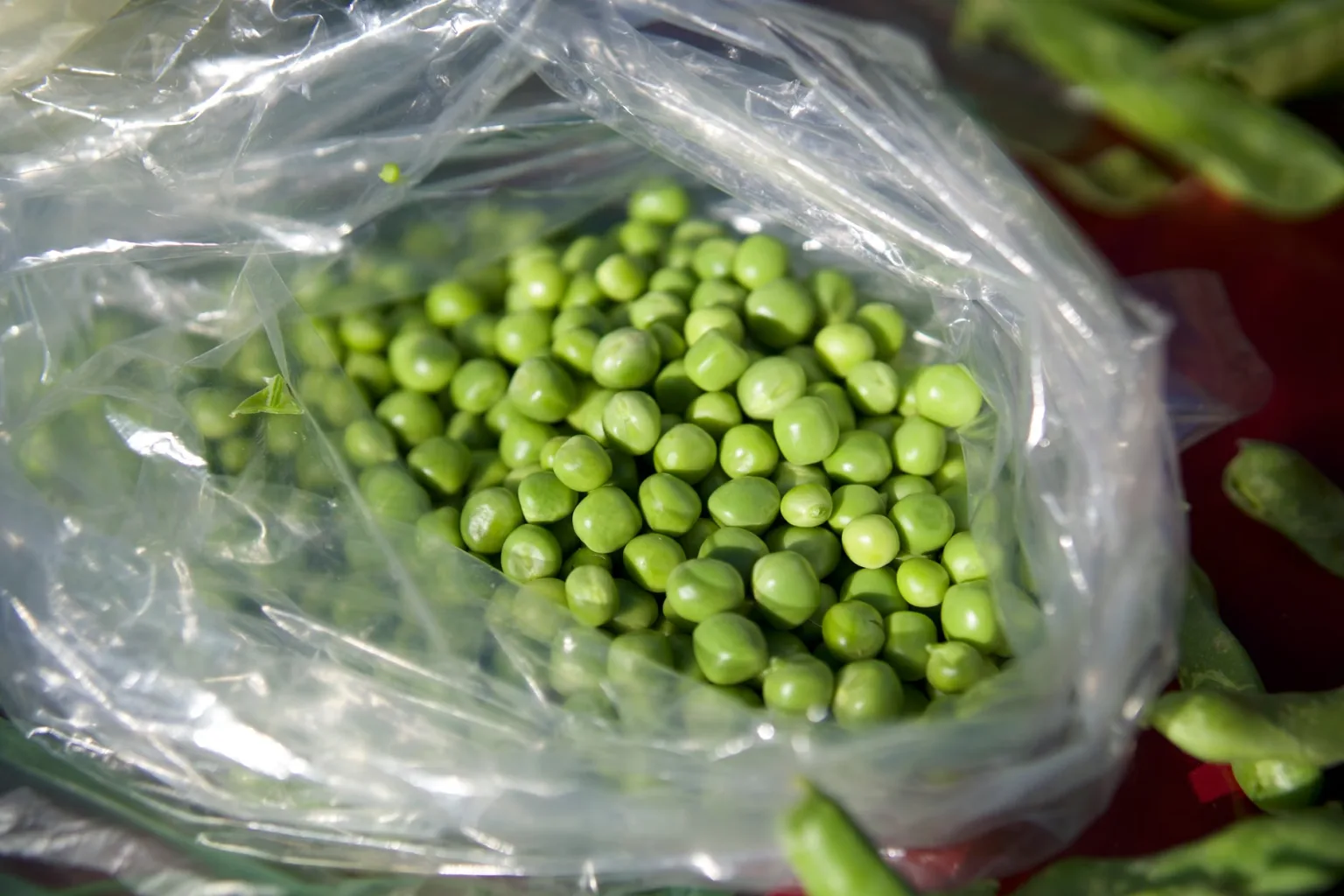
Frozen peas are the tender green seeds of the pea plant, removed from their pods and preserved by freezing. Botanically they are legumes, although in everyday cooking they are often treated as a vegetable. Frozen peas are usually briefly blanched before freezing, but processing can vary by product. They are generally ready to add to a dish without shelling or thawing first; check the package instructions for the specific product.
When to use it
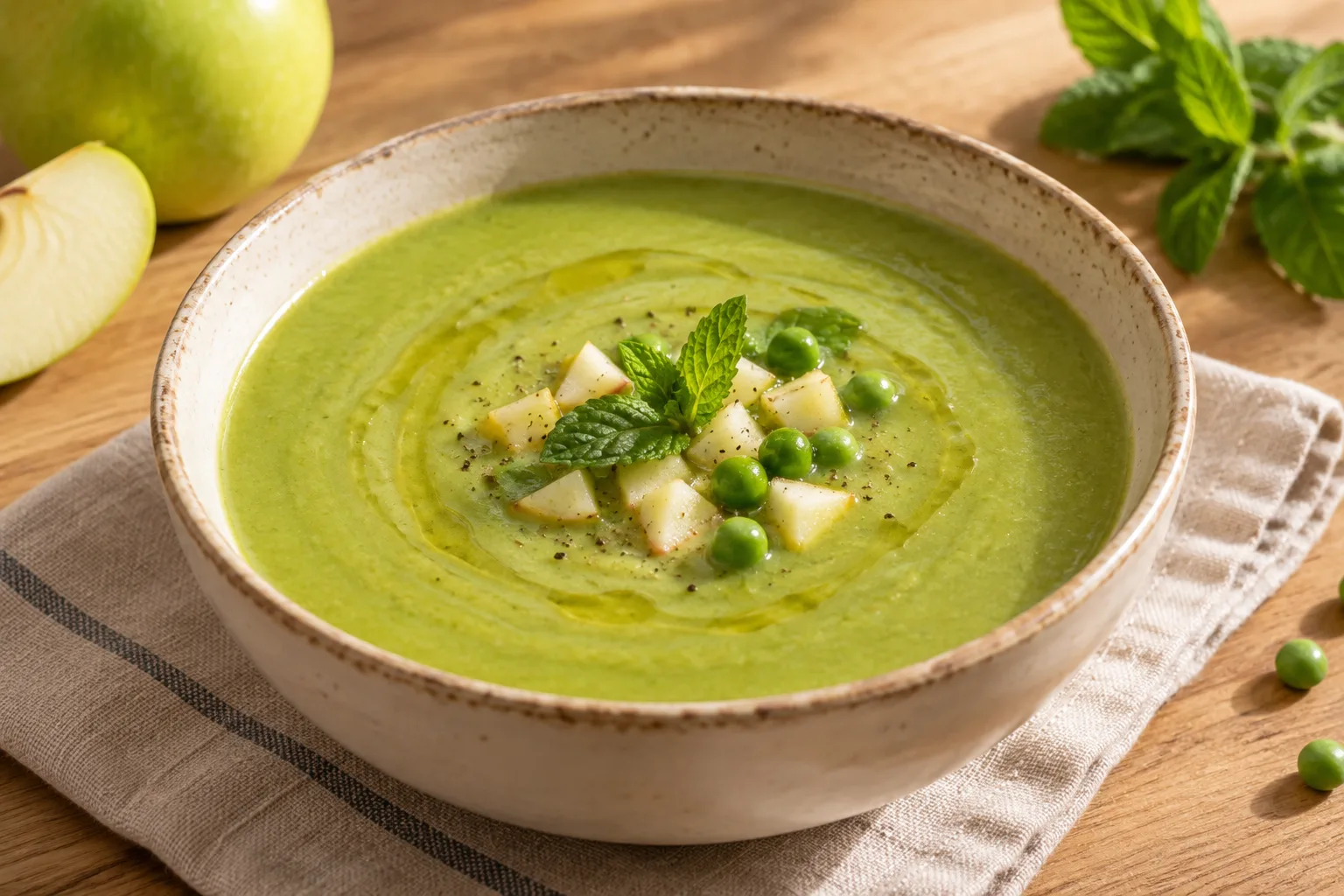
Use frozen peas when you want to add colour and a tender texture without shelling fresh peas. They work in soups, purées, rice dishes, pasta, stir-fries and as a side. The frozen format makes them convenient to have available throughout the year. Add them to hot dishes according to the package directions, and avoid cooking them longer than needed if you want them to keep their shape.
How to use it
For many dishes, you can add peas straight from the freezer without thawing. Cook them in water, steam them, or heat them in a pan; they can also be warmed in a covered, microwave-safe container. Cooking directions and timing depend on the product and method, so follow the package instructions and check the texture before serving. Add peas to soups, purées, rice dishes or stir-fries, or serve them as a side. For a purée, blend them after cooking; in a stir-fry, add them with the other ingredients so they heat evenly.
Flavour and texture
Frozen peas have a mild, slightly sweet, vegetal flavour and a tender texture when cooked without overdoing it. The result can vary with the variety, processing and cooking method. Freezing does not preserve the same crisp texture as a fresh vegetable, so peas are often at their best in cooked dishes such as stews, soups, rice dishes and stir-fries.
How to choose it
Choose a well-sealed package with no visible damage, and check the product information and storage instructions. If you can see the contents, a heavy accumulation of ice crystals may indicate that the product has not been stored well or that its quality may have suffered. Check the ingredient information too if you want plain peas without added ingredients.
Storage
Keep peas in the freezer and follow the storage instructions on the package. After taking out the amount you need, reseal the bag securely or transfer the remainder to a freezer-safe container, limiting exposure to air. If you thaw them, use an appropriate safe method and prepare or use the product in line with its package directions; freezing does not destroy all bacteria that may be present.
Substitutions
You can substitute shelled fresh peas or drained canned peas. Adjust the preparation: fresh peas need their own cooking, while canned peas are already cooked and may have a different texture. Add canned peas near the end so they warm through without breaking apart. Check whether the recipe expects its peas to be added frozen, fresh or already cooked.
Common mistakes
Do not assume every frozen product has identical processing or cooking directions. Avoid thawing more than you plan to use, and do not cook the peas for longer than needed without checking their texture: they can lose their shape and become soft. Leaving the package open in storage can also expose the peas to air and reduce quality.
Safety and allergens
Freezing temporarily stops microbial growth, but it does not necessarily eliminate harmful bacteria. Follow the package instructions, use suitable thawing methods and prevent cross-contamination during handling. Check the label for the ingredients, allergens and storage conditions of the specific product.
Culinary uses
- Guarnición de verduras
- Ingrediente para sopas, cremas y purés
- Componente de arroces, pastas y salteados
Recommended techniques
- Cocer directamente desde congelados
- Cocinar al vapor
- Saltear o rehogar desde congelados
- Calentar en microondas en un recipiente tapado
Pairs well with
- Zanahoria, maíz y pimiento rojo
- Espinacas y acelgas
- Cilantro y jengibre
- Arroz, jamón, huevo o pescado
Frequently asked questions
Do I need to thaw frozen peas before cooking?
They can often be added straight from frozen. Check the package, as the recommended method can vary by product.
Are frozen peas always blanched?
Do not assume that every product is processed in the same way. Frozen peas are usually blanched before freezing, but check the package for the processing and instructions for the product you have.
What ingredients pair well with frozen peas?
They pair well with carrots, corn, red pepper, spinach or chard. They can also be used in dishes with rice, pasta, egg, fish or ham.
Sources and review
Automatically researched, cross-checked and validated content. Sources consulted:
- En el etiquetado alimentario hay algunas menciones que son obligatorias eletiquetadocuentamucho.aesan.gob.es
- Guisantes: propiedades, beneficios y usos en la cocina cuerpomente.com
- Guisante de vaina comestible | Postharvest Research and Extension Center postharvest.ucdavis.edu
- Guisantes - Spend Smart Eat Smart spendsmart.extension.iastate.edu
- Client Challenge doi.org
- Guisantes: propiedades y usos en la cocina - Cocina y Come cocinaycome.com
- NC conservas vegetales mapa.gob.es
- Desmontando mitos sobre la (des)congelación de los alimentos | UOC uoc.edu
- Conservación de alimentos en casa: Congelación | Extensión UMN es.extension.umn.edu
- Cocina Y Cultura Research Papers - Academia.edu academia.edu
- Uso de frutas y vegetales enlatados y congelados – Food Smart Colorado foodsmartcolorado.colostate.edu
- ESTUDIO DE UN PRODUCTO ALIMENTARIO DE V GAMA ... upcommons.upc.edu
- Guisantes, verdes, congelados, sin tratar (orgánicos) | Fundación G+E diet-health.info
- Asociación Española de Verduras Congeladas hoyverdurascongeladas.com
- Los guisantes secos | EROSKI eroski.es
- Cómo cocinar guisantes congelados - Recetas, tiempos de cocción y consejos recetas.elperiodico.com
- Los guisantes secos | Consumer consumer.es