- Category
- Grains, flour and pasta
- State
- Dry
- Usual unit
- cup
What it is
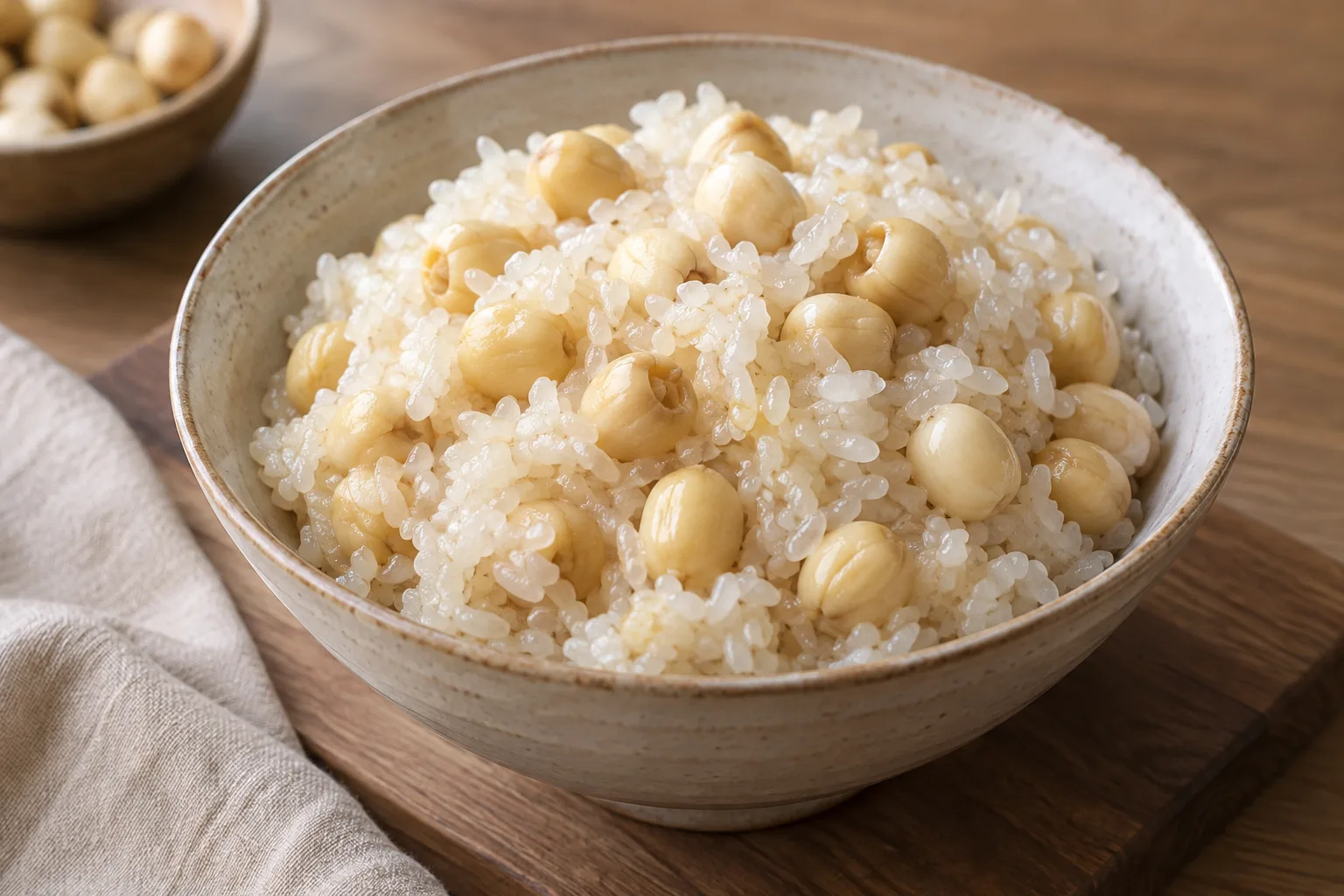
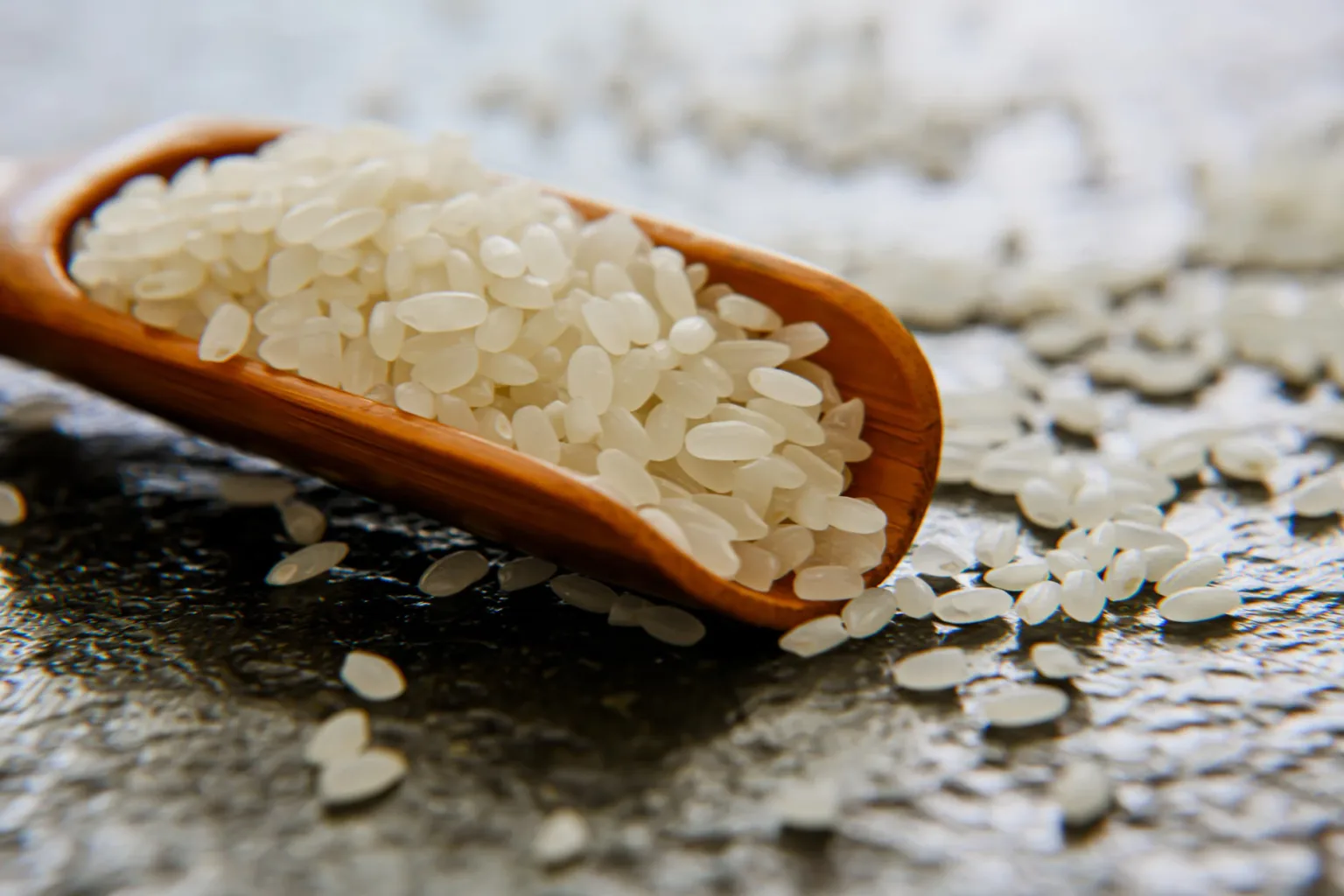
Glutinous rice is a variety of cultivated rice known for becoming especially adhesive when cooked. The name describes this sticky quality; it does not mean the rice contains gluten. Its cooking behavior is associated with starch that is high in amylopectin and very low or nearly absent in amylose. It is sold as a dry grain, and varieties may be white, black, or purple. It should not be confused with other rice that also becomes somewhat sticky: glutinous rice is particularly cohesive and is not the best choice when separate, loose grains are the goal.
When to use it
Choose glutinous rice when a recipe needs grains that hold together, can be shaped, or can form a compact mass after cooking. It works as an accompaniment to curries and sauces and in traditional savory or sweet dishes, including rice bites, cakes, and desserts. The grain can also be milled for recipes that call for glutinous rice flour. Avoid it when the main aim is a side of separate grains: its defining quality is stickiness, not fluffiness.
How to use it
For steaming, cover the dry rice with water and soak it for several hours; some recipes specify a minimum of about eight hours, but practice varies with the rice and method. Drain it afterward and rinse as directed by the recipe. Put the hydrated rice in a basket or steamer, cover it, and steam until tender; sources describe roughly half an hour for some methods, not a universal cooking time. Check the texture and follow the package or the specific recipe. Alternative methods exist, but they may not give the same result. Once cooked, serve it as an accompaniment or use it in sweet and savory dishes. For mochi or other dough-like preparations, use a recipe developed for glutinous rice or its flour.
Flavour and texture
Texture is the defining feature: cooked grains adhere to one another and can form a compact, shapeable mass. The flavor is mild, allowing sauces and seasonings to stand out. Some sources describe particular varieties as aromatic, but not every product should be assumed to have the same aroma; color and degree of milling can also vary.
How to choose it
Look for the package terms glutinous rice, sticky rice, or their local equivalent. Do not mistake it for sushi rice: both may have some cohesion, but they are not the same product and do not guarantee the same texture. The grain is sold dry and may be white, black, or purple. Check that the package clearly identifies the product and intended preparation; glutinous rice flour is a different format from whole grains.
Storage
The available evidence identifies this ingredient as a dry grain but does not establish a universal storage period or specific storage conditions. Follow the manufacturer’s label and keep the package closed and protected from moisture and contamination. Any more specific package directions take priority over this general advice. Do not apply storage guidance for cooked rice to the dry grain.
Substitutions
Sushi rice can be an imperfect alternative when some cohesion is what matters, but it will not exactly reproduce glutinous rice’s texture. Ordinary short-grain rice may also work in dishes where less stickiness is acceptable. Neither option should be treated as an equivalent replacement in recipes that depend on a very sticky mass or a specific glutinous rice flour.
Common mistakes
A common mistake is expecting separate grains and treating stickiness as a failure; it is a characteristic of this rice. Do not assume all sticky rice varieties are interchangeable or apply a standard-rice recipe without checking it. Soaking and cooking methods vary, so use the package or a recipe written for glutinous rice and check for tenderness rather than treating a published time as a universal rule.
Safety and allergens
The evidence reviewed does not provide a specific safety warning for this ingredient. Follow the package instructions and local official food-handling guidance; do not use a product that shows signs of spoilage or comes in damaged packaging.
Culinary uses
- Acompañamiento cohesivo para platos con salsa
- Ingrediente para preparaciones dulces y saladas
Recommended techniques
- Remojar y cocinar al vapor
- Moler para obtener harina de arroz glutinoso
Pairs well with
- Curris y salsas especiadas
- Leche de coco y mango
- Pollo y otros platos de carne
Frequently asked questions
Does glutinous rice contain gluten?
The name refers to the sticky texture of the cooked rice; it does not mean that the rice contains gluten. If you need to avoid gluten, also check the product label for cross-contact information or added ingredients.
Is it the same as sushi rice?
No. Both can be cohesive, but glutinous rice is especially adhesive and is not an identical substitute for sushi rice.
How is it usually cooked?
A traditional method is to soak the rice and then steam it. Timing depends on the grain and method, so follow a recipe for glutinous rice and check that it is tender.
Estimated nutrition
- Fat
- 0 g
- Saturates
- 0 g
- Carbohydrate
- 84 g
- Sugars
- 0 g
- Fibre
- 0 g
- Protein
- 6 g
- Salt
- 0 g
Sources and review
Automatically researched, cross-checked and validated content. Sources consulted:
- Client Challenge doi.org
- Desarrollo de un pan de masa madre rico en GABA y ... diposit.ub.edu
- Vamos a Conservar Alimentos: La Congelación de Frutas extension.psu.edu
- Cómo cocer el arroz glutinoso o pegajoso tailandés - Pepekitchen pepekitchen.com
- Arroz glutinoso: ¿qué es, cómo se hace y en qué recetas usarlo? directoalpaladar.com
- El arroz glutinoso integral – Casa Perris casaperris.com
- Arroz glutinoso: características, preparación y receta - Mejor con Salud mejorconsalud.as.com
- Arroz glutinoso - Wikipedia, la enciclopedia libre es.wikipedia.org
- Arroz glutinoso(Grano descascarado de la planta de arroz (arroz glutinoso (Oryza sativa var. glutinosa)), perteneciente a la familia de las gramíneas (Poaceae).)_Baidu Enciclopedia baike.baidu.com
- Antes de ir a YouTube youtube.com
- Arroz glutinoso – el arroz de Laos | Umami Madrid umami-madrid.com
- ¿Qué es el arroz glutinoso y por qué se llama así? hogarmania.com
- Amilosa y amilopectina: la clave de la textura del arroz margavilan.substack.com
- Arroz pegajoso o glutinoso (sticky rice) - Pizca de Sabor pizcadesabor.com