- Category
- Drinks
- State
- Fresh
- Usual unit
- l
What it is
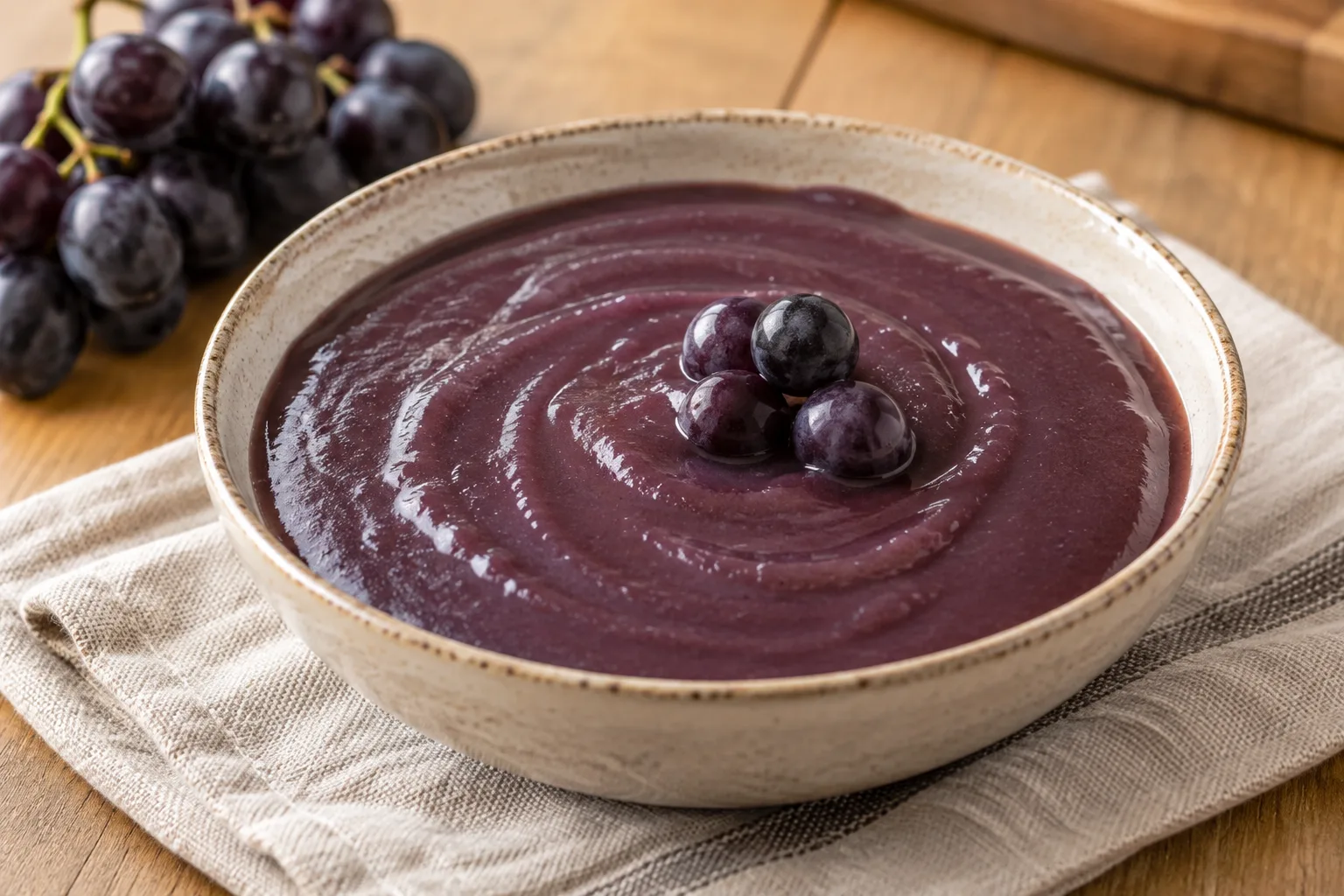
Grape must is the liquid obtained by pressing grapes before fermentation. It is not the same as wine: wine is made when must ferments, so the names should not be treated as interchangeable. Must can be consumed as a drink and used in cooking or desserts. The available evidence also describes concentrated grape must as an ingredient for foods and beverages. Because it is a concentrated form, do not assume it can be used in the same quantity as liquid must. Products may vary in appearance and profile, so check the label and the wording of the recipe before choosing one.
When to use it
Use grape must when a recipe or drink specifically calls for grape liquid obtained before fermentation. It can be served as a drink or used in cooking and desserts. If a recipe calls for concentrated grape must, do not assume liquid must will produce the same result: check the requested form and adapt the recipe only when its instructions allow it. Do not automatically replace must with wine, which is made from fermented must and is therefore a different ingredient.
How to use it
Serve grape must as a drink or use it as an ingredient in cooking and desserts, uses identified in the available evidence. Read the label to see whether the product is liquid or concentrated must, since these are different forms. Follow the quantities and sequence given in the recipe; the evidence does not establish a general conversion between these forms or between must and grape juice. If a recipe calls for must before fermentation, do not treat wine as the same ingredient: wine is produced by fermenting must. Avoid assuming that all grape-based drinks are identical.
Flavour and texture
The available description characterizes grape must as sweet and aromatic, with a profile that reflects the grapes. A single flavor or texture cannot be specified for every product: grapes and commercial forms can vary, and the evidence also distinguishes concentrated must. Check the label and taste a small amount before adjusting a recipe.
How to choose it
Check that the product is clearly labelled grape must and note whether it is liquid or concentrated. Do not assume that must, wine and grape juice are interchangeable names: at least their production processes differ. If you are buying it for a recipe, compare the requested form with the package label, and do not infer that ingredients are present or absent without checking the label.
Storage
The available evidence does not establish storage times, temperatures or conditions for grape must. Follow the specific instructions on the package and do not apply guidance for one product to another, especially when one is concentrated. Without the label or manufacturer’s directions, a reliable shelf life or storage method cannot be recommended here.
Substitutions
Grape juice is a related alternative, but the sources distinguish juice from must by how they are made; they do not support a universal substitution or quantity conversion. Concentrated grape must is also grape-based, but its concentration may change the result. Use it only when the recipe allows an adjustment of form, and do not replace must with wine as though they were identical.
Common mistakes
A common mistake is confusing must with wine: wine is made by fermenting must. Also avoid treating grape must, grape juice and concentrated grape must as identical products or as universally interchangeable in recipes. Check the product name and form, and do not invent substitution quantities when the recipe does not provide them.
Safety and allergens
Follow the package directions and do not consume the product if its label says it is unsuitable for that use. The available evidence provides no specific safety warning or verifiable storage guidance for this ingredient.
Culinary uses
- Bebida de uva
- Ingrediente para cocinar y preparar postres
Recommended techniques
- Prensado de uvas para obtener el mosto
- Fermentación del mosto para elaborar vino
Pairs well with
- Postres
- Bebidas y preparaciones culinarias
Frequently asked questions
What is grape must?
It is the liquid obtained by pressing grapes before fermentation.
Is grape must the same as wine?
No. Wine is produced when grape must ferments.
How can grape must be used?
It can be served as a drink or used in cooking and desserts. Check whether the recipe calls for liquid or concentrated must.
Estimated nutrition
- Fat
- 0 g
- Saturates
- 0 g
- Carbohydrate
- 80 g
- Sugars
- 80 g
- Fibre
- 0 g
- Protein
- 0 g
- Salt
- 0 g
Sources and review
Automatically researched, cross-checked and validated content. Sources consulted:
- REGLAMENTO (UE) No 1169/2011 DEL PARLAMENTO ... eletiquetadocuentamucho.aesan.gob.es
- La uva de Rioja ante el cambio climático: ¿qué variedades se adaptan mejor? doi.org
- informe anual de indicadores - agricultura, pesca y alimentación servicio.mapa.gob.es
- Sistema APPCC en la industria de zumos de frutas aesan.gob.es
- VINOS BLANCOS: EXTRACCION DEL MOSTO. ... upcommons.upc.edu
- Reestructuración vitivinícola y activación del SIAL vinos ... ageconsearch.umn.edu
- Comida y bebida en el Libro de buen amor digitalcommons.providence.edu
- caracterización de vinos de piña (variedada española roja) scholar.uprm.edu
- Tesis.pdf repositorio.ucam.edu
- 27,28 y 29 de Noviembre engineering.purdue.edu
- Del viñedo a la innovación: aplicaciones del mosto de uva en alimentos y bebidas - Fabricante de mosto de uva y zumo de uva concentrado: Julian Soler juliansoler.com
- Diferencias entre Mosto, Vino y Zumo de uva - Durán Galán durangalan.com