- Category
- Vegetables
- State
- Fresh
- Usual unit
- unit
What it is
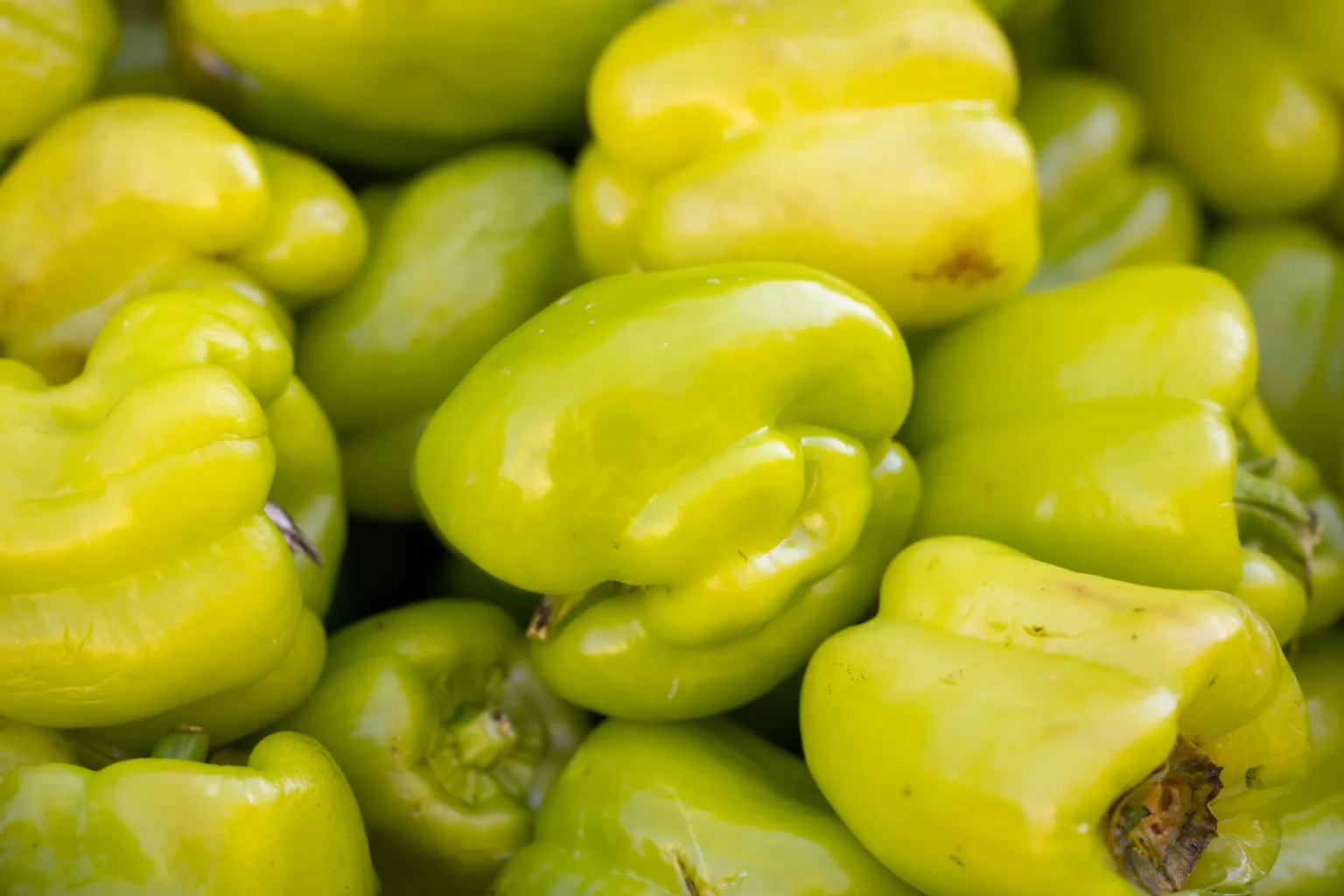
Green bell pepper is the fresh fruit of a Capsicum plant and is used as a vegetable in cooking. Green commonly indicates a less mature stage than red, although shape, size, and flavor depend on the variety. In general, green peppers taste more vegetal and less sweet than red ones. Bell pepper should not be confused with black pepper; they are different ingredients. This profile concerns sweet green bell pepper, not every kind of green chile, since heat and culinary use can vary among pepper types.
When to use it
Use it when you want a vegetal note and crisp texture in salads or fresh preparations. It is also useful in sofritos, sauces, and cooked vegetable dishes, where it can contribute flavor and moisture. Choose the shape to suit the recipe: small pieces blend into bases and sauces, while larger pieces keep the pepper more prominent. If you want a distinctly sweet result, bear in mind that green bell pepper is usually less sweet than red.
How to use it
Remove the stem and seeds, then cut the pepper to suit the dish: strips or dice for salads, and smaller pieces when folding it into a sofrito or sauce. Serve it raw for a fresh, crisp character, or cook it by roasting, frying, or sautéing. Roasting tends to make the flesh sweeter and softer, while frying changes its aroma and adds the flavor of the cooking fat. Match the cut and method to the pepper’s role in the dish; do not assume every green variety will produce the same texture or result.
Flavour and texture
Green bell pepper usually tastes more vegetal and less sweet than red pepper. Raw, it is fresh and crisp; cooking softens it and changes its aroma according to the method. Roasting tends to bring out sweetness and create a softer, more yielding texture. The exact flavor and texture also depend on the variety, so green peppers do not all behave alike.
How to choose it
Choose peppers that feel firm and look sound; avoid ones that are soft or deteriorated. Shape and thickness vary by variety, so consider the intended use: a fleshy pepper may suit larger pieces, while an elongated one may be better for thin cuts. Green color alone does not mean every pepper has the same flavor or heat.
Storage
Keep the pepper fresh and uncooked until you are ready to use it, and check its condition before preparation. The available evidence does not establish a specific storage period or conditions for this ingredient, so a precise shelf life should not be assumed. If it is soft or deteriorated, do not choose it for a preparation that depends on a firm pepper.
Substitutions
Red bell pepper can replace green in many dishes, but it is usually sweeter and changes the dish’s color. Sweet Italian green pepper can also work when its elongated shape and thinner flesh suit the recipe. Neither is an exact substitute: size, fleshiness, and variety affect cutting, cooking, and final texture.
Common mistakes
Do not assume every green pepper is sweet, equally crisp, or interchangeable with every other variety. Nor should you replace fresh pepper with paprika: paprika is a seasoning made from dried, ground peppers, not a fresh vegetable. Remember that roasting, frying, and serving raw produce different flavors and textures.
Safety and allergens
Choose firm, sound peppers. For home canning, follow a tested preservation recipe specifically for peppers; do not improvise the process.
Culinary uses
- Fresh, crisp ingredient for salads and raw preparations
- Vegetable base for sofritos, sauces, and cooked dishes
Recommended techniques
- Eat raw, sliced or diced
- Roast, fry, or sauté, adjusting the cut and cooking to the recipe
Pairs well with
- Salads and fresh vegetable preparations
- Sofritos, sauces, and roasted or fried vegetable dishes
Frequently asked questions
Is green bell pepper less sweet than red?
Generally, yes. Green bell pepper usually has a more vegetal and less sweet flavor than red pepper.
Can green bell pepper be eaten raw?
Yes. Cut into strips or dice, it can be used in salads and other fresh preparations.
How is green bell pepper different from sweet Italian green pepper?
Italian green pepper is usually more elongated and thinner. It can work in some of the same recipes, but its shape and fleshiness affect cutting and the finished dish.
Estimated nutrition
- Fat
- 0 g
- Saturates
- 0 g
- Carbohydrate
- 4.05 g
- Sugars
- 2.7 g
- Fibre
- 1.4 g
- Protein
- 0 g
- Salt
- 0.07 g
Sources and review
Automatically researched, cross-checked and validated content. Sources consulted:
- The Essential Glossary of Cooking Terms for the Culinary Arts - Escoffier escoffier.edu
- Pimientos: variedades y usos en cocina - CocinoPedia.com cocinopedia.com
- El Pimiento Verde. Un ingrediente tradicional - Restaurante La Española restaurantelaespanola.es
- Usos culinarios apropiados de las variedades de plátano verde barraganete, dominico y maqueño, en la gastronomía ecuatoriana. | Revista de Gastronomía y Cocina doi.org
- Comité Científico aesan.gob.es
- Food Labeling Guide marketready.uky.edu
- Cookbooks and Reading Suggestions - UNT Food Pantry - Guides at University of North Texas guides.library.unt.edu
- Community Cookbook - FAO UNC Eshelman School of Pharmacy faopharmacy.unc.edu
- 10 Essential Cooking Tips to Improve Kitchen Skills northbridge.edu
- Peppers - National Center for Home Food Preservation nchfp.uga.edu
- ICE Chefs' Father's Day Food Traditions | Institute of Culinary Education ice.edu
- Menu - Notre Dame Hospitality hospitality.nd.edu
- El Pimiento Y Su Importancia En La Gastronomía Española - Restaurante Romero restaurante-romero.es
- El pimiento ecológico: un ingrediente principal en nuestras ... afuegolento.com
- Tipos de pimientos: todo lo que necesitas saber de este alimento | El arte de comer bien | mentta mentta.com