- Category
- Vegetables
- State
- Fresh
- Usual unit
- g
What it is
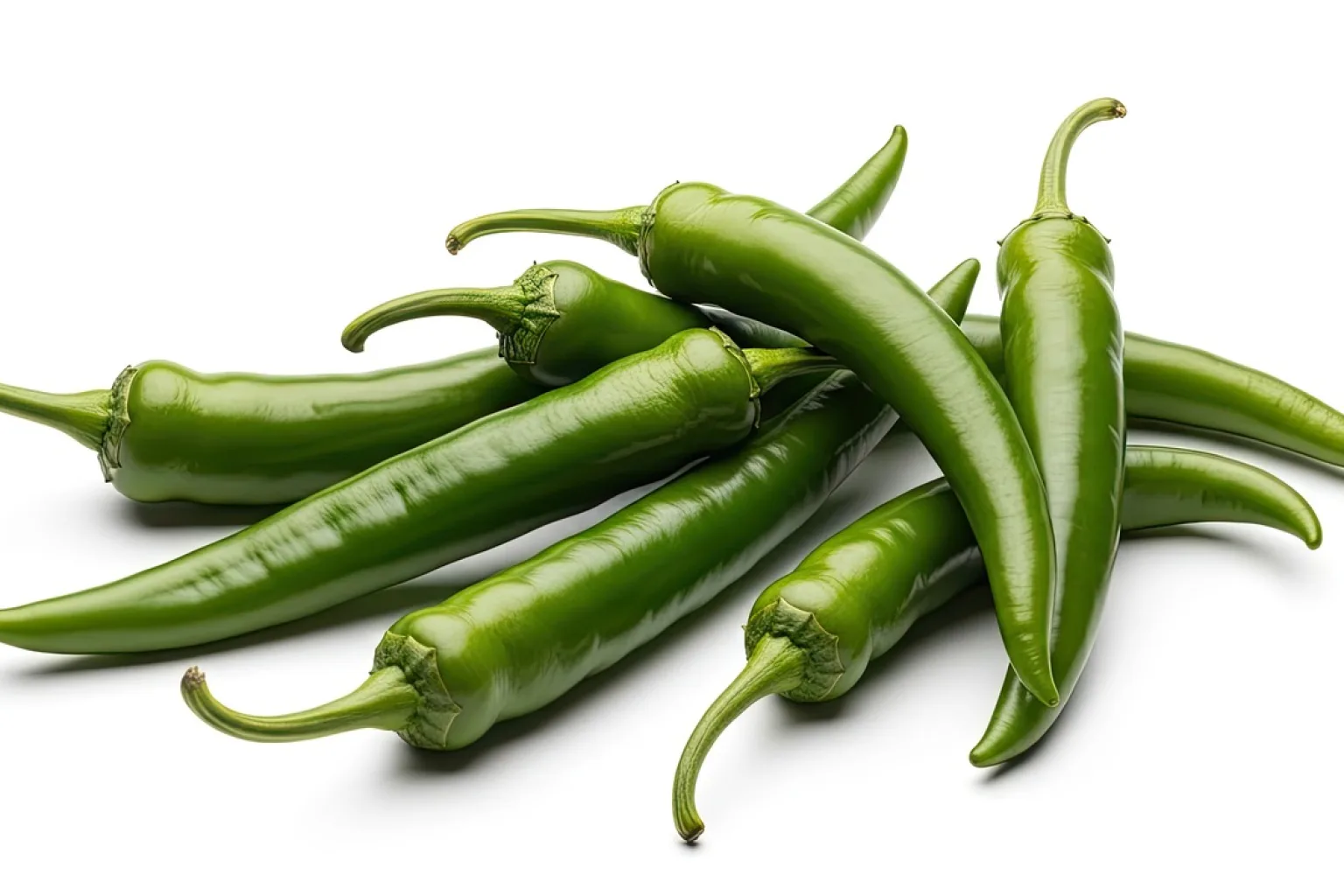
Green chili pepper is a Capsicum pepper sold or harvested while green. The name does not refer to just one variety: size, shape, flavor and heat can differ from one type to another. Some green chilies are distinctly hot, while varieties such as piparra are generally mild. Its fleshy fruit can be used as an ingredient or seasoning, adding fresh pepper flavor and, depending on the variety, heat. The pale inner ribs and seeds can affect the perceived heat, but individual peppers do not all have the same intensity.
When to use it
Use green chili when you want to add freshness and some heat to a sauce, stew, vegetable dish or legumes. It can also be fried as a side or sliced into a snack or appetizer. Since heat varies among varieties and individual peppers, begin with a small amount and taste before adding more. If you want a mild result, choose a variety known for low heat rather than relying on the green color alone.
How to use it
Rinse the chili under running water and dry it before cutting. Leave it whole, remove the stem, chop it or slice it, depending on the dish: a whole chili is easy to remove later, while chopped or sliced pieces distribute through sauces and stews. Add it gradually and taste, because heat is not consistent across varieties. You can also fry green chilies as a side or pickle them. Removing the seeds and pale inner ribs may moderate the heat, though the result can vary.
Flavour and texture
Green chilies can have fresh, vegetal notes and heat ranging from mild to pronounced. The fruit is fleshy; some varieties have thin skins and a tender texture, while others may be firmer. Color alone cannot tell you how hot a pepper will be. In cooked dishes its flavor blends into the preparation; sliced or served as a side, it can retain a more distinct presence and noticeable texture.
How to choose it
Choose firm chilies without visible damage or signs of disease or insect injury. If you want a particular heat level, ask about the variety or check the product information, since green chili pepper covers peppers with different levels of heat. Taut skin and even color can be useful signs when selecting fresh peppers, but they do not guarantee a specific heat level.
Storage
Keep fresh chilies refrigerated and use them while they remain in good condition and firm. The available evidence does not establish one storage life for every variety and set of conditions, so do not rely on a fixed number of days. Rinse under running water before preparation rather than soaking. For longer storage, follow a tested freezing or pickling recipe; do not improvise a jar-preserving process.
Substitutions
Hot paprika can replace fresh chili in a preparation that works with a dried spice, but it will not provide the same freshness or texture. A fresh green jalapeño is another option within the chili pepper group, though its flavor and heat may differ. Add the substitute gradually and taste as you go.
Common mistakes
Do not assume every green chili has the same heat or add a large amount without tasting. Color alone is not a reliable measure of intensity. When replacing fresh chili with a dried spice, account for the change in texture and flavor, and avoid touching your face or eyes while handling hot peppers.
Safety and allergens
Rinse fresh chilies under running water before preparation. When cutting hot chilies, wear gloves or wash your hands thoroughly with soap and water before touching your face or eyes. Keep work surfaces and utensils clean.
Culinary uses
- Aporta picor y frescura a salsas y guisos
- Funciona como condimento o guarnición en platos y aperitivos
Recommended techniques
- Lavar y cortar en rodajas o picar
- Freír
- Encurtir
Pairs well with
- Legumbres, como lentejas y alubias
- Verduras, salsas y platos de pasta
- Carnes y platos de pescado
Frequently asked questions
Are all green chilies hot?
No. Heat depends on the variety and can vary. Some, such as piparra, are generally mild, while others are hotter.
How can I use green chili pepper?
Chop it into sauces and stews, slice it, fry it as a side or pickle it.
How can I make a dish less hot?
Start with a small amount and taste. Removing the seeds and pale inner ribs may help, although results vary among peppers.
Estimated nutrition
- Fat
- 0.2 g
- Saturates
- 0.02 g
- Carbohydrate
- 9.46 g
- Sugars
- 5.1 g
- Fibre
- 1.5 g
- Protein
- 2 g
- Salt
- 0.02 g
Sources and review
Automatically researched, cross-checked and validated content. Sources consulted:
- The Essential Glossary of Cooking Terms for the Culinary Arts - Escoffier escoffier.edu
- Usos culinarios apropiados de las variedades de plátano verde barraganete, dominico y maqueño, en la gastronomía ecuatoriana. | Revista de Gastronomía y Cocina doi.org
- Guindilla: Botánica, cultura y sabor en una Especia | Alveus alveus.eu
- Guindilla: qué es, beneficios y usos en la cocina de este pimiento picante bonviveur.com
- elBulli: un nuevo lenguaje en la gastronomía repositorio.ucjc.edu
- Lesson 4A – Semillas: Elementary Spanish I pressbooks.uiowa.edu
- IEW Recipes | OISS | Rice University oiss.rice.edu
- Vamos a Conservar Alimentos: Chiles/Pimientos extension.psu.edu
- Resistance in the Novels of Alejo Carpentier and Ralph ... jscholarship.library.jhu.edu
- Recetas para comer fuera de casa: Achard de verduras cordonbleu.edu
- Guindilla: qué es, beneficios, usos en la cocina y variedades de este pimiento picante directoalpaladar.com
- GUINDILLA VERDE. La mejor calidad. Mercajara, somos mayoristas mercajara.com
- - YouTube youtube.com
- Guindilla vasca de temporada: todo lo que necesitas saber - Garaia Koop garaia.net