- Category
- Vegetables
- State
- Fresh
- Usual unit
- unit
What it is
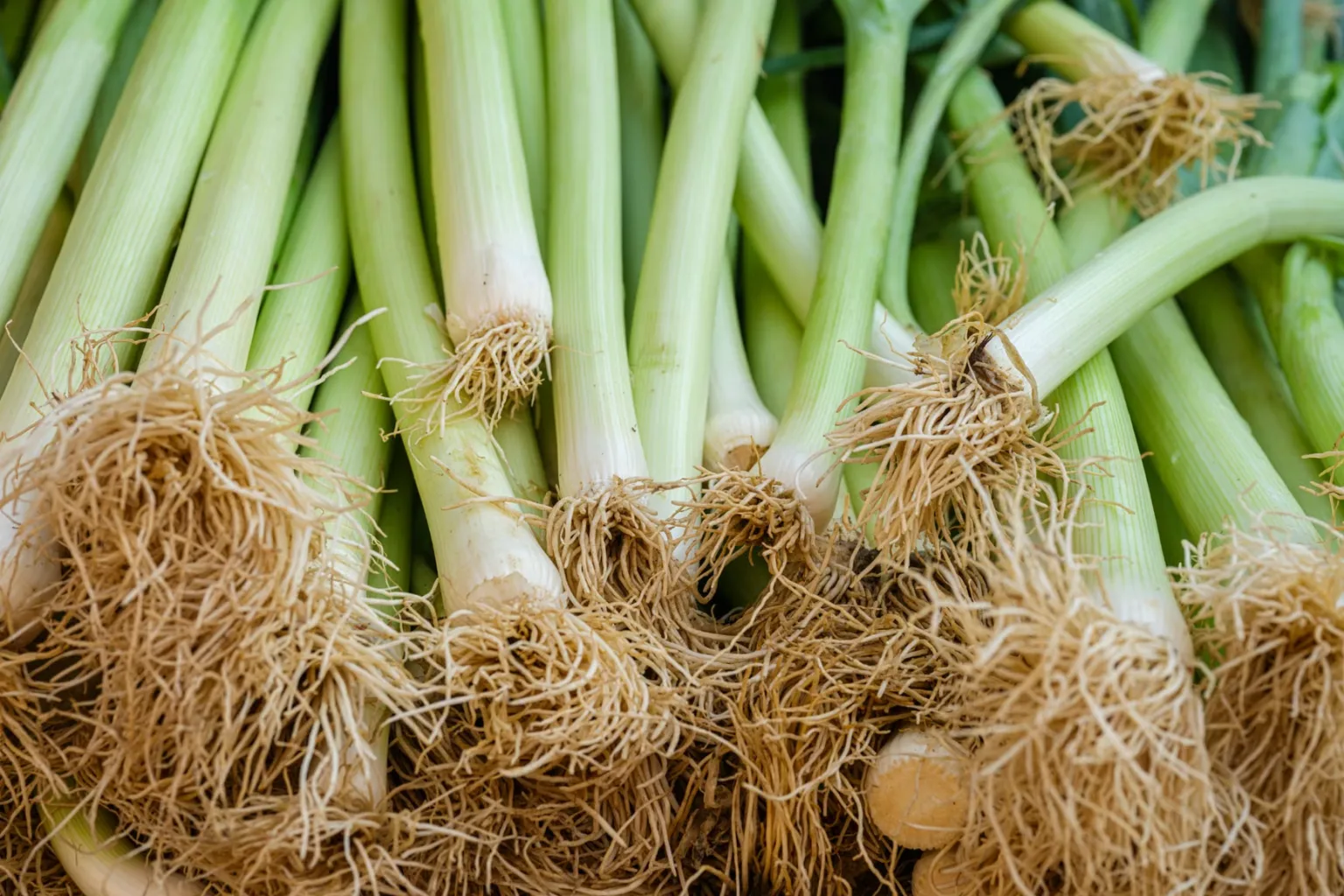
The green part of a leek is the flat foliage that extends above its white section. It is edible and can be used in cooking, though it is often firmer and more pronounced in flavor than the white part. You can remove outer leaves that feel tough and trim the dark green tips if they seem too fibrous for the dish. There is no need to discard all the greens by default: once washed and chopped or thinly sliced, they can flavor stocks, soups, stews and other recipes. When you want their texture to be noticeable, cut them into fine strips or small rounds.
When to use it
Use leek greens when you want to add an onion-like flavor with the distinctive character of leek to stocks, soups and stews. Firmer leaves work well in cooked dishes or when cut very finely; they can also be sautéed for an omelet or added to a quiche. If you want them to be less noticeable, use them as part of an aromatic base and strain them out of the stock. For a textural finish, slice the leaves into fine strips and use them as a topping, raw or cooked as the recipe calls for.
How to use it
Separate the leaves and rinse them carefully under running water, opening the folds to remove any trapped soil. Trim damaged or overly tough sections, then cut the rest to suit the dish: fine rounds or strips for a sauté, larger pieces for stock, or a small dice for an omelet or quiche. Add the greens to a pot of stock or stew to lend flavor, or sauté them and combine them with other ingredients. For a crisp topping, slice the green part into very fine strips and fry them; drain off excess oil before serving. Match the cut and cooking method to how firm the leaves are.
Flavour and texture
The flavor is reminiscent of onion and is usually more pronounced in the dark green leaves. The green part can be firmer and more fibrous than the white section of the leek, so a fine cut and cooking help it blend into a dish. In stocks and stews it adds an aromatic note; thinly sliced, it can also bring textural contrast as a finishing touch.
How to choose it
When buying a whole leek, choose one that feels firm and has no obvious damaged or wilted sections. The greens should be intact and not excessively yellowed. If the greens are sold separately, look for leaves without visible deterioration and with a reasonably even color. Very tough outer leaves can be removed, but do not discard all the green part: firm sections work in stocks, while more tender sections can be sliced thinly for cooking.
Storage
Store a whole leek unwashed and untrimmed in the refrigerator, wrapped or covered. If you have already separated the green part, keep it refrigerated and protected from exposure, and use it while it still looks in good condition. Remove damaged leaves before cooking. Guidance for storing a whole leek unwashed and untrimmed does not, by itself, establish how long a cut portion will keep.
Substitutions
The white part of the same leek can replace the greens when you want a milder flavor, although its texture will also differ. Onion or scallion can stand in for a leek-like allium note in a recipe; adjust the amount to taste because these ingredients are not identical. These alternatives will not exactly reproduce the firmness of leek leaves.
Common mistakes
Do not discard all the greens just because they are firmer than the white part. Another common mistake is rinsing only the outside without separating the leaves: soil can remain between the folds. Avoid cutting the leaves into large pieces when you want them to blend quickly into a dish; a finer cut is easier to use in sautés and omelets.
Safety and allergens
Wash the green part under running water and separate its folds to remove dirt before cutting or eating it. Remove damaged leaves, and follow any storage instructions on the package when applicable.
Culinary uses
- Base aromática para caldos, sopas y guisos
- Verdura para salteados, tortillas y quiches
- Guarnición o acabado crujiente
Recommended techniques
- Cortar en tiras finas o rodajas
- Saltear o estofar
- Añadir a caldos y cocer como parte de sopas o guisos
- Freír en tiras finas para un acabado crujiente
Pairs well with
- Caldos y sopas
- Guisos de carne y platos de pescado
- Patata y preparaciones tipo crema
- Huevos y quiches
Frequently asked questions
Can you eat the green part of a leek?
Yes. The green leaves are edible; remove any damaged or overly tough leaves and wash between the folds before cooking.
What is the green part of a leek best used for?
It works well in stocks, soups and stews, and can also be thinly sliced for sautés, omelets or quiches.
How do you wash leek greens thoroughly?
Separate the leaves and rinse them under running water, paying attention to the folds where soil can collect.
Sources and review
Automatically researched, cross-checked and validated content. Sources consulted:
- En el etiquetado alimentario hay algunas menciones que son obligatorias eletiquetadocuentamucho.aesan.gob.es
- · 277 · USOS PRINCIPALES José Fajardo puerro, porro, porru mapa.gob.es
- Puerro - Frutas Eloy frutaseloy.com
- Usos culinarios apropiados de las variedades de plátano verde barraganete, dominico y maqueño, en la gastronomía ecuatoriana. | Revista de Gastronomía y Cocina doi.org
- Vamos a Conservar Alimentos: Chiles/Pimientos extension.psu.edu
- Cultivo de puerros en huertos familiares | Extensión de la UMN es.extension.umn.edu
- Recomendaciones de consumo por la presencia de nitratos en hortalizas aesan.gob.es
- Cocinar con verduras de hoja verde | University of Maryland Extension extension.umd.edu
- Processing Fresh Chile Peppers | New Mexico State University - BE BOLD. Shape the Future. pubs.nmsu.edu
- Washington State Food Access English-Spanish Glossary wpcdn.web.wsu.edu
- All about collard greens: Handling, preparing and storing - Food and Health canr.msu.edu
- Cuatro ingeniosos usos para la parte verde del puerro y que no acabe en la basura | La despensa | Buenavida | EL PAÍS elpais.com
- Te contamos cuál es la parte comestible del puerro - Ametller Origen ametllerorigen.com
- No tires la parte verde del verde del puerro, te damos tres ideas para aprovecharlo directoalpaladar.com
- La parte verde del puerro también se come: Recetas para aprovecharla | esVivir esvivir.com