- Category
- Nuts and seeds
- State
- Dry
- Usual unit
- g
What it is
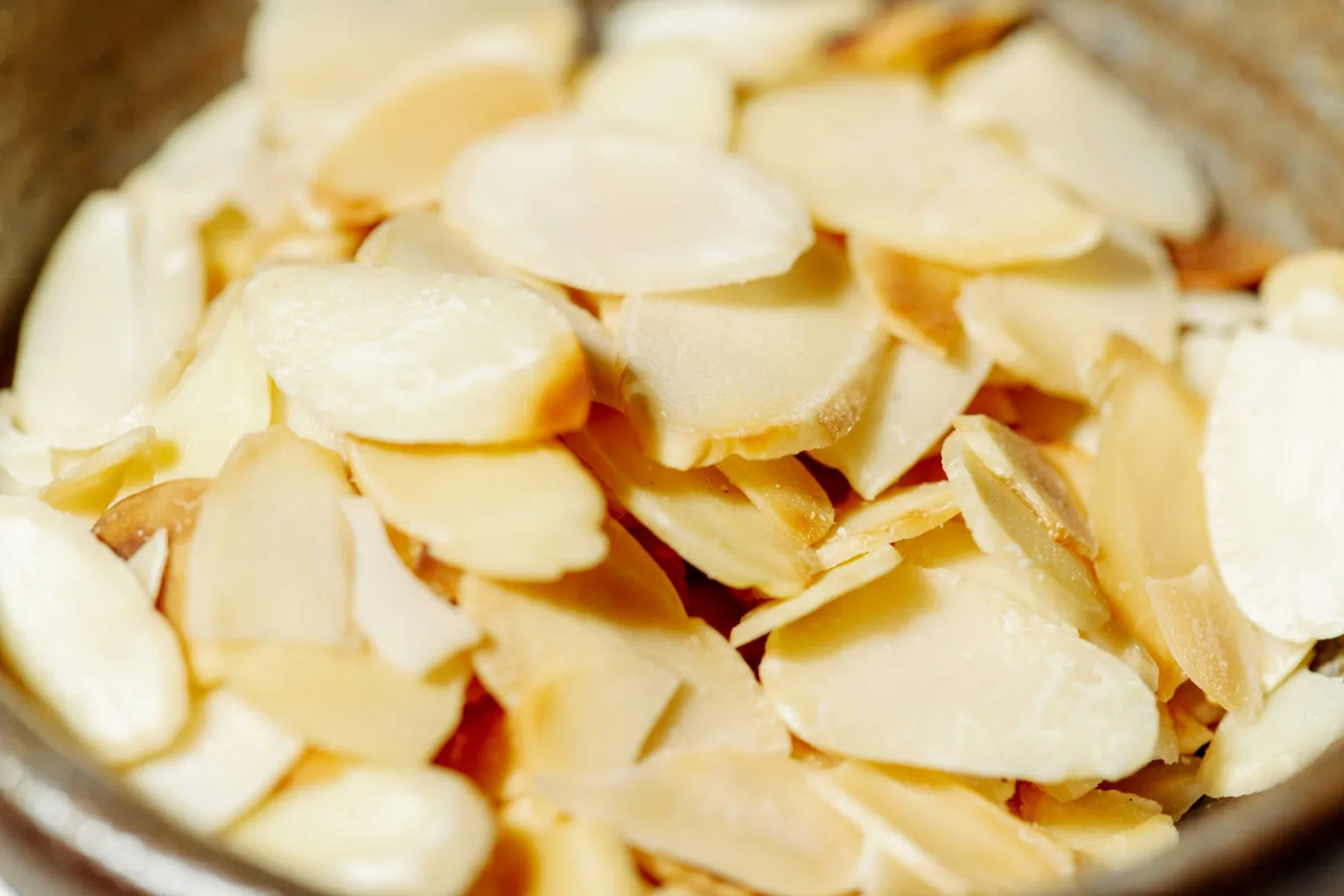
Ground almonds are almonds crushed to a texture that can range from fine to slightly coarse. They are sold with the skins or blanched, meaning the skins have been removed, so color and flavor can vary. Some recipes and shops use the term almond flour for ground almonds, but the name does not always indicate an identical grind. Check the texture called for in the recipe rather than assuming the products are interchangeable. Ground almonds are not almond paste: they remain a loose ingredient that can be incorporated into a mixture. They are used in baking as well as savory cooking, where they can contribute flavor, consistency or body. Check the ingredient list, especially when buying a blend or prepared mixture.
When to use it
Use ground almonds when you want almond flavor and a more substantial texture in a batter, cake, cookie or filling. They suit recipes that specifically call for ground almonds and can also be added to sauces, soups and stews to contribute body. In savory dishes, they can be part of a blended mixture or sauce; in baking, they are used in cakes, cookies and other batters. Choose a fine or coarser grind to match the texture the recipe calls for, and consider whether the almonds retain their skins: skin-on almonds can give a preparation a different color and flavor. If a recipe calls for almond flour, check the product’s grind before substituting.
How to use it
Measure the amount specified in the recipe and distribute the ground almonds among the dry ingredients, or add them to the mixture in the order given. They are used in cakes, cookies and other baked goods; the result depends on grind and recipe formulation, so do not assume every ground almond product behaves like a fine flour. For a sauce, soup or stew, incorporate them with the other ingredients or blend them with some of the liquid to distribute them evenly and add body. They can also be included in a blended mixture for savory cooking. Choose the product for the texture and appearance you want, and follow the recipe’s quantities and method: changing from a coarse grind to a fine one may change the result. Check whether the product contains skins or other ingredients before using it.
Flavour and texture
Ground almonds have a recognizable almond flavor that is often relatively mild compared with strongly aromatic ingredients. Texture depends on the grind: it may be fine and flour-like or retain small grains. Skin-on almonds usually look darker than blanched ones and can give a preparation a more pronounced flavor. In batters and sauces, they contribute consistency; they are not a paste and do not behave exactly like cereal flour.
How to choose it
Check the product name, ingredient list and the grind described or shown on the package. See whether the almonds are blanched or retain their skins; this changes the color and can alter the flavor of a recipe. For a reliable result, choose a grind close to the one the recipe specifies. The terms ground almonds and almond flour are sometimes used inconsistently. If buying in bulk or as part of a blend, check the ingredient and allergen information provided by the seller.
Storage
Keep ground almonds in an airtight container in a cool, dry place. Because they are ground, their aroma can deteriorate and the product can turn rancid; a culinary source recommends refrigerating ground almonds to help prevent this. Follow the package instructions and date, and check the smell and appearance before use. Keep the container closed and avoid exposing the product to moisture or heat.
Substitutions
Blanched and skin-on ground almonds can be substituted for one another only if the recipe can accommodate a change in color, flavor and texture. Fine almond flour is not automatically interchangeable with every ground almond product: differences in grind can change the result. Check the specific recipe before substituting, and do not assume an equal amount will produce the same texture. When a recipe depends on a particular grind, using the one specified is the most reliable option.
Common mistakes
Treating every ground almond product as fine almond flour can change the consistency of a dish. It is also easy to overlook whether the almonds are blanched or retain their skins, even though this can affect color and flavor. Do not substitute without checking the recipe and package, and do not leave the product open or exposed to heat and moisture. Check the ingredients before using a prepared blend.
Safety and allergens
Almond is an allergen. Avoid this ingredient if you have an almond allergy and check allergen information on the package or from the seller, especially for bulk products and blends. Food information requirements can vary with how a food is sold; if the information is unclear, ask before consuming it.
Culinary uses
- Aporta sabor y cuerpo a masas dulces y pasteles
- Espesa y da consistencia a salsas, guisos y preparaciones trituradas
- Se integra en coberturas, mezclas y rellenos de repostería
Recommended techniques
- Incorporar a masas y mezclas de repostería
- Mezclar o triturar con líquidos y otros ingredientes para salsas y sopas
- Añadir como ingrediente molido a preparaciones saladas
Pairs well with
- Chocolate y cacao
- Cítricos como naranja y limón
- Frutas de hueso como cereza, ciruela y melocotón
- Verduras, carnes y pescados en salsas o guisos
Frequently asked questions
Are ground almonds and almond flour the same?
The names can overlap, but grind and processing do not always match. Check the texture and follow the recipe’s specification.
What is the difference between skin-on and blanched ground almonds?
Blanched almonds have had their skins removed and are usually lighter; skin-on ground almonds are darker. The difference can affect a dish’s appearance and flavor.
How should I store ground almonds after opening?
Seal them well and keep them in a cool, dry place; refrigeration may help prevent ground almonds from turning rancid. Follow the package directions.
Sources and review
Automatically researched, cross-checked and validated content. Sources consulted:
- En el etiquetado alimentario hay algunas menciones que son obligatorias eletiquetadocuentamucho.aesan.gob.es
- Client Challenge doi.org
- Aesan - Agencia Española de Seguridad Alimentaria y Nutrición aesan.gob.es
- Variedades de almendras - Guía de tipos, calidades y abastecimiento | Nutrada nutrada.com
- Almendra: usos, variedades y combinaciones en pastelería pastrypedia.net
- Almendros y almendras - Gastronomía - Región de Murcia Digital regmurcia.com
- Redescubre la almendra, el fruto seco más popular: sus propiedades, usos en la cocina y cinco recetas para disfrutarla directoalpaladar.com
- Almendras: propiedades, beneficios y cómo usarlas en la cocina abc.es
- ¿Qué es la Almendra? Origen, beneficios y posología | Dieti Natura dieti-natura.es
- Almendra - Wikipedia, la enciclopedia libre es.wikipedia.org
- ▷ Recetas con harina de Almendra: Recetas Saladas Fáciles | Blog turronesydulces.com
- Almendra, la bomba de salud que es la base de la cocina dulce mediterránea lavanguardia.com
- Almendra procesada, lo que debes saber para conocer este fantástico producto | Almendras de la mancha almendrasdelamancha.com
- Harina de Almendras vs. Almendra Molida: ¿Son Realmente lo Mismo? Un Análisis Exhaustivo para Pasteleros pasteleriamarianohernandez.es
- Análisis y Comparación de las Mejores Almendras Molidas Veganas del Mercado bioloco.es
- Salsa de Almendras: receta casera, fácil y versátil paulinacocina.net
- 15 recetas con almendras: platos salados y postres con el gran sabor de este fruto seco bonviveur.com