- Category
- Baking
- State
- Dry
- Usual unit
- g
What it is
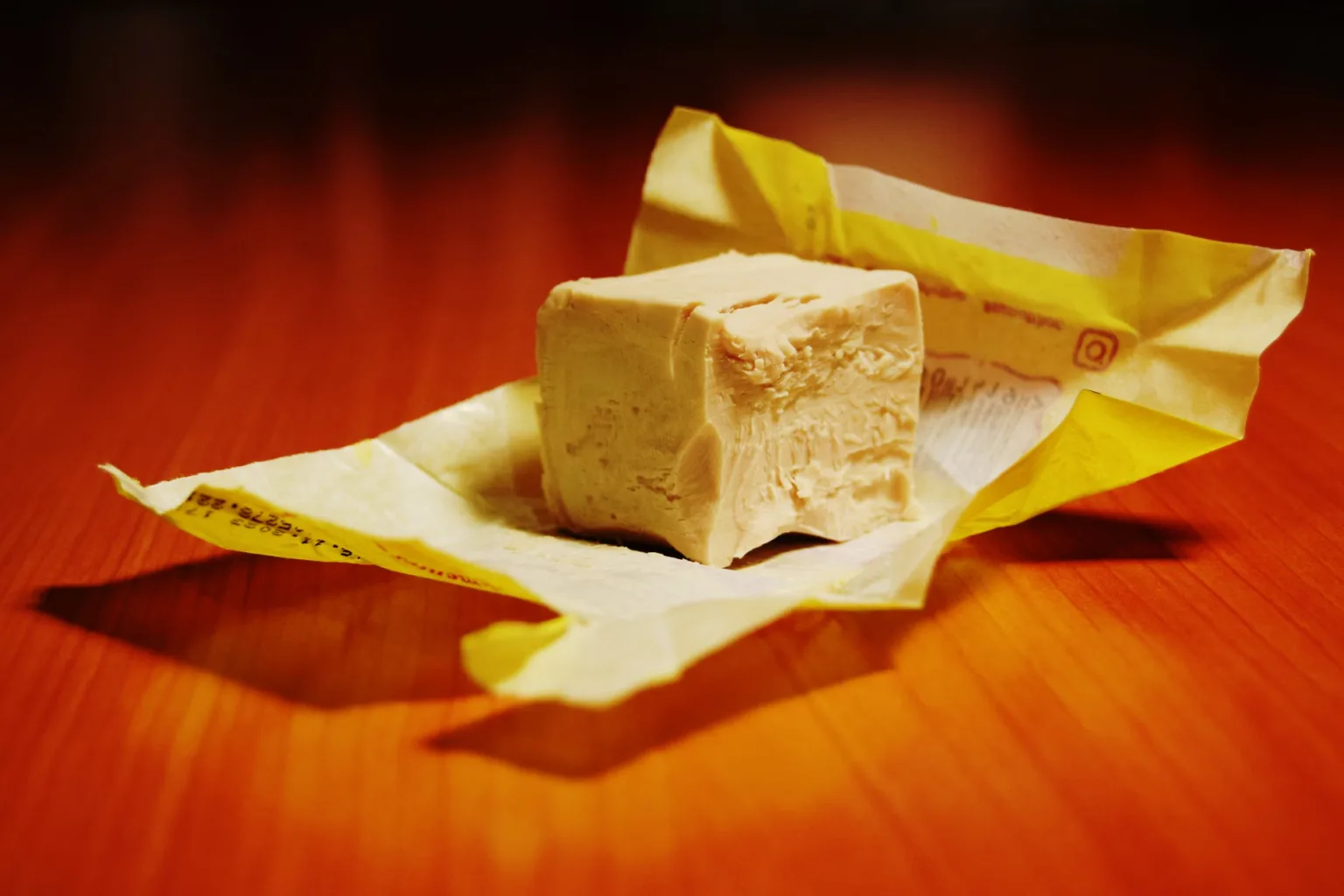
Instant yeast is a dry, granular form of baker’s yeast. Unlike baking powder, which makes a mixture rise through a chemical reaction, baker’s yeast is a living microorganism involved in fermentation. In dough, fermentation produces carbon dioxide, helping the dough expand. Instant yeast can be added directly to the dough and rehydrates there, so a separate pre-hydration step is not required. It should not be confused with active dry yeast or baking powder: these are different products and are not always used in the same way. (14299, 3180, 3174)
When to use it
Choose instant yeast for baking recipes that call for instant or dry baker’s yeast, such as bread and pizza dough. It can also be suitable for enriched sweet doughs when the recipe is written for baker’s yeast. It is useful when you want to mix yeast directly into the dough, but it does not replace baking powder in cakes or pancakes that rely on chemical leavening. The dough still needs to ferment and rest; follow the method and rising cues in your recipe, since the yeast packet alone does not determine the whole process. (14299, 3174, 17538)
How to use it
Check that the package says instant baker’s yeast, not baking powder. Measure the amount specified in the recipe and mix it directly with the dry ingredients or into the dough as the manufacturer directs; a separate pre-hydration step is not necessary. Combine the ingredients into a dough, work it as the recipe instructs, and leave it to ferment before baking. Do not assume that different yeast types can be swapped in equal amounts: dry and fresh yeast contain different amounts of water, and recipes may need adjustment. If using active dry yeast instead of instant, follow its package directions for hydration. (14299, 3174, 3180)
Flavour and texture
Instant yeast is usually sold as dry granules. In dough, it supports fermentation and helps produce a more open crumb. Yeast can contribute flavor nuances to fermented foods, but their intensity depends on the recipe and process, so a particular flavor cannot be guaranteed in every loaf. One source notes that dry yeast may leave a residual flavor, meaning results can vary by product. (14299, 3180)
How to choose it
Look for the words “instant” and “baker’s yeast” on the label to distinguish it from baking powder and active dry yeast. Instant products are sold dry, commonly as granules, and are designed to go directly into dough. Check that the package is intact and read the manufacturer’s directions for quantity and use: products and recommendations can differ. (14299, 17538)
Storage
Store the yeast according to the directions printed on its package and seal it well after opening. A baking-industry source says vacuum-packed dry yeast can have a long shelf life, but recommends using it soon after opening; the specific duration depends on the product and its instructions. Do not treat a general shelf-life statement as a substitute for the manufacturer’s label. (14299)
Substitutions
Active dry yeast and fresh baker’s yeast may work in fermented doughs, but they are not always handled like instant yeast. Active dry yeast may need pre-hydration; check its package. Fresh yeast contains more water, so adjust the amount according to the recipe or a reliable conversion. Do not replace baker’s yeast with baking powder in a fermented dough: they work differently. (14299, 3174, 3180)
Common mistakes
Do not confuse instant yeast with baking powder: the former ferments dough, while the latter releases gas through a chemical reaction. Another mistake is assuming instant yeast must always be activated separately, even though it is designed to mix directly into dough. Avoid changing the type or quantity without checking the recipe and product directions. (14299, 3174, 3180)
Safety and allergens
Follow the package and recipe directions, and do not use the product if its package is damaged or its contents look unusual. The supplied evidence contains no specific official safety warning for this ingredient.
Culinary uses
- Leudante biológico para masas
- Ingrediente de fermentación en panadería
Recommended techniques
- Mezclar directamente con los ingredientes secos o con la masa
- Amasar y dejar fermentar la masa antes de hornearla
Pairs well with
- Harina de trigo y agua en masas de pan
- Harina, grasa y azúcar en masas dulces fermentadas
Frequently asked questions
Do I need to activate instant yeast before using it?
Usually not: instant yeast can be mixed directly into dough. Always check the directions for your particular product. (14299)
Is instant yeast the same as baking powder?
No. Instant yeast is baker’s yeast that ferments dough; baking powder produces gas through a chemical reaction. (3180, 3174)
Can I substitute fresh yeast for instant yeast?
It may work in fermented dough, but the quantity needs adjusting. One source gives a guide of one part dry yeast to three parts fresh yeast; check your recipe and product. (3174, 14299)
Estimated nutrition
- Fat
- 0 g
- Saturates
- 0 g
- Carbohydrate
- 0 g
- Sugars
- 0 g
- Protein
- 0 g
- Salt
- 0 g
Sources and review
Automatically researched, cross-checked and validated content. Sources consulted:
- Tipos de levadura, características y usos | IFEMA MADRID ifema.es
- Levadura: qué es, tipos y beneficios bonviveur.com
- Client Challenge doi.org
- Mejorando la Seguridad y Calidad de Frutas y Hortalizas ... jifsan.umd.edu
- elBulli: un nuevo lenguaje en la gastronomía repositorio.ucjc.edu
- Distintos usos de la levadura: Conócelos aquí levanova.es
- Comité Científico aesan.gob.es
- Mejora de la seguridad alimentaria en productos cárnicos ... dugi-doc.udg.edu
- Levadura fresca: qué es, usos y diferencias con la levadura seca lesaffre.es
- case Córdoba, Veracruz, Mexico - AgEcon Search ageconsearch.umn.edu
- Bioethics News | Page 171 | Bioethics and Law Observatory (OBD) of the University of Barcelona bioeticayderecho.ub.edu
- EFECTO DE LA APLICACIÓN DE ULTRASONIDOS EN ... upcommons.upc.edu
- Tipos de levadura: Guía para panadería y repostería profesionalhoreca.com