- Category
- Meat
- State
- Fresh
- Usual unit
- g
What it is
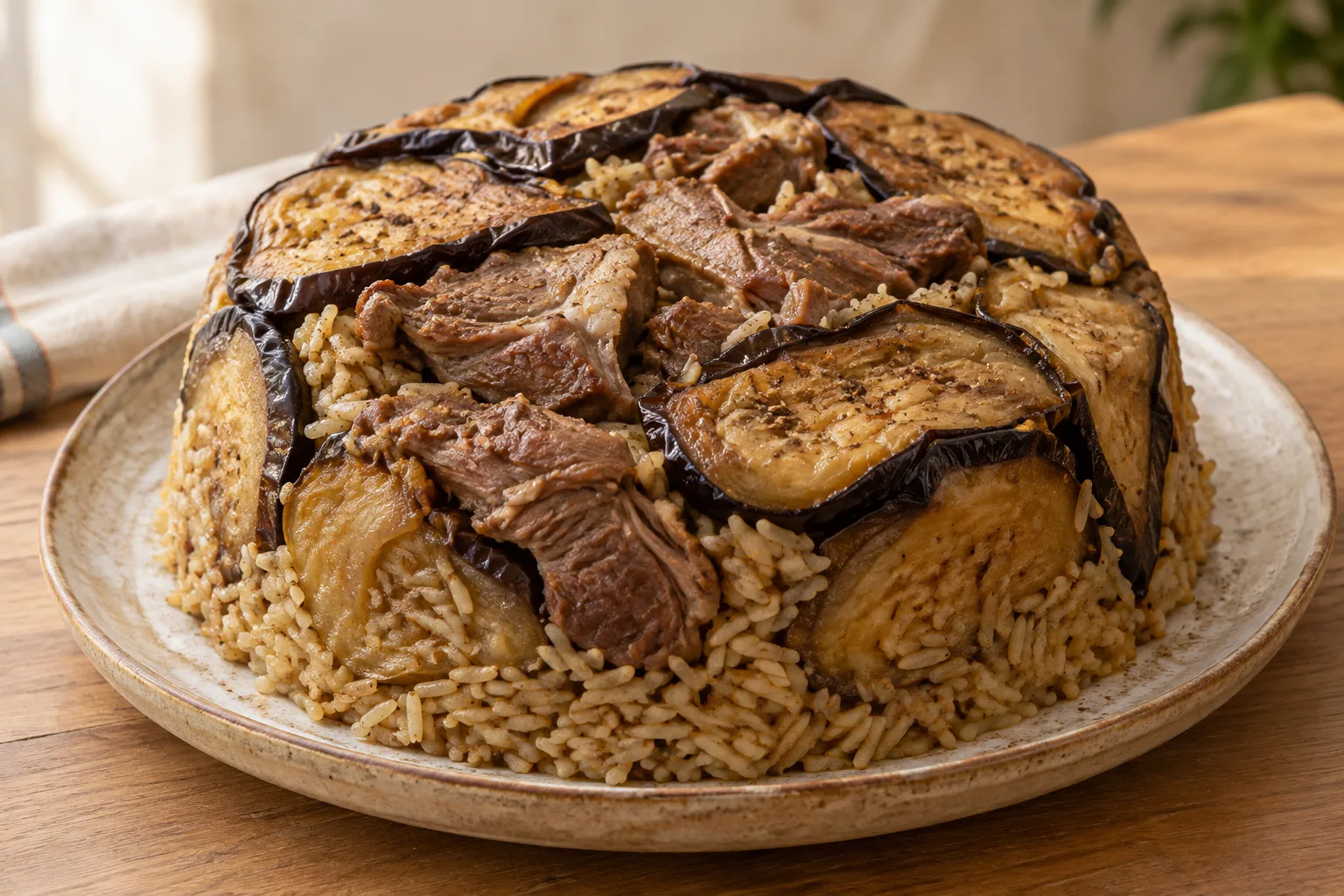
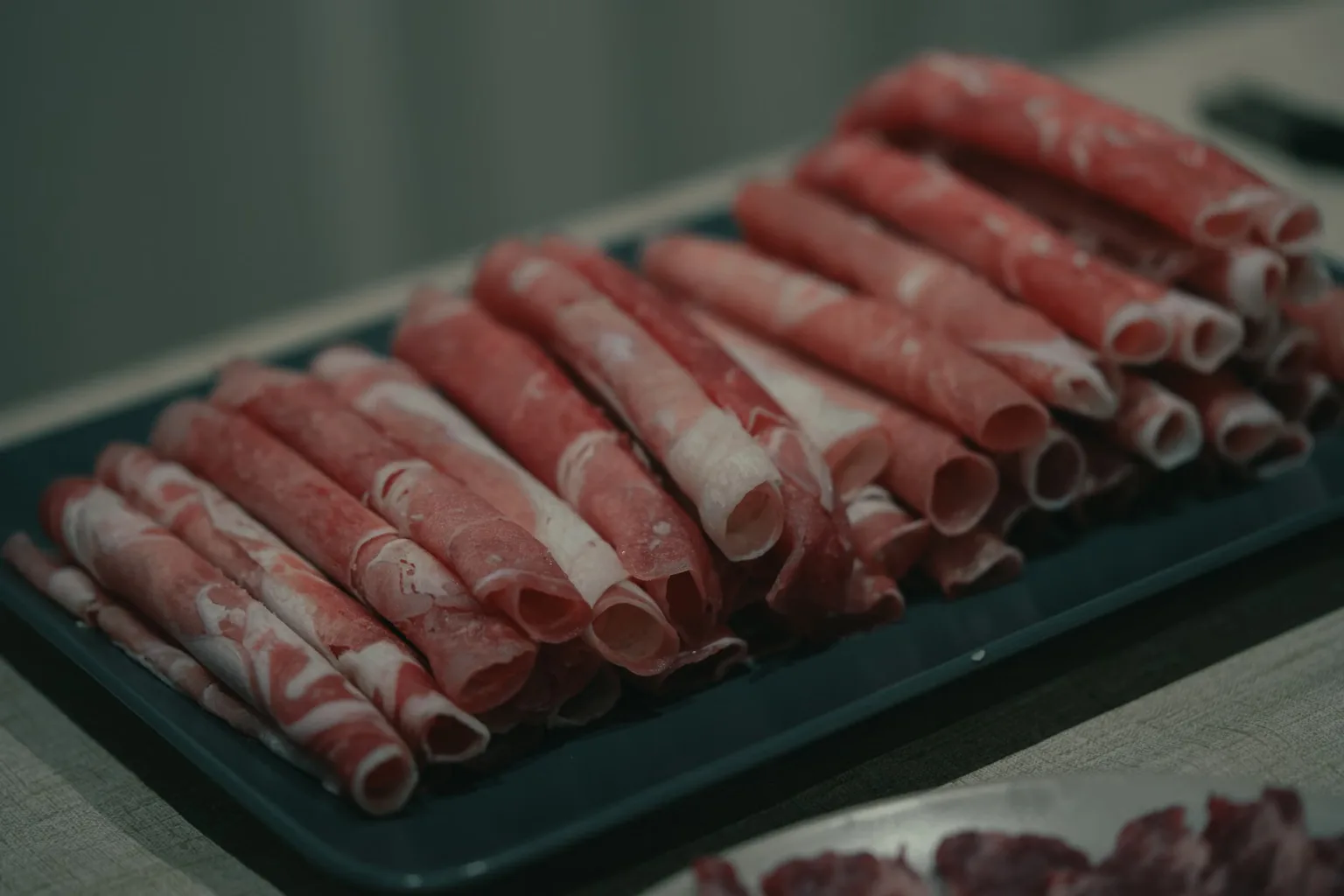
Lamb is meat from a young sheep. One culinary source defines lamb as meat from a domestic sheep less than one year old, regardless of sex. The cut and the animal’s age can affect how the meat is used and described: younger animals are reported to have a more delicate flavour, while flavour grows more pronounced with age. Common cuts include leg, shoulder, chops, neck and breast or flank. These pieces differ in shape and bone content, so it is useful to choose with the cooking method in mind rather than treating every cut as interchangeable. Check the product description for the exact cut and any specific handling instructions.
When to use it
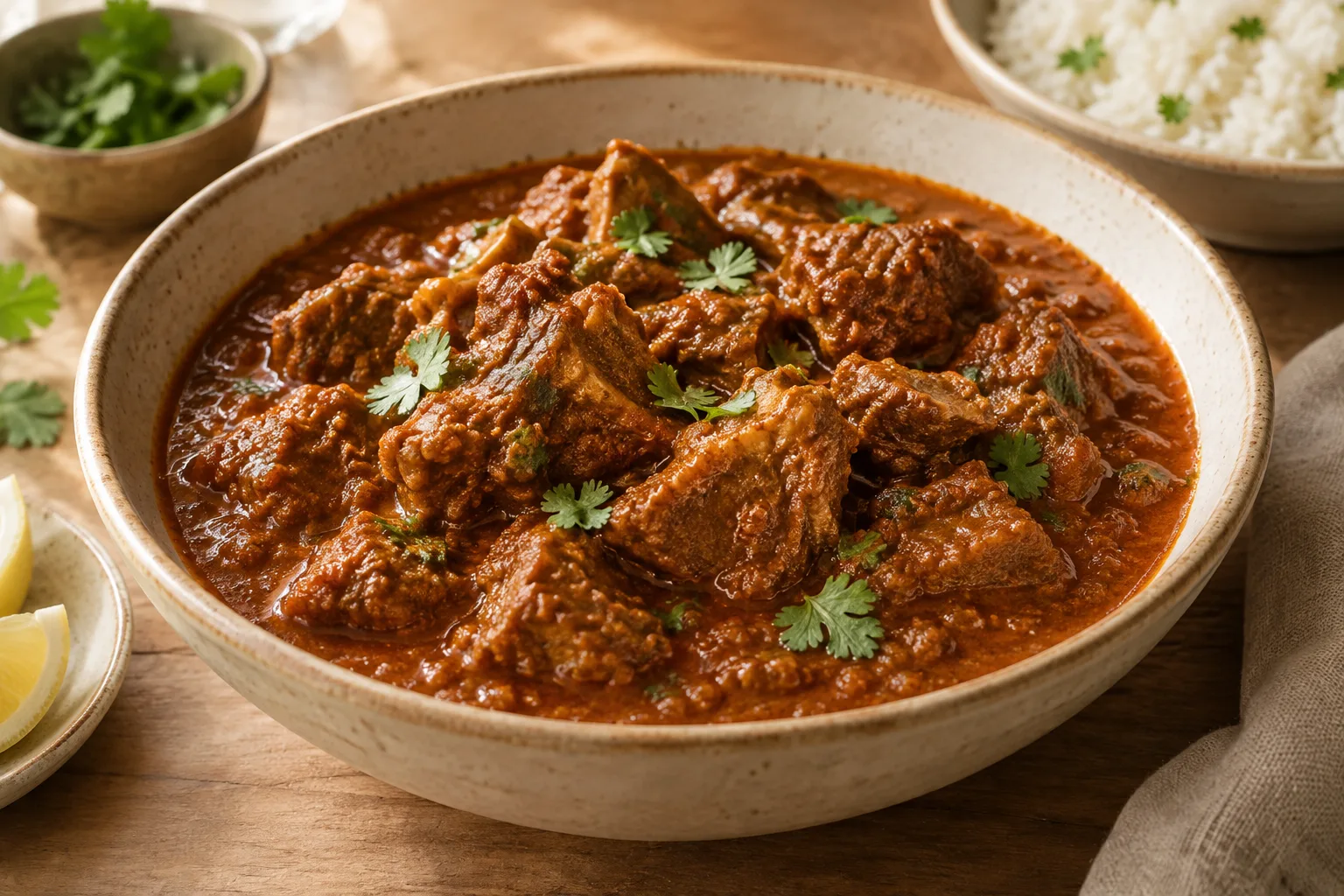
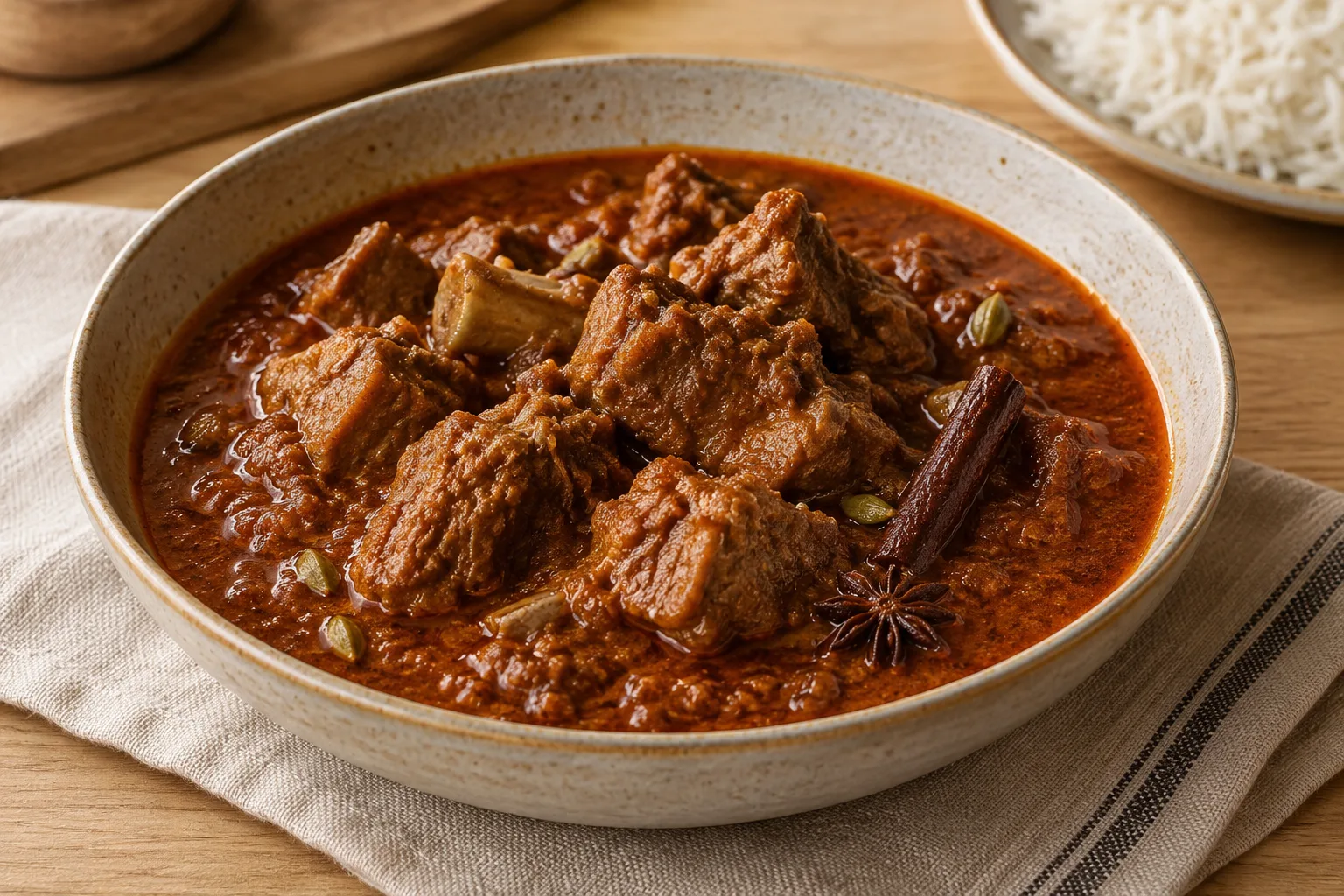
Choose lamb when you want a centrepiece or a main dish and can match the cooking method to the cut. Leg, shoulder and other listed roasting cuts suit oven roasting; chops are used for grilling or pan-frying. For a stew or caldereta, look for diced pieces such as shoulder, neck or breast. Age may also guide your choice: the available culinary source describes younger lamb as more delicate in flavour and older animals as more pronounced. Check the product name and any directions provided by the seller or on the package before deciding how to prepare it.
How to use it
Decide on the dish first, then choose the cut: leg or shoulder for roasting; chops for grilling or pan-frying; and diced shoulder, neck or breast for stews. Lamb can be served with potatoes, vegetables, vegetable purées, legume purées or sauce. If you need to change cuts, stay with one suited to the same kind of preparation: the culinary source lists several cuts for roasting and names different diced cuts for stews. Follow the product’s own use and storage directions where supplied. Do not assume that every cut needs the same preparation or cooking process, since shape and bone content differ.
Flavour and texture
Lamb does not taste or feel exactly the same across every cut and animal. The culinary source describes younger animals as having a more delicate flavour, which becomes more pronounced with age; it also describes meat from older sheep as less tender. Think about the style of dish you want and the cut available: a roasting piece, a chop and a bone-in cut for a stew are not interchangeable in handling. Specific aromatic notes are not included here because the evidence does not establish them consistently for all lamb.
How to choose it
Ask the butcher to identify the cut and suggest a use if the piece is unfamiliar. Culinary sources list leg, shoulder, baron and saddle for roasting; chops for grilling or pan-frying; and shoulder, neck or breast for stews. Check the product label for its name, date and any storage or use directions. Depending on the circumstances, packaged sheepmeat may have to show country-of-origin or provenance information; check what is stated on the package rather than assuming all products have the same label.
Storage
Keep lamb according to the directions on its package or provided by the seller, and pay attention to the date shown. Official food-labelling guidance explains that specific storage or use instructions should be provided when an item requires them. Do not use a product beyond its use-by date if it has one. The available evidence does not establish one storage time or temperature for every cut and presentation, so use the product’s own instructions instead of guessing.
Substitutions
For an oven roast, you can switch between cuts listed for roasting, such as leg and shoulder, while remembering that they are different pieces. For a stew, shoulder, neck and breast are cited as common choices; use one in place of another according to availability. These are within-lamb cut alternatives, not exact equivalents: bone content and shape can affect the result and how the piece is handled.
Common mistakes
Do not choose a cut without considering the method: the sources distinguish roasting cuts, chops for grilling or pan-frying, and diced cuts for stews. Do not assume that every age offers the same flavour or tenderness. Avoid guessing cooking or storage times; check the product’s specific directions and follow its label.
Safety and allergens
Check the date and follow storage and use directions on the package or from the seller. If the product carries a use-by date, do not go beyond it. The available evidence does not support one universal cooking time or temperature for every lamb cut and presentation.
Culinary uses
- Plato principal
- Carne para asar, hacer a la parrilla o guisar
Recommended techniques
- Asar al horno
- Cocinar a la parrilla o a la plancha
- Freír en sartén
- Guisar o estofar
Pairs well with
- Patatas
- Verduras y purés de verduras
- Puré de legumbres, como hummus
- Salsas
Frequently asked questions
Which lamb cuts are suitable for roasting?
The culinary source lists leg, shoulder, baron and saddle as cuts for roasting. Ask for the exact cut if it is not clearly identified.
Which cuts can I use in a stew?
Shoulder, neck and breast are cited as common choices for stews and calderetas; the source also notes that different cuts can be diced for stewing.
Does lamb’s flavour change with age?
According to the available culinary source, younger animals have a more delicate flavour, while flavour becomes more pronounced in older animals.
Estimated nutrition
- Fat
- 20.5 g
- Saturates
- 9.82 g
- Carbohydrate
- 0 g
- Sugars
- 0 g
- Fibre
- 0 g
- Protein
- 17 g
- Salt
- 0.19 g
Sources and review
Automatically researched, cross-checked and validated content. Sources consulted:
- En el etiquetado alimentario hay algunas menciones que son obligatorias eletiquetadocuentamucho.aesan.gob.es
- The Essential Glossary of Cooking Terms for the Culinary Arts - Escoffier escoffier.edu
- Culinary - Cibola High School cibola.aps.edu
- El cordero, base de nuestra cultura, gastronomía y economía | Cultura restaurantecain.es
- El cordero, un auténtico placer gastronómico - La Mesa Habla lamesahabla.com
- Publicaciones de Seguridad alimentaria aesan.gob.es
- As the labor crisis continues for Colorado restaurants, immigrants stock up on culinary knowledge - MSU Denver RED red.msudenver.edu
- Culinary Arts / Hospitality Administration & Events - Ivy Tech Community College ivytech.edu
- Ricardo J. Barrazueta Cordero -Thesis.pdf etd.auburn.edu
- SUSTAINABLE KITCHEN files.wmich.edu
- Project MUSE -- Verification required! muse.jhu.edu
- Jaime A. Meza-Cordero, Ph.D. - USC Dornsife dornsife.usc.edu
- Prof. Zachary Cordero and Florian Allroggen selected to participate in NAE’s Grainger Foundation Frontiers of Engineering 2025 Symposium - MIT AeroAstro aeroastro.mit.edu
- Cordero: la tradicional carne de primavera - Gastroactitud. Pasión por la comida gastroactitud.com
- Descubre el cordero, un tesoro gastronómico de España rincondecastilla.com