- Category
- Dairy and eggs
- State
- Fresh
- Usual unit
- unidades
What it is
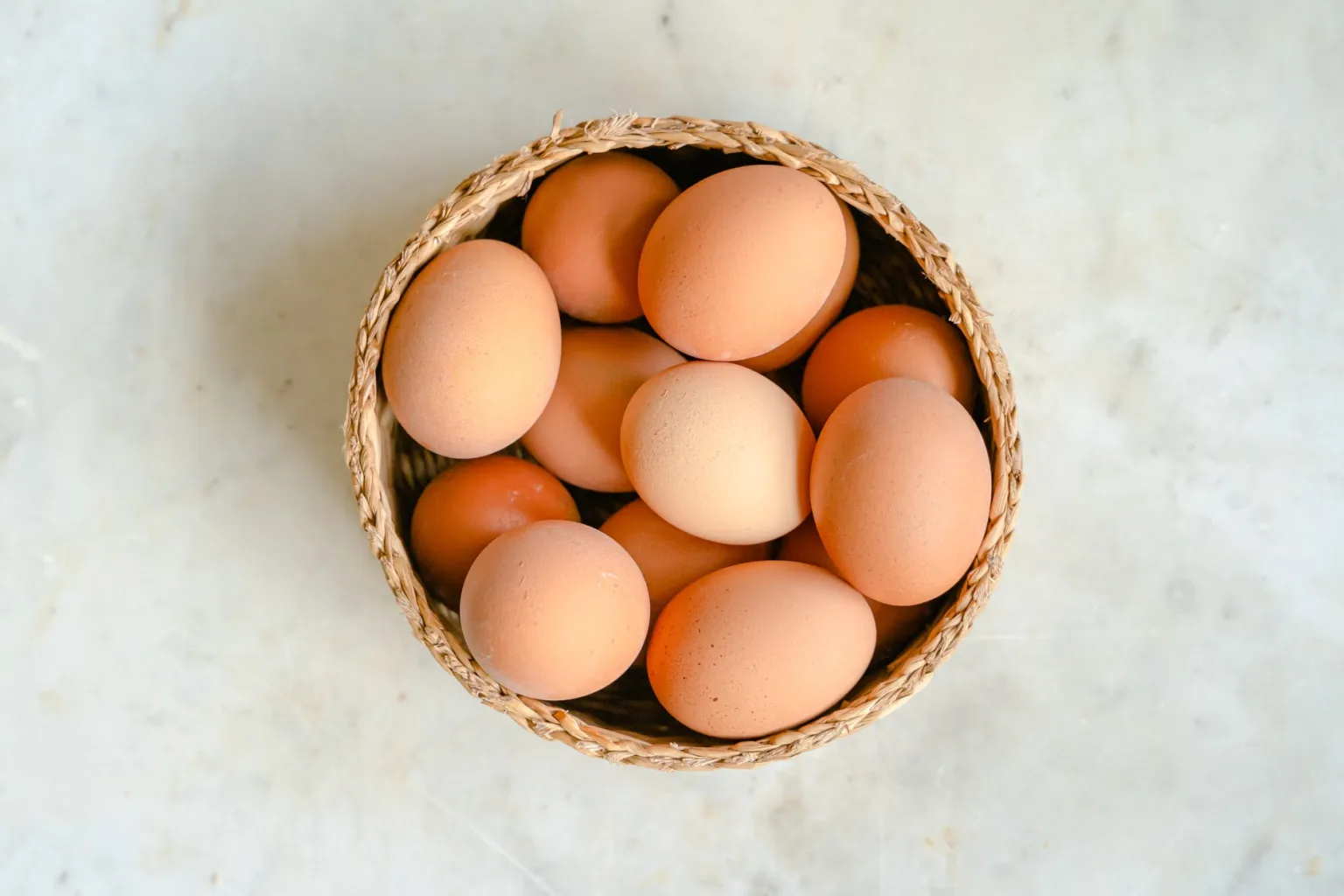
In recipes, “large egg” usually means a chicken egg assigned to a size category. A whole egg combines two parts with different culinary behaviour: the white can form foam and set to provide structure, while the yolk contributes creaminess and helps emulsify. That makes an egg suitable as the centre of an omelette or fried-egg dish, as well as an ingredient in sauces, batters, creams and desserts. Size can affect recipe proportions, so follow the stated size when a formula is precise. “Large” does not necessarily mean exactly the same weight in every grading system.
When to use it
Use a large egg when you want it to be the main feature of a dish, such as in an omelette, scramble, fried egg or boiled egg. It is also useful when a preparation needs binding, setting, foam, emulsification or creaminess: eggs can be incorporated into batters and cakes, thicken creams and help make sauces. A whole egg is convenient when several of these functions are wanted together. If a recipe calls for only the white or yolk, follow that direction because the two parts behave differently.
How to use it
Cook an egg in its shell or crack it open; use it beaten, or separate the white and yolk if the recipe requires that. For a simple dish, fry, poach or boil it, or beat it for scrambled eggs or an omelette. In baking, an egg can help bind ingredients and provide structure. Whipped whites can add air to meringues and soufflés, while yolks help emulsify sauces such as mayonnaise and add creaminess to other preparations. Add eggs in the order specified by the recipe, and fold whipped whites in gently to avoid losing all their air. If a formula depends on a particular size, use eggs of the stated size.
Flavour and texture
Once cooked, the egg white has a relatively mild flavour, while the yolk is richer and more succulent. Heat changes the white from translucent to set; the yolk can be left creamier or cooked firmer, depending on the result you want. Beating and incorporating air changes the texture, while emulsifying the yolk helps create creamy sauces. The final flavour and texture also depend on the cooking method and the ingredients served with the egg.
How to choose it
Choose eggs with intact shells and no visible cracks or damage, and check the size stated on the pack so it matches the recipe. Categories and weight limits can vary between grading systems; do not assume that “large” means the same weight everywhere. For baking formulas that need precise proportions, try to use eggs of a consistent size.
Storage
Keep eggs clean and dry, protected from knocks, strong odours and direct sunlight. At home, refrigerate them and avoid unnecessary temperature changes. Follow the pack’s storage instructions and do not use eggs with cracked shells. A universal storage period cannot be specified here because it depends on the product label and its conditions.
Substitutions
No single substitute reproduces every function of an egg. Aquafaba can help when a preparation needs foam; mashed banana or applesauce can bind and add moisture in some sweet bakes, but they also affect flavour and texture. Hydrated chia seeds can bind certain mixtures. Choose a substitute for the job the egg performs in the recipe, not simply by matching the number of eggs.
Common mistakes
A common mistake is replacing an egg without considering whether the recipe relies on it for foaming, emulsifying, binding or structure; different substitutes perform different jobs. A recipe may also turn out differently if you change egg size without adjusting the formula, especially in baking. Avoid cracked eggs and do not expect a substitute to produce exactly the same flavour or texture.
Safety and allergens
Handle eggs carefully, discard eggs with cracked shells and follow the storage directions on the pack. For preparations that will not be cooked sufficiently, pasteurised egg products can reduce microbiological risks associated with fresh eggs; follow local food-handling rules.
Culinary uses
- Ingrediente principal
- Agente aglutinante y estructurante
- Emulsionante y espesante
- Agente espumante
Recommended techniques
- Freír
- Cocer con cáscara
- Escalfar
- Batir y cuajar en revuelto o tortilla
- Montar las claras para formar espuma
Pairs well with
- Patatas y verduras
- Tomate y especias
- Arroz
- Pan y salsas
Frequently asked questions
What does “large egg” mean?
It is a size category, but its weight range can differ between grading systems. Check the pack and the size specified in your recipe.
Can I use only the white or only the yolk?
Yes, when the recipe calls for it. The white can form foam and provide structure; the yolk helps emulsify and gives preparations a creamier texture.
Is there one substitute for every use of an egg?
No. Aquafaba, banana, applesauce and chia can work in particular applications, but the best choice depends on the egg’s role and may change the result.
Estimated nutrition
- Fat
- 10 g
- Saturates
- 3 g
- Carbohydrate
- 0 g
- Sugars
- 0 g
- Protein
- 12 g
- Salt
- 0.35 g
Sources and review
Automatically researched, cross-checked and validated content. Sources consulted:
- Client Challenge doi.org
- Guía de Buenas Prácticas de Higiene para la Elaboración de Ovoproductos aesan.gob.es
- Huevo (alimento) - Wikipedia, la enciclopedia libre es.wikipedia.org
- El huevo: origen, tipos, tamaños, propiedades y elaboraciones faborit.com
- Usos del Huevo – Instituto de Estudios del Huevo institutohuevo.com
- Huevo: tipos, usos, técnicas y recetas - CocinoPedia.com cocinopedia.com
- Artes culinarias/Ingredientes/Huevo - Wikilibros es.wikibooks.org
- 3.- Diferentes variedades de huevos chefcampus.com
- El huevo, un alimento presente en las culturas gastronómicas de todo el mundo - Avicultura avicultura.com
- Sustitutos de huevo para hornear y cocinar - Fat Daddio's fatdaddios.com
- Tipo de cocción de huevos: guía completa para prepararlos en casa | Recetas Nestlé recetasnestlecam.com
- Huevos y vino: un maridaje con mil combinaciones - Vignerons bodeboca.com
- Cómo preparar huevos de siete formas distintas con técnicas de chefs reconocidos - Infobae infobae.com
- El huevo en la cocina: usos y secretos | CEAC ceac.es
- Hoy, huevo hoyhuevo.es
- Escuela Virtual de Turismo y Gastronomía: junio 2014 escuelavirtualdeturismoygastronomia.blogspot.com
- Alternativas veganas al huevo - Scoolinary blog.scoolinary.com