- Category
- Grains, flour and pasta
- State
- Dry
- Usual unit
- g
What it is
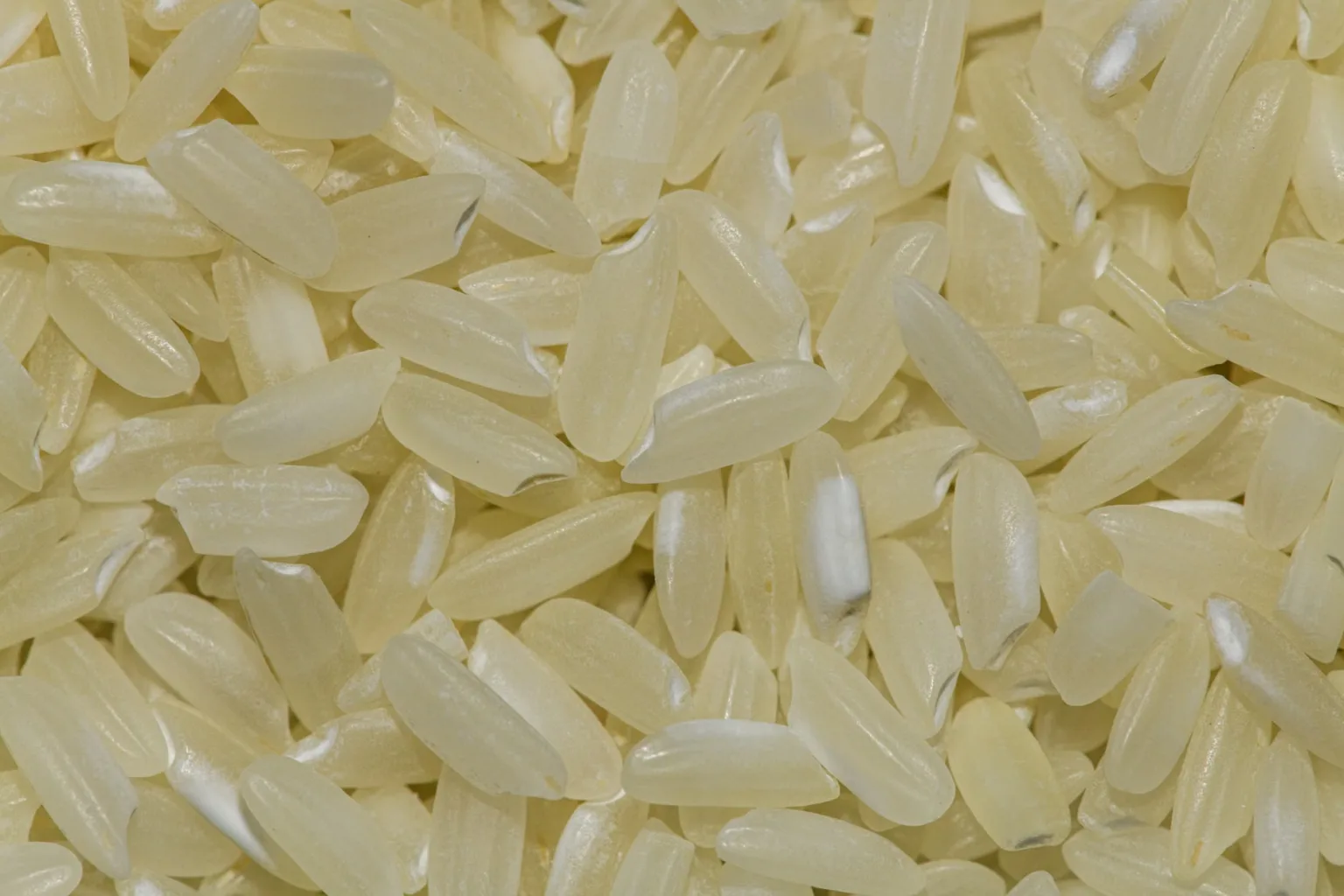
Long-grain rice is identified by its elongated grains and is sold as one of the rice categories based on grain size. The label does not name a single variety or guarantee that every rice in the category will have exactly the same texture or aroma. Puntal and Thaibonnet are examples of long-grain varieties, and aromatic long-grain rice such as basmati is also available. Some long-grain varieties are described as staying separate after cooking and are used in salads, as a side, or in pilaf-style preparations. To choose well, check the variety named on the package rather than relying on the words “long grain” alone.
When to use it
Choose long-grain rice for a side or salad when separate grains are desirable. Some long-grain varieties are used for pilaf and other rice preparations; basmati also brings its own aroma. The result depends on the specific variety and how it is cooked, so do not assume every long-grain rice is interchangeable. For recipes that call for a softer, more cohesive or creamy result, select a rice recommended for that style rather than assuming any long-grain rice will behave the same way.
How to use it
Read the package to identify the variety and follow its cooking directions, since grain shape alone does not determine the right treatment. Serve it as a side, add it to a salad, or use it in a pilaf-style preparation. When choosing between varieties, consider the result you want: some long-grain rices are described as staying separate after cooking, while basmati can contribute aroma. If a recipe depends on a particular texture, use the rice it recommends rather than automatically substituting one variety for another. Store the dry product in a closed container in a cool, dry place.
Flavour and texture
Flavor and aroma vary by variety: basmati, for example, is described as aromatic with a taste reminiscent of nuts. Long grain does not mean one uniform sensory profile or identical texture across all products. Some long-grain varieties, including Puntal and Thaibonnet, are characterized as staying separate after cooking and resisting overcooking. Check the variety name to better anticipate the result.
How to choose it
Check the variety name as well as the “long grain” label: basmati, Puntal and Thaibonnet are examples with distinct described characteristics. For salads or sides, you may want a variety that stays separate when cooked; for aroma, basmati is one named option. Check that the package is intact and that the rice looks uniform, without visible impurities, as recommended by the available buying information.
Storage
Keep dry rice in a tightly closed package or another closed container in a cool, dry place. These conditions help preserve its sensory qualities. Also follow the manufacturer’s instructions if the package gives specific guidance. Do not treat storage guidance for dry rice as instructions for cooked rice: the available evidence does not establish times or conditions for leftovers here.
Substitutions
Another long-grain rice may work as a substitute, but do not assume all varieties behave alike. Puntal and Thaibonnet are examples described as suitable for sides or salads; basmati offers an aromatic profile. Medium-grain rice may produce a softer or more cohesive result, so substitute it only when that difference suits the recipe.
Common mistakes
A common mistake is treating “long grain” as the name of one specific variety: it is a category that can include rices with different aromas and cooking behavior. Avoid automatically applying a liquid ratio or cooking time from another rice to every package; follow the product directions. If you want separate or aromatic grains, check the variety rather than relying on grain shape alone.
Safety and allergens
The available evidence does not provide a specific food-safety warning for this ingredient. Follow the package directions and official food-safety guidance in your area; no storage times or conditions for cooked rice are specified here.
Culinary uses
- Side dish and accompaniment
- Base for rice salads and pilaf
Recommended techniques
- Cook according to the variety and package directions
- Use in pilaf-style preparations
Pairs well with
- Vegetables
- Fish and seafood
- Meat
- Broths and sauces
Frequently asked questions
Is long-grain rice a single variety?
No. It is a category based on grain shape or size and includes different varieties. Check the specific rice name to learn more about its characteristics.
What dishes can it be used for?
Some long-grain varieties are used in salads, as sides and in pilaf-style preparations. The best use depends on the variety and the result you want.
How should dry rice be stored?
Keep it closed in a cool, dry place. If the package provides additional directions, follow the manufacturer’s instructions.
Estimated nutrition
- Fat
- 0.66 g
- Saturates
- 0.18 g
- Carbohydrate
- 80 g
- Sugars
- 0.12 g
- Fibre
- 1.3 g
- Protein
- 7.13 g
- Salt
- 0.01 g
Sources and review
Automatically researched, cross-checked and validated content. Sources consulted:
- Hablemos de arroces - BuleBar bulebar.es
- A PROGRAM FOR extension.usu.edu
- educational content to support healthful lifestyle practices sjsu.edu
- Nutrition After Your Transplant - Health Online healthonline.washington.edu
- Dictionary of Health Related Terms: English – Spanish hia.berkeley.edu
- Comité Científico aesan.gob.es
- Tipos de arroz: ¿cuántos hay y para qué se usa cada uno? mastershosteleria.com
- Healthy Eating Plan for Weight Management med.uc.edu
- Harvest for Healthy Kids - Radishes wpcdn.web.wsu.edu
- Pacífico FL 15 y Golfo FL 16, variedades multiambientales de arroz con grano extra largo para México | Revista Mexicana de Ciencias Agrícolas doi.org
- Tipos y variedades alimentosdespana.es
- Descubre los alimentos - Arroz largo | mentta.com mentta.com