- Category
- Sugar and sweeteners
- State
- Liquid
- Usual unit
- cucharadita
What it is
Maple syrup is a liquid sweetener made by concentrating sap collected from certain maple trees. The sap is processed into a sweet syrup, which may be filtered and classified according to characteristics such as color and flavor. Products therefore do not all look or taste alike: the shade may be lighter or darker, and the flavor more delicate or more pronounced. Maple syrup is different from imitation syrup, honey and other plant-based syrups. In cooking, it can be poured directly over food or added to preparations to contribute sweetness and its own aromatic character.
When to use it
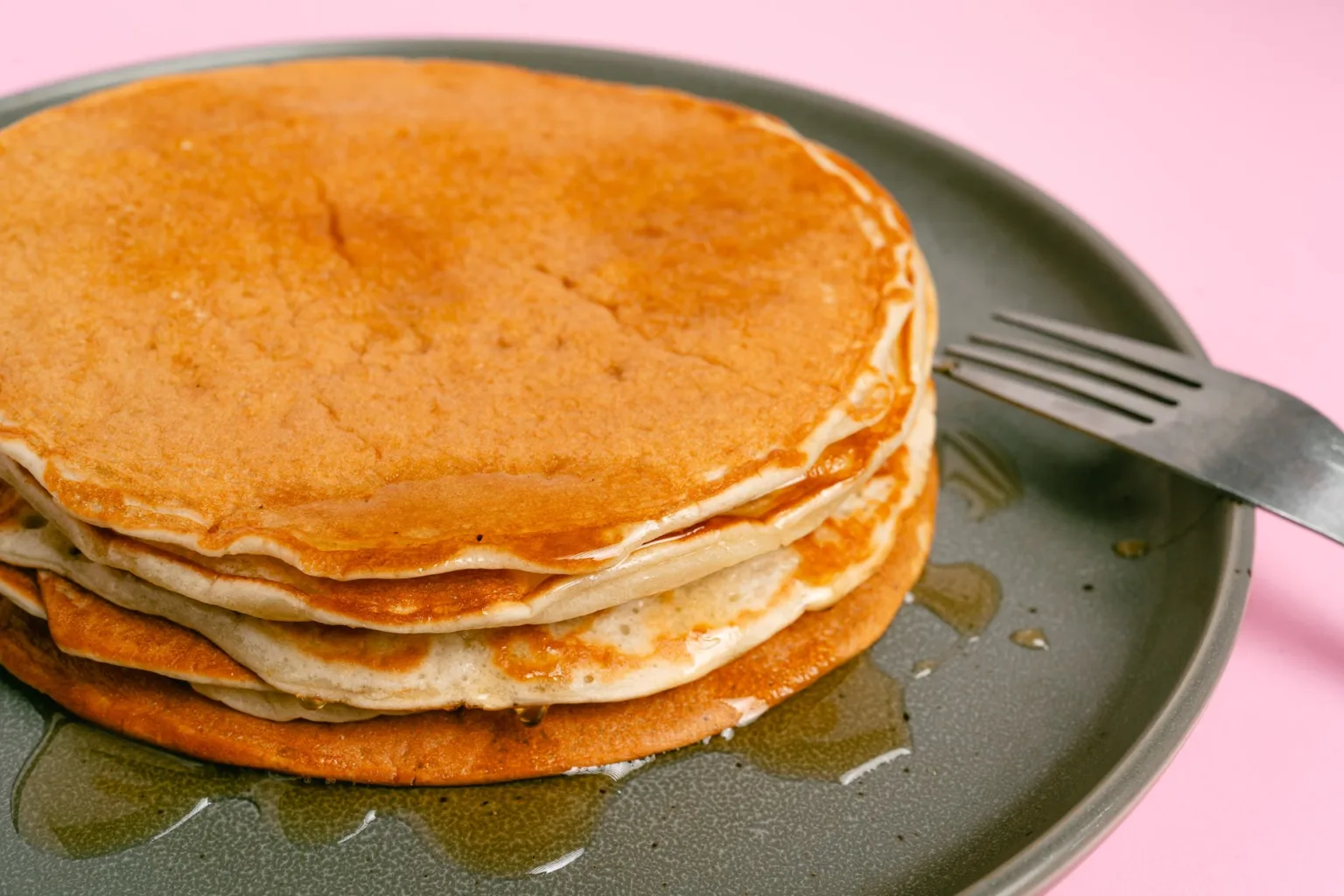
Use maple syrup when you want liquid sweetness with a flavor of its own rather than a neutral sweetener. It is commonly served over pancakes, crêpes and waffles, and can also accompany oatmeal, toast or yogurt. In sweet recipes, it can be added to drinks, batters and desserts; in savory dishes, it can be included in sauces, marinades or glazes. Choose a more delicate product when you want it to complement other flavors, or a more pronounced one when you want the maple character to stand out. Since color and flavor vary, taste the product you have before adjusting a recipe.
How to use it
Pour maple syrup directly over pancakes, crêpes, waffles, toast or oatmeal, or add it to yogurt and other foods that suit a sweet note. Stir it into drinks until blended; its liquid form makes it easy to incorporate. In baking, use it as a recipe ingredient and remember that it contributes both sweetness and its own aroma, so it is not a neutral replacement. You can also mix it with other ingredients to make sauces, marinades or glazes for savory dishes. Add it gradually and taste as you go, especially if the syrup has a pronounced flavor. If you use it in place of another sweetener, check how the sweetness and consistency change before making further adjustments.
Flavour and texture
Maple syrup is sweet, aromatic and viscous, with a flowing consistency that is thicker than water. Its color can range from golden or light amber to darker shades, and its flavor intensity can vary too. Some products have a more delicate profile, while others are more pronounced. Do not assume every bottle will taste alike: differences in color and aroma are part of the range of products and can affect how noticeable the syrup is in a recipe.
How to choose it
Read the product name and package information to check that you are buying maple syrup rather than an imitation syrup or another kind of syrup. Review the ingredient list and the manufacturer's directions as well. Color and flavor intensity vary, so choose a gentler profile for delicate uses or a more pronounced one if you want maple to stand out in a sauce, glaze or baked recipe. If the label provides a classification, treat it as product information; do not assume that every syrup in a category will taste identical.
Storage
Store the product according to the directions on its package, which are the appropriate reference for that particular product. Check the use instructions and any date provided on the label too. After opening, follow the manufacturer's storage and handling directions; do not assume that every product has the same requirements. Keep the container closed when not in use, and do not rely on general advice that conflicts with the label.
Substitutions
Honey and agave syrup can replace maple syrup in some preparations, but their flavors are different. Molasses has a stronger taste and can substantially change the result. Brown sugar dissolved in water can provide sweetness in some recipes, though it does not exactly reproduce maple syrup's aroma or texture. There is no universal substitution ratio for every recipe: consider the syrup's role and adjust gradually, tasting when practical.
Common mistakes
A frequent mistake is treating maple syrup as a neutral sweetener: it brings its own flavor as well as sweetness. It can also be disappointing to expect every product to have the same color or intensity. When replacing it with honey, agave, molasses or dissolved sugar, do not assume the recipe will keep the same flavor and consistency. Finally, do not apply a generic storage rule if the package directions say otherwise.
Safety and allergens
Check the label for ingredients, allergen information, dates, storage directions and instructions for use. Follow the manufacturer's guidance, since directions can differ by product and presentation.
Culinary uses
- Liquid sweetener
- Topping and finishing drizzle
- Ingredient for baking, sauces and glazes
Recommended techniques
- Pour over food as a topping
- Stir into drinks or other mixtures
- Incorporate into baking
- Mix into sauces, marinades or glazes
Pairs well with
- Pancakes, crêpes and waffles
- Oatmeal, toast and yogurt
- Drinks and desserts
- Tofu and savory preparations
Frequently asked questions
What is maple syrup made from?
It is made by concentrating sap from certain maple trees to produce a sweet syrup.
How can I use maple syrup in cooking?
Serve it over pancakes, crêpes, waffles, oatmeal or toast, or use it in drinks, baking, sauces, marinades and glazes.
Do all maple syrups taste the same?
Not necessarily. Color and aromatic intensity can vary; check the label and taste your syrup before adjusting a recipe.
What can I use if I do not have maple syrup?
Honey, agave syrup or, in some preparations, molasses or dissolved brown sugar may work, but each alternative changes the flavor and possibly the consistency.
Estimated nutrition
- Fat
- 0 g
- Saturates
- 0 g
- Carbohydrate
- 88.3 g
- Sugars
- 88.3 g
- Protein
- 0 g
- Salt
- 0 g
Sources and review
Automatically researched, cross-checked and validated content. Sources consulted:
- En el etiquetado alimentario hay algunas menciones que son obligatorias eletiquetadocuentamucho.aesan.gob.es
- ¿Por qué la muerte es origen de miedos y tabúes? doi.org
- Qué es el sirope de arce, cuáles son sus ventajas en repostería y cocina salada y siete recetas en las que brilla directoalpaladar.com
- Jarabe de arce - Wikipedia, la enciclopedia libre es.wikipedia.org
- Sirope de arce o maple: propiedades y usos en la cocina - Mejor con Salud mejorconsalud.as.com
- Sirope de arce: qué es, propiedades, beneficios y valor nutricional lavanguardia.com
- Sirope de arce: qué es y cuáles son sus propiedades cuerpomente.com
- De dónde proviene y cómo se extrae el sirope de arce: historia, proceso, variedades y usos jardineriaon.com
- Artes culinarias/Ingredientes/Sirope de arce - Wikilibros es.m.wikibooks.org
- Sirope en la cocina friolisa.es
- Jarabe de arce - Gastronomía Vasca: Escuela de Hostelería Leioa gastronomiavasca.net
- Todo sobre el jarabe de arce [GUÍA COMPLETA] basmatic.com
- Los 10 mejores sustitutos del sirope de arce - NewFoodHub nwfoodhub.com
- Mejores Sustitutos de Jarabe de Arce para Repostería | BakingSwaps bakingswaps.com
- SALSA DE SIROPE DE ARCE – La Gata Rock&Food lagatarockandfood.wordpress.com
- jarabe de arce - Scoolinary scoolinary.com
- Usos alternativos del sirope de arce | MapleFarm maplefarmsyrup.com