- Category
- Oils and fats
- State
- Fresh
- Usual unit
- tablespoon
What it is
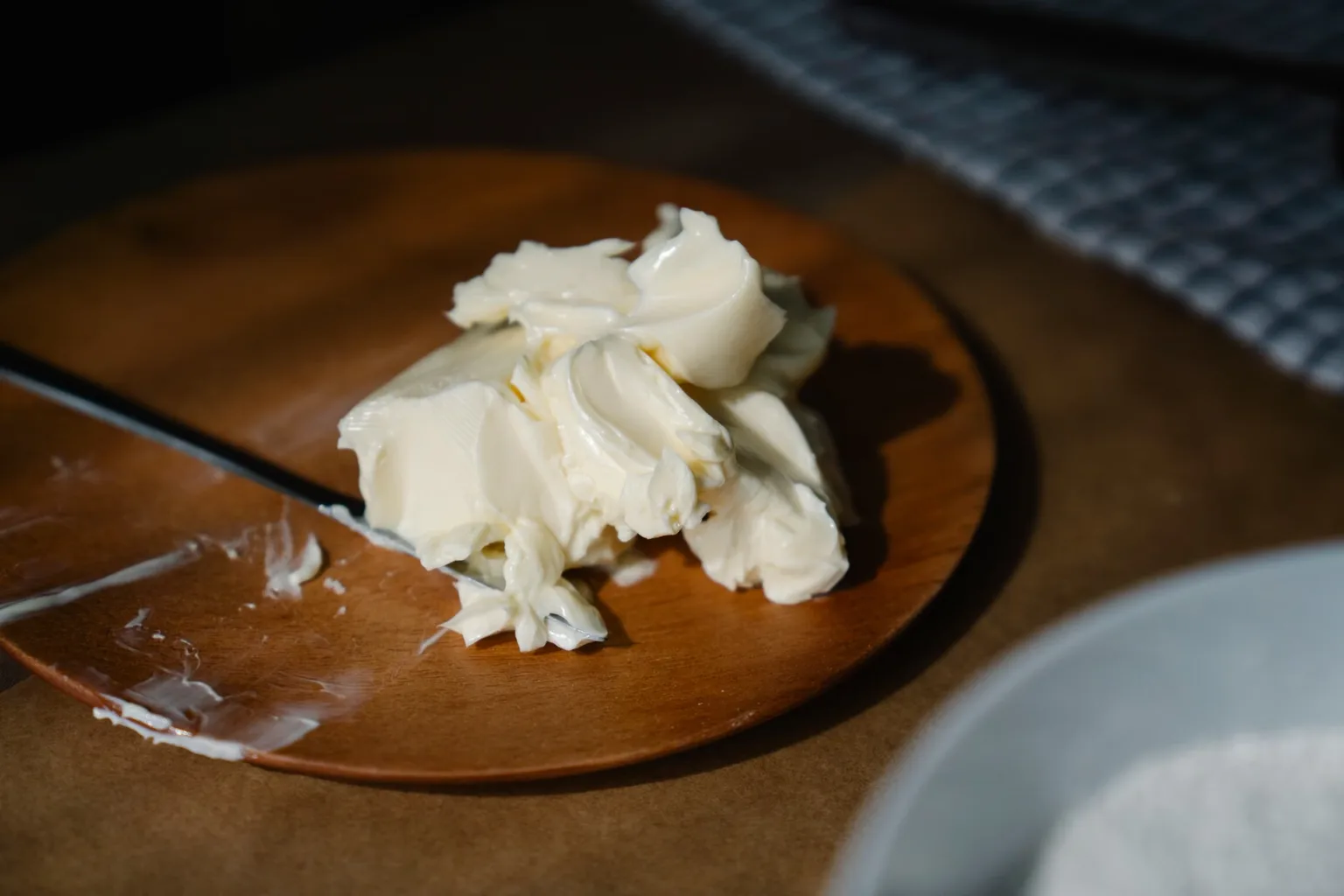
Margarine is a spreadable fat used in place of butter for some culinary purposes. There is no single formula for every product: varieties can differ in their oils, ingredients, and consistency. Some are solid spreads, while others are liquid and pourable. The name alone therefore does not tell you whether a particular margarine will work in every recipe. Read the ingredient list, allergen information, and manufacturer’s directions to understand the product you have and how it is intended to be used.
When to use it
Use margarine to spread on bread or toast, add fat to cooked foods, or in recipes that can accommodate it as a cooking fat. Depending on the product, it may be suitable for sautéing and baking applications such as cakes, muffins, or pastry. Some liquid margarines are pourable and convenient for pan cooking. Since formulation and texture vary, check that the type you choose is intended for the task, especially when making dough or pastry, where consistency can affect the result.
How to use it
Spread it on bread or toast, or add it to cooked foods when you want a spreadable fat. In cooking, margarine can be used for sautéing and in some baking preparations when the product and recipe are compatible. Liquid varieties can be poured, and some products are described as suitable for pan cooking. Follow the package directions rather than assuming a table spread will perform like a product designed for cooking or pastry. If replacing another fat, remember that differences in consistency can affect how the recipe turns out.
Flavour and texture
Flavor and texture depend on the formulation. Margarine can be a firm spread or a liquid product that pours. Some varieties are designed to resemble butter, but products do not all have the same consistency or work interchangeably in every recipe. Check the label and choose a format that suits the intended use.
How to choose it
Choose a type of margarine for the way you plan to use it, such as spreading, cooking, or a particular preparation. Check that the package is intact and read the ingredients, use directions, and allergen information. Formulations vary by brand and product, so the word margarine alone does not confirm that a product is free from milk or soy or suitable for every recipe.
Storage
Storage conditions can depend on the specific product. Follow the storage instructions on the package and observe the date shown. Keep the margarine in its packaging or a clean, closed container to protect it from contamination and external odors. Do not assume all varieties have identical storage requirements; use the instructions for the product in hand.
Substitutions
Butter can replace margarine in some applications, and margarine can be used instead of butter in certain recipes. Olive oil or a vegetable-oil-based spread may also be an option, depending on the preparation. These alternatives are not automatically equivalent: fat type and consistency can affect the outcome, so check that the substitute suits the recipe.
Common mistakes
A common mistake is treating every margarine as though it has the same ingredients and texture. Products do not all work equally well for spreading, cooking, and pastry. Do not assume margarine is suitable for someone with a milk or soy allergy. Check the ingredient list, declared allergens, and package directions before use.
Safety and allergens
Check the package for ingredients, allergens, and storage and use directions. Formulations vary, and an official alert has reported milk in a margarine product; do not assume every product is allergen-free. Follow the manufacturer’s stated date and storage conditions.
Culinary uses
- grasa para untar
- grasa de cocina y repostería
Recommended techniques
- untar
- saltear
- hornear
- freír en sartén si el producto es adecuado para ello
Pairs well with
- pan y tostadas
- verduras cocinadas
- pasta y arroz
- masas y productos de repostería
Frequently asked questions
Is all margarine plant-based?
Do not assume that every product has the same ingredients. Check the ingredient list and allergen information on the package.
Can I bake with margarine?
Margarine can be used in some baking applications, but the result depends on the product and recipe. Choose a variety intended for that use.
Does margarine contain milk or soy?
Some products may declare milk or soy, and formulations vary between products. Always check the label, especially if you have an allergy.
Estimated nutrition
- Fat
- 78.6 g
- Saturates
- 14.3 g
- Carbohydrate
- 0 g
- Sugars
- 0 g
- Protein
- 0 g
- Salt
- 2.05 g
Sources and review
Automatically researched, cross-checked and validated content. Sources consulted:
- En el etiquetado alimentario hay algunas menciones que son obligatorias eletiquetadocuentamucho.aesan.gob.es
- Client Challenge doi.org
- Cooking Food Storage | USU extension.usu.edu
- Food Selection & Storage | Home & Garden Information Center hgic.clemson.edu
- Aesan - Agencia Española de Seguridad Alimentaria y Nutrición aesan.gob.es
- Margarina mapa.gob.es
- Margarines and Spreads - Oklahoma State University | Oklahoma State University extension.okstate.edu
- I Can’t Believe It’s Not Butter: Margarine, Shortening, and Nut Butters - Clarifying Butter - LibGuides at Conrad N. Hilton Library library.culinary.edu
- (PDF) STORAGE STABILITY AND ACCELERATED SHELFLIFE TESTING OF MARGARINE SAMPLES academia.edu
- Margarine vs. Butter: What's the Difference? - Escoffier escoffier.edu
- Butter vs. Margarine - Harvard Health health.harvard.edu
- Nutrition | Label - Margarine nutrition.umd.edu
- Margarina - Wikipedia, la enciclopedia libre es.wikipedia.org
- Qué es la margarina directoalpaladar.com
- 1 TEMA 4: LA MARGARINA 1. Origen e historia. 2. Definición. 3. Elaboración cursos.gan-bcn.com
- Desvelamos todas tus dudas sobre la margarina - Garpa Alimentación - Almacenamiento y Distribución para las Islas Canarias garpa-alimentacion.com