- Category
- Fish and seafood
- State
- Fresh
- Usual unit
- kg
What it is
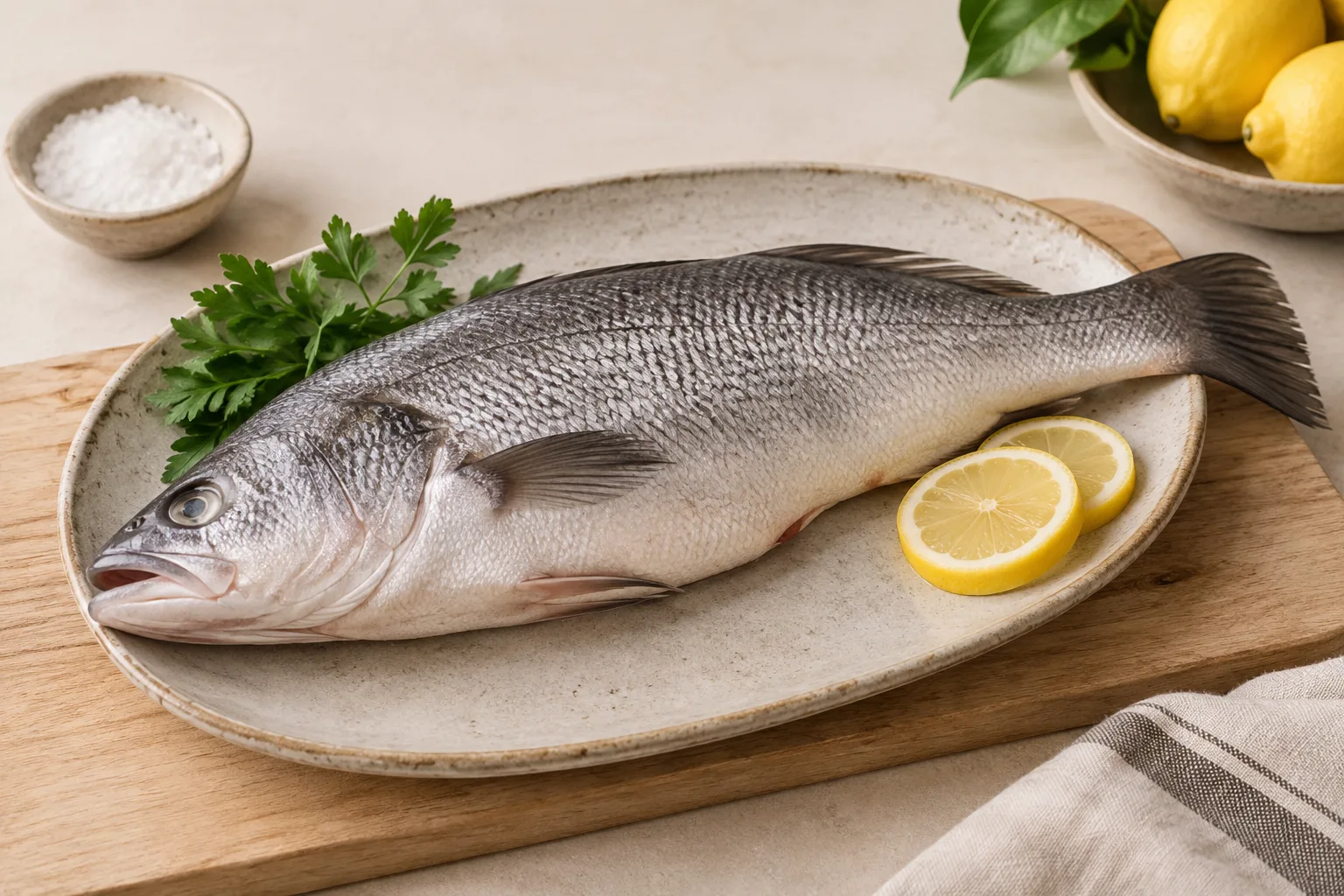
Meagre is a common name used for fish in the Sciaenidae family; Argyrosomus regius is one species identified by this name in Spain. Common names can vary between regions and species, so check the product description at the shop or on the label when precise identification matters. For cooking, meagre may be sold whole, opened, as fillets, loins or steaks. Its flesh is described as white, firm and delicate, making it suitable for both simple preparations and dishes with broth. This profile treats the ingredient as fresh fish but does not assume a particular origin, catching method or season of availability.
When to use it
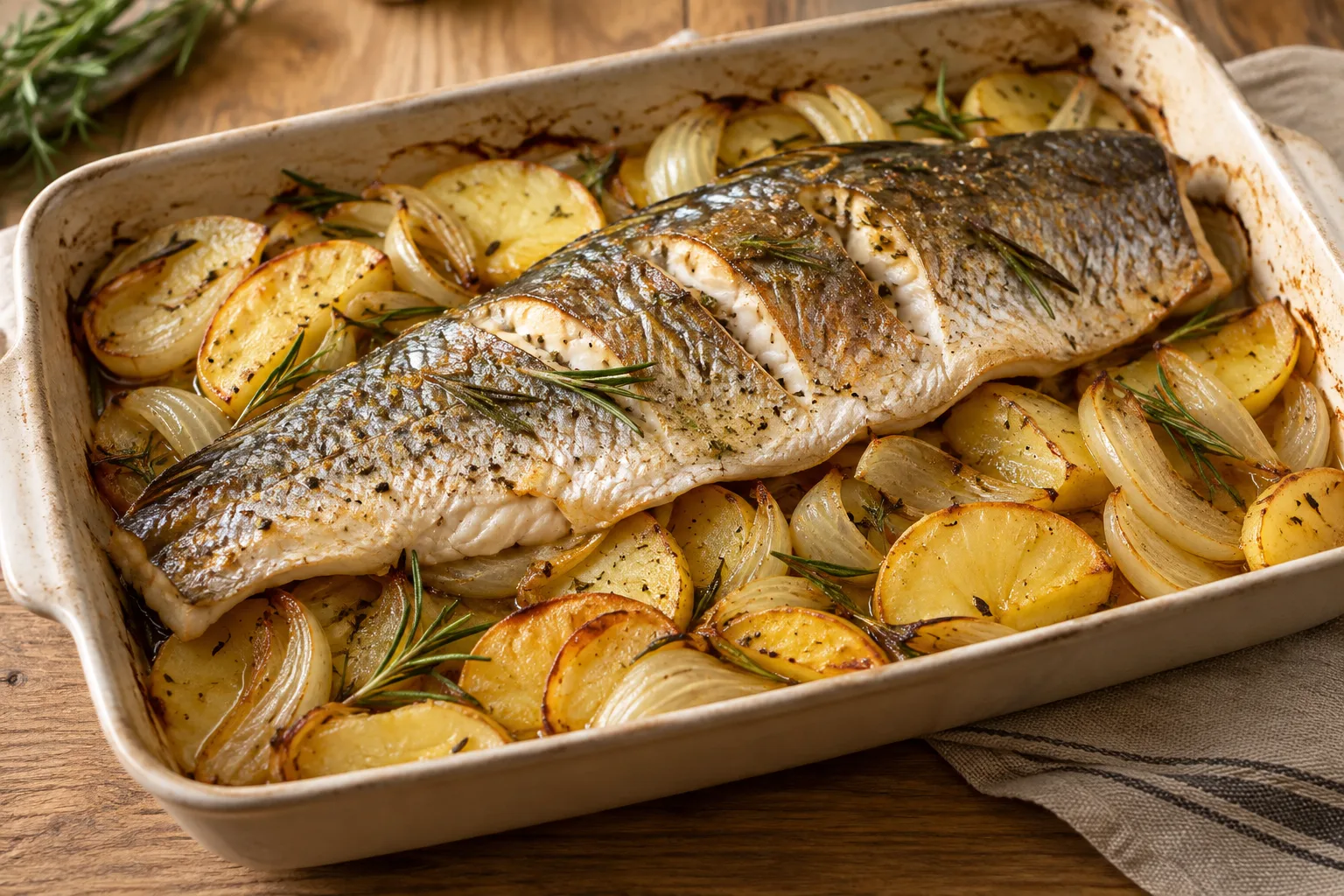
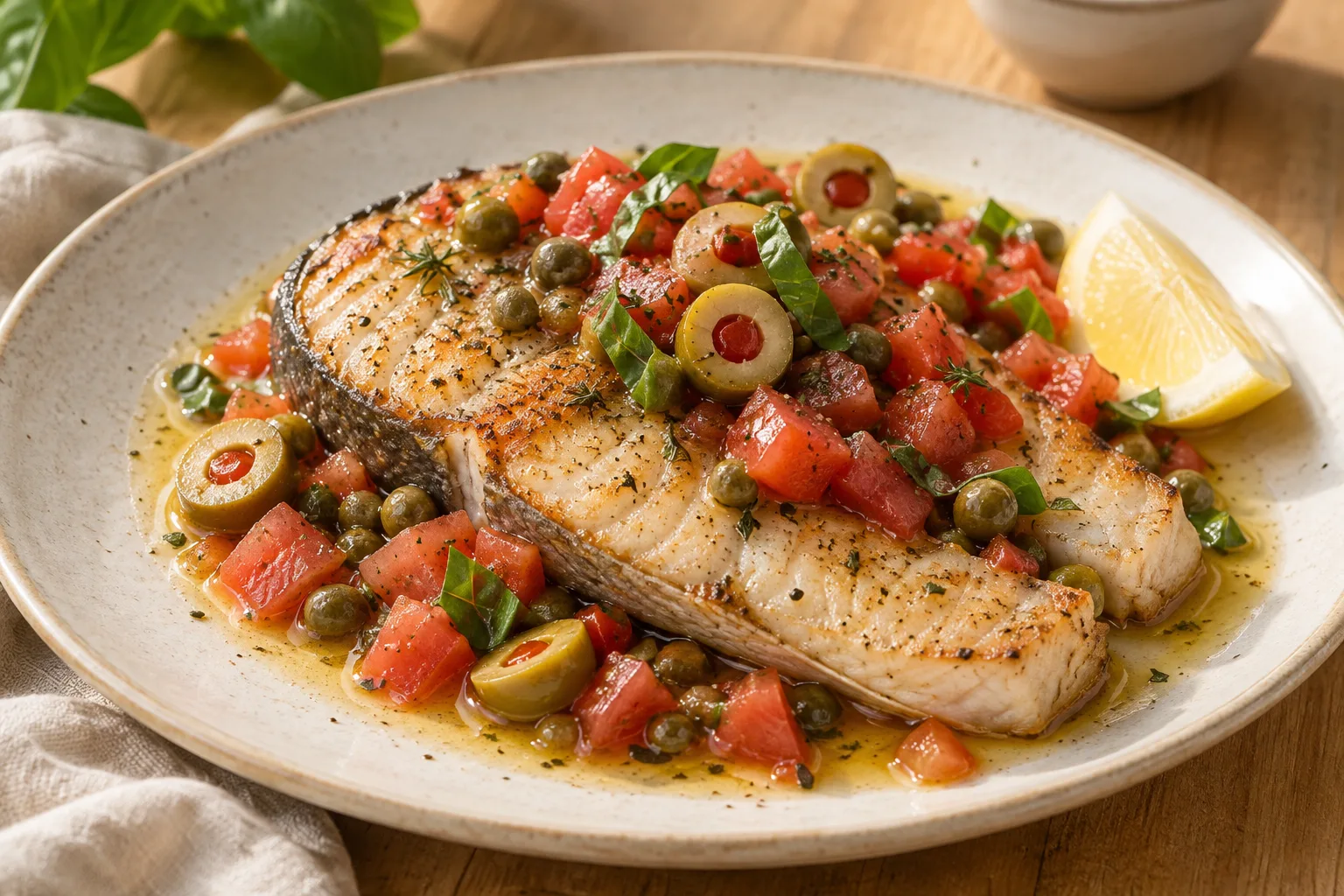
Choose meagre when you want a mild-flavoured fish that can be served in portions or cut to suit a recipe. A whole fish suits baking or grilling; fillets or loins are convenient for pan-cooking, steaming or frying; and steaks can go into stews and soups. Its versatility makes it suitable for an uncomplicated meal as well as a more elaborate dish. Availability can depend on origin and production method, so there is no single season that applies to all meagre.
How to use it
Select the cut to match the method: use a whole or opened fish for baking or grilling, fillets or loins for pan-cooking, steaming or frying, and steaks for stews or soups. Recipes also use meagre in marinades and ceviche, but raw use calls for particular care and product-specific safety information: this profile cannot confirm that every piece is suitable to eat raw. Pair the fish with lemon, aromatic herbs or vegetables, and avoid overwhelming its mild flavour with overly dominant seasonings. Follow the product’s storage and use instructions.
Flavour and texture
Meagre is described as mild in flavour, with white, firm and delicate flesh. This combination suits different cooking styles, although rough handling or cooking can detract from the result. Characteristics may vary with species and cut, so a common name alone does not guarantee that every product will be identical.
How to choose it
Buy meagre from a trusted fishmonger and choose the cut for your dish: whole for the oven or grill, fillets or loins for convenient cooking, and steaks for stews or soups. For packaged fish, check the product name, date and storage instructions. Common names vary by region; check the label or ask the seller if you need to confirm the species or product type.
Storage
Fresh meagre is perishable. Follow the storage instructions and date on the package or provided by the seller; food information should state any special storage conditions when required. If it is sold unpackaged and you are unsure how to store it or when to use it, ask the fishmonger for guidance. Do not rely on appearance or smell alone to determine whether food has been stored safely.
Substitutions
Sea bass or gilt-head bream may work as alternatives in some baked or pan-cooked fish dishes. They are not identical: flavour and texture may differ, so adapt the recipe to the cut and result you want. For soups or stews, choose a substitute that can be served in a comparable cut, bearing in mind that its flesh and bones will give a different result.
Common mistakes
Do not assume that every fish sold under a regional common name is the same species. Also, choose the cut with the recipe in mind: a whole fish, fillet and steak are used differently. Finally, do not assume that any fresh meagre is suitable to eat raw; follow product information and ask for guidance if unsure.
Safety and allergens
Follow the product’s date and storage and use instructions. If you need allergen information or have a food allergy, confirm the details for that specific product with the seller.
Culinary uses
- Pescado principal para servir entero, en filetes o en rodajas.
- Ingrediente para guisos, sopas y preparaciones a la plancha.
Recommended techniques
- Hornear o asar a la parrilla.
- Cocinar a la plancha, freír o incorporar a guisos y sopas.
Pairs well with
- Limón y hierbas aromáticas.
- Verduras y salsas ligeras de limón o vino blanco.
Frequently asked questions
Which cuts of meagre can I buy?
It may be sold whole, opened, as fillets, loins or steaks. Choose according to your dish and check what the seller has available.
How can I cook meagre?
It can be baked, grilled, pan-cooked or fried, and is also used in stews and soups. The cut helps determine the best method.
Does meagre always refer to the same species?
Not necessarily. Common names vary by region and may be used for different species. Check the product description when exact identification matters.
Sources and review
Automatically researched, cross-checked and validated content. Sources consulted:
- En el etiquetado alimentario hay algunas menciones que son obligatorias eletiquetadocuentamucho.aesan.gob.es
- Client Challenge doi.org
- Cooking Food Storage | USU extension.usu.edu
- Aesan - Agencia Española de Seguridad Alimentaria y Nutrición aesan.gob.es
- Food Selection & Storage | Home & Garden Information Center hgic.clemson.edu
- Culinary MakerSpace | Auxiliary Services | Binghamton University binghamton.edu
- Using and Preserving Cranberries - National Center for Home Food Preservation nchfp.uga.edu
- Mapa mapa.gob.es
- Preserve Smart apps.chhs.colostate.edu
- O R E G O N S T A T E U N I V E R S I T Y E x t e n s i o n S e r v i c e extension.oregonstate.edu
- Classes for Home Cooks | CCSF ccsf.edu
- 🥇Todo lo que debes saber sobre la corvina: origen, características y usos culinarios reyvinoblanco.com
- Cómo cocinar corvina: qué es; las mejores recetas fáciles y caseras para este pescado directoalpaladar.com
- Corvina Fresca Online | Envío 24h — Costa Pujol costapujol.cat
- Corvina: beneficios de comerla y recetas para disfrutarla abc.es
- Recetas fáciles y prácticas - ensumesa ensumesa.com
- Corvina: propiedades, beneficios y cómo cocinarla | Mariskito mariskito.com
- Corvina. Pescado fresco de Crianza de Mares y Ríos de España crianzamaresyriosdespana.es