- Category
- Fruit
- State
- Fresh
- Usual unit
- unit
What it is
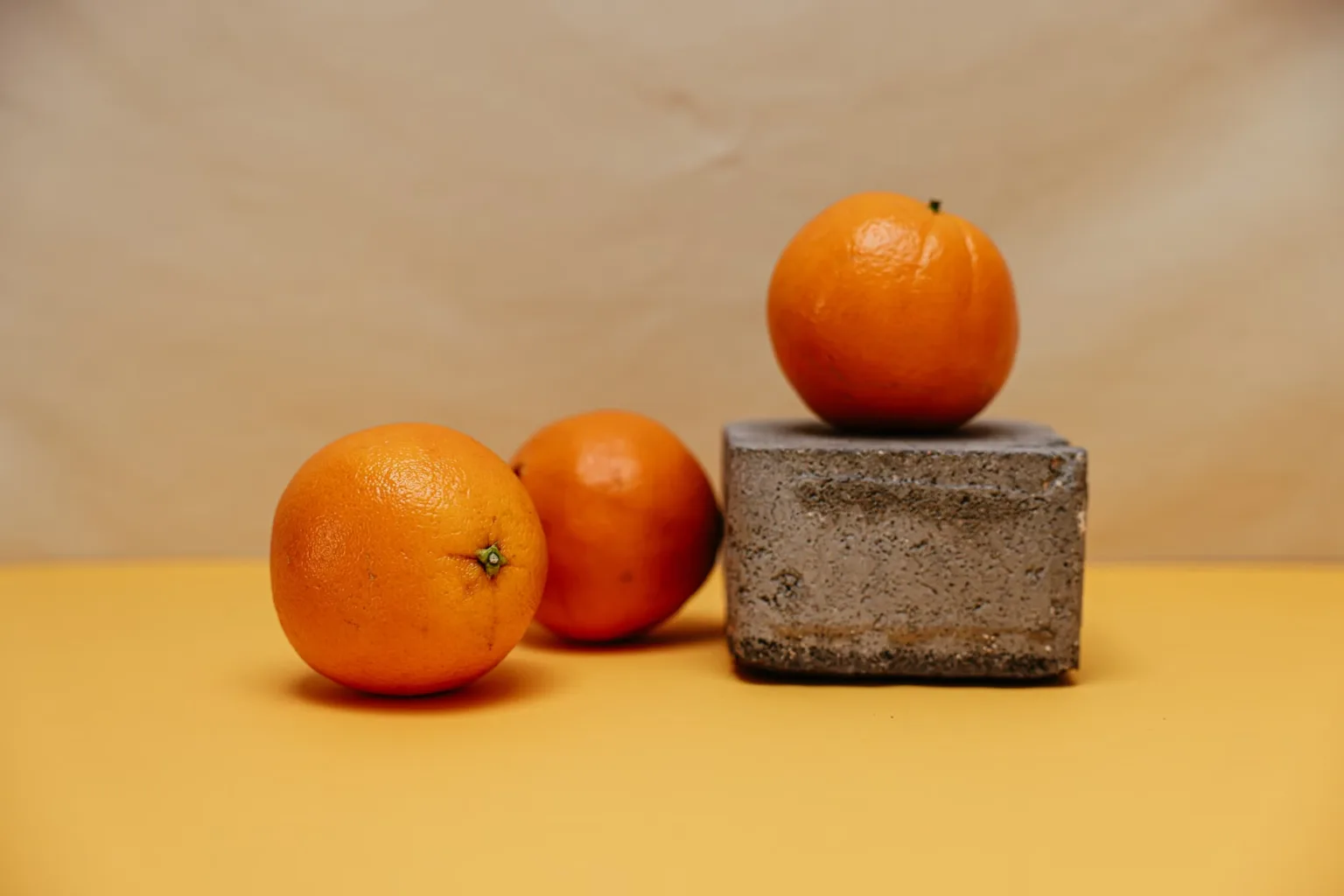
An orange is a citrus fruit sold in many varieties. Sweet oranges are commonly eaten fresh, while bitter oranges are more often used in preparations such as marmalade. Shape, size, flesh color, juiciness, and seed presence vary by type. As a result, an orange suited to eating may not be the best choice for juicing, and an aromatic peel can bring character to a recipe. Both the flesh and juice, as well as the peel, can be used when the recipe calls for them. Choose the variety according to the intended use rather than assuming every orange will behave the same way.
When to use it
Use fresh orange when you want juicy segments in a salad, a piece of fruit to eat, or a citrus note in a sweet or savory dish. For juice, choose fruit that seems suitable for juicing and remember that yield varies among varieties. The peel can add aroma to baking and other recipes. If a recipe calls for a sweet orange to eat fresh, do not assume a bitter orange is interchangeable: the two can have different culinary uses. The specific variety and the part of the fruit required should guide your choice.
How to use it
Before peeling or cutting an orange, wash the surface by rubbing it under running water, then dry it. To eat it fresh, remove the peel and separate the segments; you can also cut the fruit and add the flesh to a salad. To make juice, squeeze the fruit and adjust the amount to the recipe, bearing in mind that varieties do not always yield the same amount. Peel can add aroma to baked goods and other preparations; use it when the recipe calls for it. Pair orange with chicken, fish, or seafood in savory dishes, or use it in sweet preparations. If preserving dried peel, follow a tested, method-specific procedure.
Flavour and texture
Depending on the type, an orange can taste sweet, acidic, or bitter. Its juicy flesh is divided into segments, while juice yield, seed presence, and peel thickness also vary. The peel is aromatic, and its outer texture differs among varieties. These differences are normal: select the type for the result you want instead of assuming all oranges will taste or perform alike when eaten or juiced.
How to choose it
Choose oranges that are firm and heavy for their size, with fine-textured skin and no soft spots. Avoid fruit with visible cuts, bruises, or other damage. Color alone is not always a reliable sign of readiness, because appearance depends on variety and growing conditions. If you want juice, remember that yield varies by type; if you want fruit to eat, prioritize an intact, firm example.
Storage
Keep fresh oranges in the refrigerator crisper if you need to store them. The University of California guidance says commercially grown oranges can keep refrigerated for several weeks; homegrown oranges can remain on the tree until needed or be stored in the refrigerator crisper. Set aside and use first any fruit with a broken or damaged peel, since the break can make it more likely to spoil. Do not wash the fruit until you are ready to peel or cut it.
Substitutions
Mandarin or lemon can work as citrus alternatives in some recipes, but they are not identical replacements: they change the flavor and may shift the balance of the dish. Adjust amounts gradually and consider whether the recipe needs flesh, juice, or peel. If the orange has a specific role, such as providing plenty of flesh or a sweet profile, check that the alternative can serve that purpose before substituting.
Common mistakes
Do not choose an orange by color alone or assume all varieties are equally juicy. Do not skip washing before peeling or cutting; clean the surface first. Avoid using fruit with cuts or soft spots without checking it, and do not confuse bitter orange with sweet orange when a recipe is intended for fresh eating.
Safety and allergens
Before peeling or cutting, rub the orange under running water and dry it. Discard fruit with obvious deterioration. For packaged or prepared products, check the label for ingredients and any applicable storage and use instructions.
Culinary uses
- Fruta fresca para comer sola o en ensaladas
- Fuente de zumo, pulpa y aroma de piel para preparaciones dulces y saladas
Recommended techniques
- Exprimir para obtener zumo
- Pelar, separar en gajos y usar la pulpa o la piel como ingrediente
Pairs well with
- Pollo y otras carnes
- Pescados y mariscos
Frequently asked questions
Should I wash an orange before peeling it?
Yes. Rub the surface under running water and dry the fruit before peeling or cutting it.
How do I choose a fresh orange?
Look for fruit that is firm and heavy for its size, with fine-textured skin and no soft spots, cuts, or bruises.
Are all oranges equally good for juicing?
Not necessarily. Juiciness and yield vary by variety, so choose according to how you plan to use the fruit.
Estimated nutrition
- Fat
- 2 g
- Saturates
- 1.16 g
- Carbohydrate
- 30.4 g
- Sugars
- 24.3 g
- Fibre
- 1.3 g
- Protein
- 1.1 g
- Salt
- 0.12 g
Sources and review
Automatically researched, cross-checked and validated content. Sources consulted:
- En el etiquetado alimentario hay algunas menciones que son obligatorias eletiquetadocuentamucho.aesan.gob.es
- Client Challenge doi.org
- Cooking Food Storage | USU extension.usu.edu
- The Essential Glossary of Cooking Terms for the Culinary Arts - Escoffier escoffier.edu
- Oranges | UC Master Food Preserver Program of Orange County ucanr.edu
- Naranja | Postharvest Research and Extension Center postharvest.ucdavis.edu
- FOCUS ON WHOLE FRUITS: How to Select and Store Fruit | NDSU Agriculture ndsu.edu
- Oranges: Safe Methods to Store, Preserve, and Enjoy class.ucanr.edu
- How to Cook Nopales for a Flavorful Experience • southernwv.edu staging.southernwv.edu
- Naranja (fruta) - Wikipedia, la enciclopedia libre es.wikipedia.org
- Descubre las variedades de naranjas y sus usos en la cocina naranjaslove.com
- Estos son todos los tipos de naranja que existen y sus usos en la cocina | Gastrolab gastrolabweb.com
- Naranja: propiedades y usos en la cocina - Cocina y Come cocinaycome.com
- Naranja | Origen y variedades | Frutas | EROSKI CONSUMER frutas.consumer.es