- Category
- Sugar and sweeteners
- State
- Dry
- Usual unit
- g
What it is
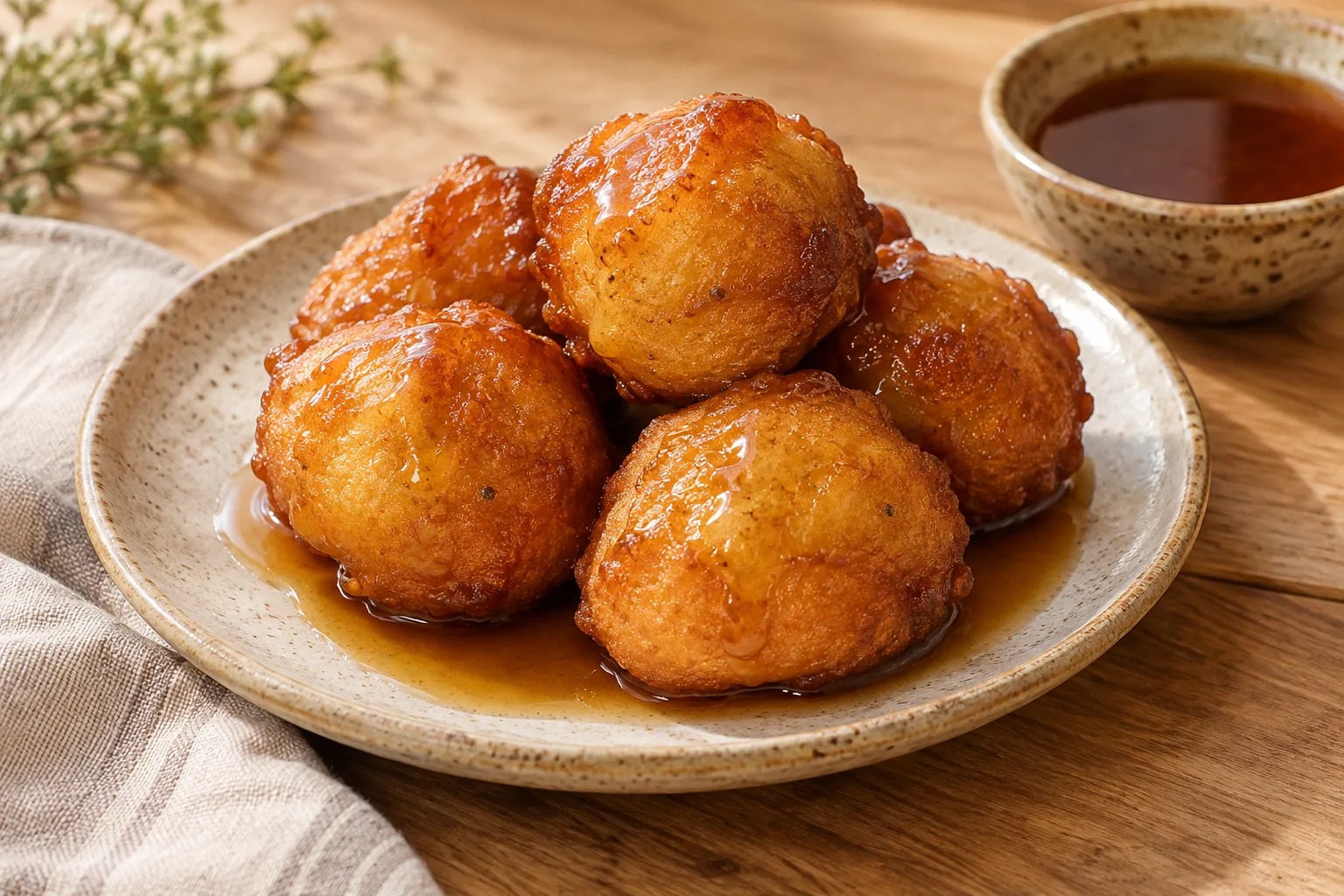
Panela is a sweetener made from sugarcane juice that is cooked down and then solidified. It is sold in blocks, cones, or cubes, as well as in granulated form, which is easier to measure and dissolve. Its color can range from earthy brown to golden or cinnamon shades, depending on the product. Unlike refined white sugar, panela has a distinctive flavor, commonly described as caramel-like or toasted. Regional names include piloncillo, chancaca, papelón, and rapadura in some markets. Check the package rather than relying on the name alone, since names and forms vary by region.
When to use it
Use panela when you want to sweeten a drink or add a caramel-like note to a dessert. It is used in hot drinks such as coffee and chocolate, in foods such as rice pudding, and in drinks made with lemon. It can also be used in savory dishes, though its characteristic flavor may be noticeable; start with a modest amount and adjust to taste. Granulated panela is handy when you want to measure or dissolve the sweetener quickly. A solid block is useful when you want to grate or chop it, or cook it into a syrup.
How to use it
If you have panela in a block, grate or chop it into small pieces to make measuring easier and help it dissolve more evenly. For a hot drink, add it gradually and stir until incorporated; taste before adding more, since its caramel-like flavor may be more noticeable than that of a neutral-tasting sugar. Granulated panela can be stirred directly into drinks or recipes as directed. You can also dissolve and cook it to make a syrup, sometimes called panela honey, for sweets and other preparations. In savory dishes, add it gradually so the sweetness does not overwhelm the other flavors.
Flavour and texture
Panela is sweet and often has caramel-like or toasted notes, with a more pronounced profile than white sugar. Its color can range from earthy brown to golden or cinnamon shades. In block form it is compact and hard, so grating or chopping may make it easier to measure and dissolve. Granulated panela has loose particles and is easier to portion and dissolve. Flavor and form can differ from product to product, so do not assume that every type will behave identically in a recipe.
How to choose it
Choose a form that suits your use: granulated panela is convenient to measure and dissolve, while blocks or cones can be grated, chopped, or cooked into syrup. Check that the package is intact and read the label to confirm the product and form, since regional names do not always match. Color can vary between products and, by itself, does not show that one is better. If a recipe calls for a precise amount, remember that a block may need to be prepared before you measure it.
Storage
The available evidence does not specify a panela-specific storage method or storage period. Follow the package directions and handle the product cleanly to avoid contamination. Keeping storage containers and utensils clean is a general hygiene precaution. Storage does not improve a food’s initial quality, so check the product and its package before use; do not rely only on appearance or taste to judge safety.
Substitutions
White or brown sugar can replace panela when a recipe needs sweetness, but the result will not have exactly the same caramel-like flavor. Block and granulated panela are not handled in the same way: grate or chop a block, and consider the form requested by the recipe. The available evidence does not establish a universal conversion between these products; adjust to taste and to the sweetener’s role in the dish.
Common mistakes
Do not treat a hard block as if it will dissolve as readily as granulated panela: grate or chop it first. Avoid adding a large amount all at once, since its caramel-like taste can change the character of a drink or dish. Do not assume white or brown sugar will give the same flavor, or that regional names guarantee an identical form; check the product and follow the recipe.
Safety and allergens
No panela-specific safety warning is provided. As a general precaution, handle it with clean hands and use clean containers and utensils; check the package and follow the manufacturer’s directions. Appearance or taste alone cannot guarantee that a food is safe.
Culinary uses
- Sweetener for drinks and desserts
- Adds caramel-like flavor to sweet and savory dishes
Recommended techniques
- Grate or finely chop a solid block before measuring
- Dissolve in hot liquid or cook into a syrup
Pairs well with
- Coffee and chocolate
- Rice pudding and other desserts
- Drinks with lemon
Frequently asked questions
Is panela sold only in blocks?
No. It may be sold in blocks, cones, or cubes, and it is also available granulated. Granulated panela is easier to measure and dissolve.
Can I use panela to sweeten coffee or chocolate?
Yes. It is used in hot drinks such as coffee and chocolate. Add it gradually and stir until dissolved.
Can white sugar replace panela?
It can provide sweetness, but it will not reproduce panela’s characteristic caramel-like flavor exactly. Adjust the amount to taste.
Estimated nutrition
- Fat
- 0 g
- Saturates
- 0 g
- Carbohydrate
- 85.7 g
- Sugars
- 82.1 g
- Fibre
- 0 g
- Protein
- 0 g
- Salt
- 0 g
Sources and review
Automatically researched, cross-checked and validated content. Sources consulted:
- Client Challenge doi.org
- Food Selection & Storage | Home & Garden Information Center hgic.clemson.edu
- Pampered Chef Official Site | Pampered Chef US Site i-links.illinois.edu
- Kitchens/Co-Packers | CALS cals.cornell.edu
- Storing Food for Safety and Quality wpcdn.web.wsu.edu
- Comité Científico aesan.gob.es
- Food Storage Booklet.indd extension.usu.edu
- NUTRITION 650/650L Food Science and Culinary Arts ... sph.unc.edu
- Culinary Arts/Chef Training | Coastal Alabama Community College catalog.coastalalabama.edu
- Guía completa sobre la panela | Recetas Nestlé recetasnestle.com.co
- Panela - Wikipedia, la enciclopedia libre es.wikipedia.org
- Panela: qué es, beneficios y contraindicaciones bonviveur.com
- ¿Has probado la panela? - Formacion en Gastronomia formacionengastronomia.com