- Category
- Grains, flour and pasta
- State
- Dry
- Usual unit
- Variable
What it is
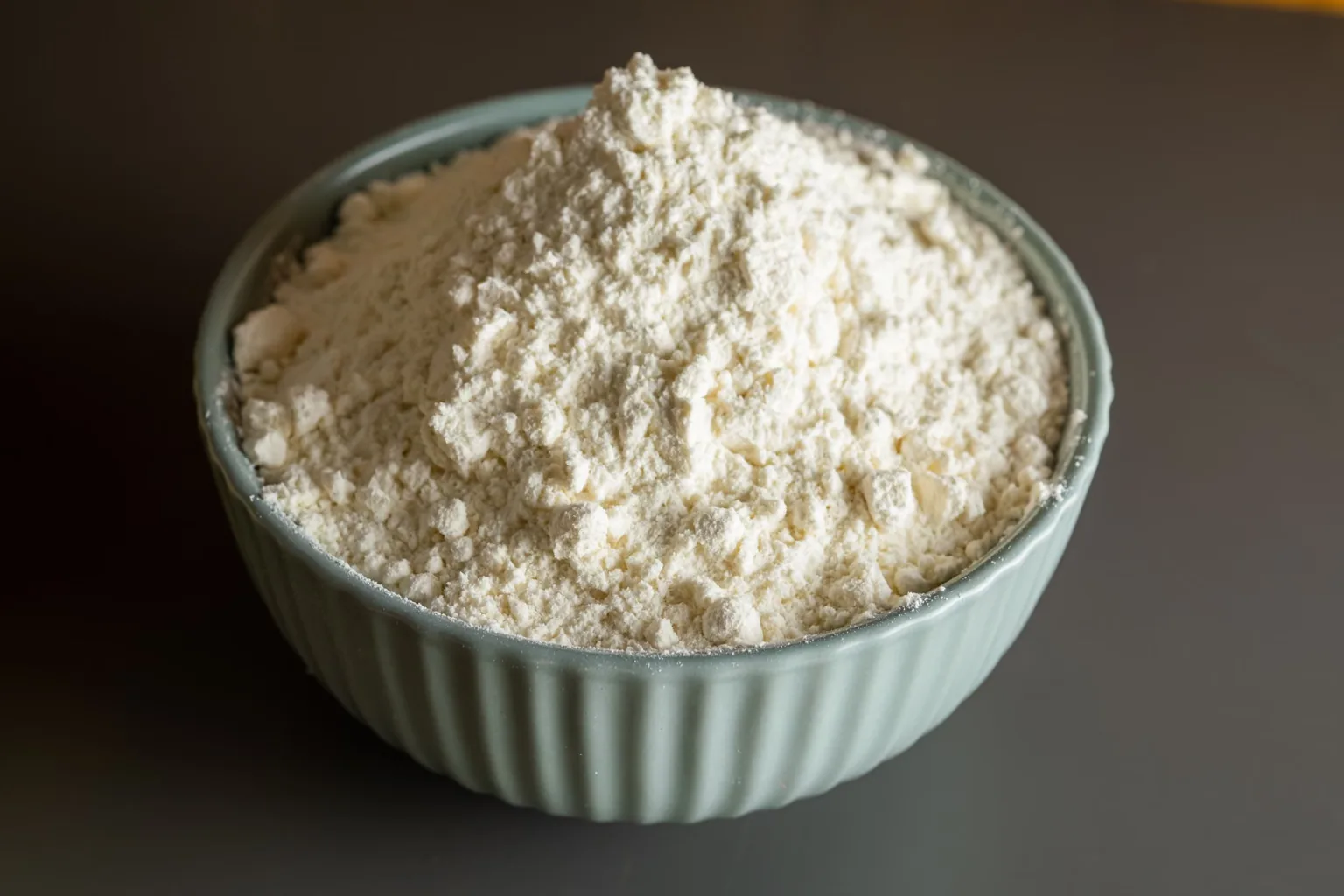
Plain flour is a dry, milled ingredient made here from wheat. The word flour can also describe products milled from other grains or ingredients, so check the product label to confirm what you are buying. Wheat flours are not all alike: their properties and suitability for different preparations can vary. In cooking, flour can provide structure and consistency to doughs, contribute to the texture of baked goods, and help thicken soups, sauces or stews. A product name alone may not tell you exactly how a flour will perform in a recipe. Read the product description and follow any usage guidance on its package.
When to use it
Use wheat flour when a recipe needs dough to form, structure in a baked preparation, thickening for a dish, or a coating for food. Flours vary in strength and other characteristics: some types are better suited to bread, while others are used for biscuits, cakes or softer doughs. Check which kind the recipe calls for and read the product information, especially when the result depends on elasticity or volume. A general name on the package does not guarantee identical performance across flour types.
How to use it
Follow the recipe for the amount and method of incorporation. Flour can be mixed with liquid to form dough, combined with other ingredients in a sweet preparation, or added to thicken a dish. Knead only when the recipe calls for it, since flour types and desired results differ. When thickening, use the method given for the dish rather than assuming another kind of flour will behave the same way. Flour can also be used as a coating. Do not taste raw dough or batter containing flour; cook or bake it according to the recipe or package directions. After handling raw flour, wash your hands and clean the surfaces and utensils that it touched.
Flavour and texture
Plain flour is a fine, dry powder. Its culinary role is to contribute structure and consistency, and flour can also contribute flavor and aroma to a preparation. The result is not identical with every flour: the type of grain and the flour's characteristics affect the texture of dough and the finished food. Do not assume that a wholegrain or other-grain flour will behave like plain wheat flour.
How to choose it
Check that the package identifies the product as wheat flour and look for any stated purpose, such as bread-making or baking. Flours differ in their characteristics, and some are better suited to particular recipes, so a generic name may not provide enough detail. In particular, the designation “00” alone does not establish, on the evidence available here, that a flour will perform exactly like another plain flour. Follow the product and recipe guidance.
Storage
Follow any storage instructions printed on the package and keep the product identified in its packaging or in a container whose label you can check. The available information does not establish a universal storage period or set of conditions for all flours. Refer to the specific product directions rather than relying on a general rule.
Substitutions
Whole-wheat flour and flours made from other grains may be options in some recipes, but they are not automatically interchangeable with plain flour. Whole-wheat flour can give a denser texture and a more pronounced flavor; oat flour also has its own properties. Check the recipe guidance and expect the consistency or finished result to change when you switch flour types.
Common mistakes
Do not assume all wheat flours have the same properties or that a generic label tells you the flour's strength or result. Another important mistake is tasting raw dough, batter or coating made with flour: uncooked flour can contain harmful germs. Cook or bake as directed, and clean your hands, surfaces and utensils after handling it.
Safety and allergens
Do not eat raw dough or batter containing flour, even if it contains no egg; uncooked flour can carry germs that cause illness. Cook or bake according to the recipe or package directions. Keep raw flour separate from ready-to-eat foods, clean surfaces and utensils after use, and wash your hands. Check the product's allergen information.
Culinary uses
- Aporta estructura a masas y preparaciones de panadería y repostería
- Espesa sopas, salsas y guisos
- Sirve para rebozar alimentos
Recommended techniques
- Mezclar con líquido para formar masas
- Amasar cuando la receta lo requiera
- Incorporar para espesar preparaciones
- Usar como cobertura para rebozar
Pairs well with
- Agua u otros líquidos para formar una masa
- Huevos y azúcar en algunas masas dulces
- Mantequilla en masas enriquecidas
Frequently asked questions
Can every wheat flour be used for every recipe?
Not necessarily. Wheat flours have different characteristics; some are better suited to bread, while others are used in baking. Check the type specified by the recipe and the product information.
Can I taste raw dough made with flour?
No. Uncooked flour can contain harmful germs. Cook or bake the dough according to the recipe or package directions.
Is whole-wheat flour the same as plain flour?
No. Whole-wheat flour can produce a denser texture and a more pronounced flavor. Do not assume it can be substituted in the same way or will give the same result in every recipe.
Estimated nutrition
- Fat
- 3.5 g
- Saturates
- 0.75 g
- Carbohydrate
- 79.2 g
- Sugars
- 2.21 g
- Fibre
- 2.8 g
- Protein
- 9.1 g
- Salt
- 0.62 g
Sources and review
Automatically researched, cross-checked and validated content. Sources consulted:
- En el etiquetado alimentario hay algunas menciones que son obligatorias eletiquetadocuentamucho.aesan.gob.es
- The Essential Glossary of Cooking Terms for the Culinary Arts - Escoffier escoffier.edu
- Guía: tipos de harina, usos y características | Aprende Institute aprende.com
- Tipos de harina y su uso en la cocina profesional - EN LA COCINA Magazine enlacocina.telemesa.es
- ¿Qué es el bien común? doi.org
- Harina: tipos y clases de harina para usar en la cocina bonviveur.com
- Publicaciones de Seguridad alimentaria aesan.gob.es
- Flour handling behaviors: evaluation of self bdigital.zamorano.edu
- How to Make Corn Tortillas From Scratch | Institute of Culinary Education ice.edu
- ¡Manos en la masa! - Berkeley Food Institute food.berkeley.edu
- Raw Flour and Dough | Food Safety | CDC go.unl.edu
- The Happy Kitchen: Community Designed Cooking Classes digital.library.unt.edu