- Category
- Bread and dough
- State
- Fresh
- Usual unit
- g
What it is
Puff pastry is a dough made with flour, water and salt, with layers of fat incorporated between the dough layers. Rolling and folding arrange the dough and fat in layers. During baking, steam helps separate those layers, creating the pastry’s characteristic flaky appearance and crisp texture. Homemade and commercial formulas are not necessarily identical: the fat may be butter, lard or margarine, and varieties differ in fat proportion and lamination method. Puff pastry is also distinct from filo, which is made from thin sheets prepared separately. Check the ingredient list rather than assuming that every pastry sold as puff pastry has the same composition.
When to use it
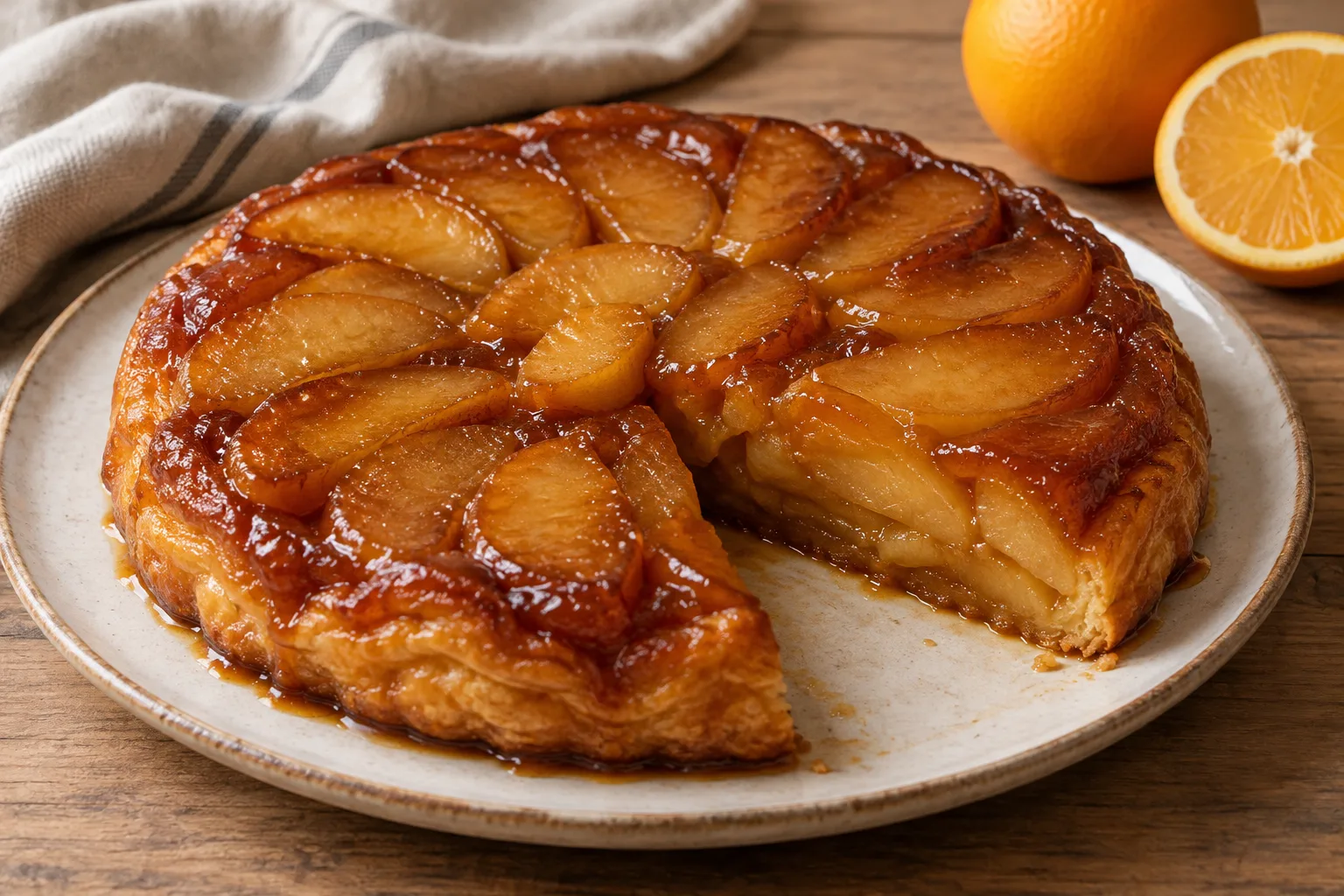
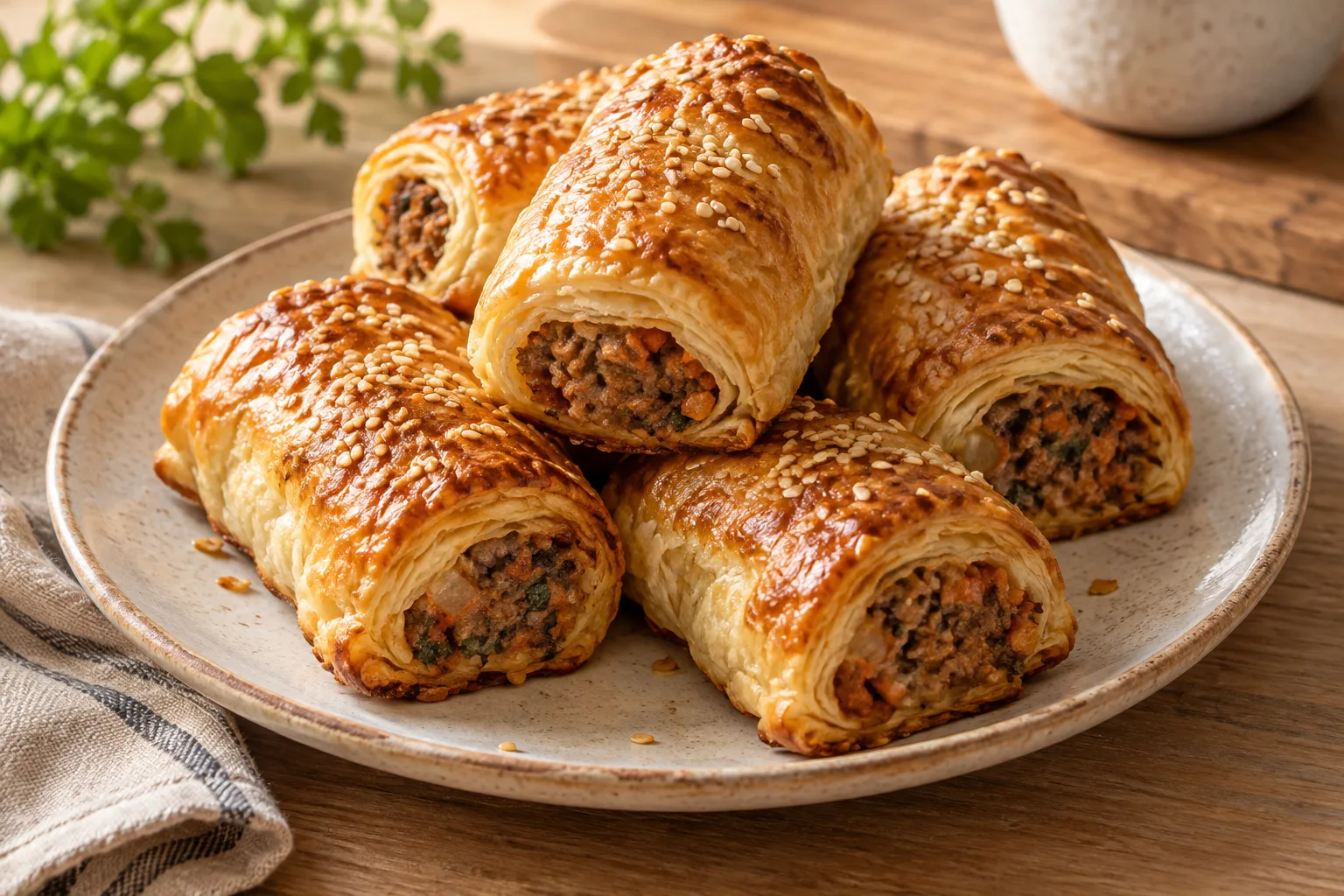
Use it when you want a base or wrapper that becomes crisp in the oven and gives a preparation visible layers. It works in tarts, pastries and other sweet preparations, as well as around savoury fillings. It is a versatile choice when a recipe calls for laminated pastry, but the result depends on the pastry type and intended use. Inverted, quick and half puff pastry do not have exactly the same characteristics as standard puff pastry; check which type you have if a recipe specifies one.
How to use it
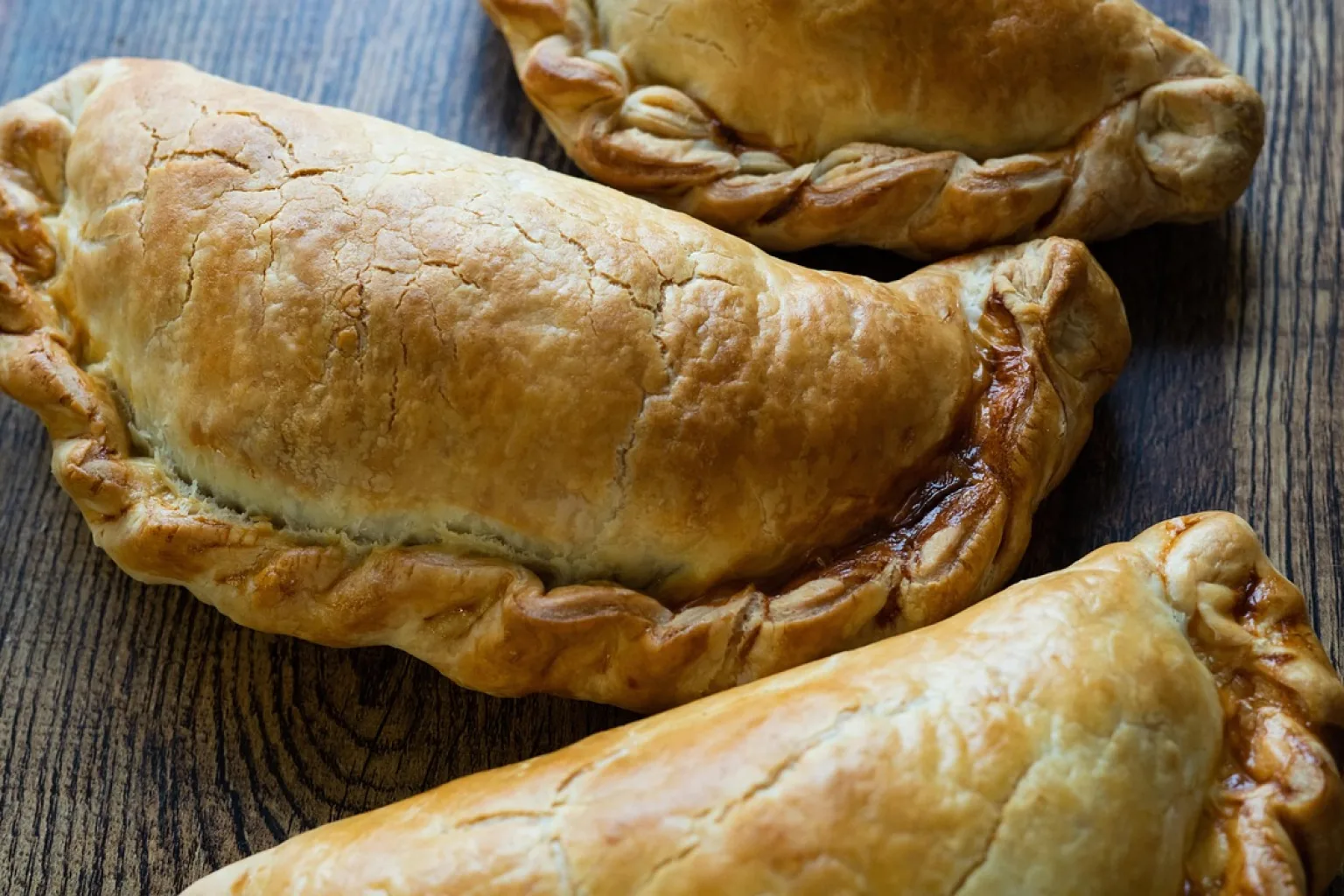
If using a packaged product, read its instructions because varieties and formats can differ. Roll, cut or shape the pastry for the preparation, taking care not to squash the edges if you want to preserve the layered effect. Use it as a tart or pastry base, or fold and seal it around a sweet or savoury filling. Puff pastry can also be the main component of a simple bake or serve as a topping. Filo may work in preparations that suit thin sheets, but its structure is different. Bread dough or a similar dough can be used for empanadas, although the result will differ. Follow the recipe or package baking directions rather than assuming there is one universal time or temperature.
Flavour and texture
Its flavour depends on the fat and the other ingredients in the formula; it can be fairly neutral or more buttery in character. Its defining texture is thin, crisp, separable layers after baking. Thickness, folding and pastry type affect the result, so different varieties do not all become equally light or voluminous.
How to choose it
Check the package to see which fat is used and whether the pastry is the type required by your recipe. Ingredients may include butter, lard or margarine, and products may be standard, inverted, quick or half puff pastry. Check the product format and instructions; two pastries with the same general name do not necessarily behave identically or contain the same ingredients.
Storage
Follow the package storage directions and any instructions specific to the variety you buy. The available evidence describes puff pastry as a dough and identifies several types, but does not establish a universal storage condition or shelf life. Do not assume every pastry should be stored in the same way; check the label before storing or using it.
Substitutions
Filo may replace puff pastry in some preparations suited to thin sheets, but it will not give the same structure. Bread dough or a similar dough is another documented option for empanadas, although the result will be different. Do not swap these doughs without considering whether the recipe needs laminated layers, separate sheets or a more bread-like wrapper.
Common mistakes
A common mistake is treating every product called puff pastry as identical: the fat, proportions and method can vary. It is also easy to confuse puff pastry with filo, which may be similar in some uses but is made from separate sheets. Choose the pastry for the structure the recipe needs and follow the specific product instructions.
Safety and allergens
Check the ingredient and allergen information on the package, especially if you need to avoid wheat or gluten, or milk. Handle and store the product according to the manufacturer’s directions; there is no universal storage instruction that applies to every variety.
Culinary uses
- Base crujiente para tartas y pasteles
- Envoltura o cubierta para rellenos dulces y salados
Recommended techniques
- Estirar y plegar para conservar las capas
- Cortar y moldear antes de hornear
Pairs well with
- Manzana y otros ingredientes para tartas dulces
- Chocolate, azúcar y rellenos dulces o salados
Frequently asked questions
Are puff pastry and filo the same?
No. They are different doughs: puff pastry is laminated by folding dough with fat, while filo is made from separate thin sheets. They may suit some of the same uses, but their structures differ.
Can puff pastry be used for sweet and savoury recipes?
Yes. It is used as a base or wrapper in sweet preparations and also in savoury dishes. The filling and shape depend on the recipe.
Does all puff pastry contain butter?
Not necessarily. The fat may vary and can include butter, lard or margarine. Check the ingredient list of the specific product.
Estimated nutrition
- Fat
- 25 g
- Saturates
- 12.5 g
- Carbohydrate
- 39.3 g
- Sugars
- 0 g
- Fibre
- 0 g
- Protein
- 7.14 g
- Salt
- 0.36 g
Sources and review
Automatically researched, cross-checked and validated content. Sources consulted:
- Client Challenge doi.org
- The Essential Glossary of Cooking Terms for the Culinary Arts - Escoffier escoffier.edu
- La masa de hojaldre y su reinado - Escuela de Turismo escuelaturismopirineos.com
- Tipos de hojaldre, tipos y sus principales características estudiahosteleria.com
- Mesa para dos. La Gastronomía en la Poesía y el Cine ... scholarworks.umass.edu
- Hojaldre - Wikipedia, la enciclopedia libre es.wikipedia.org
- 21 Seminarios de panadería y pastelería | Culinary Institute Lenotre culinaryinstitute.edu
- Identificación de Hierbas Problemáticas | Integrated Pest Management | College of Agriculture, Health and Natural Resources | University of Connecticut ipm.cahnr.uconn.edu
- OSPMADRD 65M: The Language of Food (Spring 2026) web.stanford.edu
- LYONIA scholarspace.manoa.hawaii.edu
- El hojaldre, su origen e historia. - Idella Bakery - Bollería y Pastelería artesanal idellabakery.com