- Category
- Vegetables
- State
- Fresh
- Usual unit
- tazas
What it is
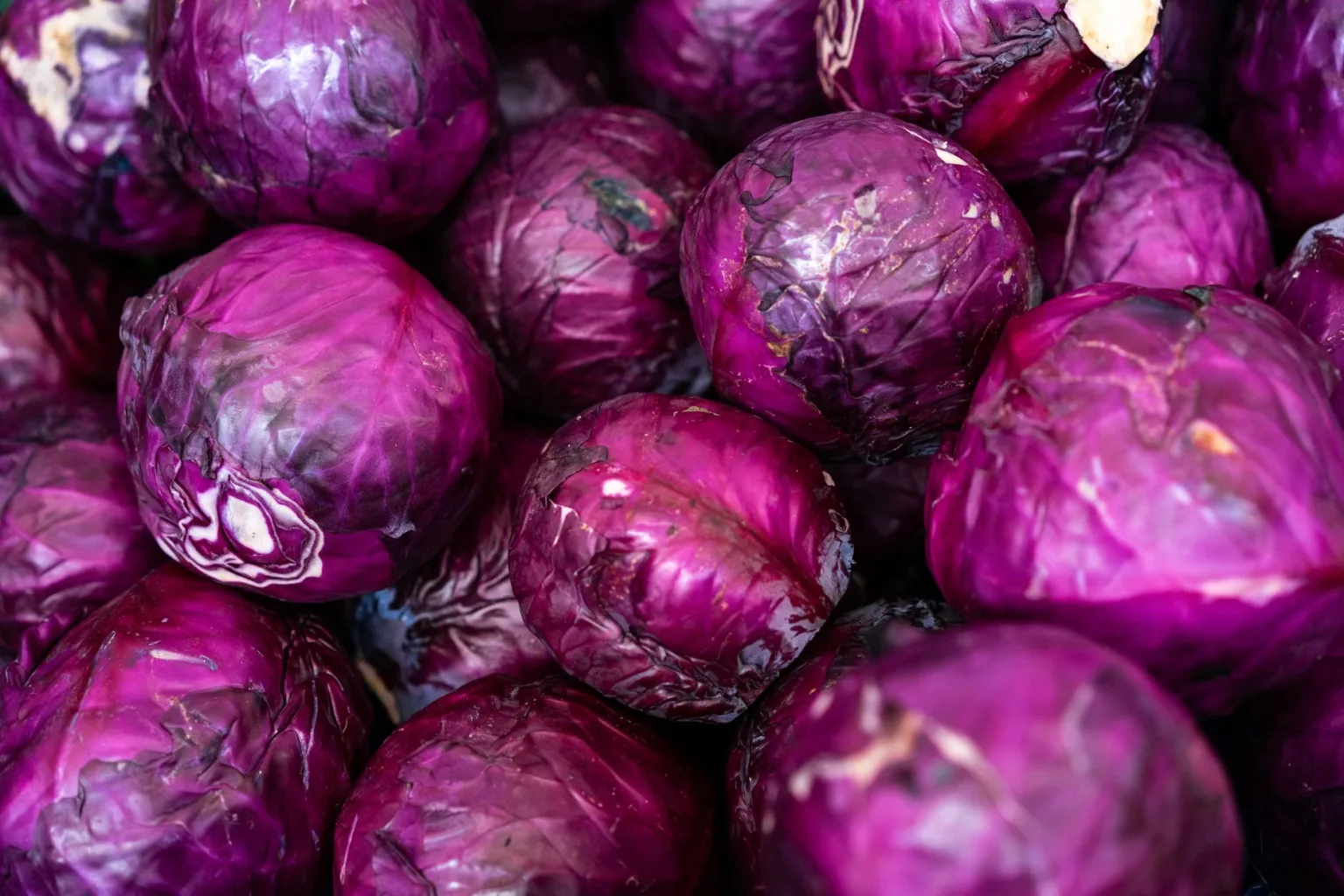
Red cabbage is a compact-headed cabbage also known as purple cabbage. It belongs to the Brassicaceae family, along with other cabbages. Its leaves can range from red and purple to bluish shades; the variation is associated with anthocyanin pigments and can also reflect growing conditions. The leaves are firm and tightly layered, and the flavor is mild with a slight sweetness. It is sold fresh, whole or cut, and can be eaten raw or cooked. It is a cabbage, not a different purple vegetable such as beetroot.
When to use it
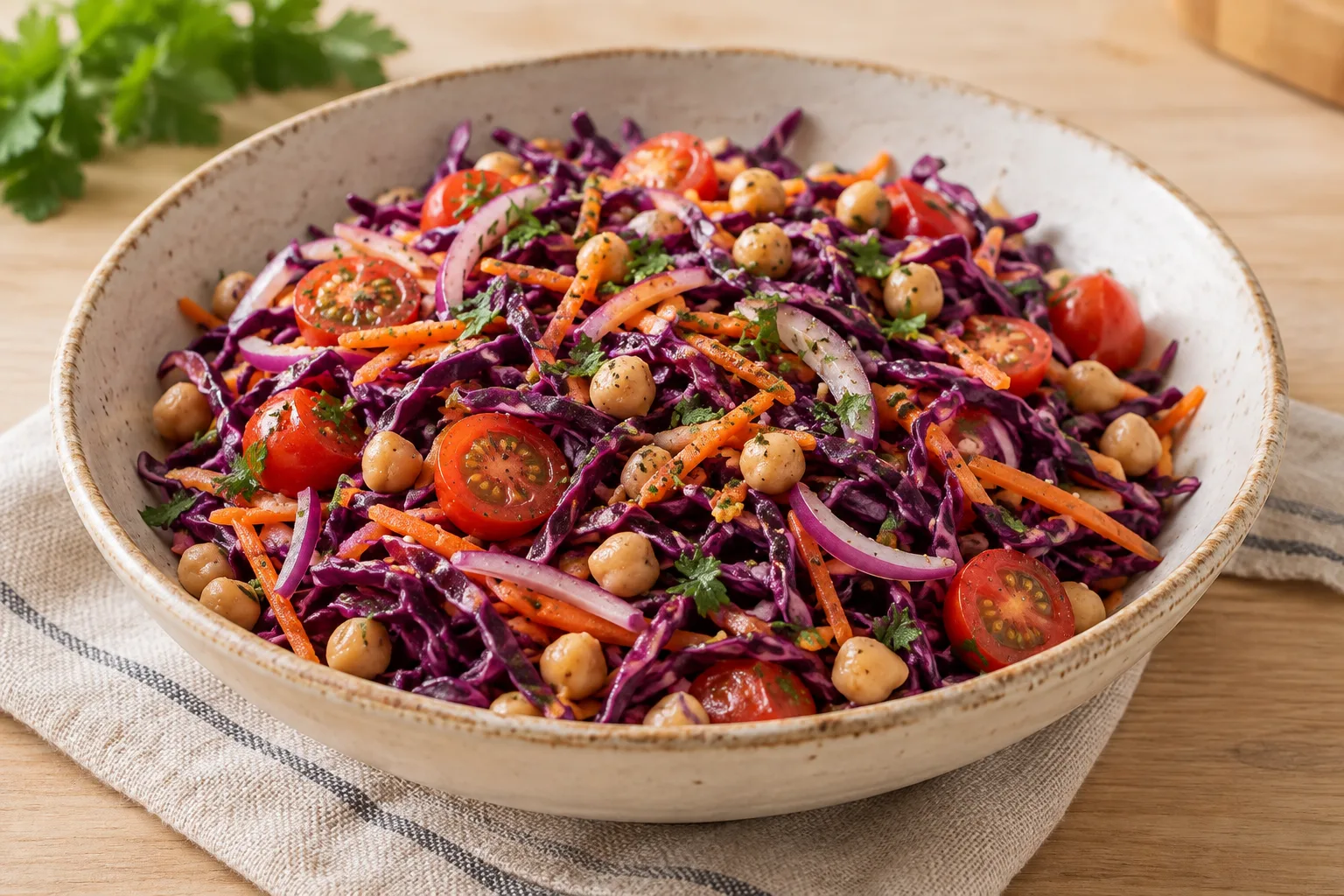
Use red cabbage when you want strong color and a crisp bite in a salad, slaw or vegetable dish. Finely sliced raw cabbage offers a fresh contrast to mild or creamy ingredients. Cooked, it works as a side, in soups or in sautés, and suits sweet-and-sour preparations. It is particularly associated with colder months, although availability at a particular shop or market can vary.
How to use it
Remove any damaged outer leaves and cut the head into quarters. Trim away the firm core, then slice or shred the leaves to suit the dish: thin cuts work well in salads, while thicker pieces keep more presence in cooked preparations. For a salad, toss with dressing and add crisp ingredients or fruit. You can also sauté, boil, roast in wedges or pickle it. Vinegar or lemon brings acidity that contrasts with the cabbage’s mild sweetness. Choose the cut and cooking method to get the texture you want.
Flavour and texture
Red cabbage has a mild, vegetal flavor with a slight sweetness. Raw leaves are firm and crunchy; finely sliced leaves are easy to mix into salads, while cooked cabbage softens but can retain some bite. Its color is distinctive, though individual heads can range from red and purple to blue-violet.
How to choose it
Choose a compact, firm head that feels heavy for its size and has fresh-looking outer leaves. Avoid heads with extensive blemishes, holes or visibly damaged areas. Color intensity alone is not a reliable quality test, as the shade can vary naturally. For cut or packaged cabbage, check that the product and packaging look in good condition and read the label.
Storage
Keep a whole head in the refrigerator and wait to wash it until you are ready to use it. A perforated bag allows some airflow. If you use only part of the head, store the remainder and cut more as needed. How long it keeps depends on its condition when purchased and storage conditions, so check the cabbage and follow package directions where provided.
Substitutions
Green or white cabbage can replace red cabbage when a crisp cabbage texture matters most, but the dish will lose its characteristic purple color. Pointed purple cabbage is another option if you want a mild-flavored, colorful cabbage, although its shape and texture may differ. Adjust the cut and cooking method to the cabbage you choose.
Common mistakes
Cutting cabbage into very large pieces for a salad can make it less comfortable to eat and harder to coat evenly with dressing. Do not judge a head by color alone; check that it is firm and compact. If you want to keep a crunchy texture, avoid cooking it longer than the recipe requires.
Safety and allergens
Follow package storage and use directions when provided. If the cabbage is sold unpackaged and you need information about how it was handled or presented, ask the retailer. Discard visibly damaged portions and use clean utensils.
Culinary uses
- Ingrediente crujiente para ensaladas y ensaladas de col
- Guarnición cocida para platos principales
Recommended techniques
- Cortar o rallar finamente para servir cruda
- Saltear, cocer, asar o encurtir
Pairs well with
- Manzana y pera
- Vinagre o zumo de limón
- Cebolla y zanahoria
- Cerdo asado o pollo
Frequently asked questions
Can red cabbage be eaten raw?
Yes. Slice or shred it finely and add it to salads or slaw for color and crunch.
How can red cabbage be cooked?
It can be sautéed, boiled, roasted or pickled. The cut and method affect whether it stays firm or becomes more tender.
Why does red cabbage vary in color?
Heads can range from red and purple to bluish shades. The color is associated with anthocyanin pigments and can vary with growing conditions.
Estimated nutrition
- Fat
- 0.09 g
- Saturates
- 0.01 g
- Carbohydrate
- 6.94 g
- Sugars
- 3.32 g
- Fibre
- 2.6 g
- Protein
- 1.51 g
- Salt
- 0.61 g
Sources and review
Automatically researched, cross-checked and validated content. Sources consulted:
- En el etiquetado alimentario hay algunas menciones que son obligatorias eletiquetadocuentamucho.aesan.gob.es
- Client Challenge doi.org
- Aesan - Agencia Española de Seguridad Alimentaria y Nutrición aesan.gob.es
- Brassica oleracea var. italica - Wikipedia, la enciclopedia libre es.wikipedia.org
- La lombarda, la colorida col morada para disfrutar de temporada (y más allá de Navidad): propiedades, características y recetas directoalpaladar.com
- Morada y picuda: absolutamente 'cool' | El Diario Montañés eldiariomontanes.es
- Col lombarda: el tesoro morado – PULEVA lechepuleva.es
- 11 razones para comer col morada - Mejor con Salud mejorconsalud.as.com
- Col morada, todos los beneficios de consumirla – Archivo pueblaonline.com.mx
- Col morada » Huerto en casa huerto-en-casa.com
- Col Morada: ¡La Guía Definitiva Y Sus Poderosos Beneficios! datosnutricional.com
- La col morada, atractiva y con un agradable sabor. - radiorebelde.cu
- Beneficios y propiedades de la col morada | PDF | Repollo | Comida y bebida scribd.com
- Col morada: beneficios, propiedades y cómo incluirla en tu dieta | Grupo Animal grupoanimal.mx
- Recetas con col morada: coloridas y deliciosas cookpad.com
- Col lombarda - Florette florette.es
- Ensalada de Col Morada con Aderezo Oriental (Lista en 15 Min) piloncilloyvainilla.com
- Repollo Morado Salteado [Video+Receta] - Tia Clara tiaclara.com