- Category
- Pulses
- State
- Dry
- Usual unit
- g
What it is
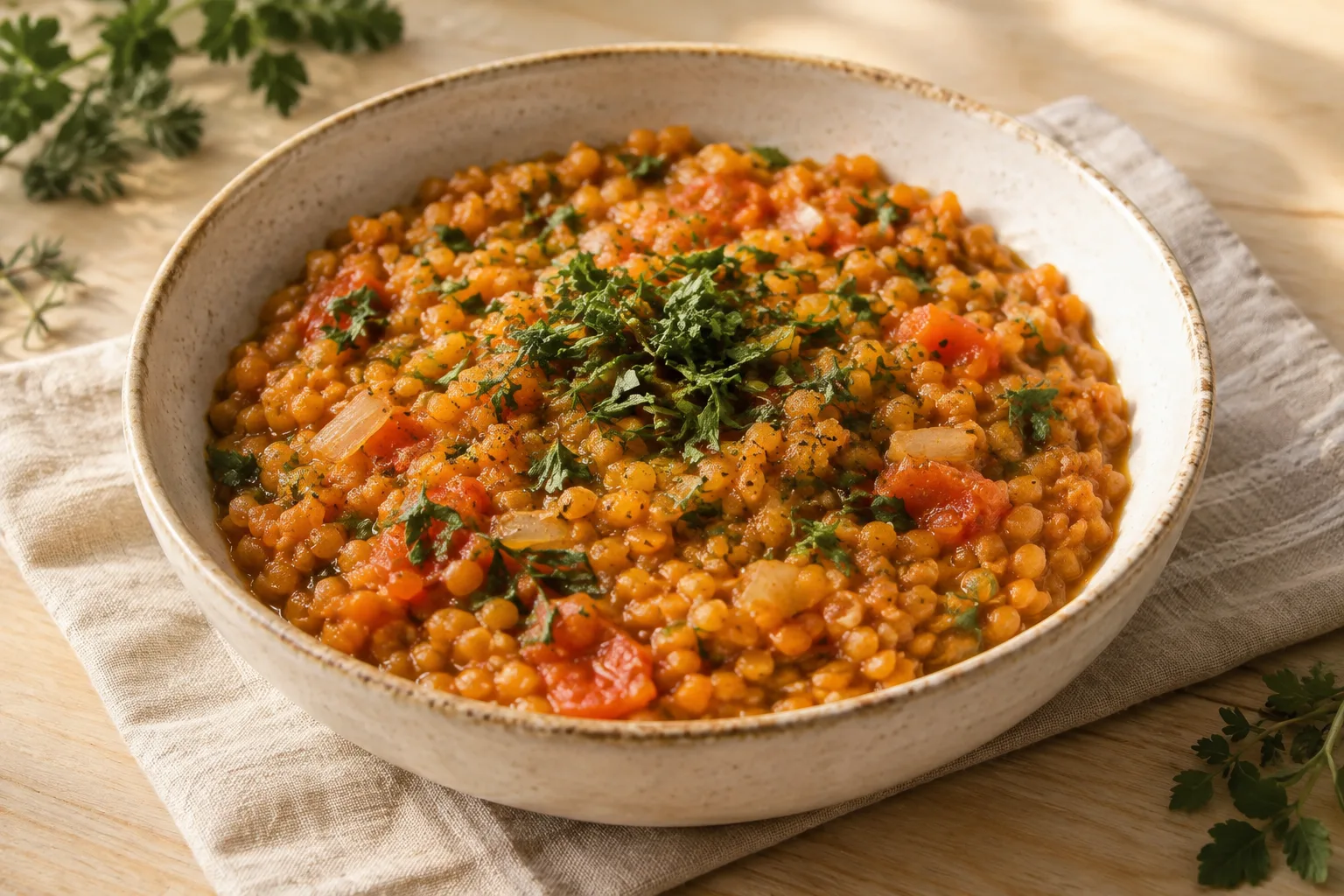
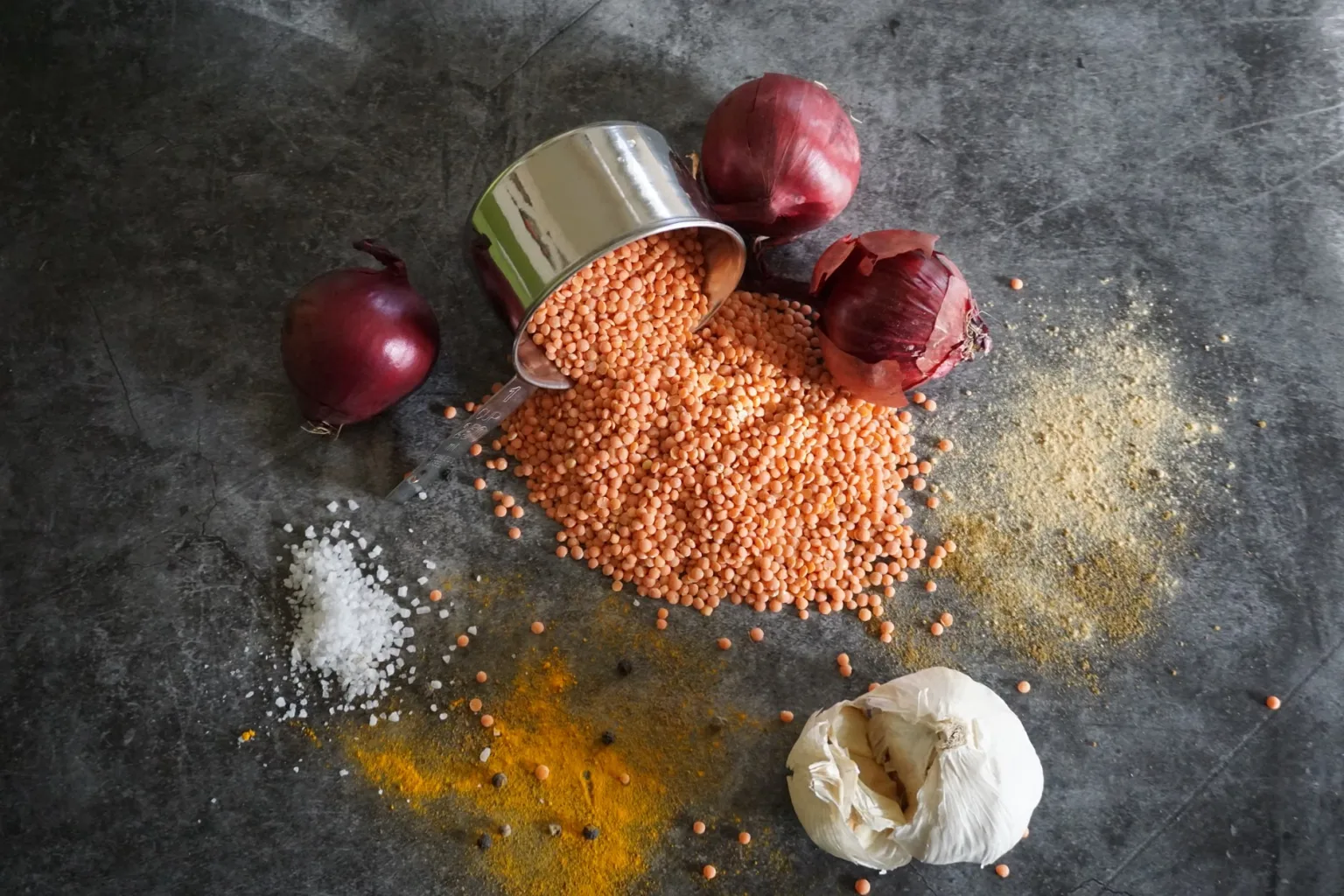
Red lentils are dried seeds from a legume and are commonly sold without their seed coat. Their color can range from pinkish to orange or coral, so the name does not always mean a vivid red appearance. Without the coat, they soften quickly and tend to break down during cooking. That quality is useful when a creamy result is wanted, but less suitable when the lentils need to stay whole. Also known as coral lentils, they are often used in dishes such as dal. They behave differently from brown or green lentils, which are more likely to keep their shape during cooking.
When to use it
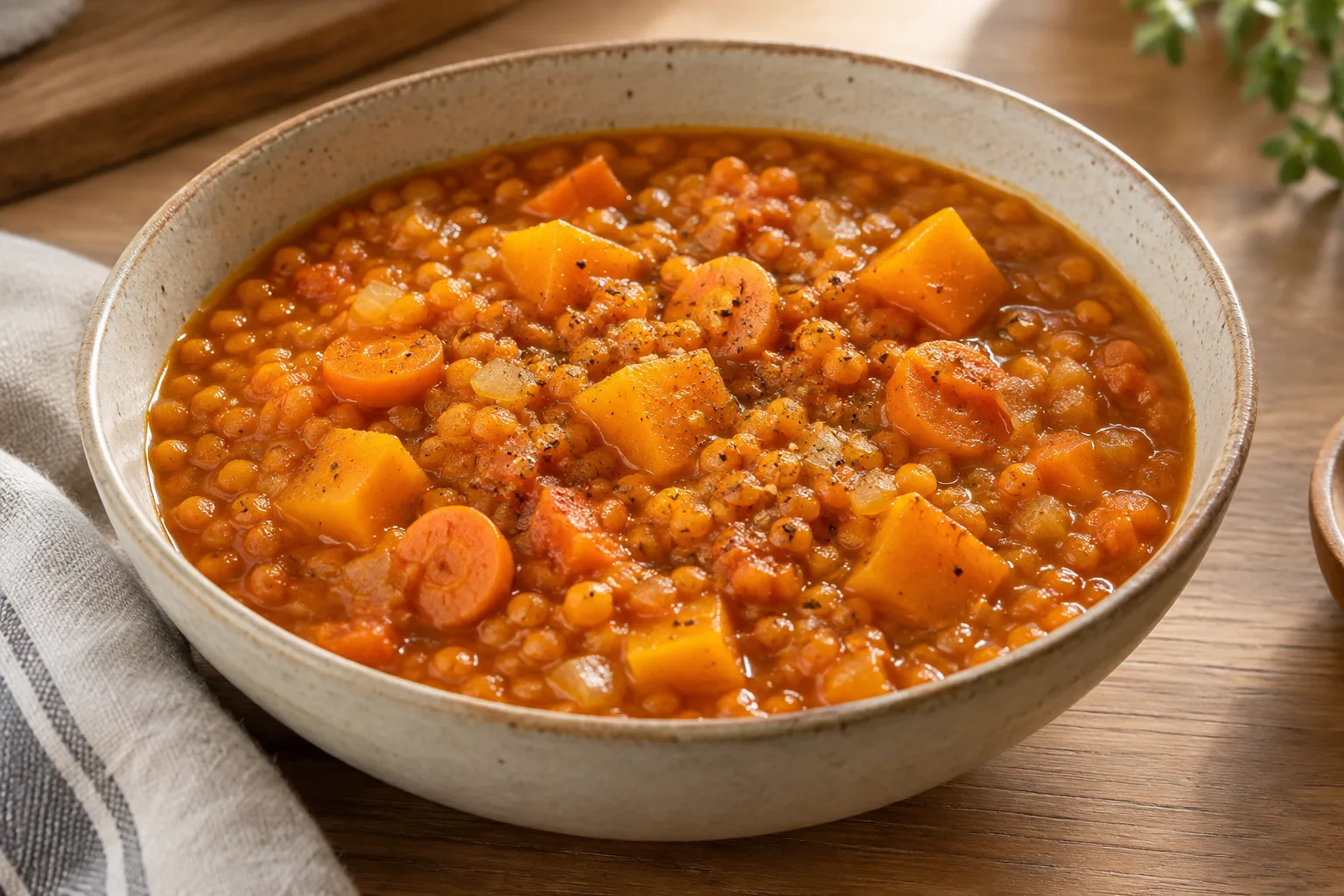
Choose red lentils when you want to thicken a soup, make a cream-style soup or purée, cook a curry or prepare a soft dal. They can also form the base of spreads, patties, vegetable burgers or mixtures that benefit from a soft texture. They are less suitable for recipes that depend on intact lentils, such as some grain-based salads; for those, choose a variety that holds its shape better. Their ability to take on the flavors of cooking liquid and seasonings makes them useful in creamy stews as well.
How to use it
Rinse the lentils before cooking and remove any visible debris. They generally do not need soaking, so they can go straight into a pot with liquid or into a preparation with vegetables and seasonings. Bring them to a simmer and check their texture as they cook: they soften and may break down, and the cooking time varies with the product and the result you want. Follow the package directions rather than treating any single published time as a guarantee. For a thicker soup or curry, let them soften and stir them into the dish. For a smooth soup or purée, blend them after cooking. If the recipe requires lentils to stay whole, choose another variety.
Flavour and texture
Their flavor is commonly described as mild and delicate, with a slightly sweet or nutty note depending on the product. Dry lentils are often pinkish, orange or coral, and their color can change during cooking. Their defining cooking feature is their texture: as they soften, they tend to break apart and create a creamy, smooth result that thickens soups and curries. They do not have the firm bite of varieties that retain their skins and shape. This difference is normal and can guide your choice of recipe.
How to choose it
Look for red, coral or orange lentils and check that the package identifies them as lentils rather than another split legume with a similar color. Their shade can range from pinkish to orange, so they do not need to be bright red. Availability varies by shop; some sources note that they may be found in specialist food shops or online. Read the package to confirm preparation directions and any product-specific details.
Storage
The available sources describe dried legumes as easy to keep, but do not provide specific storage conditions for this variety. Store the lentils according to the package directions and check those instructions after opening. Do not automatically apply advice intended for cooked or canned lentils to dried lentils. If the package gives a date or particular guidance, use it when planning your pantry stock.
Substitutions
Split yellow lentils can serve a similar purpose in soups, purées and curries, although their color and cooking behavior may differ. Brown or green lentils can replace red lentils in some soups and stews, but they tend to hold their shape better and may cook differently. Adjust the liquid and doneness to suit the recipe and follow the product directions. No substitute is guaranteed to produce exactly the same creamy texture as peeled red lentils.
Common mistakes
A common mistake is expecting red lentils to remain whole: peeled red lentils soften readily and may break down. It is also usually unnecessary to assume they need soaking. Avoid relying on one fixed cooking time without checking the product and desired texture, since published guidance varies. Finally, do not replace them with a shape-holding variety when the recipe depends on their creamy thickening effect.
Safety and allergens
The available sources do not identify a specific safety warning for dried red lentils. Rinse them before cooking and follow the package directions. Give any product-specific preparation or storage instructions priority.
Culinary uses
- Base de sopas, cremas, purés y dahl
- Espesante natural para guisos y preparaciones cremosas
- Ingrediente para masas vegetales, tortitas y hamburguesas
Recommended techniques
- Enjuagar antes de cocinar; por lo general no hace falta remojo
- Hervir suavemente y ajustar la cocción al resultado deseado
- Triturar o aplastar una vez cocidas para obtener cremas, purés o masas
Pairs well with
- Curry, comino, cúrcuma, ajo y jengibre
- Tomate, brócoli, zanahoria y calabaza
- Cilantro, limón y yogur como acompañamientos
Frequently asked questions
Do red lentils need soaking?
Generally, no. The sources indicate that peeled red lentils can be cooked without soaking; rinse them first and check the directions on your package.
Why do red lentils break down when cooked?
This is typical of the variety, which is commonly sold without its skin. As the lentils soften, they can lose their shape and create a creamy texture suited to soups, purées and curries.
Can I use red lentils in a salad where the lentils must stay whole?
They are not the best choice if you want firm, intact lentils, because they tend to break down during cooking. Choose a variety that holds its shape better for that kind of salad.
Sources and review
Automatically researched, cross-checked and validated content. Sources consulted:
- Lentejas rojas naturafruits.com
- Informe sobre Legumbres, Nutrición y Salud aesan.gob.es
- Las mejores nueve recetas con lentejas rojas o de coral, para aprovechar al máximo la legumbre de rápida cocción directoalpaladar.com
- Client Challenge doi.org
- Tipos de lentejas: características y cocción | Fine Dining Lovers finedininglovers.es
- Origen de las Lentejas: Historia, Variedades y Usos Culinarios spice.alibaba.com
- Verdes, rojas o negras: tipos de lentejas y sus recetas habituales | Gastronomía elmundo.es
- Lentejas rojas: una variedad india rebosante de color y nutrientes alimente.elconfidencial.com
- La lenteja roja y sus propiedades | El Diario Vasco diariovasco.com
- Lentejas Rojas y Más: Descubre Las Variedades Que Debes Probar Ya - RoomLab roomlab.cl
- Lenteja roja - Trevijano trevijano.com
- Lentejas rojas: qué son, cuáles son sus propiedades y cómo cocinarlas hogarmania.com
- Lentejas rojas | www.cocinista.es cocinista.es
- Curry - Wikipedia, la enciclopedia libre es.wikipedia.org
- Cómo cocinar lentejas rojas: seis ideas fáciles para la legumbre más rápida | El Comidista | Gastronomía | EL PAÍS elpais.com
- Lentejas rojas: cómo cocinarlas y 5 recetas para sacarles partido petitchef.es
- Lentejas rojas - Técnicas de cocina - Veritas ecológico veritas.es