- Category
- Drinks
- State
- Liquid
- Usual unit
- ml
What it is
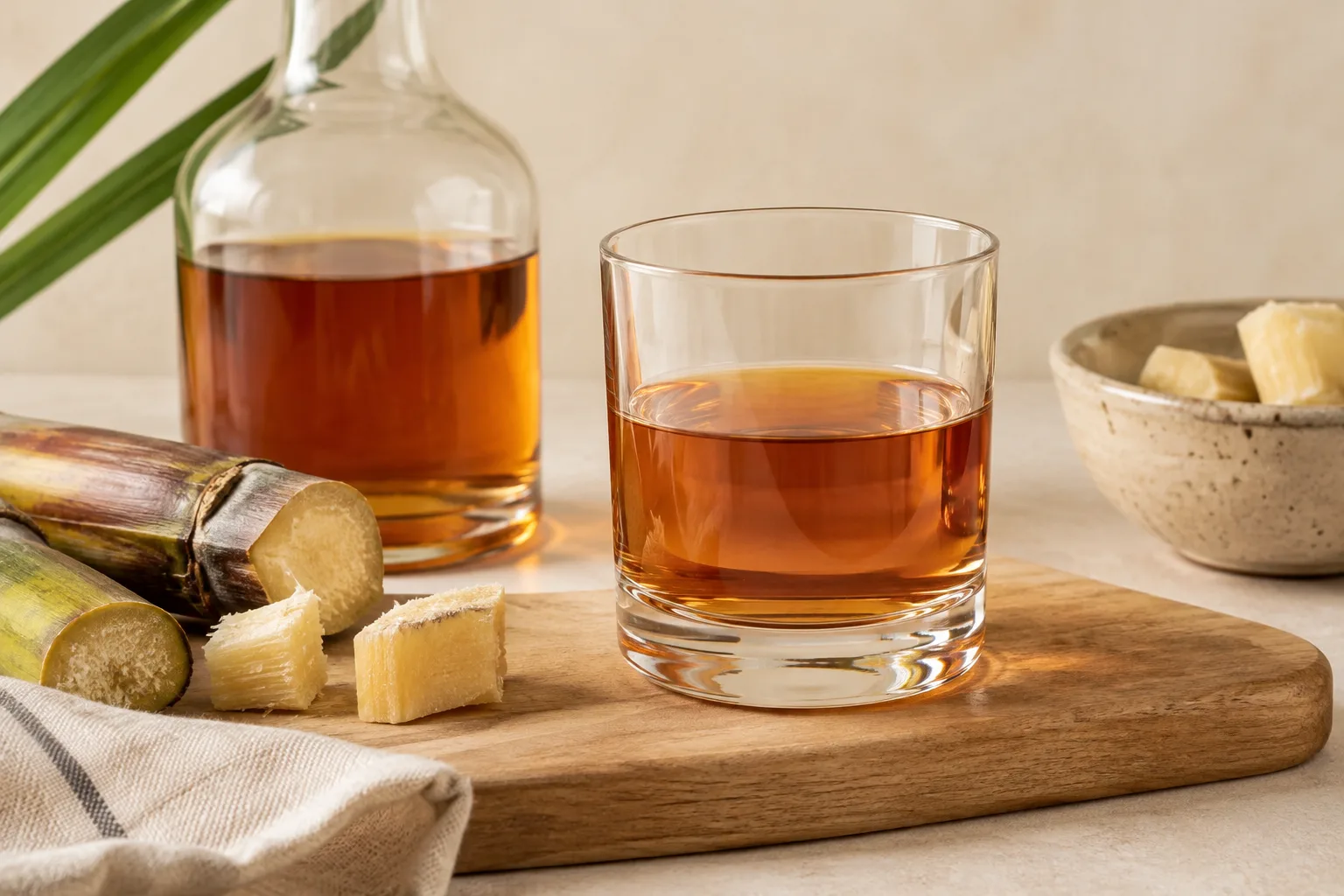
Rum is an alcoholic distilled drink made from fermented sugarcane products, including molasses or sugarcane juice. There are different styles, and aging in barrels is optional, so aroma and flavor can vary between bottles. In cooking, rum is used in drinks and to flavor fruit, sauces, batters and desserts. It is not a neutral liquid: it contributes its own character as well as alcohol. Consider both when choosing a bottle, deciding how to use it and serving the finished preparation. The available evidence does not establish a universal storage life for every bottle or mixture.
When to use it
Use rum when you want a distinctive aromatic note in a cocktail, sweet batter, sauce or fruit preparation. Suggested culinary pairings include pineapple, raisins, chocolate, coffee, cinnamon and orange. Rum is also mentioned in savory suggestions with meat or fish. Choose an amount that suits the recipe and the rum’s profile rather than assuming all products taste alike. If the preparation is not cooked, consider its alcohol content when deciding how to serve it.
How to use it
Measure rum before adding it to cocktails, batters or baking preparations, so it contributes aroma without covering the other ingredients. You can macerate raisins or infuse fruit such as pineapple in rum; these preparations are not necessarily cooked and contain alcohol. In a sauce, rum may be added during cooking and reduced as a recipe directs, but do not present this as a guarantee that all the alcohol disappears. For caramelized fruit, follow a suitable recipe rather than improvising the process. Adjust the amount to the product’s profile and taste before adding more. If a recipe specifies a style, take that direction into account.
Flavour and texture
Rum is a liquid and contributes the aroma of a sugarcane spirit as well as alcohol. Its texture does not independently change a recipe’s structure. Aroma and flavor can vary between bottles and styles, and aging is optional. In a preparation that is not cooked, its character may be more direct; in a sauce or batter, it combines with the other ingredients. Suggested pairings include pineapple, raisins, chocolate, coffee, cinnamon and orange.
How to choose it
Read the label to identify the product and style, and check that it is rum before adding it to a recipe. Products can vary and aging is optional, so do not expect every bottle to contribute the same aroma. Choose with the intended use in mind: a drink, sauce and dessert may call for different profiles. If a recipe specifies a style, follow that direction where possible; changing the product can change the result.
Storage
Keep the bottle tightly closed and follow the storage directions on its label. The available evidence does not establish a universal shelf life or special conditions for every product. Avoid transferring rum to an unidentified container, where it could be mistaken for another liquid. If you mix it with fruit, raisins or other ingredients, follow the recipe’s directions for storing that preparation; do not assume it keeps in the same way as the unmixed spirit.
Substitutions
No substitute can be expected to reproduce rum’s aroma exactly. If you want to avoid alcohol, omit it and choose a recipe that works without it rather than expecting another ingredient to copy its flavor. For a sauce, you can adapt a recipe that uses wine or beer, but the result will differ and should follow the corresponding instructions. Do not automatically exchange equal amounts: aromatic strength and the liquid’s role can vary by preparation.
Common mistakes
Do not assume that heating a preparation removes all the alcohol. Avoid adding rum without measuring it or assuming every style has the same profile. A maceration or infusion that is not cooked contains alcohol and is not equivalent to an alcohol-free flavoring. Changing an ingredient in a sauce or dessert without considering its effect on flavor and recipe balance can also alter the result.
Safety and allergens
Rum contains alcohol. Keep this in mind when preparing and serving foods or drinks that include it. Preparations that are not cooked retain alcohol; do not present cooking or reduction as a guarantee that it is removed completely.
Culinary uses
- Aromatizar cócteles y otras bebidas
- Aportar aroma a postres y masas
- Añadir una nota aromática a salsas y platos salados
Recommended techniques
- Macerar pasas o frutas
- Infusionar frutas
- Incorporar en salsas durante la cocción
- Usar en masas y preparaciones de repostería
- Caramelizar fruta siguiendo una receta
Pairs well with
- Piña
- Pasas
- Chocolate
- Café
- Canela
- Naranja
Frequently asked questions
Does the alcohol disappear when rum is cooked?
Do not assume so. Preparations containing rum that are not cooked retain alcohol, and the available evidence does not establish that cooking or reducing a preparation removes it all.
What recipes can use rum?
It can flavor drinks, sauces, batters and desserts, or be used to macerate raisins and infuse fruit. Choose a use that fits the recipe and consider the alcohol if the preparation is not cooked.
What flavors pair well with rum?
Suggested pairings include pineapple, raisins, chocolate, coffee, cinnamon and orange. The result depends on the rum and the recipe.
Estimated nutrition
- Fat
- 0 g
- Saturates
- 0 g
- Carbohydrate
- 0 g
- Sugars
- 0 g
- Fibre
- 0 g
- Protein
- 0 g
- Salt
- 0 g
Sources and review
Automatically researched, cross-checked and validated content. Sources consulted:
- Client Challenge doi.org
- opinión científica aesan.gob.es
- Assisting Master Chef Ron-Ben Israel | Institute of Culinary Education ice.edu
- Ron Vieira: Urbana Cafe - Center for Innovation | Xavier University xavier.edu
- Cumberland Culinary Center Passes Major Milestone - Cumberland University cumberland.edu
- Demonstration Kitchen : Events and Conferences slec.osu.edu
- A Domestic Cook Book: Containing a Careful Selection of Useful Receipts for the Kitchen | Malinda Russell | 9780472039647 | University of Michigan Press press.umich.edu
- Washburne Culinary & Hospitality Institute - City Colleges of Chicago ccc.edu
- The Effects of the Cooking for One Curriculum on Nutrition, ... scholarsjunction.msstate.edu
- Ron - Wikipedia, la enciclopedia libre es.wikipedia.org
- Los 5 usos del Ron en la cocina que tienes que conocer - Recetas Económicas y Creativas recetaseconomicasycreativas.com
- Antes de ir a YouTube youtube.com
- El ron y su importancia en la gastronomía | Grupo Animal grupoanimal.mx