- Category
- Fish and seafood
- State
- Preserved
- Usual unit
- g
What it is
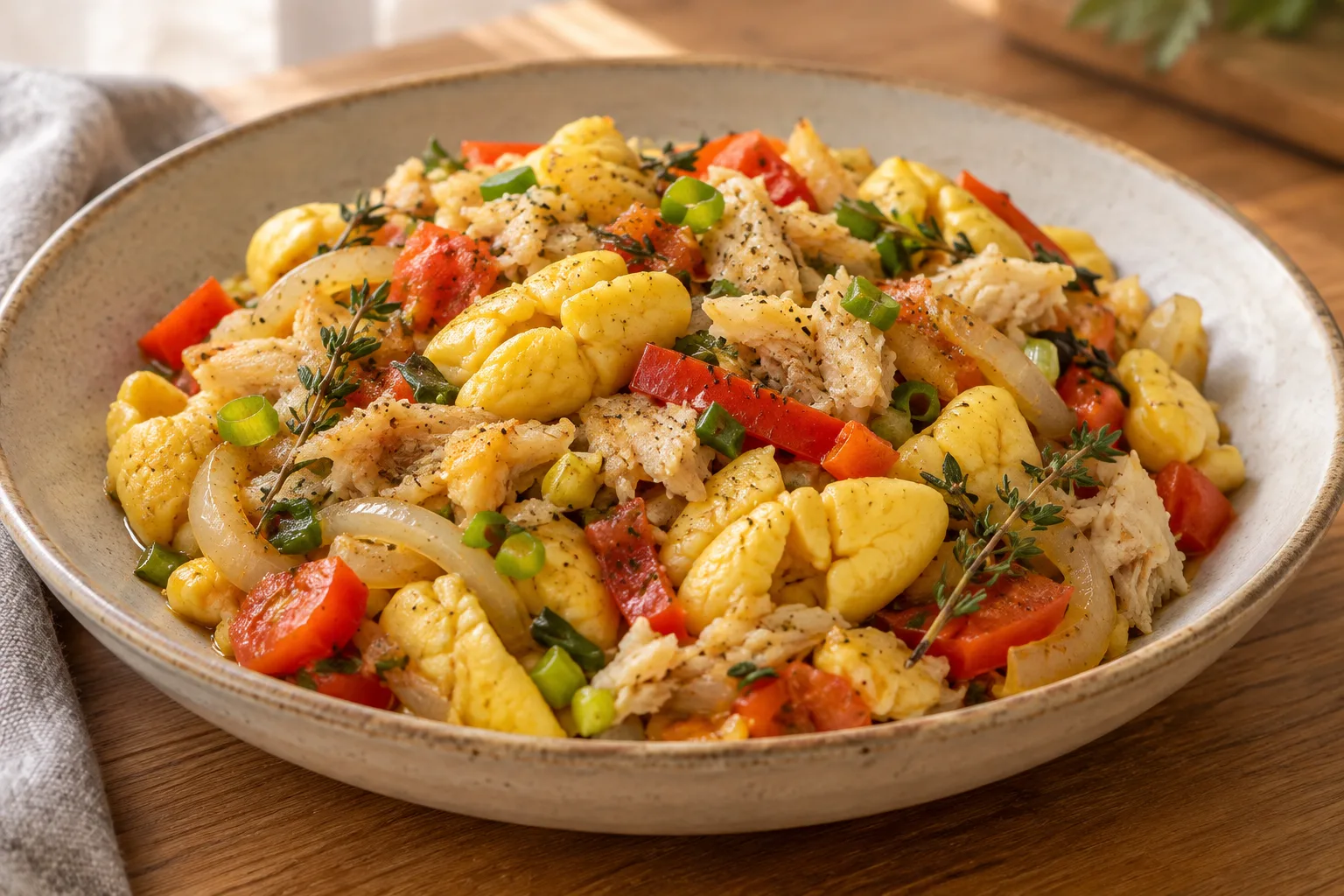
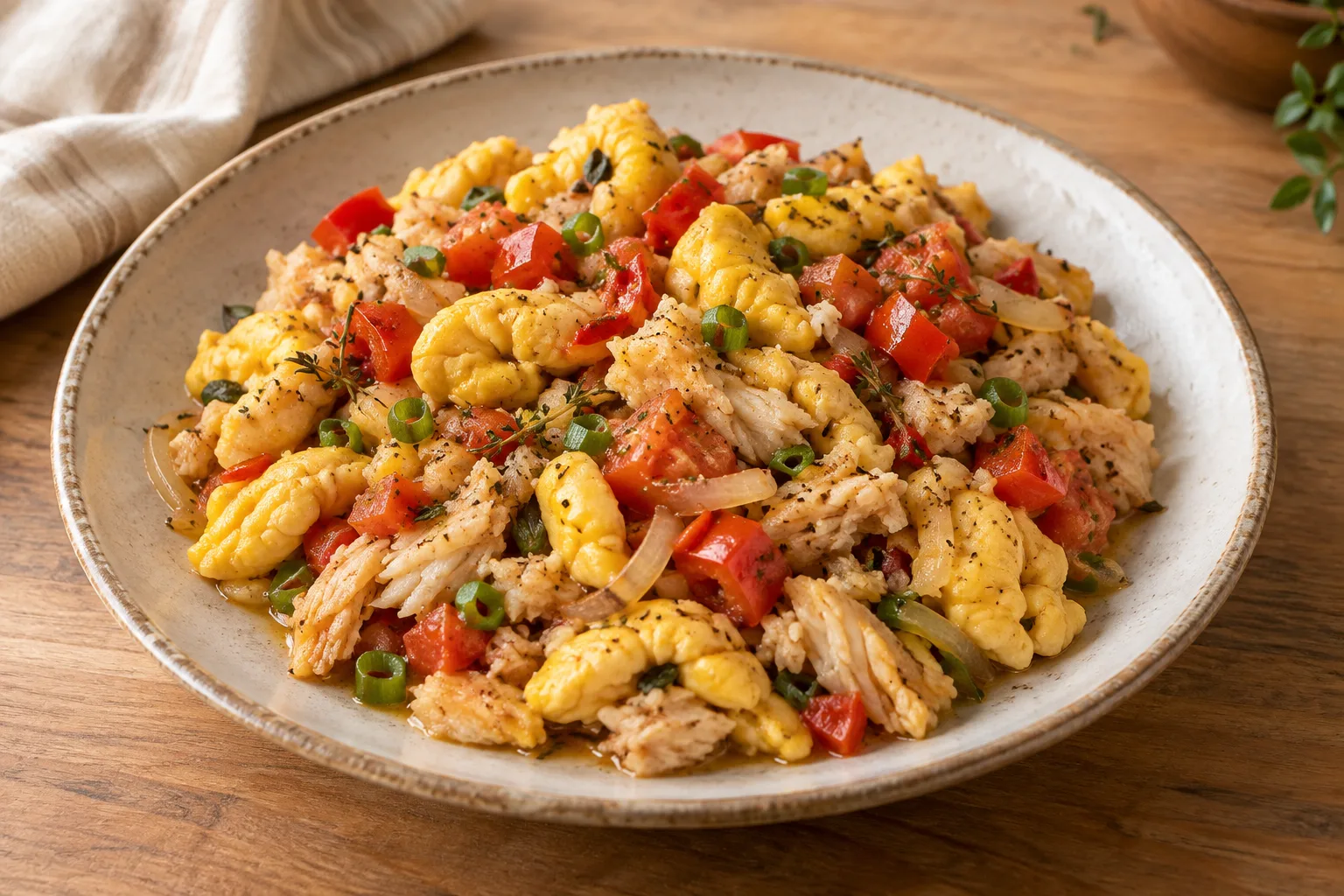
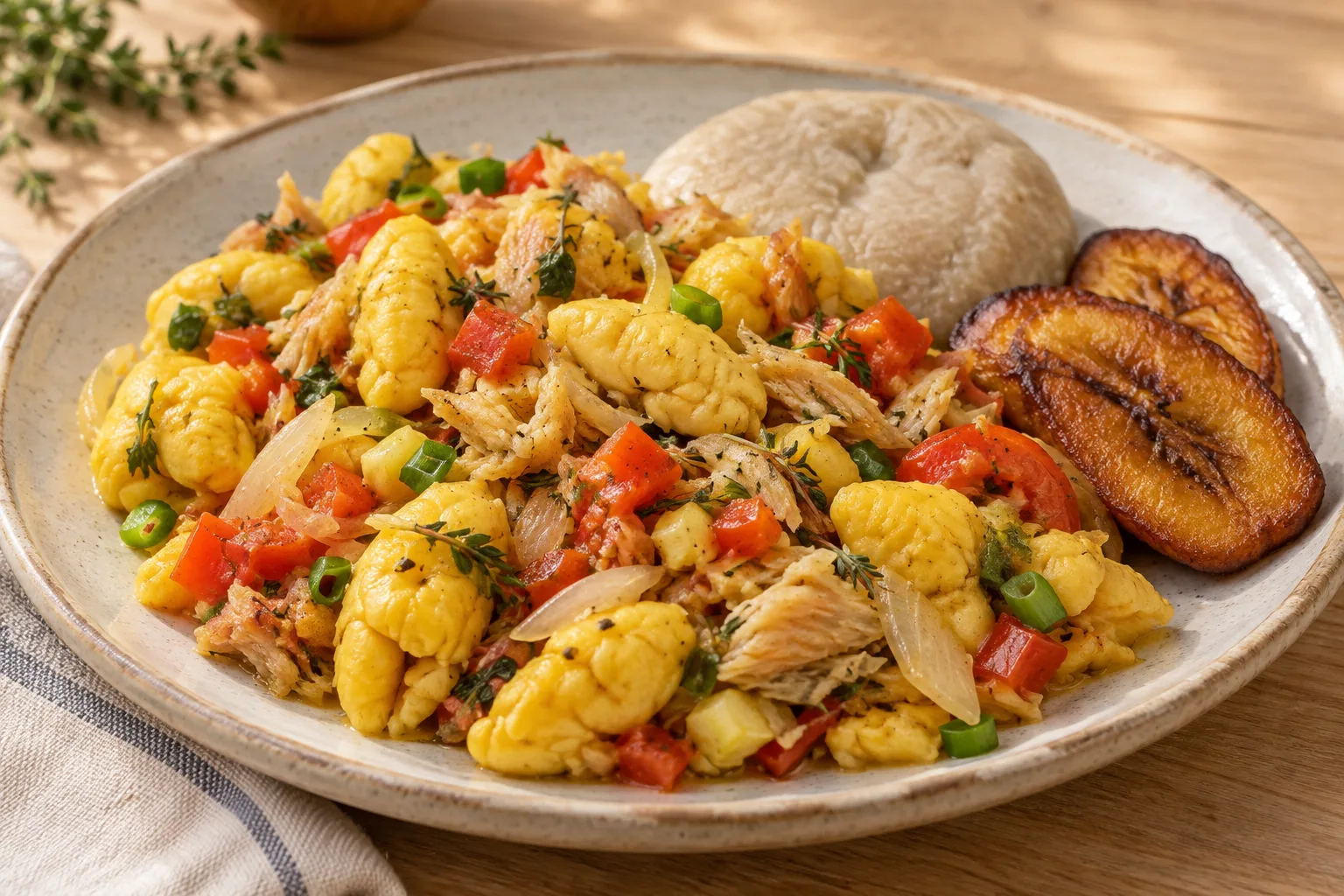
Salt cod is a preserved fish product identified in the available sources as cod. The fish is salted and, in some forms, dried, so it is not the same as a fresh fillet and often needs preparation before cooking. It is sold as pieces or loins and also as flakes. Salting and drying affect its flavor and help preserve it, but the amount of salt and moisture can vary from one product to another. The name cod may also be applied imprecisely to different fish, so check the species and preparation instructions on the label. In cooking, the product is commonly rinsed and soaked to reduce salt before it is cooked. Do not confuse fish that still needs desalting with salt cod already prepared for a recipe.
When to use it
Use salt cod when you want fish to be the focus of a stew, substantial salad, or fritter and have time to prepare the form you bought. Recipes from different regions use it in everyday dishes as well as festive preparations. It is especially practical when a recipe specifically calls for salt cod and includes desalting as part of the method. Before cooking, check whether you have dry salted pieces, flakes, or a product that has already been desalinated: each form may need different handling. If a recipe calls for fresh fish, do not substitute salt cod without adjusting the preparation and salt balance.
How to use it
First read the label to confirm the product form and the maker’s instructions. For dry salt cod that needs desalting, rinse the surface and soak it in plenty of water; some recipes recommend changing the water during soaking. There is no single soaking time that applies to every cut and product, so check the salt level in line with the recipe and available instructions rather than assuming a fixed duration. Then cook the fish for the dish: the sources show it boiled before being flaked, stewed with vegetables, served in a salad with legumes, or used in fritters. Remove bones and skin if present, then flake or portion the fish to suit the desired texture. Adjust the salt in the rest of the dish only after tasting the prepared fish.
Flavour and texture
Salting gives salt cod a more concentrated, distinctly salty flavor than fresh fish; drying can make it firm before it is rehydrated. After soaking and cooking, it may separate into flakes or be shredded, although texture depends on the cut and degree of desalting. Pieces, loins, and flakes do not behave identically in a recipe. Taste the prepared fish before adding salt to the dish.
How to choose it
Look for a label that clearly identifies salt cod and says whether it is dry, sold as loins or pieces, or flaked. Check whether it has already been desalinated and what instructions the maker provides. The common name can be confused with other salted fish, so verify the species when it matters to the recipe. Choose an intact package with no visible signs of damage; the available sources do not establish one universal appearance or salt level for all products.
Storage
Follow the package directions, which take precedence because products and processing can differ. Some sources describe dry salt cod as suitable for storage in a dry place, but that advice should not automatically be applied to products that are desalinated, moist, or opened. The evidence here does not support a universal storage time or temperature. For opened or desalinated fish, check the label or ask the seller how to store it and when to use it.
Substitutions
The most straightforward swap is salt-cod loins for salt-cod flakes, or the reverse, bearing in mind that piece size and final texture will change. Salt cod that has already been desalinated can also be used in a recipe starting with fish that still needs desalting, but the preparation must be adjusted and the salt level checked. The sources do not support recommending another fish as an equivalent substitute; verify the species and do not assume all salted fish are interchangeable.
Common mistakes
The most common mistake is cooking salt cod without checking whether it needs desalting, which can leave the dish excessively salty. Avoid salting a stew before tasting the prepared fish, and do not assume flakes and loins behave the same way. Do not apply one fixed soaking time to every product: the cut and package directions matter.
Safety and allergens
Follow the package directions and handle the product as fish. The available evidence provides no specific official warning for this ingredient and does not support a universal storage time or temperature. If you are unsure how to store the product after opening or desalting, ask the maker or seller.
Culinary uses
- Ingrediente principal para guisos, ensaladas y frituras
- Pescado curado que aporta sabor salino y una textura que puede desmenuzarse
Recommended techniques
- Desalar mediante enjuague y remojo en agua
- Cocer o hervir antes de desmenuzar o incorporar a otras preparaciones
- Guisar, freír o servir cocido en ensaladas
Pairs well with
- Tomate, patata, pimiento, ajo y cebolla
- Aceitunas, garbanzos, arroz y repollo
- Huevo y perejil
Frequently asked questions
Does salt cod always need desalting?
Not necessarily; it depends on whether the product is still salted or is sold already desalinated. Check the label. Dry salt cod that remains salted is commonly rinsed and soaked before cooking.
Can I swap loins for flakes?
Yes, they are forms of the same ingredient and can work in many preparations, but flakes disperse differently while loins retain larger pieces. Adjust the cut and texture of the dish.
What ingredients pair well with salt cod?
Recipes in the available sources combine it with ingredients including tomato, potato, peppers, garlic, onion, olives, chickpeas, rice, cabbage, egg, and parsley.
Estimated nutrition
- Fat
- 3.33 g
- Saturates
- 0 g
- Carbohydrate
- 66.7 g
- Sugars
- 3.33 g
- Fibre
- 3.3 g
- Protein
- 10 g
- Salt
- 4.75 g
Sources and review
Automatically researched, cross-checked and validated content. Sources consulted:
- El Bacalao: Historia, Diseminación Y Usos Culinarios - Restaurante Romero restaurante-romero.es
- Agencia Española de Seguridad Alimentaria y Nutrición aesan.gob.es
- Dictionary of Health Related Terms: English – Spanish hia.berkeley.edu
- elBulli: un nuevo lenguaje en la gastronomía repositorio.ucjc.edu
- ¿Por qué el mar es salado? doi.org
- 1. Aprendamos sobre las comidas y las expectativas en un restaurante – Yo puedo: segundos pasos milnepublishing.geneseo.edu
- The Hispanic Atlantic's Tasajo Trail repository.lsu.edu
- 6.Sansano GROUP dieciocho.uvacreate.virginia.edu
- Efecto de la aplicación de altas presiones hidrostáticas en ... dugi-doc.udg.edu
- Cover Sheet: Request 11892 - Fora - University of Florida fora.aa.ufl.edu
- Bacalao: Qué es, y Como Hacer Ricas Recetas de Bacalao cocinadominicana.com
- Bacalao en salazón - Wikipedia, la enciclopedia libre es.wikipedia.org
- Bacalao: Historia, Tradición y Recetas en El Paladar elpaladar.es