- Category
- Vegetables
- State
- Fresh
- Usual unit
- unit
What it is
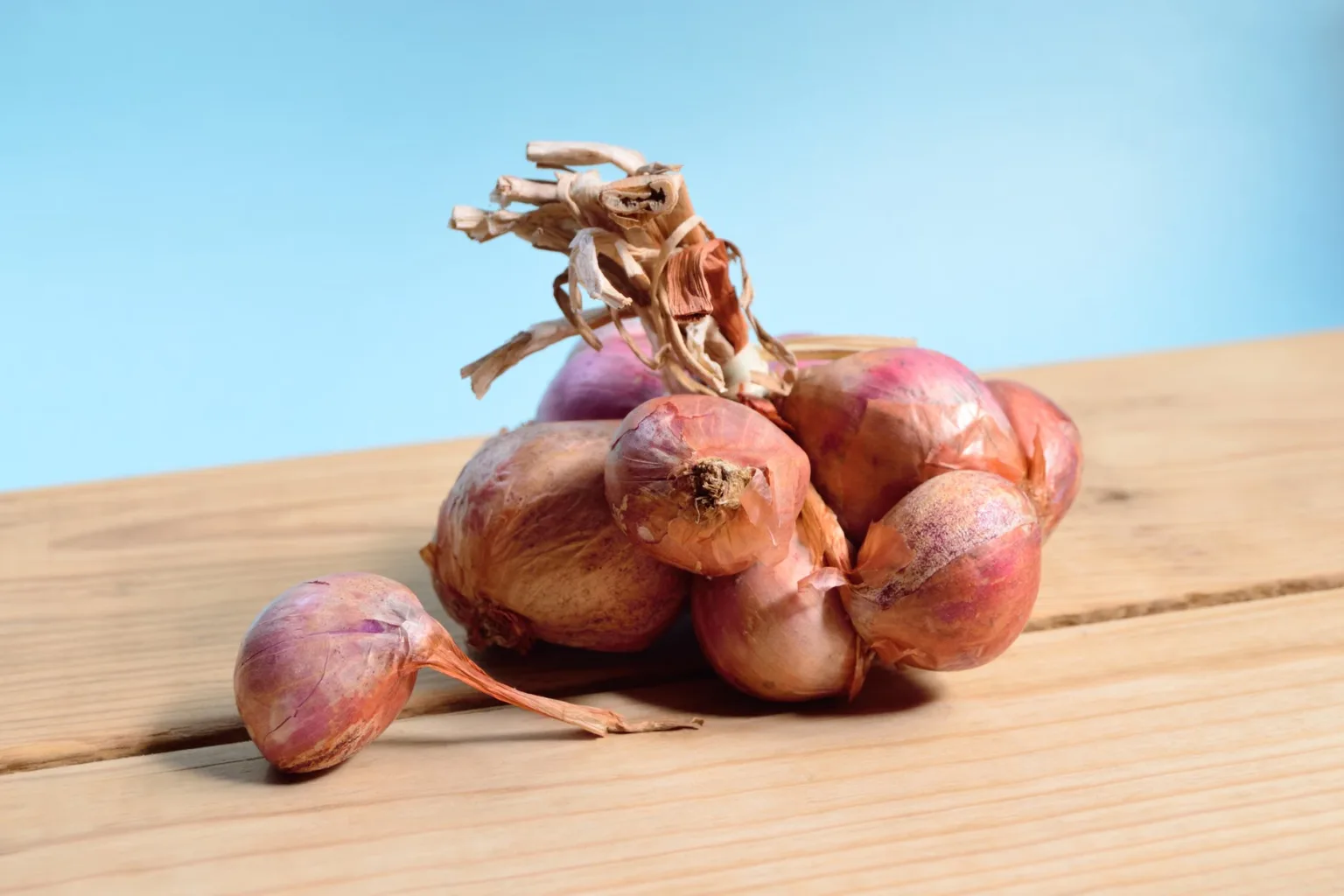
A shallot is an edible bulb in the Allium family, related to onions, garlic and leeks. It is generally smaller and more elongated than a common onion, though size, shape and color vary by variety. The skin may be coppery, reddish or grayish, while the pale flesh can have violet tones. Its flavor is reminiscent of onion but is often milder and more delicate, with a hint of sweetness and gentle pungency. Shallots are sold fresh and can be used raw or cooked; they are not the same thing as green onions or scallions.
When to use it
Choose shallots when you want an Allium flavor that is more restrained than onion, especially in dishes where the aroma should support rather than dominate. They work finely chopped in vinaigrettes, salads and dressings, and as an aromatic base for sauces, soups, stews and braises. Cooked shallots can bring sweetness to a side dish or blend into meat, poultry, fish and vegetable preparations. Their intensity varies with the variety and individual bulb, so adjust the amount to taste and to the role you want them to play.
How to use it
Remove the dry outer skin, then slice or dice the shallot to suit the dish. For a dressing or salad, chop it finely and mix it with the other ingredients; its flavor is more noticeable raw. For a sauce, soup, stew or sauté, add it chopped and cook gently so it softens and blends in without burning. You can also cook shallots whole or halved as a side, roast them, braise them or caramelize them. Since bulb size and pungency are not uniform, taste and adjust the amount. If a recipe calls for shallots and you have none, onion can work, but the result will be less delicate.
Flavour and texture
Shallots have a characteristic Allium aroma, with a mild onion flavor, sweet notes and a slightly sharp edge when raw. Cooking softens their pungency and can make the flavor rounder and sweeter. The flesh is firm and can be sliced or diced; it softens as it cooks. The precise profile varies with the variety and preparation, so a raw shallot will not taste the same as a roasted or caramelized one.
How to choose it
Look for shallots that feel firm and heavy for their size, with clean, dry skins. Avoid bulbs with visible soft spots, bruises, discoloration, dampness or mold. Varieties differ in size, shape and color, so those differences alone do not mean the produce is spoiled. Shallots are often stocked near onions and garlic; choose sound bulbs without noticeable damage.
Storage
Keep whole shallots in a cool, dark, dry place with good air circulation, and avoid damp conditions. Once peeled, refrigerate them in a closed container. Check bulbs before using and discard any that are deteriorated. Storage advice can vary with the product’s form and package directions, so follow the label when available.
Substitutions
Onion can replace shallot, but it is often more assertive and the result will not be identical; start with less and adjust after tasting. The white part of a leek, finely chopped, is a mild alternative. For a closer flavor, combine finely chopped white leek with a small amount of garlic. There is no universal conversion: bulb size, variety and the recipe all affect how much you need.
Common mistakes
Do not assume every shallot has the same size, color or intensity: varieties differ. Avoid automatically replacing shallots with an equal amount of onion, which may overpower a delicate dish. Do not let shallots burn while cooking; their flavor can become less pleasant. Also avoid storing whole bulbs in a damp or poorly ventilated place.
Safety and allergens
The supplied evidence identifies no specific safety warning for fresh shallots. Check that the produce is in sound condition and follow any package instructions for storage and use. For a prepared or packaged product containing shallot, consult its ingredient and allergen information.
Culinary uses
- Aromatic base for sauces, stews, soups and sautés
- Raw accent for salads, dressings and vinaigrettes
- Cooked side dish or garnish
Recommended techniques
- Finely chop and use raw
- Sauté or gently soften
- Roast, braise or caramelize
- Pickle
Pairs well with
- Vinegar and oil in dressings
- Mushrooms, peas and leafy vegetables
- Meat, poultry and fish
- Soups, stews and sauces
Frequently asked questions
Are shallots and onions the same?
No. They are related bulbs, but shallots are generally smaller and more elongated, and their flavor tends to be milder and more delicate than onion.
Can shallots be eaten raw?
Yes. Finely chop them for salads, vinaigrettes and dressings. Their aroma and sharp edge are more noticeable raw than after cooking.
What can I use if I do not have shallots?
Try a smaller amount of white onion, the white part of a leek, or finely chopped leek with a little garlic. The final flavor will differ.
Estimated nutrition
- Fat
- 0.5 g
- Saturates
- 0.08 g
- Carbohydrate
- 80.7 g
- Sugars
- 38.2 g
- Fibre
- 15.7 g
- Protein
- 12.3 g
- Salt
- 0.15 g
Sources and review
Automatically researched, cross-checked and validated content. Sources consulted:
- En el etiquetado alimentario hay algunas menciones que son obligatorias eletiquetadocuentamucho.aesan.gob.es
- Client Challenge doi.org
- Allium ascalonicum - Wikipedia, la enciclopedia libre es.wikipedia.org
- Chalota - Qué es, Propiedades, Beneficios, Usos, Contraindicaciones tuberculos.org
- Chalota Que Es: Descubre Sus Propiedades | ArrozSOS arrozsos.es
- 🥇 CHALOTA | Porta Vía Pizza | 2026 portavia.es
- Chalota: qué es y en qué recetas utilizarla hola.com
- ¿Qué es la chalota? | Quirónsalud quironsalud.com
- Chalotas | www.cocinista.es cocinista.es
- Chalota, la hermana más dulce y suave de la familia de las cebollas: propiedades, beneficios y recetas directoalpaladar.com
- Chalota: Qué Es, Diferencias, Usos Y Propiedades Saludables | Cocinas Económicas tuscocinaseconomicas.es
- La chalota, reina de la cocina francesa | El Correo elcorreo.com
- Sustitutos de la chalota: 8 opciones sabrosas para cocinar feelgoodpal.com
- ¿Por qué ingrediente sustituir la chalota en una receta si no tenemos? es más fácil en Canal Cocina - Canal Cocina canalcocina.es
- Chalota: qué es, propiedades y usos en la cocina del sustituto de la cebolla bonviveur.com
- Doce recetas con chalota | Gastronomía & Cía gastronomiaycia.com
- Chalotas, la guarnición que subirá de categoría cualquier plato lecturas.com