- Category
- Pulses
- State
- Fresh
- Usual unit
- g
What it is
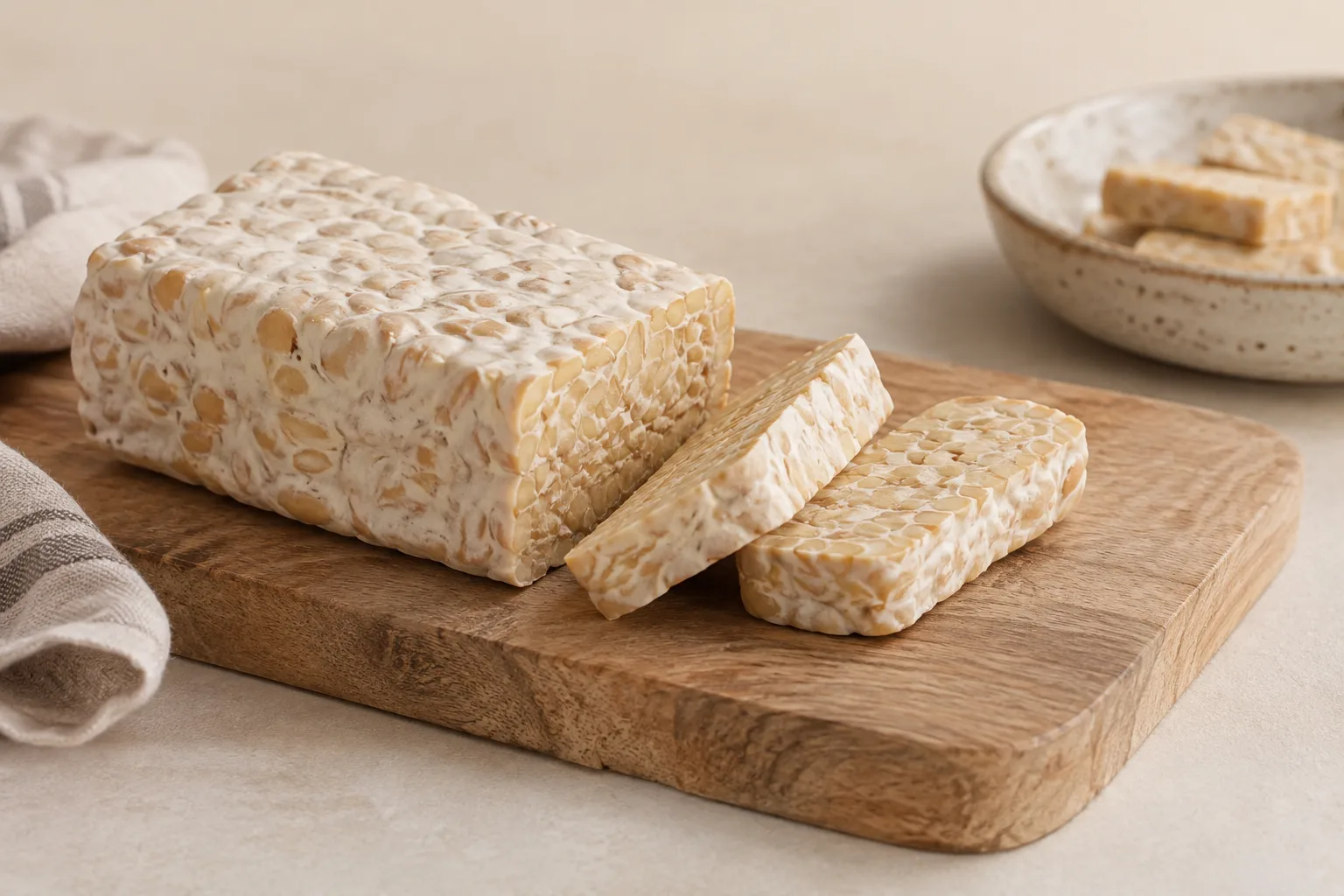
Tempeh is a fermented food usually made from cooked soybeans compacted into a firm block. Unlike tofu, it keeps the beans in the product, so the texture is more solid and the beans remain visible. Tempeh is also made from other legumes, and some products include grains or additional ingredients. Appearance, flavor, and ingredients can therefore vary by type and brand. Sold as a compact ingredient, it can be sliced, cubed, or crumbled for cooking.
When to use it
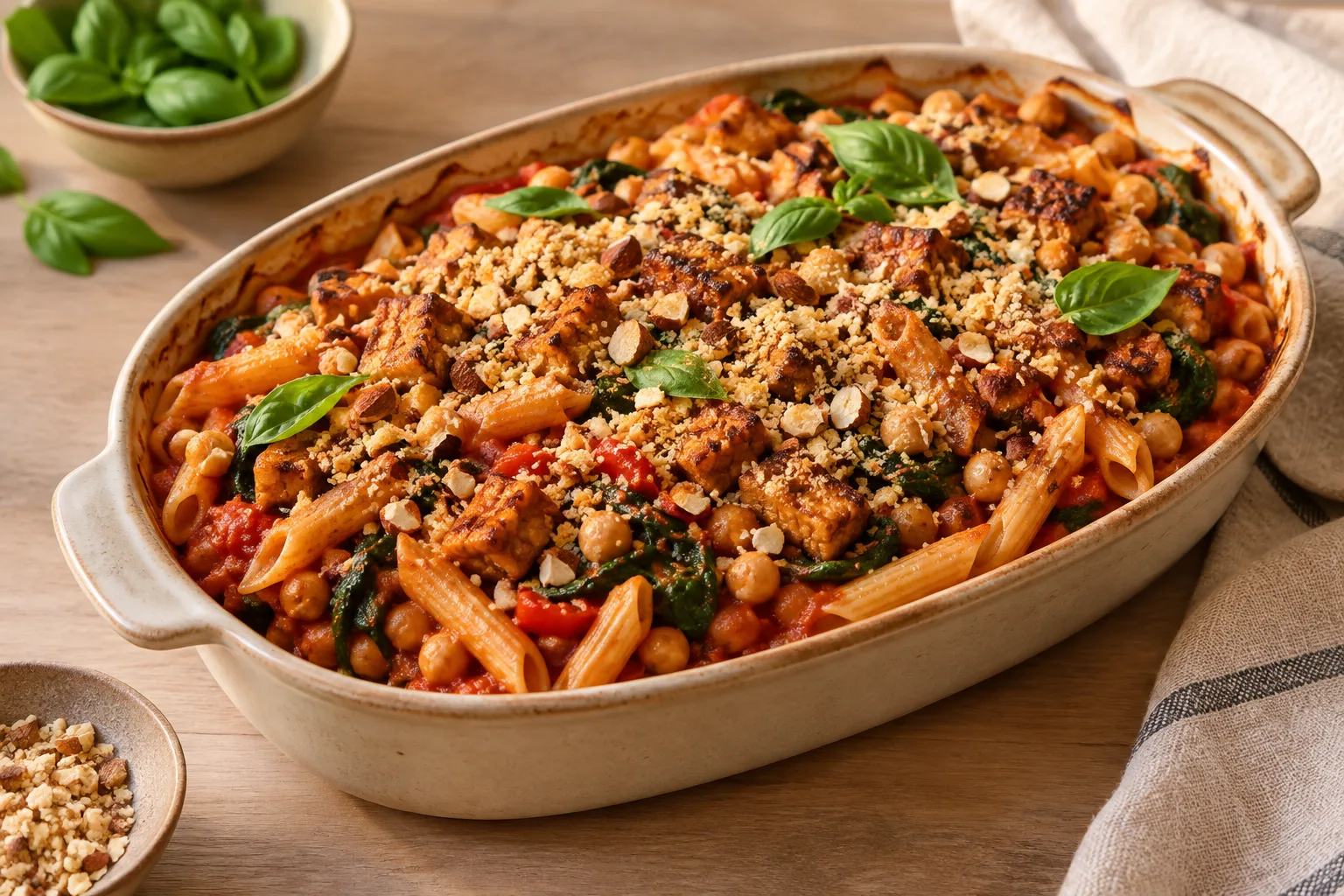
Use tempeh when you want a firm ingredient that is easy to cut for a hot or cold dish. Slices or cubes work in stir-fries, sandwiches, and salads; crumbled tempeh can be added to dishes such as tacos or chili. Its earthy flavor and ability to take on marinades make it useful when you want a plant-based alternative that pairs with sauces and seasonings. If you are unfamiliar with the variety, check the label: not every product is made only from soybeans.
How to use it
Slice the block, cut it into cubes, or crumble it to distribute through a dish. To add flavor, marinate it with a sauce or seasonings, then cook it. Tempeh can be sautéed, baked, grilled, or fried; these methods can brown the outside while leaving the inside softer. Add it to soups, stir-fries, salads, or sandwiches, or cook it crumbled for tacos and chili. Adjust the seasoning to suit the specific product and follow the package directions for use.
Flavour and texture
Tempeh usually tastes earthy, with nutty and sometimes mushroom-like notes. It has a compact, firm texture with visible beans and can be cut without readily falling apart. Marinades and sauces work well for adding flavor. Versions made with other legumes or additional ingredients may taste different.
How to choose it
Choose a compact, firm block and a variety that suits the dish and flavor you want. Check the ingredient list: although tempeh is usually made from soy, some varieties contain other legumes, grains, or additional ingredients. Also read the package information for allergens, storage, and use; do not assume that every product has the same ingredients.
Storage
Follow the storage directions on the package, which can depend on the product and how it is sold. If the label calls for refrigeration, keep it in the refrigerator and observe the date given. For cooked tempeh, use a clean, covered container and refrigerate it; do not apply a storage period from one recipe or product format to every kind of tempeh.
Substitutions
Tofu can replace tempeh when you want a milder soy ingredient, though its texture is different and less firm. Seitan is another plant-based option, but it is not a legume and has a different texture; check its ingredient list if you need to avoid gluten. The dish will turn out differently, so adjust the cut, seasoning, and cooking method.
Common mistakes
Treating tempeh like tofu can lead to expecting a soft texture or neutral flavor: tempeh is usually firmer and earthier. Another mistake is assuming every variety contains only soybeans. Read the label, cut the block to suit the dish, and do not skip marinades or seasonings if you want a more pronounced flavor.
Safety and allergens
Wash your hands and use clean utensils and surfaces when preparing tempeh. Check the package for ingredients, allergens, storage directions, and safe-use instructions; cook it according to the package directions. Soy-based varieties contain soy, while other varieties may contain different ingredients or allergens.
Culinary uses
- proteína vegetal para platos principales
- alternativa vegetal a la carne
Recommended techniques
- saltear
- hornear o asar
- freír
- marinar
Pairs well with
- arroz y verduras
- salsas y marinados
- ensaladas y sándwiches
Frequently asked questions
Is tempeh always made from soybeans?
No. Soy is the usual base, but some varieties are made from other legumes or contain additional ingredients. Check the ingredient list.
How can I cook tempeh?
Slice or crumble it, marinate it if desired, then sauté, bake, grill, or fry it. It also works in salads, sandwiches, soups, and stir-fries.
What does tempeh taste like?
It usually has an earthy, nutty flavor and a firm, compact texture. Sauces and marinades offer an easy way to vary the flavor.
Sources and review
Automatically researched, cross-checked and validated content. Sources consulted:
- TIEMPO-TEMPERATURA.pdf aesan.gob.es
- En el etiquetado alimentario hay algunas menciones que son obligatorias eletiquetadocuentamucho.aesan.gob.es
- Client Challenge doi.org
- NC conservas vegetales mapa.gob.es
- How to Prepare Tempeh Effectively • southernwv.edu staging.southernwv.edu
- (PDF) The effect of blanching method, storage and temperature to the charcteristics of cowpea tempeh subtituted by 40% soybean academia.edu
- The Temptation of Tempeh | Simply Nutritious, Quick and Delicious | Illinois Extension | Illinois extension.illinois.edu
- Food Fermentation: The Science of Cooking with Microbes | Harvard Online harvardonline.harvard.edu
- Smoky Baked Tempeh Strips extension.psu.edu
- Chapter 2: In the Kitchen (Storing and Preparing Food; Preventing Food Waste) – Culinary Medicine opentextbooks.library.arizona.edu
- Cooking with Probiotics and Gut-Friendly Foods - Escoffier escoffier.edu
- WHAT IS TEMPEH? depts.washington.edu
- Tempe (alimento) - Wikipedia, la enciclopedia libre es.wikipedia.org
- Tempeh: qué es, receta, cómo cocinarlo y consumirlo finedininglovers.es
- Tempeh: qué es, propiedades y usos culinarios bonviveur.es
- Cómo hacer tempeh en casa, beneficios y propiedades conasi.eu
- Qué es el tempeh, el superalimento vegetal | Recetas Nestlé recetasnestle.com.co