- Category
- Sauces and condiments
- State
- Other
- Usual unit
- g
What it is
Tomato sauce is a culinary preparation in which tomato, usually its pulp, is the main ingredient. There is no single formula: it may be simple or include ingredients such as oil, onion, garlic, salt, herbs, spices or chile, depending on the style and producer. Some versions are homemade or freshly prepared, while others are sold packaged; their textures can range from smooth to rustic or concentrated. The name can refer to different products in different countries, so distinguish a tomato cooking sauce from a sweet condiment such as ketchup and check the product name and ingredient list.
When to use it
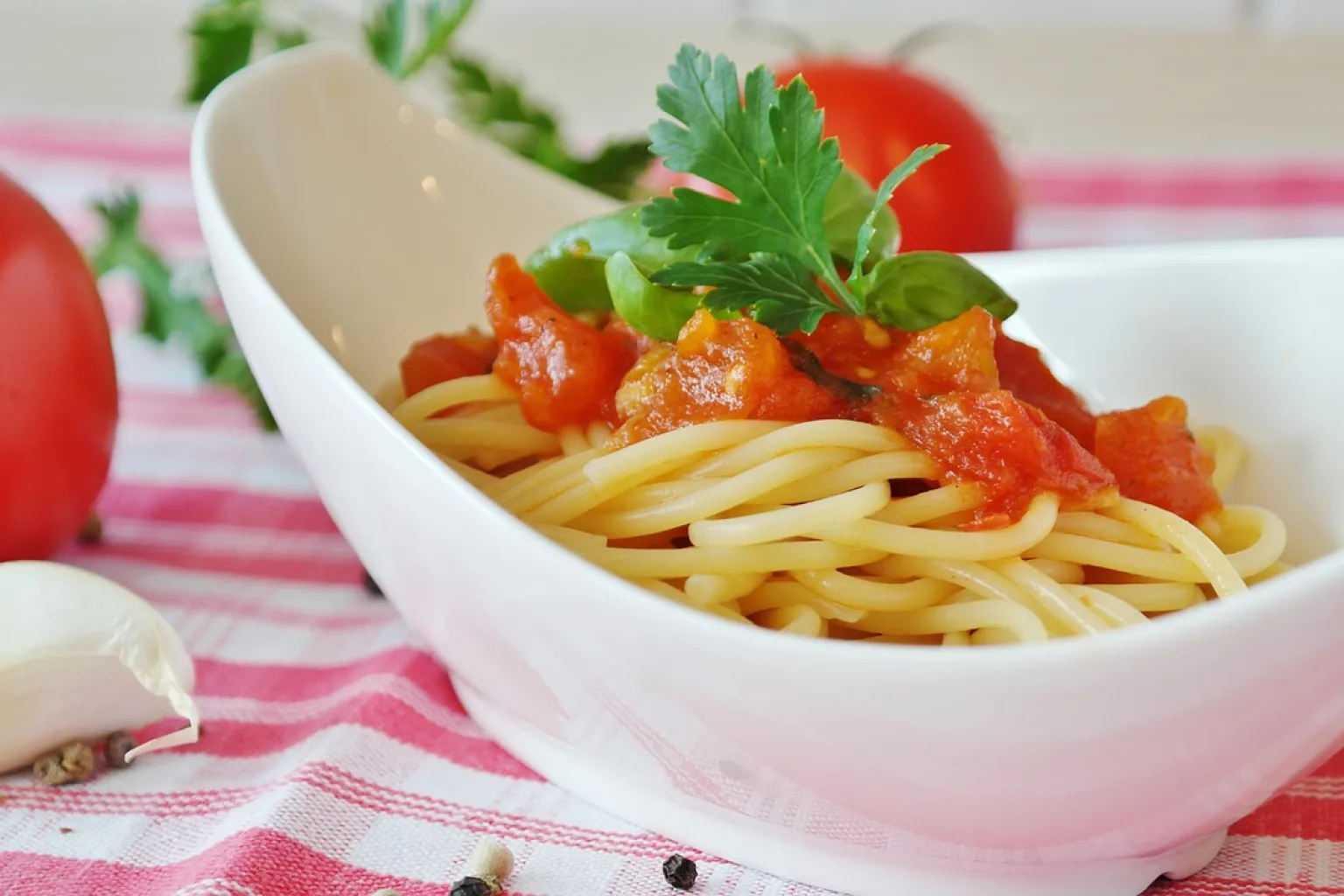
Use it when you want to add tomato flavor and moisture to a dish, or when you need a convenient base for further cooking. It can accompany pasta and pizza, go into stews or meat dishes, and pair with eggs, vegetables, potatoes or rice. Choose a smooth texture when you want it to coat or blend easily, and a thicker or more rustic one when you want the sauce to stand out. Recipes and products vary, so check whether their heat, herbs or sweetness suit the dish.
How to use it
Serve it as an accompaniment if the product is ready to use, or add it while preparing another dish. For homemade sauce or a preparation that needs more concentration, gentle cooking allows some liquid to evaporate and the flavor to concentrate; stir and adjust the consistency to suit the dish. Blend it for a uniform texture, or pass it through a food mill or sieve for a finer finish. Add herbs, spices or chile to match the flavor you want. For packaged products, follow the label's directions for use and storage.
Flavour and texture
Its flavor can be more or less tangy, sweet, spiced or intense, depending on the tomatoes and added ingredients. Texture varies too: some sauces are smooth and fluid, while others retain pieces or are more concentrated. Do not assume that every sauce contains garlic, oil, sugar, herbs or heat; check the ingredient list for the specific product.
How to choose it
Read the product name and ingredient list, because tomato sauce can describe products with different compositions and styles. Check for oil, onion, garlic, herbs, sugar, chile or other ingredients you may want to avoid or that might not suit your recipe. Also read the use and storage directions on the package, and choose a texture that fits your purpose: smooth for mixing, or thicker and chunky for a more distinct presence.
Storage
Storage depends on whether the sauce is homemade or packaged and on the manufacturer's specific directions. Follow the label's storage and use instructions, particularly after opening. For homemade sauce, do not assume there is one universal storage period; use reliable instructions suited to the particular recipe.
Substitutions
Passata or tomato purée can stand in when you want a tomato base; adjust the amount and texture to the dish. Tomato paste is more concentrated in flavor and consistency, so mix it with liquid and add it gradually if you want something closer to a less concentrated sauce. A substitute will not necessarily reproduce the sweetness, spices or texture of a particular sauce.
Common mistakes
A common mistake is treating all tomato sauces as interchangeable: ingredients, texture, concentration and heat can differ. Do not add salt, sugar or spices without tasting the product first, and do not use a highly concentrated sauce as though it had the consistency of a fluid one. For storage, do not replace the product's or recipe's specific directions with a general rule.
Safety and allergens
Tomato can cause allergy in some people. For packaged products, check the ingredient list and allergen information; a recipe may contain other relevant ingredients. Follow the package's safe-use and storage directions. If you have a food allergy, do not rely on the product name alone.
Culinary uses
- Salsa para acompañar y dar jugosidad a platos
- Base para elaborar otras salsas y preparaciones
Recommended techniques
- Cocinar a fuego suave para reducir y concentrar la salsa
- Triturar o pasar por un pasapurés o colador para ajustar la textura
Pairs well with
- Pasta y pizza
- Carnes, albóndigas y guisos
- Huevos y verduras
- Patatas y arroz
Frequently asked questions
Do all tomato sauces contain the same ingredients?
No. A sauce may contain only tomato or include oil, onion, garlic, herbs, spices, chile or other ingredients. Check the label.
What dishes can I use it in?
It can accompany pasta and pizza and be used in stews or dishes with meat, eggs, vegetables, potatoes or rice.
Is tomato sauce the same as ketchup?
Not necessarily. Names and styles vary by country; check the product name and ingredients to identify what you have.
How should I store it after opening?
Follow the specific directions on the package. There is no single instruction that applies to every product and homemade preparation.
Estimated nutrition
- Fat
- 0 g
- Saturates
- 0 g
- Carbohydrate
- 6.67 g
- Sugars
- 3.33 g
- Fibre
- 1.7 g
- Protein
- 1.67 g
- Salt
- 0.08 g
Sources and review
Automatically researched, cross-checked and validated content. Sources consulted:
- En el etiquetado alimentario hay algunas menciones que son obligatorias eletiquetadocuentamucho.aesan.gob.es
- ¿Qué otros usos le dan al tomate? restauranteelpilonrascafria.es
- La importancia del tomate en la gastronomía italiana lapiccolastanza.com
- TOMATE FRITO Y OTRAS SALSAS infoalimentacion.com
- Salsa de tomate - Wikipedia, la enciclopedia libre es.wikipedia.org
- Cómo hacer Salsa de Tomate Casera. Receta Fácil comohacersalsa.com
- AgroAvances | Noticias agroavances.com
- Salsa de tomate: Desde cocinas antiguas hasta futuros alimentos dtfoodmachine.com
- Así era la salsa de tomate hace 300 años | El Correo elcorreo.com
- Evaluation of six tomato (Lycopersicum esculentum) varieties for industrial tomato sauce preparation. | The Journal of Agriculture of the University of Puerto Rico doi.org
- Salsa de Tomate • Puchero MIX blog.pucheromix.com
- 15 mejores sustitutos de la salsa de tomate - NewFoodHub nwfoodhub.com
- Los trucos para que tu salsa de tomate casera sepa a cocina profesional que.es
- Los errores frecuentes que pueden arruinar la salsa de tomate - Infobae infobae.com
- Los trucos para hacer una salsa de tomate casera perfecta alimente.elconfidencial.com