- Category
- Vegetables
- State
- Fresh
- Usual unit
- unit
What it is
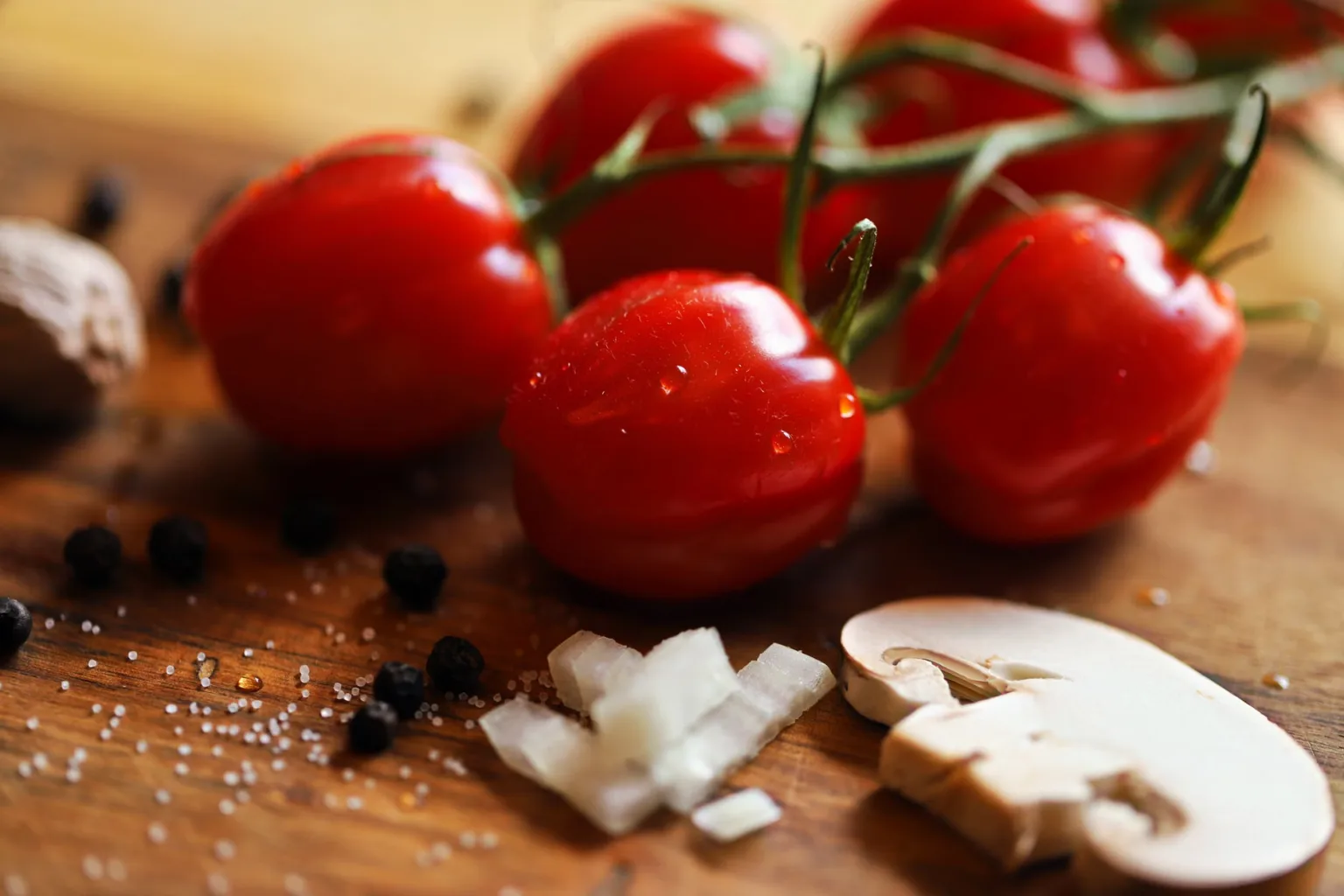
A tomato is the fleshy fruit of the tomato plant and is botanically a berry. In everyday cooking it is commonly treated as a vegetable because it is often used in savory dishes. Tomatoes come in many sizes, shapes and colors, from tiny cherry or grape types to round slicing tomatoes and oval plum or Roma types. Variety, growing conditions, local environment and handling all affect flavor, texture and cooking behavior. As a result, tomatoes are not all alike, and there is no single best choice for every recipe. Choosing by the texture and result you want is more useful than relying on the name or appearance alone.
When to use it
Choose ripe, juicy tomatoes for salads, sandwiches, fresh sauces and dishes where their uncooked flavor is prominent. Plum or Roma types, with abundant flesh, are a practical choice for sauces and soups; cherry or grape tomatoes work well whole or cut in salads and side dishes. Large tomatoes can be sliced or stuffed. If a tomato is very soft or overripe, use it promptly and consider cooking it rather than serving it in neat slices. Different varieties naturally vary in size, color and juiciness, so adapt the cut and preparation to the recipe.
How to use it
Wash the tomato before preparing it and remove the stem end. Slice it for salads, sandwiches or layers with basil and mozzarella; chop it for fresh sauces and sides, or purée it for soups. Tomatoes can also be baked, grilled, broiled, fried, stewed or stuffed. Choose the type for the result: plum or Roma tomatoes have abundant flesh and are commonly used in sauces, while firm round tomatoes are convenient for slicing. If a recipe calls for peeled tomatoes, briefly blanching and cooling them can make the skin easier to remove. Adjust the cut and cooking approach to the tomato’s juiciness and the texture you want.
Flavour and texture
Tomato flavor can range from sweet and fruity to fresh and tangy; the balance varies with variety and ripeness. The flesh may be meaty or very juicy, and skin and seeds contribute to the eating texture. Cherry tomatoes are often small and sweet, while some larger types are notably fleshy. Color alone does not determine flavor: depending on the variety, ripe tomatoes may be red, yellow, green, purple or multicolored. Expect natural differences rather than a single standard taste or texture.
How to choose it
Look for clean tomatoes that are well colored for their variety, firm and slightly yielding under gentle pressure. Avoid fruit that is excessively soft, bruised, cracked, wrinkled or marked with dark areas. Shape and color vary naturally between varieties, so tomatoes do not all need to be round or red. If you plan to cook them soon, a riper tomato may be suitable; for neat slices, choose one that still holds its shape. Let the intended use guide your choice.
Storage
Allow unripe tomatoes to ripen at room temperature, away from direct sunlight and heat. Ripe tomatoes generally keep their flavor best at room temperature when used promptly. Cold temperatures can affect flavor and texture; refrigeration can slow spoilage, but may leave the flesh softer or mealy. Wash tomatoes just before serving or preparing them. The supplied evidence does not establish one universal storage duration: it depends on ripeness and handling.
Substitutions
For salads, replace large tomatoes with cherry or grape tomatoes, cut to make pieces suited to the dish. In soups and sauces, plum or Roma tomatoes can stand in for round tomatoes when a fleshier texture is useful. Flavor and juiciness vary by variety, so adjust the cut and preparation to reach the consistency you want.
Common mistakes
Do not choose a tomato by color or size alone: both vary naturally by variety. Avoid refrigerating unripe tomatoes, since cold can interfere with ripening and affect texture. For sliced salads, skip tomatoes that are very soft or damaged; use overripe ones promptly in cooked dishes instead.
Safety and allergens
Wash tomatoes before cutting and use clean hands and utensils. The supplied official material contains no tomato-specific warning; follow current food-safety guidance in your area.
Culinary uses
- Fresh ingredient for salads, sandwiches, salsas and garnishes
- Juicy base for soups, stews, sauces and cold tomato dishes
Recommended techniques
- Serve raw, sliced, chopped or mashed
- Bake, grill, broil, stew, purée or stuff
Pairs well with
- Basil and fresh mozzarella
- Bread, onion and olive oil
Frequently asked questions
Is a tomato a fruit or a vegetable?
Botanically, it is a fruit and, more specifically, a berry. In cooking it is commonly treated as a vegetable because it is often used in savory dishes.
Which tomatoes are useful for sauce?
Plum or Roma types have abundant flesh and are a practical choice for sauces. Other tomatoes can also be used, though their juiciness may differ.
Should tomatoes be refrigerated?
For better flavor, keep ripe tomatoes at room temperature and use them promptly. Cold can affect texture and flavor, although refrigeration slows spoilage.
Estimated nutrition
- Fat
- 0 g
- Saturates
- 0 g
- Carbohydrate
- 3.97 g
- Sugars
- 3.17 g
- Fibre
- 1.6 g
- Protein
- 0.79 g
- Salt
- 0.04 g
Sources and review
Automatically researched, cross-checked and validated content. Sources consulted:
- Client Challenge doi.org
- Tomate - Wikipedia, la enciclopedia libre es.wikipedia.org
- Los 6 mejores tipos de tomate y cómo usarlos en cocina mercadosantamariadelacabeza.es
- 6 VARIEDADES DE TOMATES Y SUS USOS EN COCINA - Masymas Supermercados super-masymas.com
- Food Selection & Storage | Home & Garden Information Center hgic.clemson.edu
- Tomatoes | Cooperative Extension Service uaf.edu
- Tomatoes | UC Master Food Preserver Program of Orange County ucanr.edu
- Agencia Española de Seguridad Alimentaria y Nutrición aesan.gob.es
- - YouTube youtube.com
- The Potential of a Tomato | Institute of Culinary Education ice.edu
- tomato - FoodLink - Purdue Extension extension.purdue.edu
- Selecting, Storing, and Serving Ohio Tomatoes | Ohioline ohioline.osu.edu
- Arkansas Tomatoes | Buying, Storing, & Preparing uaex.uada.edu