- Category
- Meat
- State
- Fresh
- Usual unit
- kg
What it is
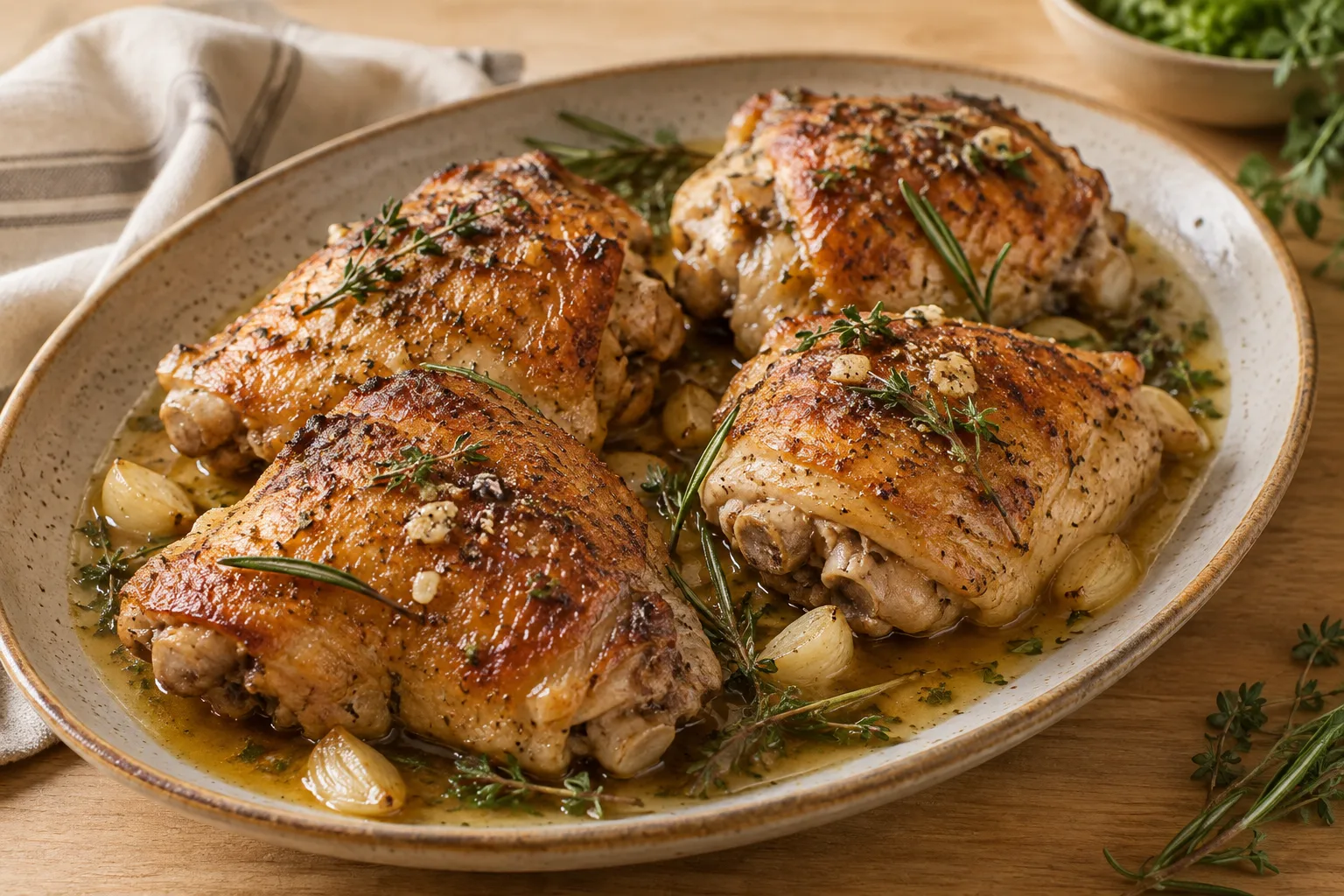
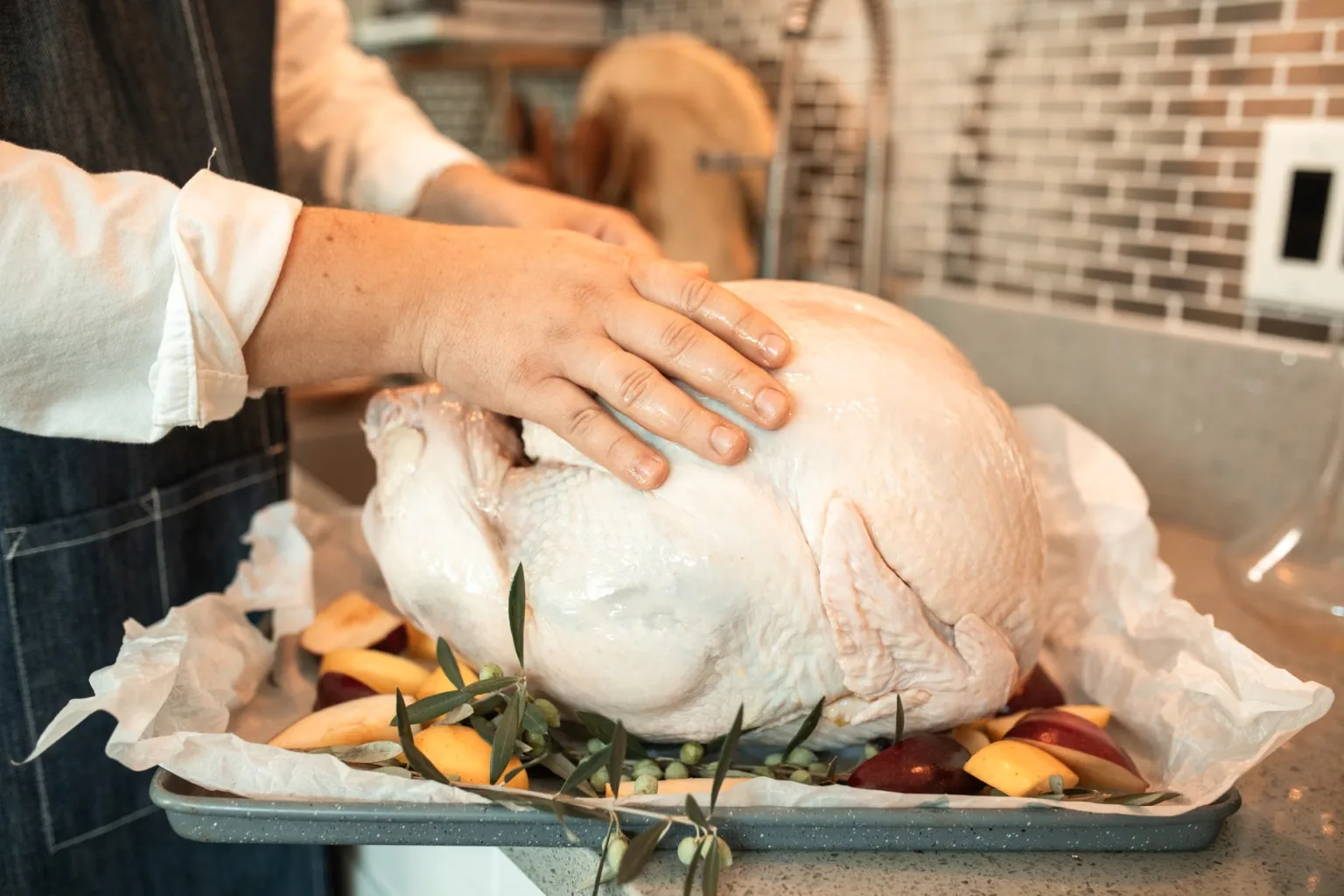
Turkey legs are the bird’s leg portions, sold as bone-in cuts or in other presentations depending on the product. They are poultry, and leg meat is classed as dark meat, unlike breast meat. Cut size and presentation can vary, so check the product description and label when buying. Turkey legs work as a main-course portion and can be prepared by roasting or braising. This profile describes fresh turkey legs, not a cooked, seasoned, or otherwise prepared product. Follow the package directions for the particular item you have.
When to use it
Choose turkey legs when you want a poultry portion to serve as the centre of a meal or prefer dark meat to breast. They suit oven-roasted dishes with potatoes and vegetables, as well as braises with onion, carrot, and cooking liquid. Cooked meat can also be shredded for other dishes. The size of the cut affects the result, so do not assume that a cooking time written for a different cut will apply unchanged. Always verify doneness safely before serving.
How to use it
Before preparation, check the product name, date, and any storage or use directions on the package. Roast the legs with potatoes and vegetables, or brown them and finish cooking in a covered pan with vegetables and liquid for a braise. Recipe examples use beer, wine, or stock, but choose a liquid to suit the dish and ingredients you have. Handle raw turkey with utensils and plates kept separate from those used for cooked food, and wash your hands afterwards. Do not rely on colour alone: check the centre with a food thermometer and reach at least 165 °F for 15 seconds.
Flavour and texture
The leg is a dark-meat cut, distinct from the breast, and is well suited to roasted and braised dishes. Recipe examples serve it with cooking liquids and sauces, though the result depends on the cut and how it is cooked. Appearance or colour alone cannot establish that raw turkey is safely cooked; use a thermometer to check doneness.
How to choose it
Look or ask specifically for turkey legs and check that the product description clearly identifies the cut. Read the date, net quantity, and any storage or use instructions on the package. Products can differ in size and presentation, so take those details into account when choosing a recipe rather than assuming one cooking time suits every leg.
Storage
Follow the storage directions on the package and observe the date given for that product. Required information and how it is presented can vary between packaged and unpackaged sales; if directions are unclear, ask the retailer or producer. Keep raw turkey separate from ready-to-eat food while handling it, and do not reuse plates or utensils that touched raw meat without washing them.
Substitutions
Chicken legs can replace turkey legs in a recipe that suits poultry, but adjust the cooking to the cut and check doneness with a thermometer. Another dark-meat turkey cut may work in a similar dish; its size and shape can affect the result. Do not assume cooking times are interchangeable: verify the internal temperature.
Common mistakes
Do not use colour alone to decide whether turkey is cooked, or automatically copy a cooking time from another cut. Avoid washing or rinsing raw poultry, since splashes can spread bacteria around the kitchen. Keep raw and cooked utensils separate, wash your hands, and check the centre with a food thermometer.
Safety and allergens
Cook turkey until the centre reaches at least 165 °F for 15 seconds and check with a food thermometer; colour alone does not confirm doneness. Wash hands with soap and water for 20 seconds after handling raw turkey, and keep raw and cooked utensils separate. Do not wash raw poultry, as splashes can spread bacteria.
Culinary uses
- Plato principal
- Carne para guisos y asados
Recommended techniques
- Asado al horno
- Estofado o braseado
Pairs well with
- Patatas y verduras
- Arroz y salsas de cebolla, zanahoria o cerveza
Frequently asked questions
How can I tell when turkey legs are cooked?
Check the internal temperature with a food thermometer. The safety guidance supplied here is at least 165 °F for 15 seconds; colour alone is not a reliable doneness check.
Can turkey legs be roasted or braised?
Yes. They can be oven-roasted or cooked in a braise. Adjust the recipe to the size of the cut and verify the internal temperature before serving.
Should I wash raw turkey before cooking it?
No. Washing is unnecessary and not recommended because splashes can spread bacteria to surfaces and utensils. Handle it carefully, keep raw and cooked items separate, and cook it thoroughly.
Estimated nutrition
- Fat
- 6.72 g
- Saturates
- 2.06 g
- Carbohydrate
- 0 g
- Sugars
- 0 g
- Fibre
- 0 g
- Protein
- 19.5 g
- Salt
- 0.18 g
Sources and review
Automatically researched, cross-checked and validated content. Sources consulted:
- En el etiquetado alimentario hay algunas menciones que son obligatorias eletiquetadocuentamucho.aesan.gob.es
- ¿Por qué la muerte es origen de miedos y tabúes? doi.org
- Turkey | Illinois Extension | Illinois web.extension.illinois.edu
- Cómo cocinar un pavo de forma segura | Extensión UMN es.extension.umn.edu
- Expanded Food and Nutrition Education Program (EFNEP) | Community Nutrition | Extension/College of Agriculture, Health & Natural Resources | University of Connecticut efnep.uconn.edu
- Turkey | Illinois Extension | Illinois extension.illinois.edu
- Recetas con muslos de pavo: jugosas y sorprendentes cookpad.com
- Muslos de pavo guisados - Gallina Blanca gallinablanca.es
- Receta de muslos de pavo al horno con verduras recetastradicionalesdecocina.blogspot.com
- Muslos de pavo - GialloZafferano Recetas italianas giallozafferano.es
- 4 formas de cocinar muslos de pavo - wikiHow es.wikihow.com
- Muslos de pavo guisados, tal y como los hace Karlos Arguiñano hogarmania.com
- Meleagris gallopavo domesticus - Wikipedia, la enciclopedia libre es.wikipedia.org
- Buscador de recetas de Cocina - Recetas rtve.es
- Muslos de pavo al horno, receta fácil y rápida de asado con patatas y salsa directoalpaladar.com
- Muslos de Pavo Guisados. (Guiso de Pavo) comidinasdelaabuela.com