- Category
- Drinks
- State
- Liquid
- Usual unit
- cup
What it is
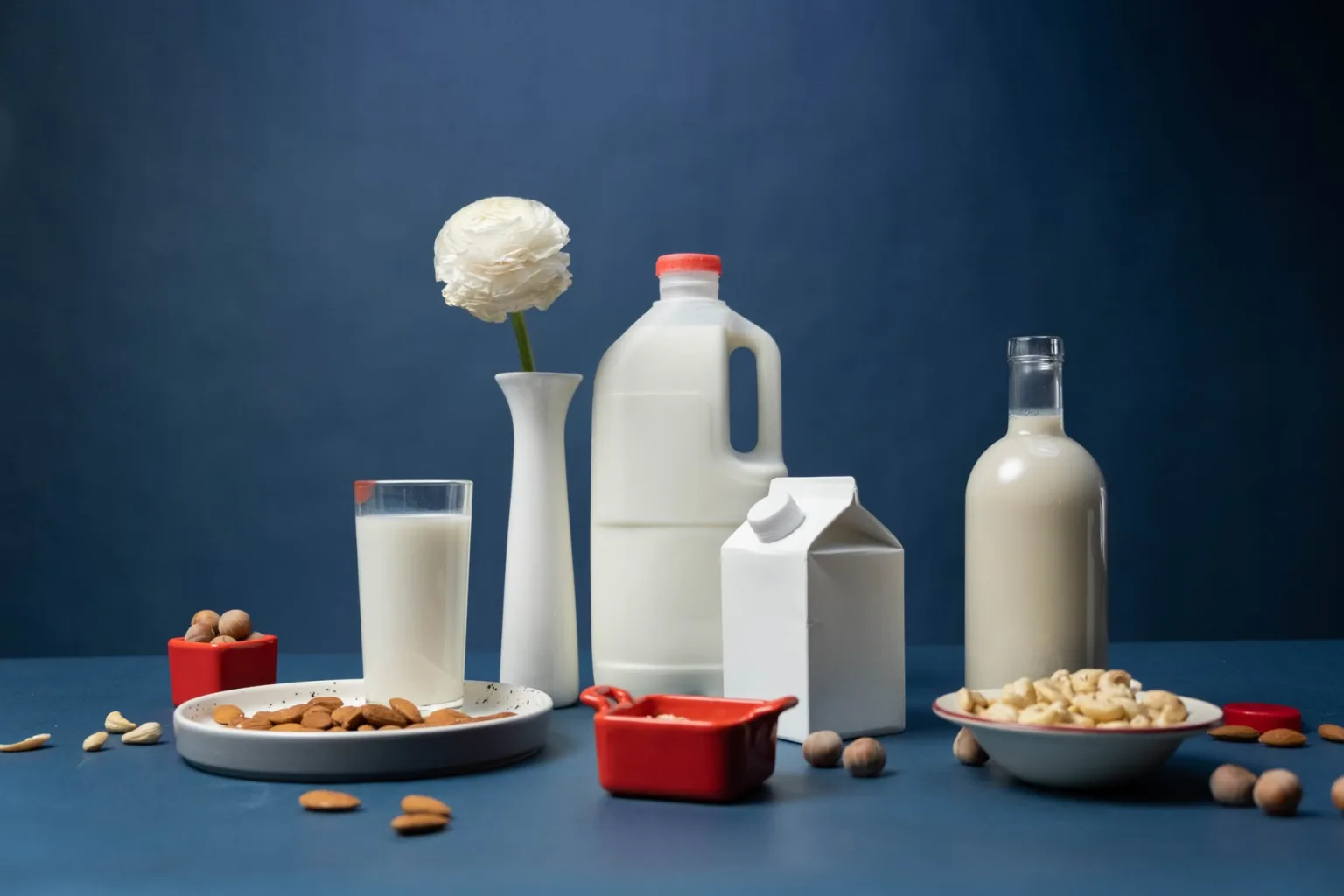
Unsweetened almond milk, also called an almond drink, is a liquid made from almonds and water. Commercial versions may include other ingredients, such as salt, emulsifiers, stabilizers or added vitamins; formulas differ between products. “Unsweetened” or “no added sugar” does not guarantee that a product contains no naturally occurring sugars, so check the ingredients and label if that distinction matters to you. It is not dairy milk, and you should not assume it will behave like dairy milk in every recipe or offer the same nutritional characteristics. The familiar name “milk” is used here to identify the ingredient.
When to use it
Use it when you want a mild-tasting drink without added sugar, either on its own or with breakfast. It can also go into cereal, porridge, coffee, tea and smoothies, and can provide liquid for batters, desserts and some savory dishes. Because commercial products differ in almond content, thickeners and other ingredients, the result can vary by brand; taste and adjust thickness or seasoning. If using it in place of dairy milk in a recipe, bear in mind that plant-based drinks do not all behave alike.
How to use it
Check the carton for ingredients, directions and whether it says to shake before serving. Drink it chilled or add it to coffee, tea, cereal, porridge and smoothies. In baking, use it as a liquid in batters or desserts; recipes that depend on the richness or thickness of dairy milk may turn out differently. For savory cooking, add it to a sauce or soup and then balance the salt and aromatics; almond with roasted garlic or miso can be an inspiration. Heat gently when adding it to a hot preparation, and follow the recipe and product directions.
Flavour and texture
It generally has a mild almond flavor and a pourable texture, but strength and body depend on the amount of almond and other ingredients. Some versions are light, while others are creamier; separation may depend on the formula. With no added sugar, it is less sweet than a sweetened version, but that does not necessarily mean it contains absolutely no sugars.
How to choose it
Compare ingredient lists and choose a no-added-sugar version if that is your aim. Almond content, salt, stabilizers and fortification can differ, so do not assume every carton is equivalent. Check the allergen declaration and any precautionary statements about possible traces, especially if someone has a tree-nut allergy. Also read the package for storage and use instructions.
Storage
Follow the storage directions printed on the package; requirements vary by product and processing. Some drinks are shelf-stable before opening, while others need refrigeration, so do not infer storage needs from appearance or packaging alone. Once opened, follow the maker’s directions for refrigeration, use-by period and closure. Discard the product if the container is damaged or you notice signs of spoilage.
Substitutions
Unsweetened soy, oat or rice drinks can stand in for almond milk, but flavor, thickness and recipe results may change. Choose an alternative for the intended use and check its label: plant-based drinks do not necessarily share the same ingredients or profile. If the swap has a major effect on texture, start with a similar amount and adjust gradually.
Common mistakes
Do not assume “unsweetened” means there are no sugars of any kind; check the label. Do not assume every almond drink can replace another without changing a recipe, since formulas and thickness vary. Overlooking the allergen declaration or package storage directions can also be an important mistake.
Safety and allergens
This drink contains almonds, a tree nut. If you have an allergy, check the ingredients and allergen information on the package; formulas and precautionary trace statements can vary. Follow the manufacturer’s storage and safe-use directions, and do not consume a product in damaged packaging or with signs of spoilage.
Culinary uses
- Bebida para tomar sola o añadir a bebidas calientes y frías
- Ingrediente líquido para recetas dulces y saladas
- Alternativa vegetal a la leche en preparaciones culinarias
Recommended techniques
- Agitar antes de servir si el producto se ha separado, siguiendo las indicaciones del envase
- Incorporar a masas, gachas, batidos o salsas
- Calentar suavemente para bebidas o preparaciones calientes
Pairs well with
- Café y té
- Cereales y gachas
- Canela y fruta en batidos o postres
- Ajo asado y miso en salsas saladas
Frequently asked questions
Is unsweetened almond milk always sugar-free?
Not necessarily. “Unsweetened” or “no added sugar” does not always mean no sugars at all. Check the product label.
Can I use it in coffee and baking?
Yes. It can be added to coffee and used as a liquid in batters and desserts. Its flavor and texture may differ from dairy milk and vary by brand.
Do all almond drinks store the same way?
No. Processing and the manufacturer’s directions determine whether it needs refrigeration and how to store it after opening. Follow the package.
Estimated nutrition
- Fat
- 1.46 g
- Saturates
- 0 g
- Carbohydrate
- 1.25 g
- Sugars
- 0 g
- Fibre
- 0.4 g
- Protein
- 0.83 g
- Salt
- 0.19 g
Sources and review
Automatically researched, cross-checked and validated content. Sources consulted:
- En el etiquetado alimentario hay algunas menciones que son obligatorias eletiquetadocuentamucho.aesan.gob.es
- ¿Por qué la muerte es origen de miedos y tabúes? doi.org
- Leche de almendra - Wikipedia, la enciclopedia libre es.wikipedia.org
- Aesan - Agencia Española de Seguridad Alimentaria y Nutrición aesan.gob.es
- FSHN20-48s/FS423: Leches a base de plantas: Almendras ask.ifas.ufl.edu
- CÓMO IMPULSARLOS A UTILIZAR EL ALIMENTO COMO UNA MEDICINA fammed.wisc.edu
- Contenido del Apéndice de Recetas cfacaa.human.cornell.edu
- Frutos secos y frutas desecadas mapa.gob.es
- Ingredientes: 2 tazas de leche de almendras sin azúcar myllu.llu.edu
- Leche de origen vegetal: información nutricional | University of Utah Health healthcare.utah.edu
- ¿Tienes leche (alternativas)? - Spend Smart Eat Smart spendsmart.extension.iastate.edu
- FSHN20-48s/FS423: Leches a base de plantas: Almendras edis.ifas.ufl.edu
- How to Make Almond Milk at Home (with Just 2 Ingredients) | Institute of Culinary Education ice.edu
- Leche de Almendra sin azúcares añadidos - Almendrina almendrina.com
- Las 10 mejores leches de almendras sin azúcar en sabor y calidad de 2025 elconfidencialdigital.com
- Leche de Almendras Sin Azúcar | YOSOY yosoyvegetal.com