- Category
- Vegetables
- State
- Fresh
- Usual unit
- unit
What it is
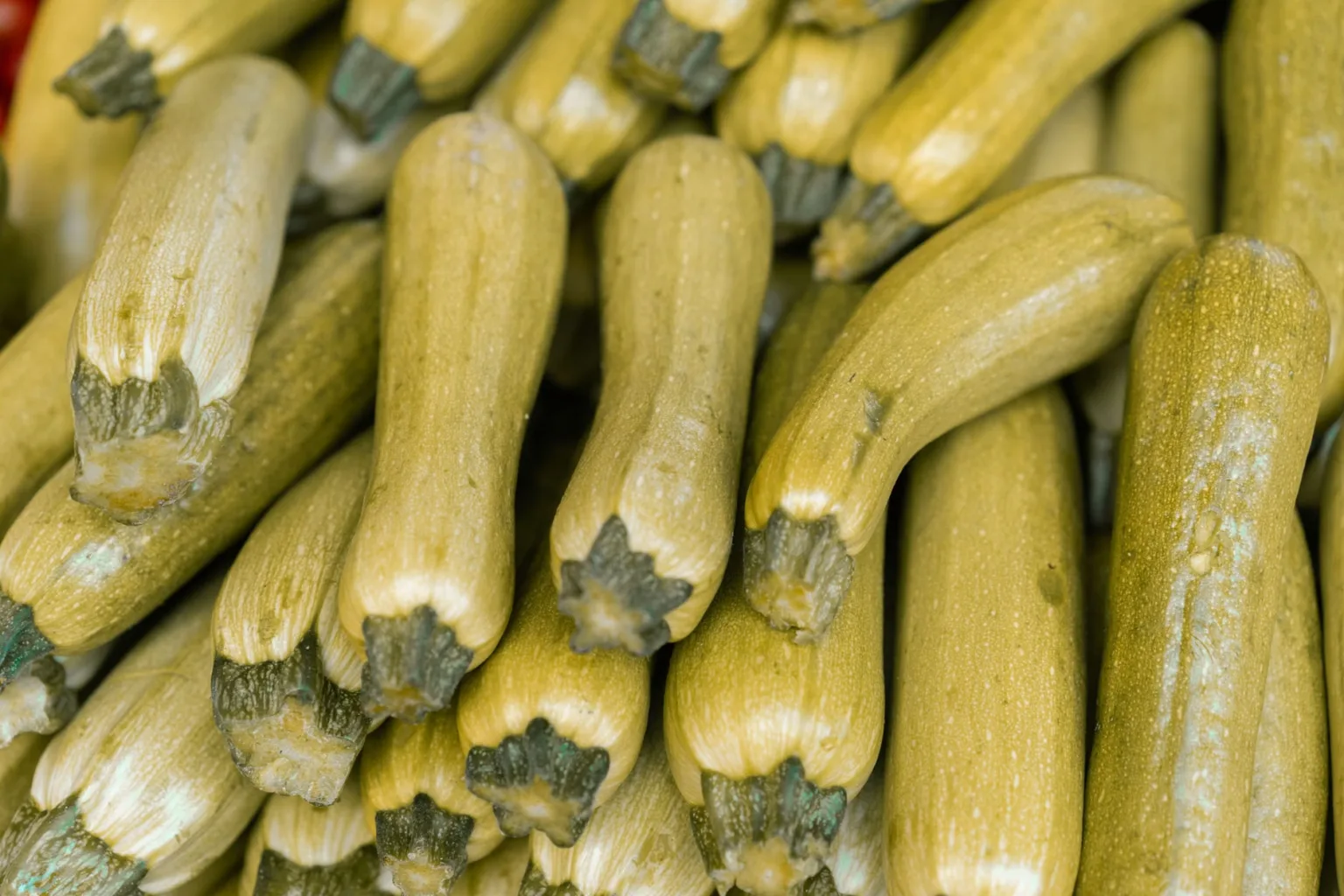
Zucchini is the tender fruit of a cucurbit plant and is used in cooking as a vegetable. The familiar type is usually long, but round varieties and different colors are also available. Its skin is thin, and its flesh is tender and juicy when fresh; the seeds in young specimens are generally unobtrusive when eaten. Size, shape, and color depend on the variety. Zucchini can be cooked whole or cut up, and both skin and flesh are used in many dishes. It is not the same culinary form as winter squash, which usually has a harder skin and firmer flesh.
When to use it
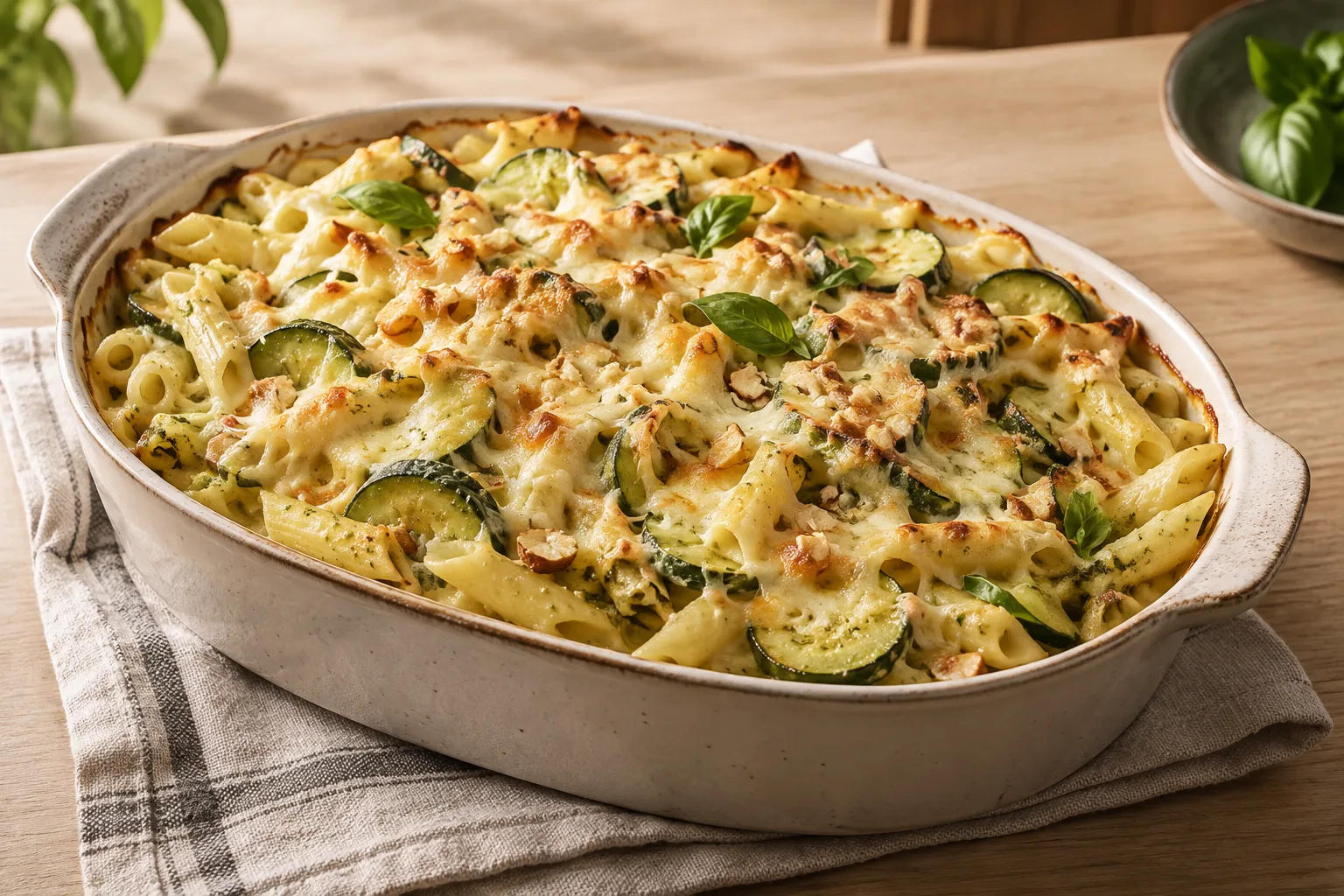
Use zucchini when you want a mild vegetable that can complement other ingredients without dominating them. Thinly sliced raw zucchini can add texture to a salad; cooked, it works as a side or as the base of a soup, sauté, stuffed dish, or casserole. Young, tender specimens are a useful choice when a delicate texture is desired. For baking, stuffing, or vegetable noodles, choose a shape that suits the cuts you need. Zucchini is sold throughout the year in some markets, while some sources identify summer as its best season; availability depends on the market and production conditions.
How to use it
Rinse zucchini under cold running water just before preparation and gently rub it with your hands to remove dirt. Trim the ends and, as the recipe requires, slice, grate, or cut it into cubes or strips. The skin can be left on for many preparations. For a salad, try thin slices or grated zucchini; for a side, sauté or grill it; for a more substantial dish, halve it lengthwise, fill it, and bake it. It can also be steamed, added to soups and purées, or cut into noodle-like strips. If freezing it, follow a tested zucchini blanching and cooling method. After thawing, it may be softer and is often better suited to soups, stews, or baked foods.
Flavour and texture
Zucchini usually has a mild, unobtrusive flavor, so it takes well to a range of seasonings and accompaniments. Fresh flesh is tender and juicy, and the skin is thin; the cooked texture depends on the cut and cooking technique. Grated or frozen zucchini can release water, and its texture is generally softer after freezing. Varieties differ in shape, color, and texture, so results are not identical for every specimen.
How to choose it
Choose zucchini that feel firm, have glossy skin, and show no obvious bruising. Small or young specimens are often tender and are a practical choice for delicate preparations; do not assume that every size and variety will have exactly the same texture. Some guidance also recommends choosing zucchini that feel heavy for their size. Since varieties may be long, round, or differently colored, select a shape that is convenient to cut for your recipe.
Storage
Keep whole zucchini in the refrigerator vegetable drawer and use it while it remains firm. University extension guidance gives 3 to 5 days as a storage recommendation, but actual keeping quality depends on initial freshness and refrigerator conditions. Wait to wash it until just before use. Refrigerate cut zucchini and use it within 1 to 2 days. To freeze it, wash and cut it, blanch it according to a reliable preservation guide, cool and drain it, then pack it in a freezer-safe container; its texture will be softer after thawing.
Substitutions
If the usual zucchini is unavailable, try another young, tender summer squash with thin skin, or a yellow or round zucchini variety. These are close options for culinary use, but piece size and texture may differ. Adjust the cut to the specimen's shape and check doneness as you cook; the available evidence does not establish an exact substitution in every recipe.
Common mistakes
Do not wash zucchini long before storing or cooking it: extension guidance recommends washing just before use. Avoid scrubbing the skin with a coarse brush, which can damage it, and do not expect frozen zucchini to retain the firm texture of fresh zucchini. If thawed zucchini seems watery before baking, drain off excess liquid or it may affect the dish's consistency.
Safety and allergens
Rinse fresh zucchini under cold running water before cutting or eating it, and use clean hands, surfaces, and utensils. For home preservation, follow tested preservation instructions rather than improvising a canning method.
Culinary uses
- verdura principal o guarnición
- base para sopas, cremas y platos al horno
Recommended techniques
- consumir crudo en láminas o rallado
- saltear, asar a la parrilla u hornear
- cocinar al vapor
- escaldar antes de congelar
Pairs well with
- tomate, cebolla y ajo
- albahaca, perejil y orégano
- queso y huevo
- arroz, cuscús y maíz
Frequently asked questions
Does zucchini need to be peeled?
Not necessarily. Its skin is thin and can be left on in many preparations; wash the zucchini well before cutting it.
Can zucchini be eaten raw?
Yes. Slice it thinly or grate it for salads. Rinse it under running water just before preparation.
Can zucchini be frozen?
Yes. Extension guidance describes blanching, cooling, and packing it for freezing. It may be softer after thawing, making it useful in soups, stews, or baked dishes.
Estimated nutrition
- Fat
- 0.32 g
- Saturates
- 0.08 g
- Carbohydrate
- 3.11 g
- Sugars
- 2.5 g
- Fibre
- 1 g
- Protein
- 1.21 g
- Salt
- 0.02 g
Sources and review
Automatically researched, cross-checked and validated content. Sources consulted:
- En el etiquetado alimentario hay algunas menciones que son obligatorias eletiquetadocuentamucho.aesan.gob.es
- Vamos a Conservar Alimentos: Calabazas y Calabacines extension.psu.edu
- Client Challenge doi.org
- Cooking Food Storage | USU extension.usu.edu
- Calabacín: tipos, propiedades y las mejores formas de cocinarlo hogarmania.com
- Escobi - El Calabacín, Todo lo que Deberías Saber escobi.es
- El calabacín, su origen, propiedades y beneficios faborit.com
- 3 recetas de calabacín, y sus propiedades y beneficios | El Diario Vasco diariovasco.com
- Disfruta del mejor calabacín en el esplendor de su temporada: propiedades, usos y muchas recetas para aprovecharlo al máximo directoalpaladar.com
- HS1495/HS1495: Harvest and Handling of Calabaza (Tropical Pumpkin) ask.ifas.ufl.edu
- Calabazas y Calabacines (Spanish) - National Center for Home Food Preservation nchfp.uga.edu
- PREPARING CLEANING ZUCCHINI NUTRITION stcroix.extension.wisc.edu
- Cómo utilizar el calabacín – Food Smart Colorado foodsmartcolorado.colostate.edu
- Como Utilizar el Calabacin | CSU Extension extension.colostate.edu
- Calabacitas | Center for Community Health communityhealth.ucsd.edu
- Calabacines: variedades, beneficios y usos – Pimienta y Purpurina pimientaypurpurina.com