- Category
- Nuts and seeds
- State
- Dry
- Usual unit
- cup
What it is
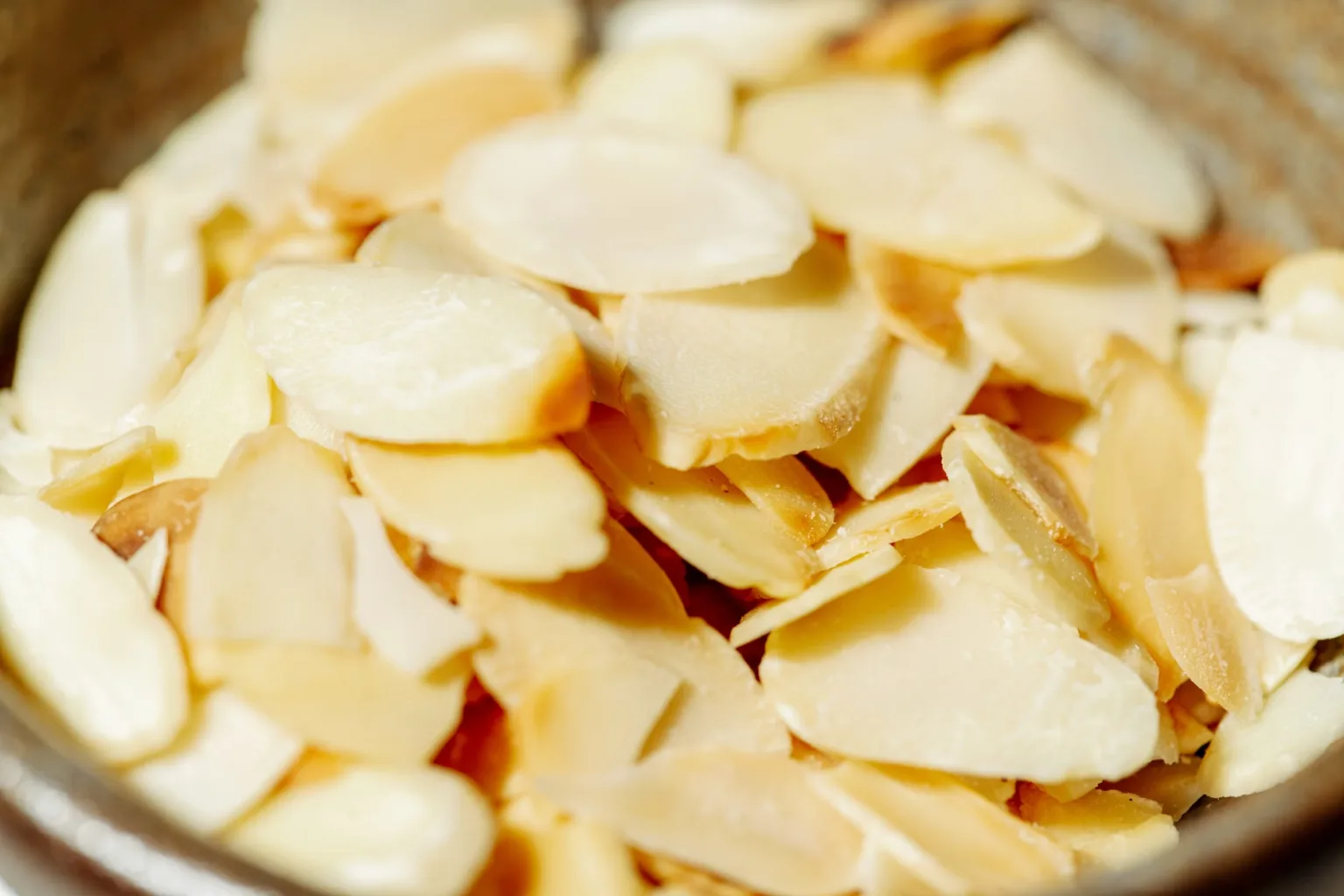
An almond is the edible seed of the almond tree, Prunus dulcis. It is commonly sold dried, with or without its skin, whole or in forms such as flakes, pieces and ground meal. Varieties can differ in size, texture and flavor, so a sweeter-tasting almond or a finer format may suit one preparation better than another. In cooking, almonds can be a main ingredient, as in marzipan, or add texture to a dish and body to a sauce. This profile concerns culinary sweet almonds, not almond-derived products such as almond drink or oil.
When to use it
Use almonds when you want a crisp contrast in salads, vegetables or finished dishes, or when you want flavor and body in sauces and stews. Ground almonds work well in cakes, cookies, doughs and sweets such as marzipan; whole or chopped almonds can be served as a snack or used as a topping. Choose the format for the texture you want and the needs of the recipe: fine ground almonds blend into a mixture, while pieces retain more bite. Almonds suit savory dishes as well as baking.
How to use it
Serve whole almonds as a snack, or chop and scatter them over salads, vegetables, fish and meat for added texture. Toast them before adding if you want a more pronounced aroma, taking care not to burn them. Grind almonds to add to doughs and desserts, or to thicken and flavor sauces and stews. Flakes and pieces give you control over the appearance and bite of a topping. Match the cut to the dish, and add almonds near the end if you want them to stay crisp. Do not assume ground almonds can replace flour in every recipe: the mixture and finished result may change.
Flavour and texture
Almonds are generally mild and slightly sweet, with differences between varieties and formats. Whole or chopped almonds give a firm, crisp bite; ground almonds blend into a mixture and help give it body. Toasting intensifies their aroma and brings out toasted notes. The skin can give a different nuance from blanched almonds, and varieties are not identical in size, texture or flavor.
How to choose it
Choose a format for the job: whole almonds for chopping or snacking, pieces or flakes for toppings, and ground almonds for doughs and fillings. Varieties can differ in size, texture and flavor, so consider this if a recipe calls for a particular result. Check the product name and allergen information on the package or at the point of sale; information requirements can vary with presentation and method of sale.
Storage
Keep almonds in an airtight container in a cool, dry place. A culinary source recommends refrigerating peeled or ground almonds to help limit rancidity. Seal the container after each use and follow any storage directions on the label. No universal storage duration is established here, so check the product’s date and specific instructions.
Substitutions
Chopped walnuts or pine nuts can be tried in some sauces or stews that use nuts, but they will not give the same flavor or texture. Hazelnuts are another nut used in some preparations, but they are not equivalent to almonds and are a separate allergen. Adjust the amount and format to suit the recipe; the available evidence does not establish universal substitution ratios.
Common mistakes
Do not choose a format without considering texture: ground almonds do not give the same bite as whole or chopped ones. Do not assume all varieties taste alike. When toasting almonds, avoid burning them; the aim is to intensify their aroma, not over-darken them. When cooking for others, do not overlook allergen information or assume a product is almond-free without checking.
Safety and allergens
Almonds are an allergen for some people. If you have an almond allergy, do not eat products containing almonds and check allergen information. Information requirements apply to packaged and unpackaged foods, with details depending on presentation and method of sale. Follow the product label and do not consume a product subject to a food alert.
Culinary uses
- Aportan textura crujiente como aperitivo o acabado de platos.
- Dan cuerpo y sabor a salsas, guisos y preparaciones dulces.
Recommended techniques
- Tostar para intensificar el aroma y añadir crocancia.
- Picar o moler para incorporar a masas, postres, salsas y guisos.
Pairs well with
- Chocolate, miel y vainilla en preparaciones dulces.
- Frutas de hueso, cítricos, verduras, pescados y carnes en platos dulces o salados.
Frequently asked questions
How can almonds be used in cooking?
Whole or chopped almonds work as a snack or crisp topping; ground almonds can be used in doughs, desserts, sauces and stews. They can also be toasted to intensify their aroma.
Are almonds only for sweet recipes?
No. They are used in desserts and doughs as well as salads, sauces, stews, and fish, meat or vegetable dishes.
Which almond format should I buy?
Choose whole almonds for chopping, flakes or pieces for toppings and texture, or ground almonds for mixing into doughs and other preparations. Check the product information and allergen details.
Estimated nutrition
- Fat
- 50 g
- Saturates
- 3.57 g
- Carbohydrate
- 21.4 g
- Sugars
- 3.57 g
- Fibre
- 10.7 g
- Protein
- 21.4 g
- Salt
- 0.09 g
Sources and review
Automatically researched, cross-checked and validated content. Sources consulted:
- En el etiquetado alimentario hay algunas menciones que son obligatorias eletiquetadocuentamucho.aesan.gob.es
- Client Challenge doi.org
- Aesan - Agencia Española de Seguridad Alimentaria y Nutrición aesan.gob.es
- Almendra: usos, variedades y combinaciones en pastelería pastrypedia.net
- Almendros y almendras - Gastronomía - Región de Murcia Digital regmurcia.com
- Redescubre la almendra, el fruto seco más popular: sus propiedades, usos en la cocina y cinco recetas para disfrutarla directoalpaladar.com
- Almendras: propiedades, beneficios y cómo usarlas en la cocina abc.es
- ¿Qué es la Almendra? Origen, beneficios y posología | Dieti Natura dieti-natura.es
- Almendra procesada, lo que debes saber para conocer este fantástico producto | Almendras de la mancha almendrasdelamancha.com
- Salsa de Almendras: receta casera, fácil y versátil paulinacocina.net
- Almond Prunus amygdalus La almendra es el fruto del almendro. La etimología mapa.gob.es
- Almendras. Origen e Historia de este delicioso fruto seco ladespensadelospostres.com
- Almendras: qué son, propiedades y usos en cocina bonviveur.com
- Almendras: qué son, propiedades y usos en cocina bonviveur.es
- Mole poblano - Wikipedia, la enciclopedia libre es.wikipedia.org
- Cómo preparar una salsa de almendras cremosa para tus platillos | Gastrolab gastrolabweb.com
- Todo lo que Necesitas Saber sobre los Cordiales de Almendras: Análisis de Ingredientes y Herramientas Esenciales para la Pastelería pasteleriamarianohernandez.es