- Category
- Vegetables
- State
- Fresh
- Usual unit
- g
What it is
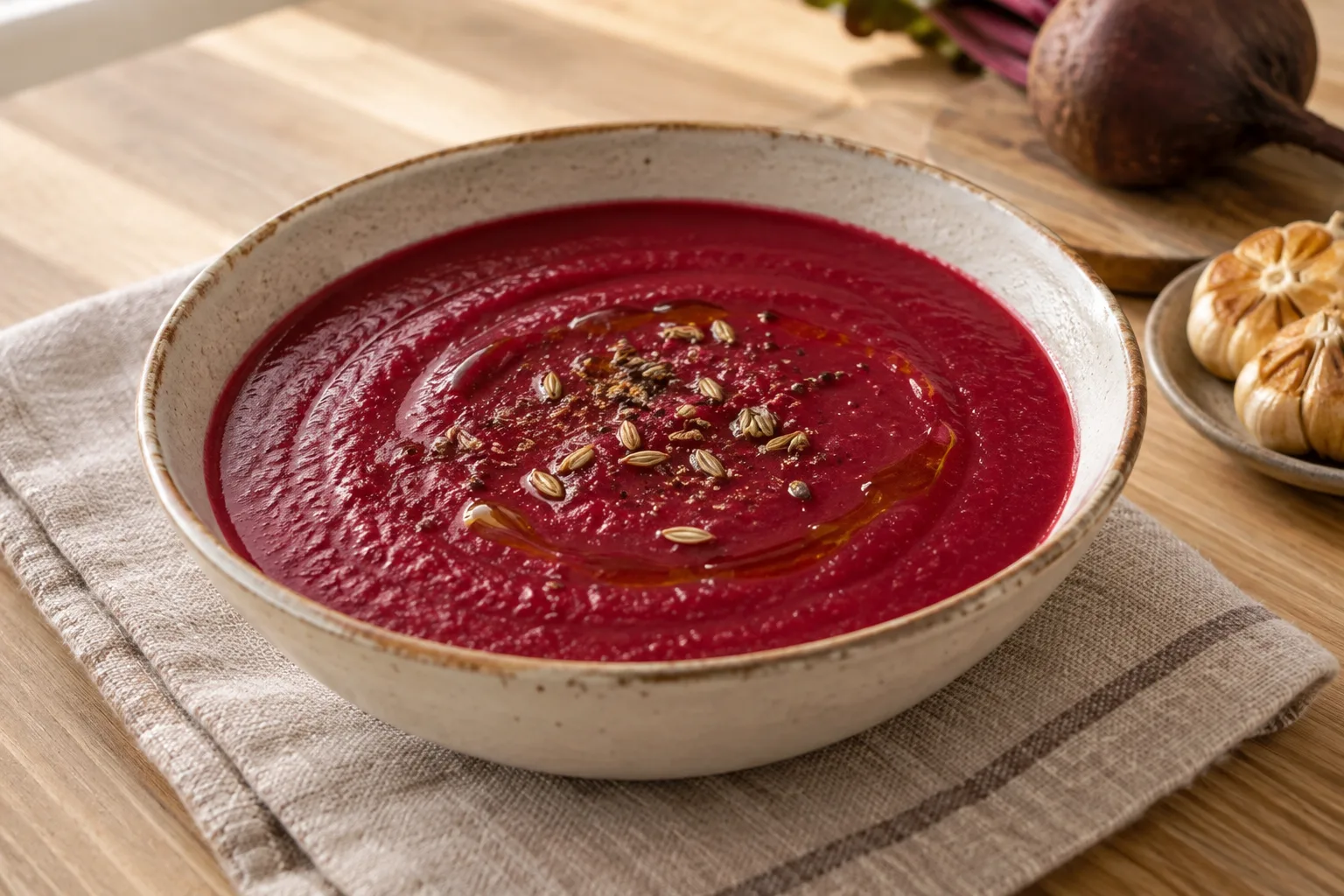
Table beetroot is a vegetable grown for its enlarged root, usually red or purple, with firm flesh and an intense colour. In cooking, the name most often refers to the root, though the leaves are edible too. It should not be confused with sugar beet or fodder beet, which have different uses. Beetroot is sold fresh, whole, or already cooked and preserved. Its colour can stain other ingredients and work surfaces, so allow for this when preparing it. The flavour is generally sweet with earthy notes, while texture depends on the method: firm and crisp when raw, and softer after cooking.
When to use it
Use beetroot raw when you want colour and a crisp bite in a salad or grated mixture with apple. Cook it when a tender texture suits a salad, side dish, soup or purée. The root works with balsamic or Italian dressing, red onion and herbs; feta and nuts are optional additions. Choose fresh beetroot when you want to control the cut and preparation, or use preserved beetroot for a straightforward salad. The leaves can also be used as a vegetable when they are included with the roots and are in good condition.
How to use it
Before preparing fresh beetroot, rinse it under running water and scrub it with a vegetable brush. For a raw salad, peel it if you like, then grate or slice it thinly; it can also be combined with apple. For a cooked preparation, roast it whole or in pieces, boil it, or cook it in a microwave. Once tender and cool enough to handle, cut it and add it to salads, dressings, soups or purées. Roasted beetroot works well with red onion, herbs and balsamic or Italian dressing; feta and walnuts or pecans are optional additions. Handle it carefully because its juice can stain hands, boards and worktops. When using a packaged product, follow its label for storage and use.
Flavour and texture
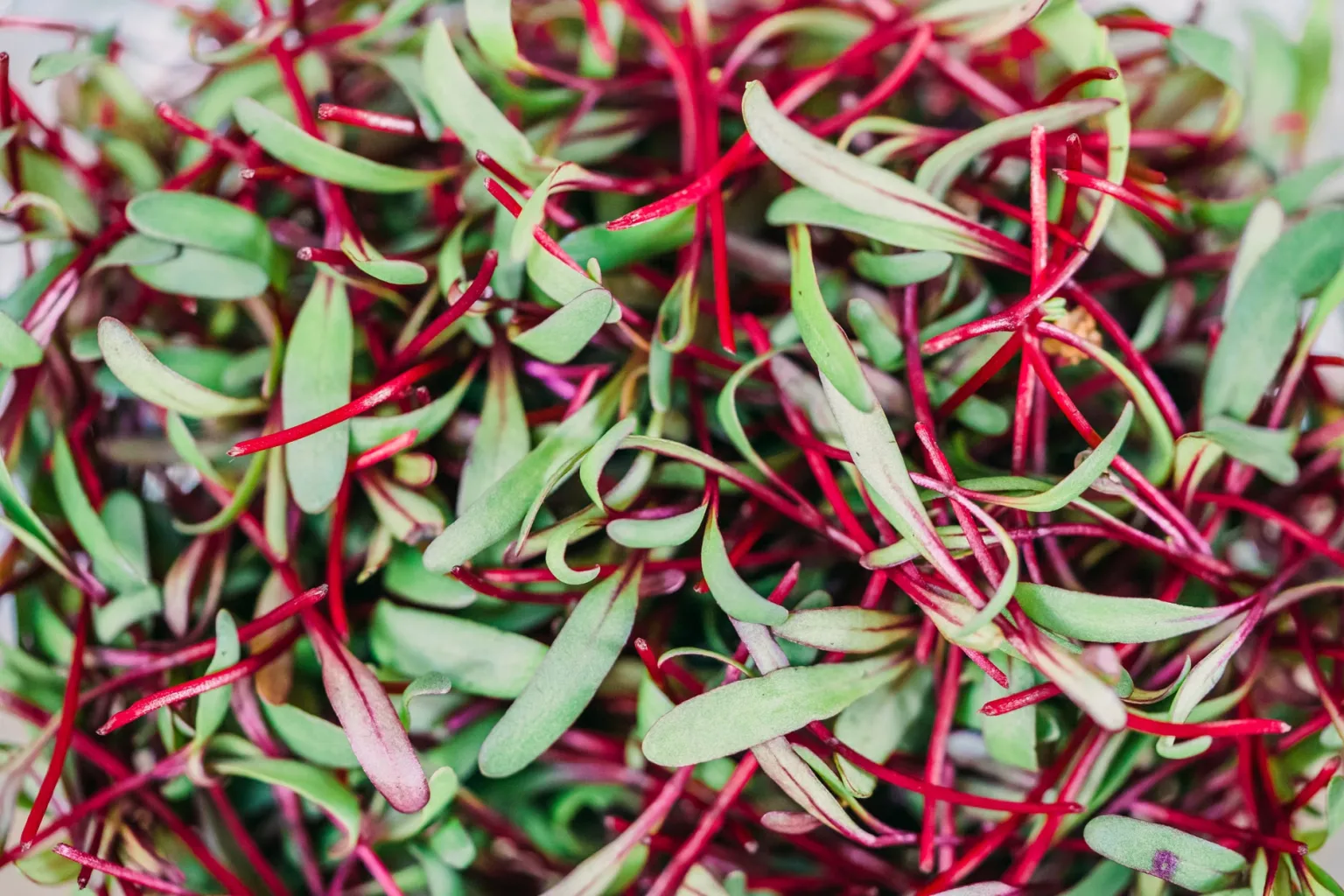
Beetroot has a sweet flavour with earthy notes and a striking red or purple colour. Raw, the root is firm and can add a crisp texture when grated or thinly sliced. Cooking makes it tender and easy to cut or blend into salads, soups and purées. Its colour can stain other ingredients and surfaces during preparation. The leaves, when present, are another edible part of the plant.
How to choose it
Choose roots that are smooth, firm, round and richly coloured, without visible bruises or blemishes. Smaller beetroots are often more tender, and roots of similar size can help them cook more evenly when prepared together. If sold with leaves, look for leaves that appear fresh and green. Shape varies: some roots are round while others are more elongated, so shape alone does not determine how to use them.
Storage
To store fresh beetroot, do not wash it first: moisture can speed deterioration. If it comes with leaves, remove them and keep the roots in a plastic bag in the refrigerator; Iowa State’s guide says they can keep for up to three weeks. Rinse the roots under running water before preparing them. Storage directions for cooked beetroot can depend on the product and presentation; for packaged beetroot, follow the label rather than assuming its instructions are the same as for fresh roots.
Substitutions
For a raw grated salad, carrot or turnip can provide a similar texture, but the flavour and colour will change. In a cooked dish, another cooked root vegetable may fill a similar role, but it will not reproduce beetroot’s sweetness, earthy notes or vivid colour. Adjust the dressing to suit the substitute.
Common mistakes
Do not store freshly washed roots if following the fresh-beetroot storage guidance: moisture can speed deterioration. Do not expect a substitute such as carrot to retain beetroot’s characteristic colour or flavour. When cutting or grating beetroot, remember that its juice can stain hands, boards and worktops. If you buy packaged beetroot, do not overlook the product’s specific label instructions.
Safety and allergens
Rinse fresh beetroot under running water before cutting or eating it, and use clean utensils. For packaged products, follow the use, storage and date instructions on the label, as these can vary by presentation. Beetroot juice can stain surfaces, so prepare it carefully.
Culinary uses
- main vegetable
- salad ingredient
- soup and purée ingredient
- natural source of vivid colour
Recommended techniques
- eat raw, grated or thinly sliced
- roast whole or cut into pieces
- boil
- blend into soups or purées
Pairs well with
- apple
- red onion
- balsamic or Italian dressing
- feta
- pecans or walnuts
- basil, parsley or oregano
Frequently asked questions
Can beetroot be eaten raw?
Yes. Grate it or slice it thinly for salads. Rinse it under running water before preparing it.
How can beetroot be cooked?
The sources describe roasting, boiling and microwave cooking. After cooking, cut it for salads or blend it into soups and purées.
Can you eat beetroot leaves?
Yes, the leaves are edible too. Their availability depends on whether the roots are sold with them.
How should fresh beetroot be stored?
Keep the roots unwashed in a plastic bag in the refrigerator and remove any leaves. A university extension guide says they can keep for up to three weeks.
Estimated nutrition
- Fat
- 0 g
- Saturates
- 0 g
- Carbohydrate
- 10.8 g
- Sugars
- 9.17 g
- Fibre
- 1.7 g
- Protein
- 0.83 g
- Salt
- 0.54 g
Sources and review
Automatically researched, cross-checked and validated content. Sources consulted:
- En el etiquetado alimentario hay algunas menciones que son obligatorias eletiquetadocuentamucho.aesan.gob.es
- Ensalada fácil de remolacha | University of Maryland Extension extension.umd.edu
- Client Challenge doi.org
- Cooking Food Storage | USU extension.usu.edu
- Mejores recetas con remolacha: cocina fácil, casera y tradicional y sus propiedades directoalpaladar.com
- Remolacha: Propiedades, usos y curiosidades | Huercasa huercasa.com
- Remolacha: Propiedades, beneficios y usos en la cocina mercadosantamariadelacabeza.es
- Remolacha: Historia, Usos, Nutrición Y Cultura - Restaurante Romero restaurante-romero.es
- La remolacha ¿Qué es y cómo cocinarla? Beneficios, usos en la cocina y recetas abc.es
- Artes culinarias/Ingredientes/Remolacha - Wikilibros es.wikibooks.org
- Aesan - Agencia Española de Seguridad Alimentaria y Nutrición aesan.gob.es
- Remolacha Azucarera mapa.gob.es
- Remolacha - Spend Smart Eat Smart spendsmart.extension.iastate.edu
- Discover the Fiery Flavor: Unveiling Remolacha in English - CodeForge Studio 6857simon.csail.mit.edu
- Raw Beet and Apple Slaw nyc.cce.cornell.edu
- Remolachas : Center for Agriculture, Food, and the Environment (CAFE) at UMass Amherst umass.edu
- Ensalada de Remolacha con Almendra 1960 (Beet and Almond Salad) - lacocina.utsa.edu