- Category
- Dairy and eggs
- State
- Fresh
- Usual unit
- g
What it is
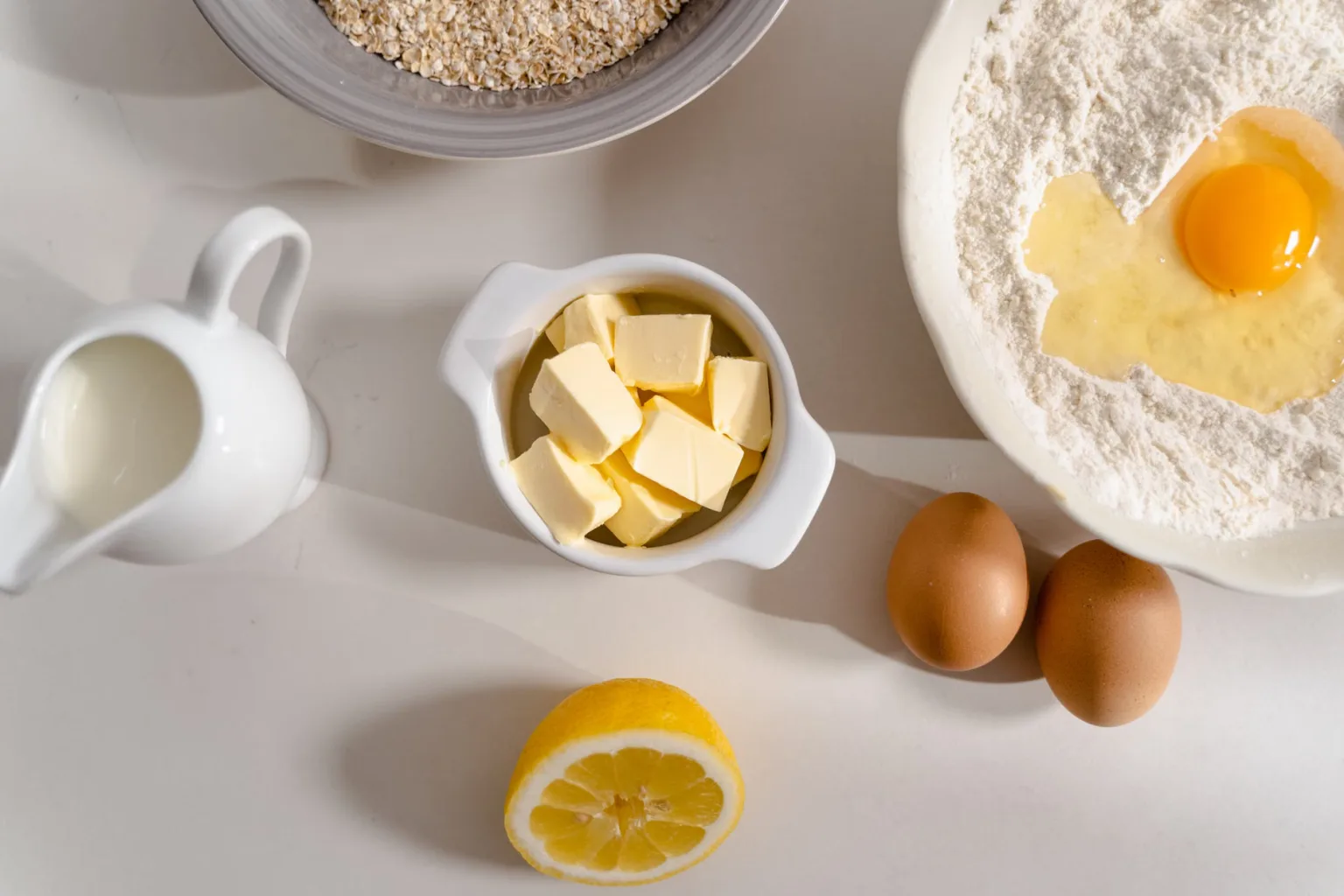
Butter is a product made from milk fat, commonly by churning cream. The available evidence describes it as a mixture of dairy fat and water, with a consistency that can vary by product and production method. Both salted and unsalted versions exist, and artisanal and commercial products may differ. In some Spanish-speaking countries, the word manteca is used for butter; check the product name and ingredients on the package because regional names vary. Butter is used both as a cooking ingredient and as a spread, bringing dairy flavor and a characteristic texture to a range of preparations.
When to use it
Use butter when you want to add flavor and richness to sautéed vegetables, mushrooms, leeks, sauces or vegetable soups. It also works as a spread for toast and as an ingredient in doughs, cookies, cakes and tarts. Its role depends on the recipe: it may be melted, worked into dough or served as a spread. If the recipe needs a particular salt level, choose salted or unsalted butter as directed. Do not assume every butter has the same consistency or behaves identically in a mixture.
How to use it
Follow the method specified in the recipe. For spreading, use butter on bread or toast; for a sauté, add it to the pan with the ingredients being cooked. It can be mixed into vegetable soups to make their texture creamier, and it is used in baking such as cookies, cakes and tarts. Butter may also be melted and incorporated into sauces or used to flavor vegetables and other dishes. Firmness varies between products, so do not assume every butter will behave the same way in dough. Check whether the recipe calls for salted or unsalted butter and account for that choice when preparing the rest of the dish.
Flavour and texture
Butter adds a rich dairy flavor that can enhance simple savory dishes and sweet preparations. Its texture varies: some varieties are firmer and harder to spread, while others are softer. Consistency depends on the product and how it is made, so the texture of one variety should not be treated as universal.
How to choose it
Read the product name and ingredient list to confirm that you are buying butter rather than a different fat product. Choose salted or unsalted butter to suit the recipe. For doughs and baking, remember that firmness can vary between products and follow the preparation instructions.
Storage
The available evidence does not establish one storage duration or set of conditions for every butter. Follow the storage directions and date on the package, and keep the product protected in its wrapper or a clean container. If the label gives specific instructions for after opening, follow them instead of assuming all products should be stored in the same way.
Substitutions
The available evidence is not enough to recommend a universal, equal-quantity replacement for butter. Margarine is a distinct product, not an automatic substitute. Use another fat only when the recipe explicitly allows it, and follow its directions because a substitution may affect texture or the final result.
Common mistakes
Do not assume all butter has the same consistency, or switch between salted and unsalted versions without checking the recipe. Butter should not automatically be replaced with margarine or another fat; confirm that the recipe allows the change and follow its directions.
Safety and allergens
Butter is made from milk fat. If you need to avoid milk, check the product name, ingredients and allergen information on the package.
Culinary uses
- Cooking fat
- Baking ingredient
- Flavor and texture enhancer
Recommended techniques
- Work into doughs
- Melt and incorporate into dishes or sauces
- Sauté ingredients
Pairs well with
- Toast and bread
- Vegetables and mushrooms
- Sweet doughs, cakes and tarts
Frequently asked questions
Are butter and manteca always the same thing?
The term varies by region. In some Spanish-speaking countries, manteca refers to butter; check the product name and ingredients.
What is the difference between salted and unsalted butter?
Salt is added to the salted version. Choose the type specified in the recipe rather than assuming the two are interchangeable without adjustment.
Can I replace butter with margarine?
Not automatically. They are distinct products; use margarine only when the recipe expressly allows that change.
Estimated nutrition
- Fat
- 78.6 g
- Saturates
- 50 g
- Carbohydrate
- 0 g
- Sugars
- 0 g
- Protein
- 0 g
- Salt
- 1.61 g
Sources and review
Automatically researched, cross-checked and validated content. Sources consulted:
- REGLAMENTO (UE) No 1169/2011 DEL PARLAMENTO ... eletiquetadocuentamucho.aesan.gob.es
- Client Challenge doi.org
- The Essential Glossary of Cooking Terms for the Culinary Arts - Escoffier escoffier.edu
- Mantequilla - Wikipedia, la enciclopedia libre es.wikipedia.org
- La importancia de la mantequilla en la cocina friolisa.es
- Comité Científico aesan.gob.es
- Food & Fun Afterschool hsph.harvard.edu
- Conoce todos los usos de la mantequilla | Naturarla | Arla arlafoods.es
- Gastronomy Blog | Page 23 sites.bu.edu
- A Comparative Analysis of Iconic Puerto Rican and Cuban ... academicworks.cuny.edu
- Culinary Arts - Train for a Career in Wine & Hospitality | Delta College deltacollege.edu
- CIA California Campus | Culinary Institute of America ciachef.edu