- Category
- Fish and seafood
- State
- Liquid
- Usual unit
- l
What it is
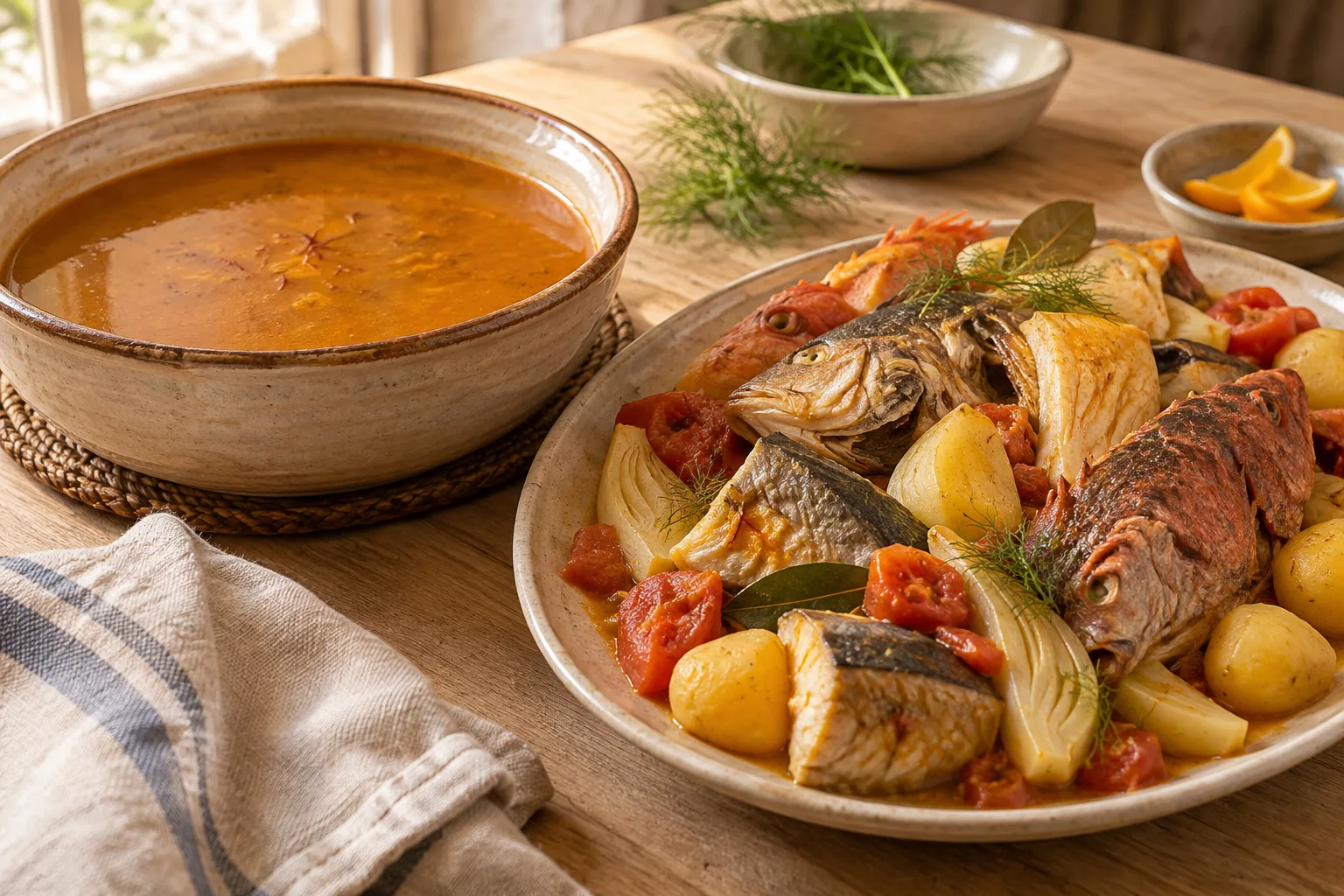
Fish stock is a liquid preparation whose flavor comes from fish and that can be served by itself or used as a foundation for other dishes. It may be made with parts such as the head, tail, skin and bones, and some versions include vegetables or aromatics. Products do not all have the same ingredients or strength, so check the ingredient list and package information. Fish stock is not necessarily the same as court-bouillon, described as a cooking liquid for poaching fish or seafood. Fumet, meanwhile, may refer to a concentrated or reduced stock. These names alone do not guarantee an identical recipe across products or preparations.
When to use it
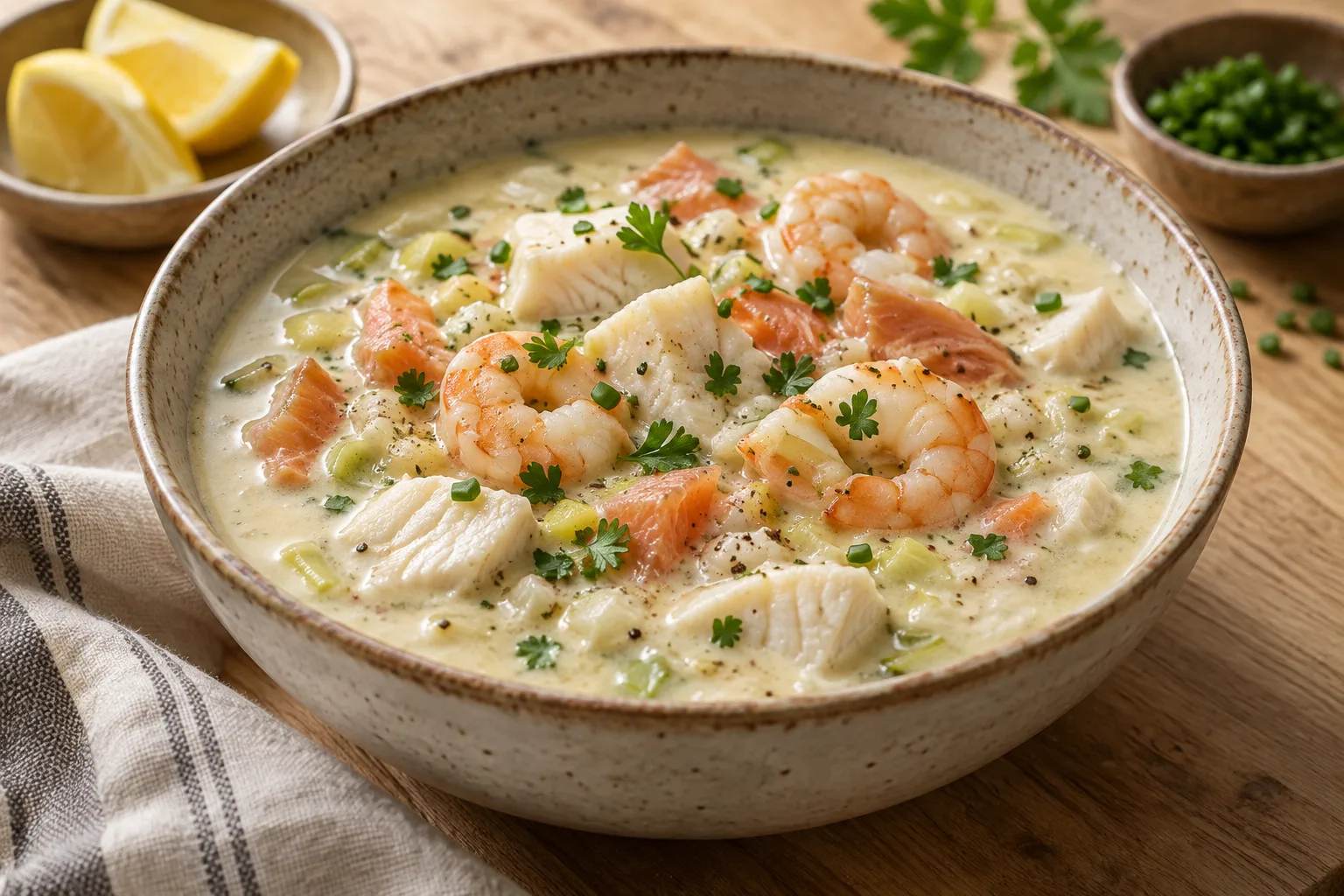
Use fish stock when you want the liquid in a recipe to contribute fish or seafood flavor rather than simply adding water. It can form the base of soups and creams, seafood stews, rice dishes and risotto, or be used to make a sauce. It can also be served as a broth preparation. Choose a strength that suits the dish: a concentrated product can overwhelm a delicate recipe, so start conservatively and taste before adding more. Check whether the product already contains salt or other ingredients, then adjust the seasoning of the dish accordingly.
How to use it
Read the label before cooking: products may contain fish, seafood, vegetables, aromatics or other ingredients, and their concentration can differ. Add the stock as part of the liquid for a soup, cream, stew, rice dish or risotto, or use it as the basis for a sauce. If a recipe calls for water, you can replace some or all of it, bearing in mind that the dish will take on fish flavor. If the stock is concentrated, adjust it according to its directions or the product recipe; do not assume every stock uses the same ratio. Taste the finished dish before adding salt. If making stock with fish, cook the fish adequately; an official source supplied here gives 70 °C as a safety temperature for fish.
Flavour and texture
Its defining feature is a fish-forward flavor that adds depth to seafood dishes; the strength depends on the ingredients and whether the product is concentrated. Stock may be clear or vary in appearance according to how it is made. Fumet may be concentrated or reduced, so it should not be assumed to have the same strength as ready-to-use stock. Taste the product before adding it to a delicate recipe and adjust the amount so it supports rather than masks the other flavors.
How to choose it
Read the product name and ingredient list to confirm what you are buying and what it contains. Check whether it is ready-to-use stock or a concentrated product, and follow its preparation directions. Review allergen, storage and safe-use information; instructions and ingredients can differ between packaged goods and foods sold unpackaged. If you need to avoid a particular ingredient, do not infer the recipe from the name alone: check the product information or ask the seller.
Storage
Follow the storage and use directions on the label, since one instruction cannot safely be applied to every product. After opening, check whether the package specifies refrigeration, a use period or other conditions, and follow them. Keep it separate from ready-to-eat foods where cross-contamination is a concern, and use clean utensils. For homemade stock, cool and store it according to safe guidance applicable to that preparation; the evidence available here does not support a universal storage duration. If you cannot confirm it was stored properly, do not use it.
Substitutions
Vegetable stock can replace fish stock when you want a liquid without fish flavor, though it will change the dish's profile. Another fish stock or a fumet may also work; if it is concentrated, adjust the amount or follow the package directions so it does not dominate. Check ingredients and allergens in any substitute: a similar name does not guarantee an equivalent formulation, and seafood stock is not necessarily suitable for someone avoiding fish or shellfish.
Common mistakes
Do not assume all stocks have the same concentration, ingredients or salt content. Do not automatically replace all the water with a concentrated product; taste and adjust to the label and dish. Avoid buying without checking allergens and storage directions. Do not confuse stock or fumet with court-bouillon: the latter is described as a poaching liquid, not necessarily a foundation for sauce or rice.
Safety and allergens
Fish is an allergen to consider. Check the label for fish and other allergens, and avoid the product if you cannot confirm it is suitable for your needs. Follow the package's storage and safe-use directions; for unpackaged foods, ask the seller for allergen information. If making stock with fish, cook the fish adequately; the official source supplied here gives 70 °C as a safety temperature for fish.
Culinary uses
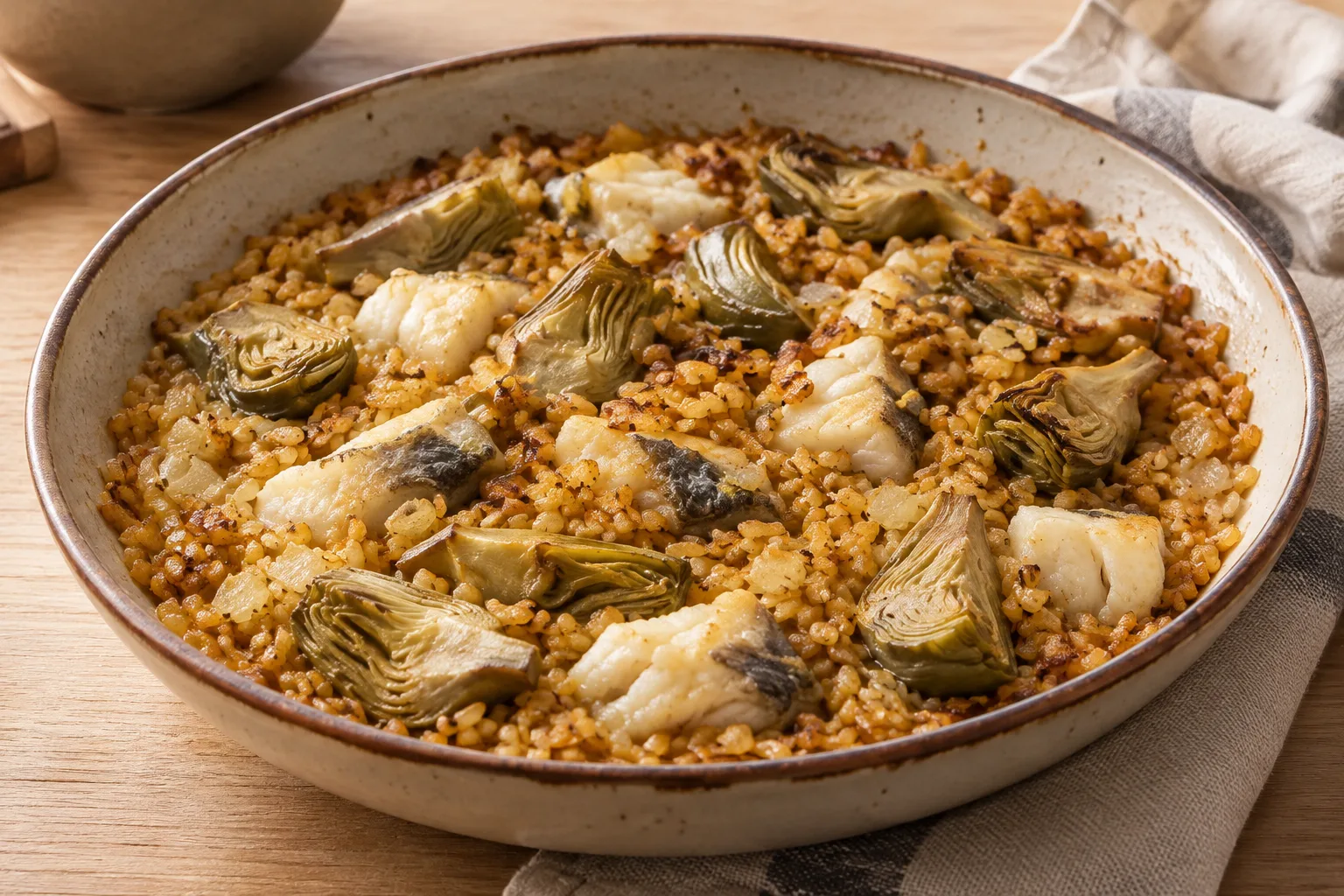
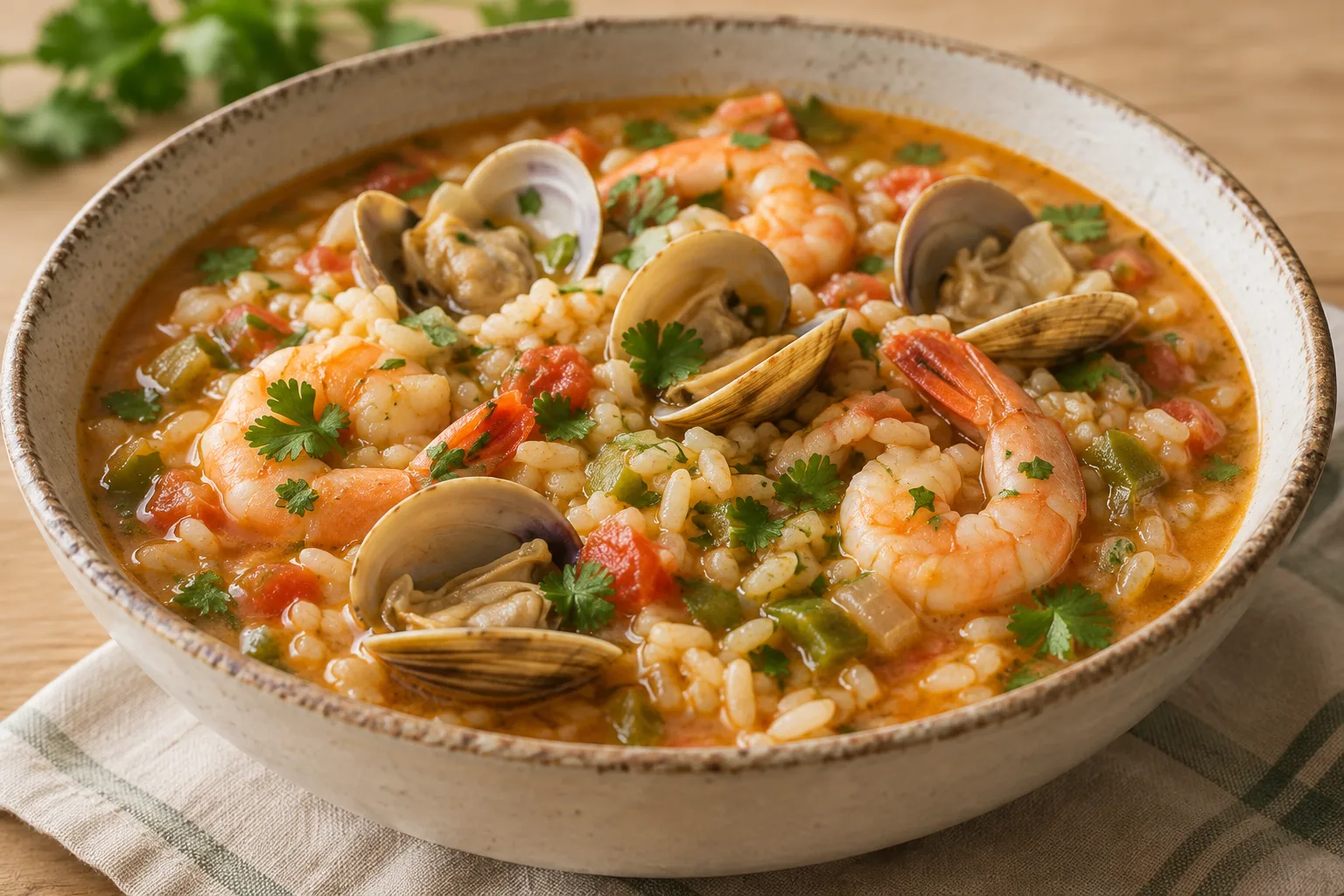
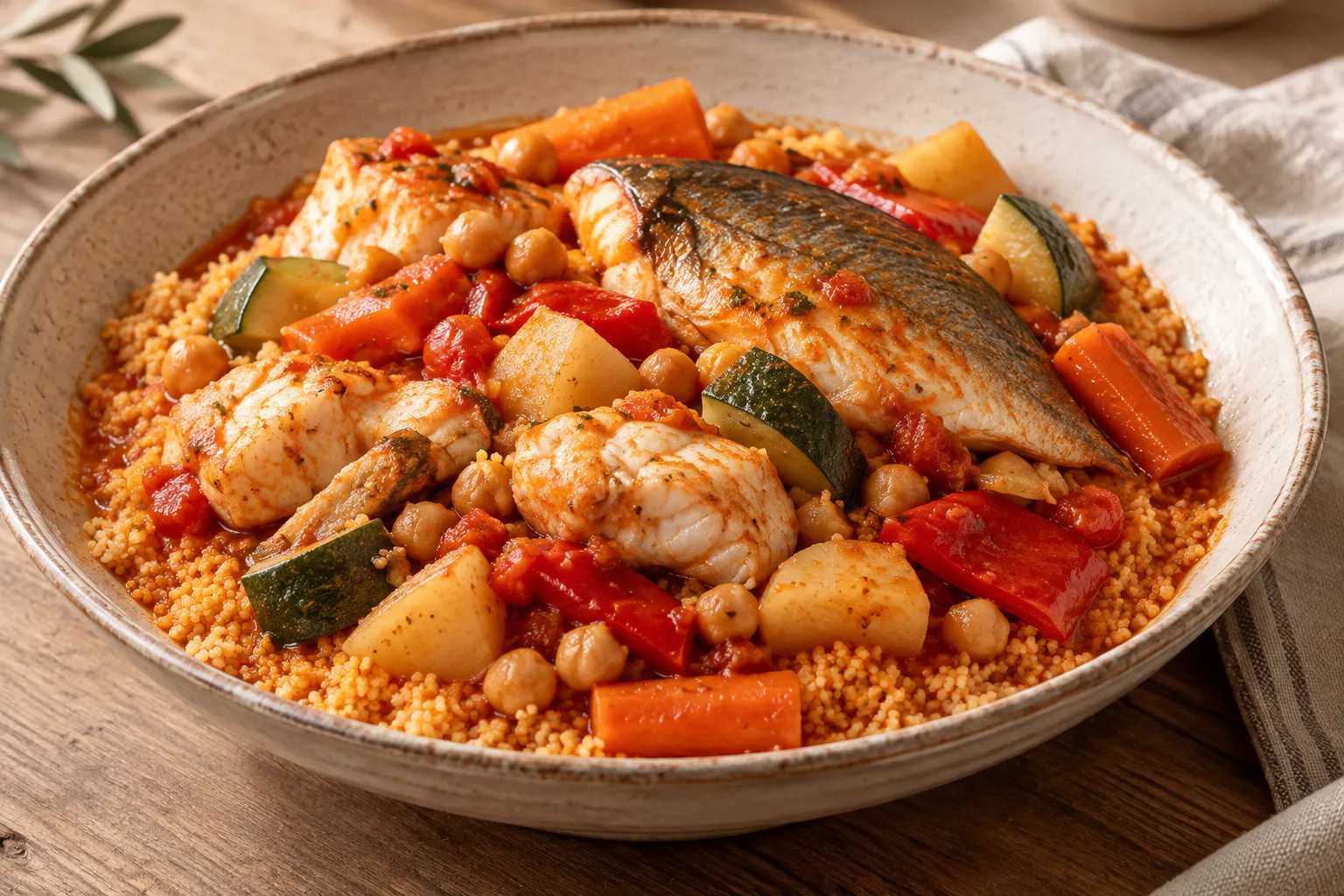
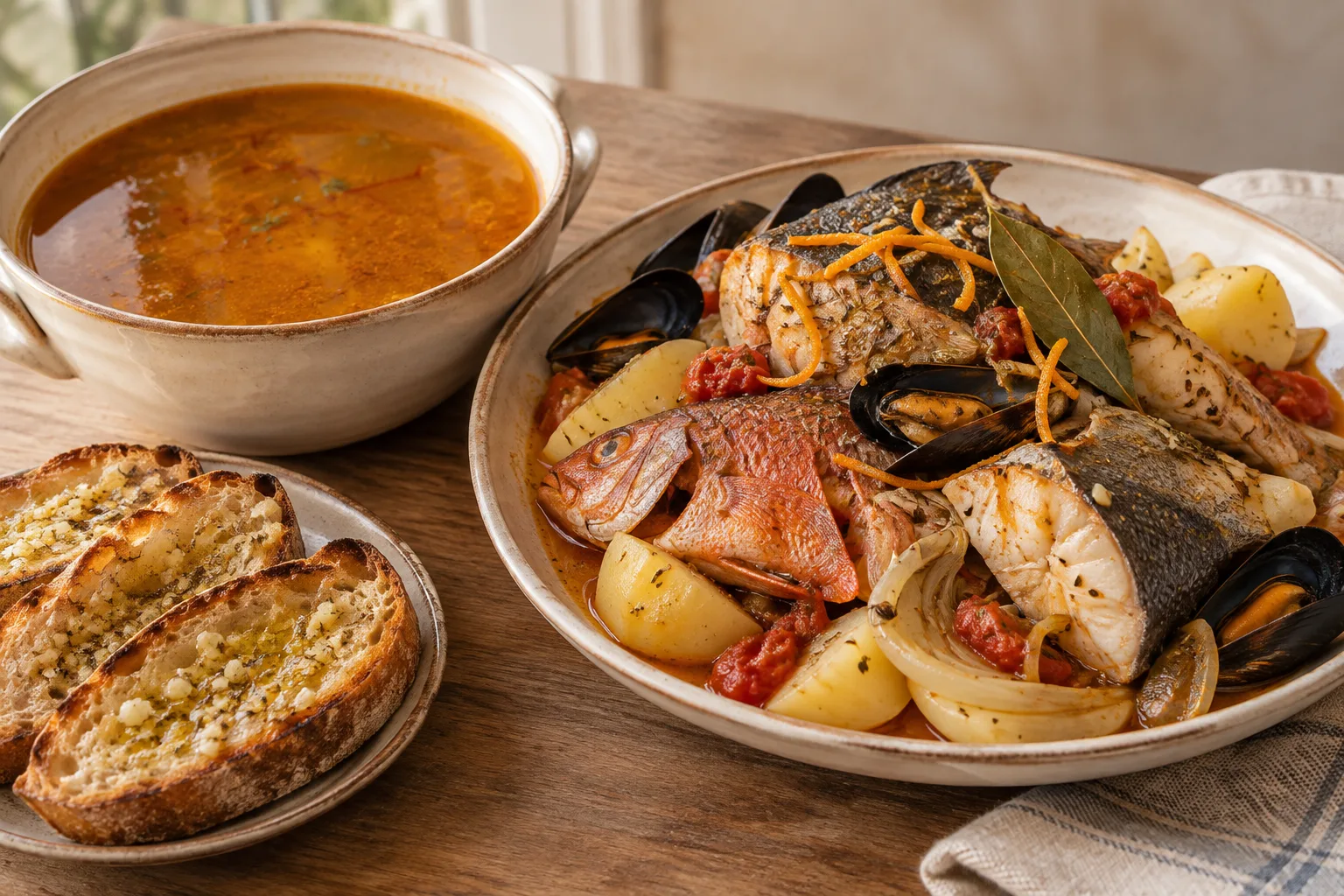
- Base líquida para sopas, cremas y guisos de pescado o marisco
- Líquido de cocción y fuente de sabor para arroces, risottos y salsas
Recommended techniques
- Usar en lugar de agua como líquido de cocción para aportar sabor a platos de arroz o guisos
- Reducir un caldo concentrado para intensificar su sabor, ajustando después el equilibrio del plato
Pairs well with
- Pescado y marisco
- Arroz, verduras aromáticas y hierbas
Frequently asked questions
What is fish stock used for?
It is used as a base or cooking liquid for soups, creams, stews, rice dishes, risotto and sauces. It can also be served as a broth preparation.
Are fumet and fish stock always the same?
Not necessarily. Fumet may be concentrated or reduced stock, and products vary in ingredients and strength. Check the label and adjust the amount.
Can I substitute vegetable stock?
Yes, if you want an alternative without fish flavor, although the dish will taste different. Always check the substitute's ingredients and allergens.
Estimated nutrition
- Fat
- 0.81 g
- Saturates
- 0.2 g
- Carbohydrate
- 0 g
- Sugars
- 0 g
- Fibre
- 0 g
- Protein
- 2.26 g
- Salt
- 0.39 g
Sources and review
Automatically researched, cross-checked and validated content. Sources consulted:
- TIEMPO-TEMPERATURA.pdf aesan.gob.es
- En el etiquetado alimentario hay algunas menciones que son obligatorias eletiquetadocuentamucho.aesan.gob.es
- ¿Por qué la muerte es origen de miedos y tabúes? doi.org
- Cooking Food Storage | USU extension.usu.edu
- Caldo de pescado (fumet): definición, tipos y usos culinarios es.alegsaonline.com
- Storing Meats & Seafood | Home & Garden Information Center hgic.clemson.edu
- Observatorio del Consumo Observatorio del Consumo y la Distribuci mapa.gob.es
- Caldo de Pescado (Fish Soup) | UCLA Housing-Dining menu.dining.ucla.edu
- "Recipes - Main Dishes - Caldo de Pescado (1980-1993)" scholarworks.utrgv.edu
- Las Bibliotecas de UTSA y sus Colecciones Especiales presentan VOL. 3 lib.utsa.edu
- Pho (Vietnamese Noodle Soup) Prep time: 10 minutes Cook time: 45 minutes web.uri.edu
- FACULTAD DE FARMACIA Y NUTRICIÓN ORGANIZA: unav.edu
- PORK & PEAS healthcare.utah.edu
- Selecting and Storing Seafood | Mariner's Menu ncseagrant.ncsu.edu
- El caldo de pescado, un descubrimiento culinario de las costas a nivel mundial eldigitaldecanarias.net
- Cómo hacer un caldo de pescado | Recetas Nestlé recetasnestle.cl
- Introducción al caldo de pescado: la base esencial de sabor mediterráneo marufina.com