- Category
- Meat
- State
- Fresh
- Usual unit
- g
What it is
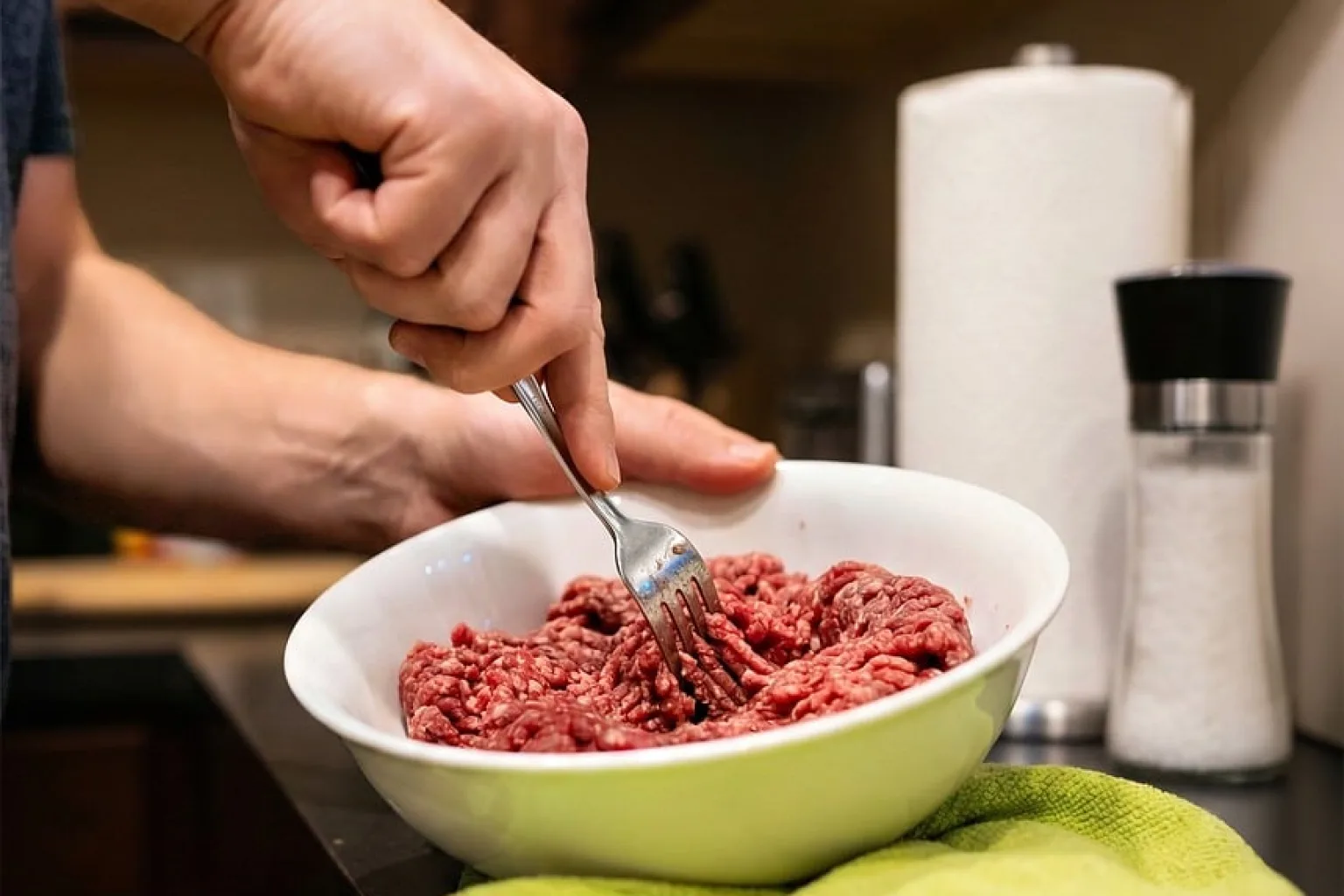
Ground beef is beef reduced to small pieces, commonly using a grinder or a knife. Depending on the meat used, it may contain muscle, fat and connective tissue, so its fat content and texture can vary. Ground beef is not necessarily the same product as a burger or another prepared meat product: those may contain additional ingredients. Check the product name and ingredient list to see what you are buying. This profile covers fresh ground beef, rather than a seasoned product or a mixture with other meats.
When to use it
Use ground beef when you want beef in small portions or evenly distributed through other ingredients. It is suitable for burgers, meatballs, fillings, pies, lasagne and pasta sauces. Choose the grind and fat content for the result you want: the beef you prefer in a burger may differ from what works in a sauced dish. The other ingredients and the composition of the product also affect its texture and flavour.
How to use it
Check the label to confirm that you have ground beef rather than a prepared product with added ingredients. To brown it, heat a pan and cook in batches if adding the whole amount would crowd the surface; this can help the meat brown instead of releasing liquid into an overcrowded pan. You can also soften it with onion and garlic, then add tomato sauce for pasta, meatballs or a filling. For oven dishes, combine it with the recipe ingredients in lasagne or a meat pie. Follow the product instructions and the advice of your local food-safety authority when handling and cooking it.
Flavour and texture
It has a beef flavour that can be more or less pronounced depending on the cuts used. Once cooked, the texture is finely crumbled and tender; the result may be juicier or leaner according to its fat content. The fine mince gives the meat more exposed surface and makes it easy to mix into sauces and other ingredients. Colour alone cannot establish freshness: also consider the package, date, smell and texture.
How to choose it
Choose a product whose label clearly identifies what it is, and read the ingredient list: ground beef and prepared meat products do not always have the same composition. Check the date and that the package is intact, and choose a fat content suited to the recipe. Colour is not a conclusive freshness test. Buy an amount appropriate to your planned use and follow the package instructions.
Storage
Ground beef is perishable. At home, follow the storage conditions and date shown on the package, and avoid interrupting the cold chain during transport. If you will not use it promptly, follow the manufacturer’s or retailer’s storage directions; the evidence available for this profile does not establish a universal storage time or temperature. Keep raw meat separate from ready-to-eat foods and follow local food-safety guidance.
Substitutions
You can use ground pork or a beef-and-pork mixture instead, bearing in mind that the flavour and texture will change. Choose according to the recipe and whether the meat is the main feature or part of a filling or sauce. Do not automatically treat ground beef and burgers or prepared meat products as interchangeable: they may contain additional ingredients.
Common mistakes
Do not assume that all ground meat or burger-shaped products have the same ingredients: check the product name and ingredient list. Do not use colour as the only freshness test. Overcrowding a pan can hinder browning. Do not confuse ground beef with a prepared product that may include other ingredients; check the label and follow food-safety guidance.
Safety and allergens
Follow the product instructions and your local food-safety authority’s advice for handling and cooking this product. The evidence available for this profile does not support specific cooking times, temperatures or storage instructions.
Culinary uses
- Hamburguesas y filetes rusos
- Albóndigas, rellenos y salsas para pasta
Recommended techniques
- Dorar en sartén
- Cocinar a fuego suave en salsa o guiso
- Hornear en preparaciones como lasaña o pastel de carne
Pairs well with
- Cebolla, ajo y tomate
- Albahaca, patata y queso
Frequently asked questions
Is ground beef the same as a burger?
Not necessarily. A burger or prepared meat product may contain additional ingredients; check the product name and ingredient list.
How do I choose the fat content?
It depends on the recipe and the texture you want. Fat content affects juiciness and how the meat behaves during cooking.
Can I use it in pasta sauce?
Yes. Brown or sauté it with onion and garlic, add tomato sauce, and cook it as part of a pasta sauce.
Estimated nutrition
- Fat
- 9.82 g
- Saturates
- 4.02 g
- Carbohydrate
- 0 g
- Sugars
- 0 g
- Fibre
- 0 g
- Protein
- 19.6 g
- Salt
- 0.17 g
Sources and review
Automatically researched, cross-checked and validated content. Sources consulted:
- The Essential Glossary of Cooking Terms for the Culinary Arts - Escoffier escoffier.edu
- Comprobando su navegador doi.org
- Carne de ternera picada - Gastronomía Vasca: Escuela de Hostelería Leioa gastronomiavasca.net
- Mesa para dos. La Gastronomía en la Poesía y el Cine ... scholarworks.umass.edu
- Nutrition After Your Transplant - Health Online healthonline.washington.edu
- Dictionary of Health Related Terms: English – Spanish hia.berkeley.edu
- Trabajo electrónico aesan.gob.es
- Carne picada mixta, de ternera o cerdo: cuál elegir - Carnicerías Juan Ortíz - Carnicería en Móstoles - Online carniceriasjuanortiz.com
- Estudio de la actividad antioxidante de diversas plantas ... upcommons.upc.edu
- Recetas para comer fuera de casa: Hachis parmentier (pastel de carne) cordonbleu.edu
- Carne picada de ternera: cómo elegirla, cuánta grasa debe tener, conservarla y cocinarla - El Mercado de Origen elmercadodeorigen.com
- Propiedades de la carne picada – Botanical-online botanical-online.com