- Category
- Bread and dough
- State
- Fresh
- Usual unit
- unit
What it is
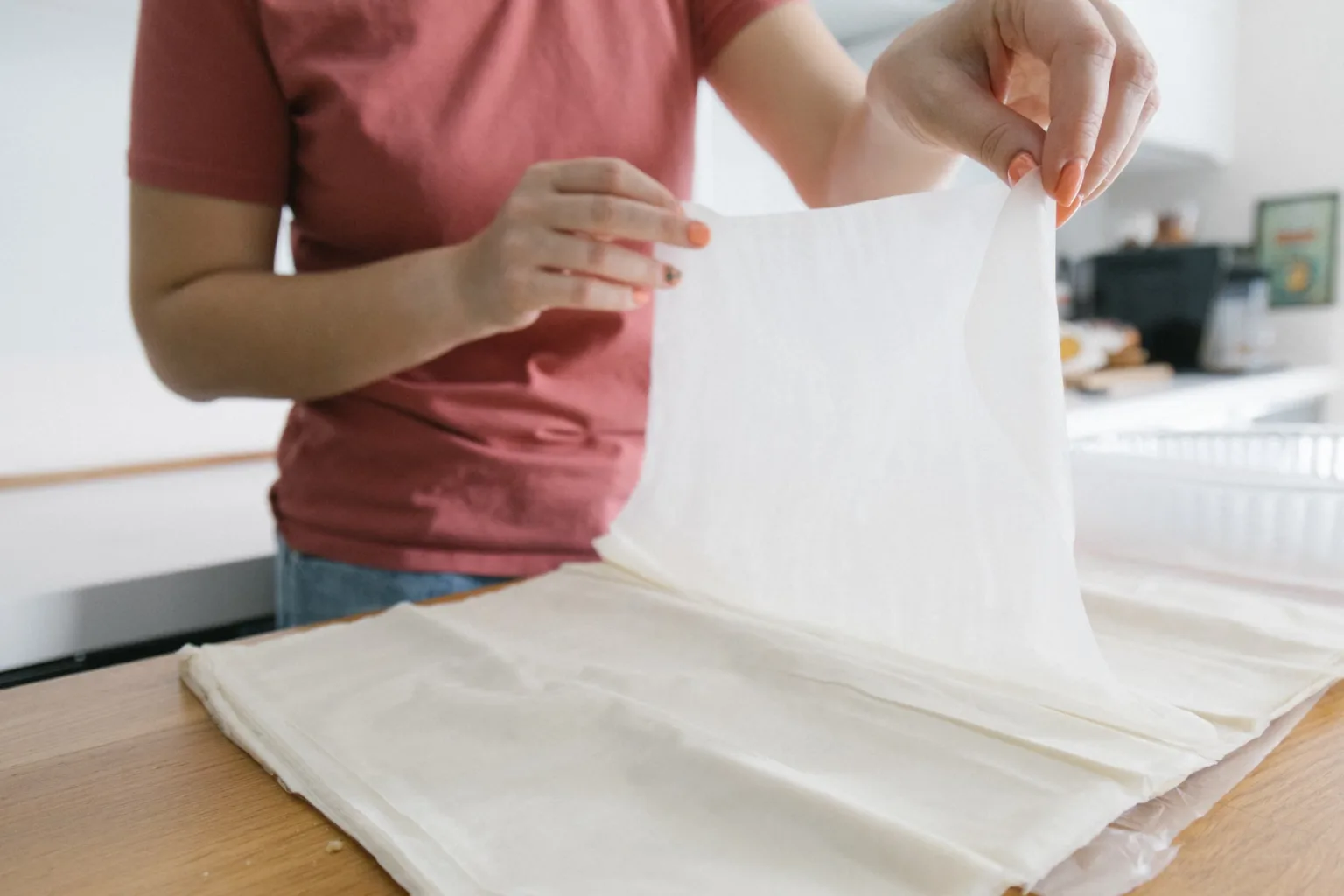
Phyllo dough, also spelled filo, is a pastry made as very thin, nearly translucent sheets. The sheets are layered and are often lightly brushed with a fat such as oil or melted butter to make crisp wrappers, bases, and pastries. It is used for both sweet and savory dishes. Phyllo is not the same as puff pastry: phyllo is handled as separate, delicate sheets, while puff pastry produces a thicker, more risen result. Commercial formulas can differ, so check the package ingredients, especially if you need to avoid a particular ingredient.
When to use it
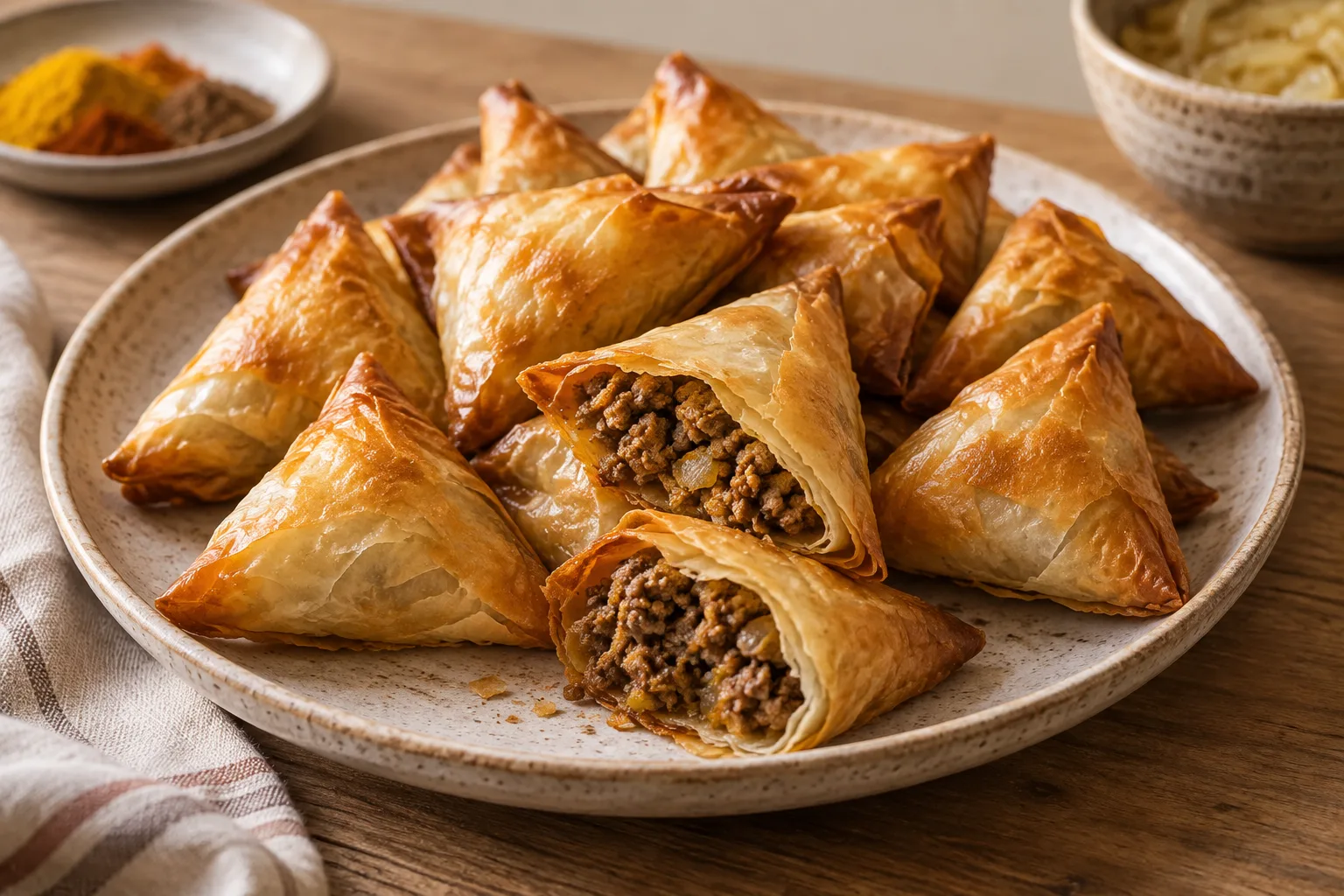
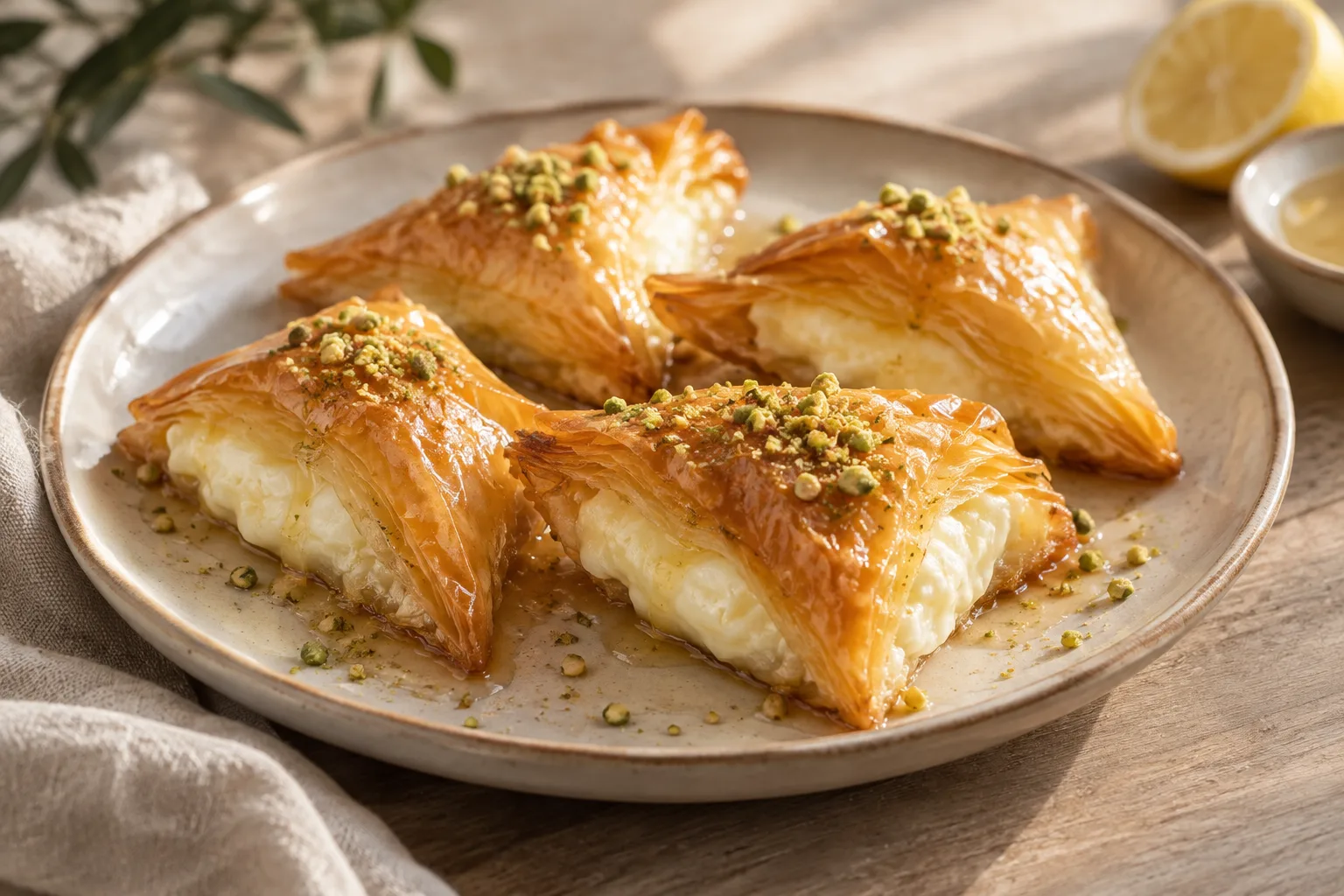
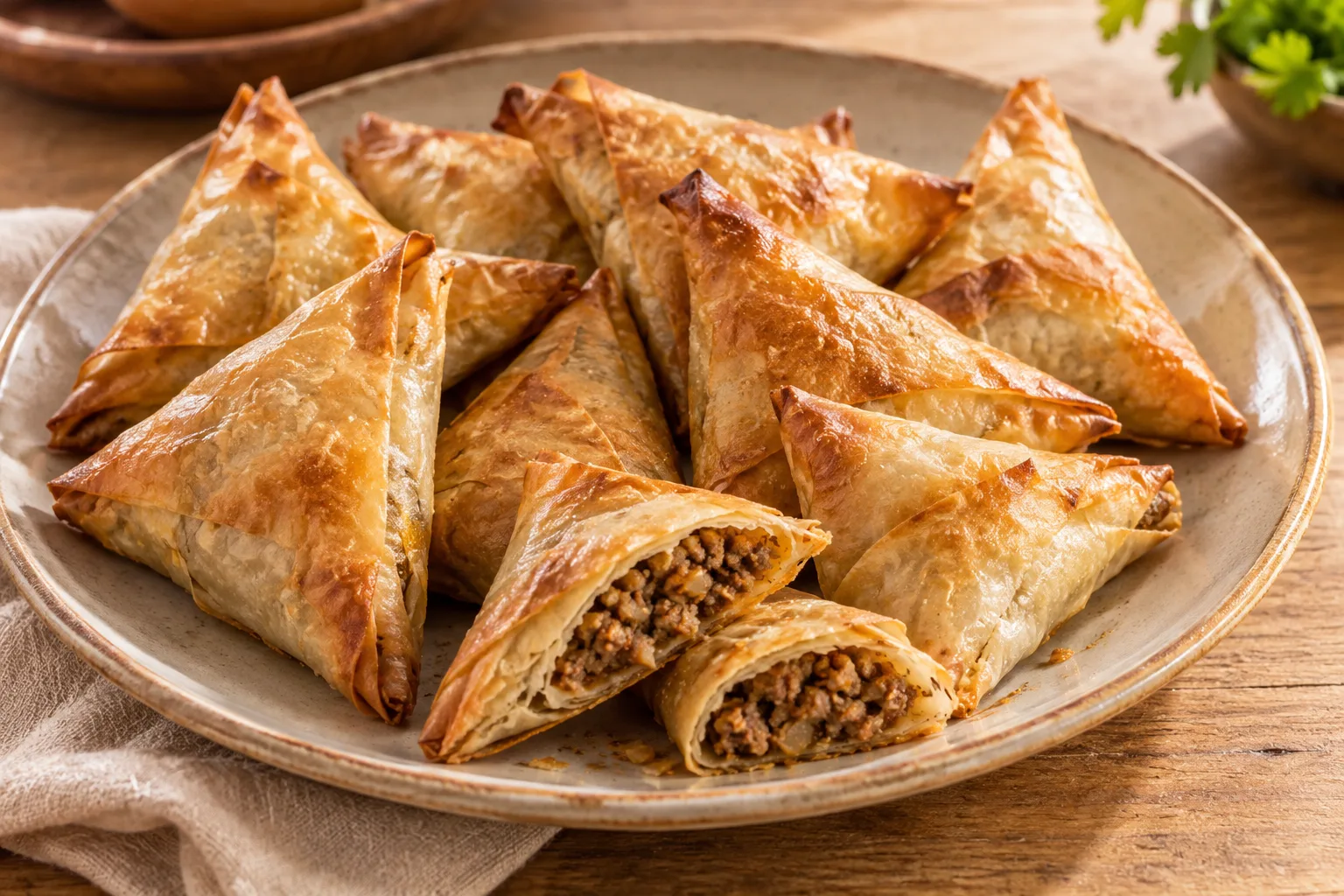
Choose phyllo when you want a delicate covering that can turn crisp during cooking, or when you want to build a pastry from several thin layers. It can be used for sweet pastries with nuts and honey, as well as savory bites with vegetables, cheese, or meat. For best results, avoid fillings that release too much moisture: a very wet filling can soak the sheets and make crispness harder to achieve. If you want a thicker pastry with a risen, flaky structure, phyllo will not produce the same effect.
How to use it
Prepare the filling first and avoid making it excessively wet. Unroll the sheets when you are ready to work and keep the unused sheets covered so they do not dry out in the air. Place one sheet on your work surface; add another if the recipe calls for layers, brushing lightly between sheets with oil or melted butter. Add the filling, fold or roll without compressing too firmly, and cook as directed by the recipe, by baking or frying. The sheets are delicate, so handle them gently and work promptly. There is no single cooking time or temperature for all phyllo dishes; follow the specific recipe and package directions.
Flavour and texture
Phyllo has a mild, neutral flavor that lets sweet and savory fillings stand out. The uncooked sheets are thin and fragile; when cooked in layers, they can become light and crisp. Oil or butter between sheets adds flavor and can help create a browned, brittle texture. The amount of layering and the moisture in the filling both affect the final result.
How to choose it
Look for thin, flexible sheets and packaging without visible damage, and check whether the product is sold chilled or frozen. Read the ingredient list and the manufacturer's storage directions because formulas can vary. If you need to avoid wheat or gluten, do not assume conventional phyllo is suitable; verify the label and its allergen information.
Storage
Keep the package closed and follow its label, since phyllo may be sold chilled or frozen. Once opened, reseal it well and limit how long the sheets are exposed to air: they dry out easily and may break when handled. If you use only part of the package, protect the remaining sheets promptly according to the package directions. Do not apply a storage period from another recipe or brand without checking that it matches your product.
Substitutions
Brick pastry can work for some wrappers, but its sheets are thicker and it handles differently. Puff pastry can be used when a thicker pastry with a different structure is acceptable; it will not reproduce phyllo's very fine crisp layers exactly. Choose according to the recipe, and do not assume that a substitute will cook or feel the same.
Common mistakes
Leaving sheets uncovered while preparing the filling can make them dry and prone to tearing. Another common mistake is using a very wet filling, which can soak the pastry and interfere with crispness. Avoid brushing on too much fat or assuming phyllo and puff pastry behave alike: they are different doughs and give different results.
Safety and allergens
Check the specific product label for ingredients and allergens, and follow its storage instructions. Handle the sheets carefully; exposure to air can dry them out and make them fragile.
Culinary uses
- Crisp outer layer for filled pastries
- Thin layered wrapper or pastry base for sweet and savory dishes
Recommended techniques
- Layer sheets and brush lightly with oil or melted butter
- Bake or fry filled parcels, rolls, and layered pastries
Pairs well with
- Spinach, cheese, and herbs
- Nuts and honey
- Vegetable or meat fillings that are not overly moist
Frequently asked questions
Is phyllo dough the same as puff pastry?
No. Phyllo is made of very thin sheets that are layered; puff pastry is a different, thicker dough with a distinct flaky result.
How can I stop the sheets from tearing?
Keep sheets you are not using covered and handle them gently. Exposure to air can dry them out and make them fragile.
What fillings work well with phyllo?
Both sweet and savory fillings can work, such as nuts with honey or vegetables with cheese. Avoid fillings that are so wet that they soak the sheets.
Estimated nutrition
- Fat
- 6 g
- Saturates
- 1.47 g
- Carbohydrate
- 52.6 g
- Sugars
- 0.18 g
- Fibre
- 1.9 g
- Protein
- 7.1 g
- Salt
- 1.21 g
Sources and review
Automatically researched, cross-checked and validated content. Sources consulted:
- Client Challenge doi.org
- Free Standing, Slide In, and Drop In Electric housing.illinoisstate.edu
- Pasta Filo o philo, ideal para hacer dellciosas recetas eladerezo.com
- Plan Estratégico Plurianual de la Acuicultura Española 2014 mapa.gob.es
- NUTRITION FOR THE HEALTH OF IT - OAKTrust oaktrust.library.tamu.edu
- Diplôme de Cuisine | Le Cordon Bleu Rio de Janeiro cordonbleu.edu
- Impact of a personalized nutritional strategy on the dietary ... dadun.unav.edu
- Triplicated Instruction Set Randomization in Parallel ... montana.edu
- Isótopos Estables En Ornitología: Una Introducción Breve digitalcommons.usf.edu
- Pasta filo | Qué es, tipos, origen y beneficios codinafoods.com
- ▷ Origen en Grecia y Turquía【 Kitchen Academy 】 kitchenacademy.es
- Masa filo - Scoolinary scoolinary.com
- Masa o pasta filo. ¿Qué es y que puedo hacer con ella? Trucos y consejos para cocinar con ella abc.es