- Category
- Herbs and spices
- State
- Powdered
- Usual unit
- teaspoon
What it is
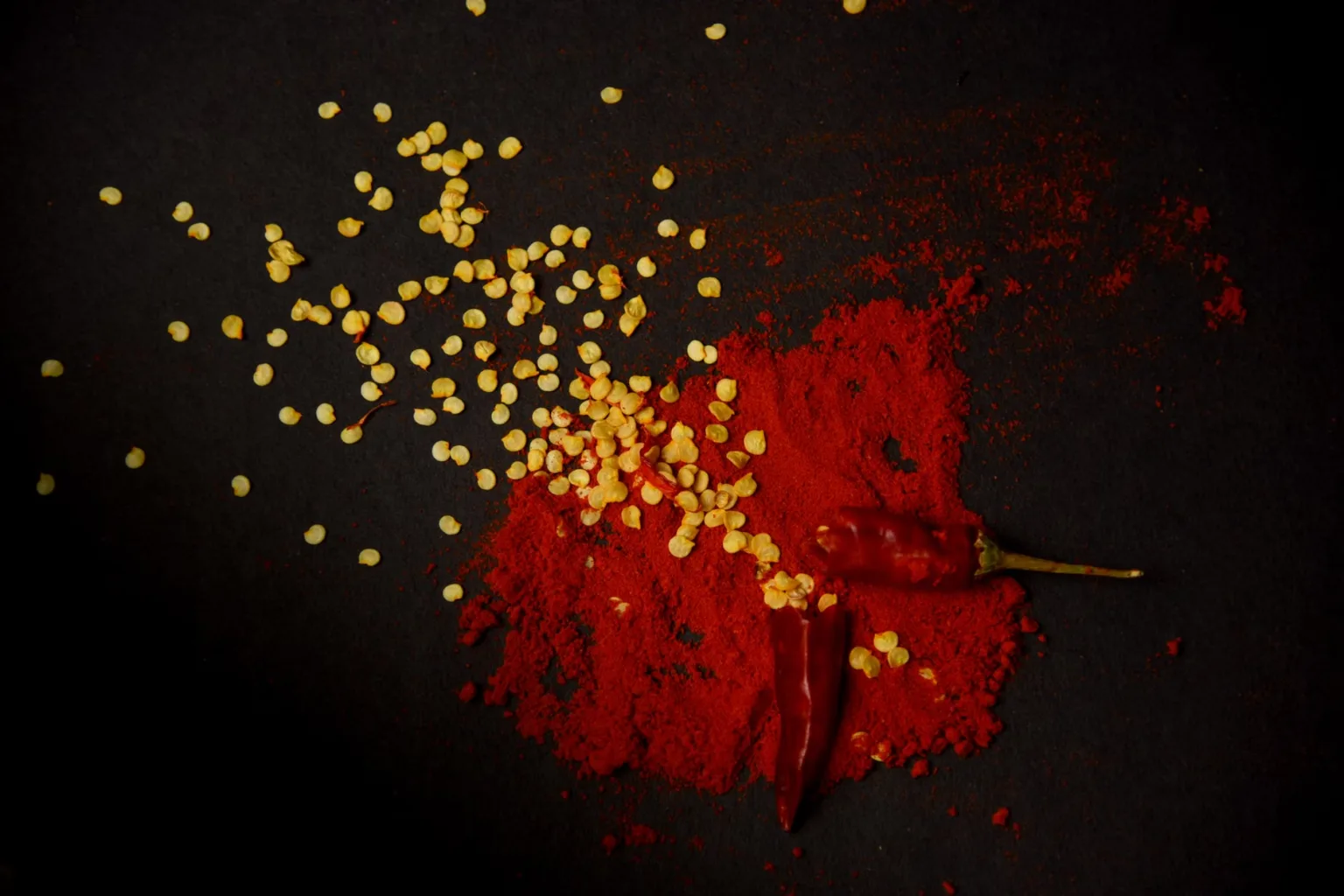
Red chilli powder is a powdered seasoning made primarily from dried red chillies. The name does not always describe one consistent product: some versions contain only ground chilli, while others combine chilli with cumin, garlic powder, oregano or other seasonings. The chilli variety, grind, color and heat level can also differ. For these reasons, products sold under similar names are not necessarily interchangeable and should not be assumed to have the same intensity. Read the ingredient list and package information to identify what you have before adding it to a dish.
When to use it
Use it when you want to add chilli heat, flavor or a red hue to savory food. It can season bean stews, tacos, burritos, sauces, marinades and other spiced dishes. If your product is a blend, its extra seasonings will shape the result; if it is pure ground chilli, you can control the other herbs and spices separately. Heat varies with the chilli variety, so begin with a small amount and taste before adding more, especially when cooking for people with different preferences.
How to use it
First check the label to tell pure chilli powder from a blend and identify any added ingredients. Stir a small amount into a sauce, stew or marinade so it is distributed throughout, then taste and increase gradually because heat varies by product. You can also combine it with cumin, garlic powder and oregano to make a seasoning blend, or use it to season beans, corn, tomatoes and onions. If color is your main goal, choose a product described for that purpose rather than assuming that a brighter red means more heat. There is no universal quantity that suits every variety and product.
Flavour and texture
Its flavor can range from warm and fruity to distinctly hot, depending on the chilli variety and the product's ingredients. Some powders are valued for the red color they add, while blends may also bring notes of cumin, garlic or oregano. The grind can be fine or somewhat coarse, affecting how readily the powder disperses through a dish.
How to choose it
Read the ingredient list: choose chilli as the sole ingredient if you want a pure powder, or check which seasonings are included in a blend. Heat and color vary with the chilli variety, so select the product for the role you want rather than relying on its name alone. If the package identifies a variety or heat profile, use that as a guide and adjust the amount in your recipe.
Storage
The powder may lose intensity and become flatter in flavor after prolonged storage. Follow the package directions, and note the opening date if that helps you rotate your seasonings. The supplied evidence does not establish a specific shelf life or storage temperature for this ingredient, so do not assume a universal time limit; refer to the manufacturer's information.
Substitutions
Ground cayenne can work when you want more heat, but it may be more intense; start with less and adjust to taste. Hot paprika can provide a milder chilli profile. Either substitution may change the flavor and possibly the color, so there is no exact one-to-one equivalence between products made from different varieties or blends.
Common mistakes
Do not assume every red chilli powder is pure ground chilli: some blends contain cumin, garlic or other seasonings. Another mistake is using a fixed amount without tasting, because heat depends on the variety and product. Check the label and add it gradually to keep the seasoning from overwhelming the dish.
Safety and allergens
The supplied official evidence identifies no ingredient-specific warning. Check the product label and ingredients, especially if you need to avoid a particular component: some products are blends and others contain only chilli. Follow the manufacturer's directions.
Culinary uses
- Aportar picor y sabor a platos salados
- Añadir color a salsas, guisos y mezclas de especias
Recommended techniques
- Mezclar con otras especias para formar un condimento
- Incorporar a una marinada o a una salsa
Pairs well with
- Frijoles, maíz, tomates y cebollas
- Ajo, comino y orégano
Frequently asked questions
Is red chilli powder always pure chilli?
No. It may be ground dried chilli or a blend with other seasonings. Check the package ingredient list.
How hot is red chilli powder?
Heat varies with the chilli variety and the product. Start with a small amount, taste and add more if you like.
Can I substitute cayenne?
Yes, it can work, but cayenne may be more intense. Begin with less and adjust to taste.
Sources and review
Automatically researched, cross-checked and validated content. Sources consulted:
- The Essential Glossary of Cooking Terms for the Culinary Arts - Escoffier escoffier.edu
- Storing Dried Milk | USU extension.usu.edu
- Agencia Española de Seguridad Alimentaria y Nutrición aesan.gob.es
- educational content to support healthful lifestyle practices sjsu.edu
- CR tested for heavy metals in 15 herbs and spices, from .. ... ucanr.edu
- Chile en polvo (¿crudo?, ¿orgánico?) | Fundación G+E diet-health.info
- Polvo de chile | Gastronomía & Cía gastronomiaycia.com
- Chile en polvo: el condimento que le da sabor a nuestra comida desde época prehispánica - México Desconocido mexicodesconocido.com.mx
- Chile Rojo en Polvo — Open Spice Box openspicebox.com
- Descubre los Beneficios del Chile en Polvo Rojo para Cocinar lupingbio.cn
- neoliberal multiculturalism in early digital discourse about food. iro.uiowa.edu
- Seasonal Produce Handouts | UNL Food | Nebraska food.unl.edu
- Julio 2024 mapa.gob.es
- Trébol Rojo en Polvo doi.org