- Category
- Vegetables
- State
- Fresh
- Usual unit
- unit
What it is
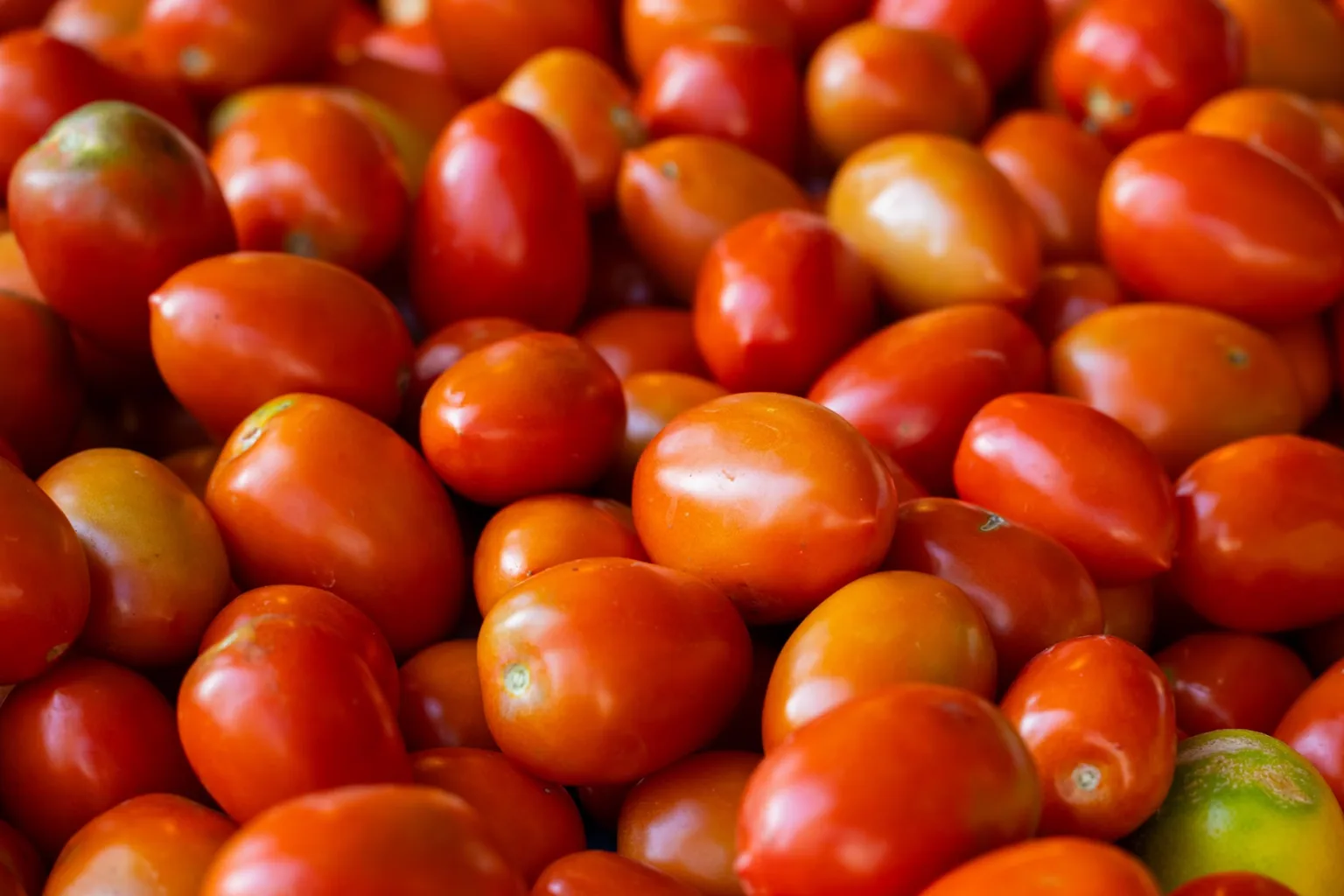
Roma tomatoes are a fresh type of tomato, commonly associated with an elongated shape. They are used as a vegetable in cooking, although botanically a tomato is a fruit. The Roma name belongs to a group of plum-type tomatoes, and individual fruits can vary in shape, size and flavor. Roma or plum tomatoes are described as fleshy, with few seeds and relatively low moisture compared with some other tomato types—qualities that can make them handy for cooking and processing. The label does not guarantee that every fruit will have identical texture, sweetness or juiciness.
When to use it
Choose Roma tomatoes when you want pulp that works well chopped, blended or cooked: they suit sauces, sautéed bases, purées and cold soups such as gazpacho. You can also slice them for salads or roast them as a side. Their type does not mean they must be cooked; use them raw when their ripeness and texture suit the dish. If a recipe depends on particularly uniform pieces, check each tomato, since size and appearance can vary among varieties and individual fruits.
How to use it
Before preparing Roma tomatoes, rinse them gently under running water and use clean work surfaces and utensils. Remove the stem end and trim any part you do not want. For a sauce, chop or blend the tomatoes and cook them; for a sautéed base, add them chopped. For a cold soup, blend them and adjust the consistency with the other ingredients in the recipe. They can also be sliced for salads, stuffed, baked, grilled or stewed. If you freeze fresh tomatoes, remember that they lose firmness after thawing and are better suited to cooking than to serving raw.
Flavour and texture
Roma tomatoes are often described as fleshy and flavorful, but their exact qualities vary with type, ripeness and handling. Some Roma or plum tomatoes have few seeds and less moisture than other tomatoes, which can suit sauce-making. Do not assume every fruit will be sweeter, firmer or less juicy; check its condition and taste it for the intended use.
How to choose it
Look for clean fruit with color appropriate to its type, smooth skin and no major dark spots, bruises, cracks or soft patches. A ripe tomato usually yields slightly to gentle pressure without becoming misshapen. Choose firm fruit if you plan to slice or stuff it, and riper fruit if you will cook it soon. Appearance can vary between individual tomatoes, so assess firmness and condition as well as shape and color.
Storage
For better flavor, keep ripe tomatoes at room temperature if you plan to use them soon; cold temperatures can harm flavor and alter texture. Tomatoes that are not yet ripe can be left on the counter away from direct sunlight and heat. If you freeze fresh tomatoes, expect them to lose firmness when thawed and reserve them for cooking. A universal storage time cannot be established from the available evidence.
Substitutions
In a salad, another ripe tomato can take the place of a Roma; choose one of similar size and adjust the cut. Another fresh tomato can also work in cooked dishes, though the amount of pulp, seeds and juice may change the result. A cooked recipe may accept canned tomatoes, but their texture and state differ from fresh tomatoes.
Common mistakes
Avoid choosing very soft or damaged tomatoes for a dish where the pieces need to hold their shape. Do not expect a frozen tomato to become firm again after thawing; use it in cooked dishes instead. Treating every Roma tomato as identical can also lead to wrong expectations about size, sweetness or juiciness.
Safety and allergens
The sources provide no variety-specific safety warning. Wash tomatoes before preparation, and check the label if a packaged product gives storage or use instructions.
Culinary uses
- Base carnosa para salsas y sofritos
- Ingrediente para sopas frías, ensaladas y preparaciones al horno
Recommended techniques
- Picar o triturar para salsas y sopas
- Asar, hornear o cocinar a fuego lento
- Usar crudo en ensaladas o triturado
Pairs well with
- Albahaca y mozzarella
- Queso parmesano y hierbas aromáticas
- Pan rallado y aceite de oliva
Frequently asked questions
Is a Roma tomato a fruit or a vegetable?
Botanically, a tomato is a fruit; in everyday cooking it is commonly treated as a vegetable.
Can Roma tomatoes be eaten raw?
Yes. Slice them for salads, or use them blended or cooked in sauces and soups.
How should I use Roma tomatoes after freezing and thawing?
They lose firmness, so they are better added to soups, sauces and other cooked dishes.
Estimated nutrition
- Fat
- 0.34 g
- Saturates
- 0 g
- Carbohydrate
- 4.73 g
- Sugars
- 2.7 g
- Fibre
- 0.7 g
- Protein
- 0.68 g
- Salt
- 0.01 g
Sources and review
Automatically researched, cross-checked and validated content. Sources consulted:
- En el etiquetado alimentario hay algunas menciones que son obligatorias eletiquetadocuentamucho.aesan.gob.es
- Vamos a Conservar Alimentos: Tomates extension.psu.edu
- Client Challenge doi.org
- Informe del Comité Científico de la Agencia Española de ... aesan.gob.es
- 6 VARIEDADES DE TOMATES Y SUS USOS EN COCINA - Masymas Supermercados super-masymas.com
- Pág. 1 MINISTERIO DE AGRICULTURA, PESCA Y ALIMENTACIÓN DIRECCIÓN GENERAL DE mapa.gob.es
- Tomatoes | Cooperative Extension Service uaf.edu
- Tomates | Center for Community Health communityhealth.ucsd.edu
- Tomatoes | UC Master Food Preserver Program of Orange County ucanr.edu
- How to Preserve Tomatoes | USU extension.usu.edu
- National Center for Home Food Preservation - National Center for Home Food Preservation nchfp.uga.edu
- WINTER STORAGE TOMATO VARIETY TRIAL agsci.oregonstate.edu
- All About Tomatoes | Institute of Culinary Education ice.edu
- Preserving Tomatoes - DigitalCommons@USU digitalcommons.usu.edu
- 3 usos culinarios del tomate pera - Ametller Origen ametllerorigen.com
- Tomate de pera - Wikipedia, la enciclopedia libre es.wikipedia.org
- Tomate pera: para qué sirve, usos y recetas imprescindibles huertadepancha.com
- Tomate pera | Gastronomía & Cía gastronomiaycia.com